Gemini 4 Neon Tops Coding Model Leaderboard: #1 Performance at a Quarter of the Cost
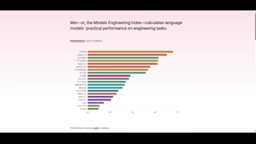
Google Gemini 4 Neon tops the coding model leaderboard at 68.0 with 4x the cost-effectiveness of rivals.
Google's Gemini 4 Neon ranks #1 on the Models Engineering Index real-world coding benchmark with 68.0, beating OpenEye 6.2 Astra and Anthropix's flagship. It sits on the top frontier of the performance-vs-cost curve. Anthropix Fable 5.2 costs 6.4x more, making Gemini 4 Neon about four times cheaper, and it also leads in cursor bench, terminal bench, and code migration.
Leaderboard Shakeup: Gemini 4 Neon Takes the World #1 Spot for Coding Models
According to a report from the YouTube channel "Coding with Sudhir," Google's new model Gemini 4 Neon has officially claimed the top spot on the Models Engineering Index, ranking #1 worldwide on real-world coding benchmarks with a score of 68.0. This is one of the most significant ranking shifts on the leaderboard recently, marking Google's return to the lead in the developer-focused coding model race.
Unlike typical general-capability evaluations, the Models Engineering Index focuses on real-world coding tasks, so its scores are closer to developers' day-to-day usage scenarios. The number 68.0 only becomes meaningful when viewed alongside the other models on the leaderboard—Gemini 4 Neon didn't just rank first; it also left the previously leading OpenEye 6.2 Astra and Anthropix's flagship model behind.
Models Engineering Index is a third-party benchmark for real-world coding tasks. Its distinguishing feature is that test cases are largely drawn from actual development scenarios—code completion, bug fixing, cross-file refactoring, and so on—rather than competition-style algorithm problems. The leaderboard uses an aggregate score (0-100) and also records model invocation costs for side-by-side value comparisons. Because its tasks closely reflect engineering practice, its scores are typically more useful to development teams than those of general-capability leaderboards.
The Performance vs. Cost Curve: What It Means to Be on the Top Frontier
On the performance-vs-cost scatter plot, Gemini 4 Neon sits on the "top frontier"—the region with the highest performance for a given cost. Charts like this reveal the real gap in cost-effectiveness: a model can score high by throwing compute at the problem, but if costs rise in tandem, its value to actual engineering teams is diminished.
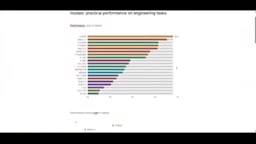
What makes Gemini 4 Neon special is that it occupies both the top of the performance rankings and the cost-advantage zone at the same time. This means developers don't have to make a painful trade-off between "quality" and "budget" when choosing a model—a combination that is quite rare in the current competitive landscape.
The performance vs. cost scatter plot is a multi-objective evaluation tool: the horizontal axis is normalized invocation cost, and the vertical axis is benchmark score. The "top frontier" (Pareto frontier) in the chart refers to the set of models with the highest score for a given cost, or the lowest cost for a given score. A model on the frontier means no other model outperforms it on both cost and performance simultaneously. The concept comes from Pareto optimality in multi-objective optimization and is used to reveal real gaps in cost-effectiveness.
Head-to-Head with Anthropix Fable 5.2: A Fourfold Cost Gap
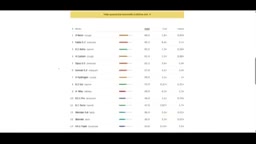
The comparative data in the leaderboard table is the most noteworthy: Gemini 4 Neon ranks first and Anthropix Fable 5.2 ranks second, but the latter costs 6.4 times as much—while Gemini 4 Neon costs only 1.6 times the baseline. That works out to Gemini 4 Neon being roughly four times cheaper than the second-place competitor.
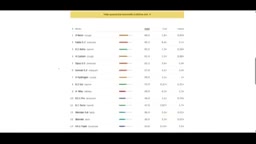
This gap has direct economic implications for developers. Coding tasks often involve a large number of repeated invocations—code completion, refactoring, migration, test generation—and per-call cost differences get amplified across the entire development workflow. If a model performs comparably but costs only a quarter as much, teams have far more room to maneuver in budget planning.
It's worth noting that the cost multiples above come from the leaderboard's own pricing methodology; pricing strategies and billing methods may differ across platforms, so actual spending should be estimated based on specific usage scenarios.
Segment Breakdown: Leadership Beyond the Overall Score
According to the same source, Gemini 4 Neon also leads across multiple sub-dimensions covered by the radar chart, including cursor bench, terminal bench, and code migration. These three correspond to interactive coding within an editor, task execution in a terminal environment, and cross-codebase migration and refactoring—all high-frequency and high-difficulty scenarios in engineering practice.
Ranking first overall plus leading across sub-items shows that this top placement isn't the result of one specialty inflating the average, but rather a balanced improvement across capabilities. For developers, this means consistent performance across diverse workflows, not just on specific tasks.
- cursor bench: A task set simulating interactive coding within a code editor (such as Cursor), covering inline completion, multi-file editing, and modifying code via natural-language instructions.
- terminal bench: Evaluates a model's ability to execute commands, debug scripts, and manage file systems in a terminal environment, emphasizing proficiency with the shell toolchain.
- code migration: Migration and refactoring tasks across codebases or across languages/frameworks, requiring the model to understand project structure, dependency relationships, and semantic equivalence—one of the more difficult scenarios in engineering.
Practical Takeaways for Developer Model Selection
This round of ranking changes offers several actionable reference points for model selection. Top performance plus a significant cost advantage makes Gemini 4 Neon a strong candidate for the default choice, especially in coding-assistance scenarios with high call volume and sensitivity to latency and expense.
On the other hand, leaderboard rankings are ultimately the product of aggregate metrics. Real-world project performance is also affected by prompt design, context length, toolchain integration, and other factors. Teams are advised to run small-scale comparative tests on real tasks from their own codebases before formally migrating, treating leaderboard scores as a starting point for screening rather than the final verdict.
As for the competitive landscape, Anthropix's and OpenEye's flagship models remain in the top tier, with the gap mainly reflected in cost-effectiveness rather than absolute capability. As each vendor continues to iterate, rankings on this leaderboard will most likely keep changing; staying attuned to evaluation methodology and cost structures is more valuable than memorizing any single ranking.
One-line Summary
Google Gemini 4 Neon tops the coding model leaderboard with a score of 68.0, delivering four times the cost-effectiveness of its closest competitor.
Paragraph Summary
Google's new model Gemini 4 Neon ranks #1 worldwide on the real-world coding benchmark Models Engineering Index with a score of 68.0, surpassing OpenEye 6.2 Astra and Anthropix's flagship model. It sits on the top frontier of the performance-vs-cost scatter plot, combining high performance with low usage costs. Compared with the second-place Anthropix Fable 5.2, the latter costs 6.4 times as much as Gemini 4 Neon, while Gemini 4 Neon costs only 1.6 times the baseline—roughly four times cheaper. In addition, Gemini 4 Neon also leads in sub-dimensions such as cursor bench, terminal bench, and code migration. The article advises developers to treat the leaderboard as a starting point for selection and to run small-scale comparative tests on their own codebases before migrating.
Related articles

Gemini 4's Three Coding Models Compared: How to Choose Between Neon, Hydrogen, and Argon
How to choose among Gemini 4's Neon, Hydrogen, and Argon coding models? This article compares official positioning, API pricing and the price-increase date, coding benchmark scores from Artificial Analysis and Cursor, and summarizes developer feedback to offer scenario-based selection advice.

Gemini 4 Neon Hands-On: Crushes Opus at Coding, but the Free Agent Hides Three Major Pitfalls
Gemini 4 Neon tops the Coding Agent Index, beating Carbon and Opus 5.5 in four real code battles—but hidden reasoning tokens bill at $15 and free Tasks silently fails.

Gemini 4 Neon Released: Google's Strongest Coding Model Tops the Rankings
Gemini 4 Neon tops the Artificial Analysis Coding Agent Index with 58.6. We break down its coding agent benchmarks, 1M token context, four thinking levels, and pricing below Carbon starting in December.