Gemini Agent Mode in Action: Let AI Efficiently Handle API Data Layer Code

How an Android developer used Gemini Agent Mode to automate data layer coding from API documentation
An Android developer demonstrates how Gemini Agent Mode can efficiently handle tedious data layer development by incorporating API documentation into prompts, defining architectural constraints, and using task slicing. The result: architecturally precise Retrofit code with zero business logic leakage that follows best practices.
As Android developers, what we really want to invest our energy in is product innovation, not repetitive, tedious boilerplate code work. And this is exactly where AI agents excel at delivering value. Recently, an Android developer shared a real-world case of using Gemini Agent Mode in Android Studio to handle API documentation and data layer coding, with impressive results.
AI Agent Technology Background
AI agents are an important concept in the field of artificial intelligence. They are not just traditional code completion tools, but intelligent systems with autonomous planning, multi-step execution, and contextual understanding capabilities. Unlike tools such as GitHub Copilot that are based on code snippet prediction, Agent mode can understand complete task goals, autonomously break down steps, invoke multiple tools (such as file reading, API calls, code analysis), and self-correct during execution. This capability allows AI to evolve from "writing one line of code" to "completing a module," marking a shift in AI-assisted programming from passive response to proactive collaboration. Gemini's Agent mode represents this technological trend, deeply integrating Google's large language model capabilities with IDEs to achieve end-to-end automation from requirement understanding to code generation.
Pain Point: Tedious Data Layer Development
In actual commercial projects, developers often face this scenario: clients have a complex but well-documented custom API for interfacing with secure backends. Developers need to write accurate, efficient data layer code based on this documentation.
While this work isn't technically demanding, it's extremely time-consuming and error-prone. You need to carefully cross-reference API documentation, handle various field mappings, request parameters, and return structures, while also adhering to the project's existing architectural standards. A slight oversight can introduce hard-to-track bugs.
As this developer put it: "As an Android developer, I want to spend time on innovation, not this grunt work." So he chose to let Gemini's Agent mode take on this "heavy lifting."
Practice: Writing Data Sources with Gemini Agent
The core task of this practice was to write a complete data source using Retrofit based on the client-provided API documentation, and it had to align with the interface definitions and architectural design already present in the project.
Retrofit Framework Technical Analysis
Retrofit is one of the most popular HTTP client libraries in Android development, developed and open-sourced by Square. Its core advantage lies in converting HTTP APIs into Java/Kotlin interfaces, declaring request methods, URL paths, request parameters, and other information through annotations, greatly simplifying network request code writing. Retrofit implements underlying network communication based on OkHttp, supports multiple data format converters (such as Gson, Moshi), and naturally supports asynchronous programming patterns like coroutines and RxJava. In actual projects, developers typically define an interface method for each API endpoint, and Retrofit dynamically generates implementation classes at runtime. This declarative API definition approach not only improves code readability but also facilitates unit testing and API documentation management, making it the de facto standard for Android data layer development.

The developer's approach is highly instructive. Instead of vaguely asking AI to "help me write the data layer," he employed several key strategies:
1. Incorporate API Documentation Directly into Prompts
He provided portions of the API documentation directly as part of the prompt to Gemini. This means the AI wasn't guessing interface structures out of thin air, but generating code based on real, accurate documentation. This ensured consistency between the generated code and the interface specifications from the source.
2. Define Architectural Constraints Clearly
He required that the generated code must fit the existing interface definitions in the project. This is crucial—in real projects, code never exists in isolation; it must integrate into the existing architectural system.
Data Layer Architecture and Layered Design Principles
In modern Android architecture (such as MVVM, MVI, or Clean Architecture), the data layer plays a critical role: it is the sole channel for the application to interact with external data sources (network APIs, databases, caches, etc.), responsible for data acquisition, transformation, and persistence. Good data layer design should follow the "single responsibility principle"—it should be as "thin" as possible, handling only data CRUD operations and format conversions, without containing any business logic or UI-related code. The benefits of this layered design are obvious: the data layer can be tested independently, business logic changes don't affect data retrieval methods, and it's easy to switch between different data source implementations (such as switching from network to local cache). In actual projects, the data layer typically includes components such as Repository, DataSource, and Model, each with distinct responsibilities, forming clear dependency relationships.

3. Precisely Define Task Boundaries
The most critical step: he explicitly instructed the agent to only write the data source portion, giving it a "small slice" to handle, rather than generating the entire functional module at once.

This detail embodies a core principle of AI collaboration: the clearer the task boundaries, the higher the AI's output quality. When you break down complex problems into clear, manageable small tasks, AI can truly deliver value.
Results: Architecturally Precise, Zero Business Logic Leakage
The final outcome led this developer to describe it as a "magic trick":
- Architecturally precise: The generated Retrofit data source perfectly aligned with the project's existing interface definitions and architectural standards
- Zero business logic leakage: The data layer remained pure, with no business logic that shouldn't appear at this layer
- Follows best practices: The AI understood that the data source should be as "thin as possible," strictly adhering to layered architecture design principles
In other words, Gemini didn't just "write code that works," but wrote high-quality code that conforms to software engineering standards with clear structure. This is the true value of AI programming tools.
Insights: How to Use AI Agents Efficiently
While brief, this case contains several highly valuable AI collaboration methodologies:
Prompt Engineering in Practice
Prompt engineering is the core skill for interacting with large language models, determining the quality and accuracy of AI outputs. High-quality prompts should include three key elements: clear task descriptions, sufficient contextual information, and explicit constraints. In this case, the developer embedded API documentation directly into the prompt, which is an application of "In-Context Learning" technology—providing specific reference materials to help AI understand domain-specific standards and requirements. Meanwhile, limiting the interface specifications of generated code through "architectural constraints" is an application of "Constrained Generation," effectively preventing AI from outputting incompatible code. And "task slicing" reflects the "Chain-of-Thought" concept—breaking down complex tasks into multiple manageable small steps, each with clear inputs and outputs. This approach significantly improves AI's execution success rate and code quality.
First, feed AI high-quality context. Directly incorporating API documentation into prompts, making AI work based on facts rather than guesswork, is the prerequisite for ensuring code accuracy.
Second, use architectural constraints to frame AI behavior. Telling AI which existing interfaces and design patterns its code needs to fit can effectively prevent AI from generating incompatible code on its own initiative.
Third, slice tasks and advance step by step. Rather than having AI complete an entire module in one go, give it clear "small slices." This not only improves output quality but also makes it easier for developers to review and control the final results.
Conclusion
As Gemini Agent mode becomes deeply integrated into mainstream development tools like Android Studio, AI is evolving from a "code completion assistant" to a "development partner capable of independently completing module tasks." For developers, mastering the right methods of AI collaboration—providing quality context, setting clear boundaries, and reasonably splitting tasks—will become a key skill for improving development efficiency. Leaving tedious repetitive work to AI and reserving precious energy for true innovation may be the greatest significance AI programming tools bring us.
Key Takeaways
Related articles
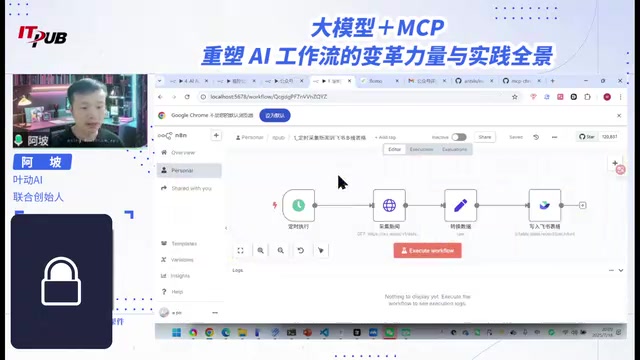
The Evolution of AI Workflows: A Three-Stage Leap from Automation to Intelligent Agents
Three real-world examples reveal the core differences between AI workflows and Agents: traditional automation follows rules, AI workflows add intelligent decisions, and Agents achieve autonomous planning.

Tension Wood: Nature's Built-In Actuator Material
Tension wood is a unique reaction wood tissue in plants that can achieve bidirectional movement like muscle. This article explores tension wood's contraction mechanism, mechanical principles, and implications for biomimetic materials and soft robotics.

AlphaGenome Atlas Explained: How DeepMind Uses AI to Decode 3 Billion Base Pairs
Deep dive into DeepMind's AlphaGenome Atlas platform: how AVI scores assess 9 billion genetic variants and how this petabyte-scale genomic resource accelerates precision medicine research.