Gemini Code Assist Shutdown: Google's AI Coding Tool Consolidation and a Developer's Migration Guide
Gemini Code Assist Shutdown: Google's …
Google shuts down Gemini Code Assist on July 17 in a broader move to consolidate its AI coding strategy.
Google has announced that Gemini Code Assist will shut down on July 17, signaling a strategic consolidation of its AI coding tools under the broader Gemini ecosystem. The move reflects intensifying competition from GitHub Copilot, Cursor, Claude, and Windsurf, as well as a broader industry shift toward agentic coding platforms. Developers should evaluate alternatives and plan migrations promptly.
Google Announces Gemini Code Assist End of Service
A post on Hacker News recently caught the attention of the developer community: Google's AI coding assistant Gemini Code Assist will officially shut down on July 17. While the discussion didn't generate massive buzz, the industry trends and strategic shifts this decision reveals are well worth a closer look for anyone following AI-assisted development.
Gemini Code Assist was one of Google's flagship AI coding tools aimed at enterprises and developers, positioned as a direct competitor to GitHub Copilot. It supported multiple IDE environments and offered features like code completion, code generation, code explanation, and refactoring suggestions — all powered by the Gemini large language model with context-aware capabilities. Notably, Gemini Code Assist was built on Google's Gemini model family, which supports an ultra-long context window of up to one million tokens, giving it a theoretical advantage in understanding large codebases. As an enterprise-grade product, it also integrated with Google Cloud Identity and IAM, enabling secure access to private repositories — a clear differentiation from lighter tools aimed at individual developers. This shutdown announcement signals a significant reshuffling of Google's AI coding product lineup.
The Product Consolidation Logic Behind the Shutdown
On the surface, shutting down an AI coding product looks like a negative signal. But viewed through the lens of Google's broader product strategy in recent years, this looks more like a strategic consolidation than a simple retreat.
Brand Unification: From Duet AI to the Gemini Ecosystem
Over the past two years, Google has gone through multiple rounds of AI brand reorganization — from Bard to Gemini, from Duet AI to Gemini for Google Cloud — consistently pulling disparate AI capabilities under the unified Gemini umbrella. You may not have noticed that Gemini Code Assist itself was already a rebrand of the earlier "Duet AI for Developers."
Duet AI was officially unveiled at Google Cloud Next 2023 as an AI assistant brand covering two major areas: Google Workspace (Docs, Sheets, Gmail, etc.) and Google Cloud. The developer-facing component, "Duet AI for Developers," offered IDE plugins and Cloud Shell integration. In early 2024, as Google rebranded its consumer AI product Bard to Gemini, the enterprise-side Duet AI was folded in as well, with the coding assistance portion eventually becoming Gemini Code Assist — completing the brand consolidation. This shutdown is therefore likely part of Google's next step: further integrating coding assistance capabilities into the broader Gemini ecosystem or the Google Cloud platform.
Reducing Product Overlap, Focusing Core Resources
For a company of Google's scale, maintaining multiple product lines with heavily overlapping functionality is not only costly — it also creates confusion for users. Folding the standalone Code Assist capabilities into a unified entry point reduces maintenance overhead while delivering a more consistent developer experience. In an era of rapid AI tool iteration, this kind of "doing less, better" strategy actually reflects a degree of product maturity.
The Intensely Competitive AI Coding Tool Landscape
Gemini Code Assist's strategic consolidation is also a microcosm of the fierce competition now defining the AI coding space.
Leading Products Continue to Squeeze the Market
The AI coding tool market has coalesced around a handful of dominant players:
- GitHub Copilot: Leverages the deep Microsoft–OpenAI partnership to hold a first-mover advantage and a massive user base
- Cursor: Focused on an AI-native editor experience, rapidly building developer credibility through a polished UX
- Claude (Anthropic): Stands out in code comprehension and generation, becoming the go-to choice for many developers
- Windsurf (formerly Codeium): Used a free-tier strategy to rapidly acquire developer users and launched an AI-native IDE, putting it in direct competition with Cursor; in 2025, OpenAI announced its acquisition of Windsurf, further accelerating consolidation in this space
Beyond these, JetBrains, Amazon (Amazon Q Developer), and Sourcegraph (Cody) continue to push hard in niche segments. The overall market reflects a dual dynamic of winner-takes-most competition alongside deep vertical specialization. In this environment, every product must continuously justify its differentiated value.
The Evolution from "Code Completion Tool" to "Intelligent Development Platform"
AI coding is evolving from single-point code completion toward intelligent platforms that span the entire development lifecycle. Developers are no longer satisfied with simple code suggestions — they expect AI to understand entire codebases, participate in architectural design, execute automated tests, and even complete end-to-end tasks.
This direction is known as Agentic Coding, and its core idea is to shift AI from passively responding to user commands to actively planning and executing multi-step tasks. Key capabilities include: automatically analyzing issues and generating complete PRs, refactoring code across files, auto-running tests and iterating on fixes based on results, and calling external tools (such as database queries or API calls) to complete end-to-end workflows. Google's Jules, OpenAI's Codex Agent, and Anthropic's Claude Code are all representative products in this direction — signaling a shift in AI coding from "co-pilot" mode to "autopilot" mode.
Google shutting down the standalone Code Assist is very likely a move to concentrate resources on this higher-potential agentic coding direction, rather than remaining invested in a relatively limited assistive tool.
What This Means for Developers
For developers currently using Gemini Code Assist, this shutdown means it's time to plan a migration path before July 17.
Evaluate Alternatives Promptly
Affected developers should complete the following preparations before July 17:
- Assess alternative tools: Evaluate mainstream AI coding assistants like GitHub Copilot, Cursor, and Codeium, and select the one that best fits your workflow
- Follow official guidance: Keep an eye on Google's migration documentation and data export policies to avoid data loss
- Test and transition early: Try out alternative tools on non-critical projects in advance to ensure a smooth switch in your development workflow
Rethink How You Depend on AI Tools
This event is also a reminder for developers: while embracing the productivity gains AI coding tools offer, it's important to maintain a realistic view of their sustainability. The lifecycle of cloud-based AI services is often subject to vendor business decisions, and tying your core workflow too tightly to a single closed product carries real risk. When choosing tools, weighing functionality, cost, and the vendor's long-term commitment will help you build a more resilient development environment.
Conclusion: Embrace the Irreversible Trend of AI-Assisted Development
Gemini Code Assist's shutdown may look like the curtain falling on a single product, but it's really a deliberate strategic adjustment by Google in the AI coding space. In a world where AI development tools evolve at breakneck speed, product consolidations, rebrands, and shutdowns will become the norm. For developers, rather than fixating on the fate of any specific tool, the smarter move is to embrace the irreversible macro-trend of AI-assisted development and continuously build your ability to leverage AI tools effectively. What unified coding assistant Google will release next is certainly worth watching closely.
Related articles
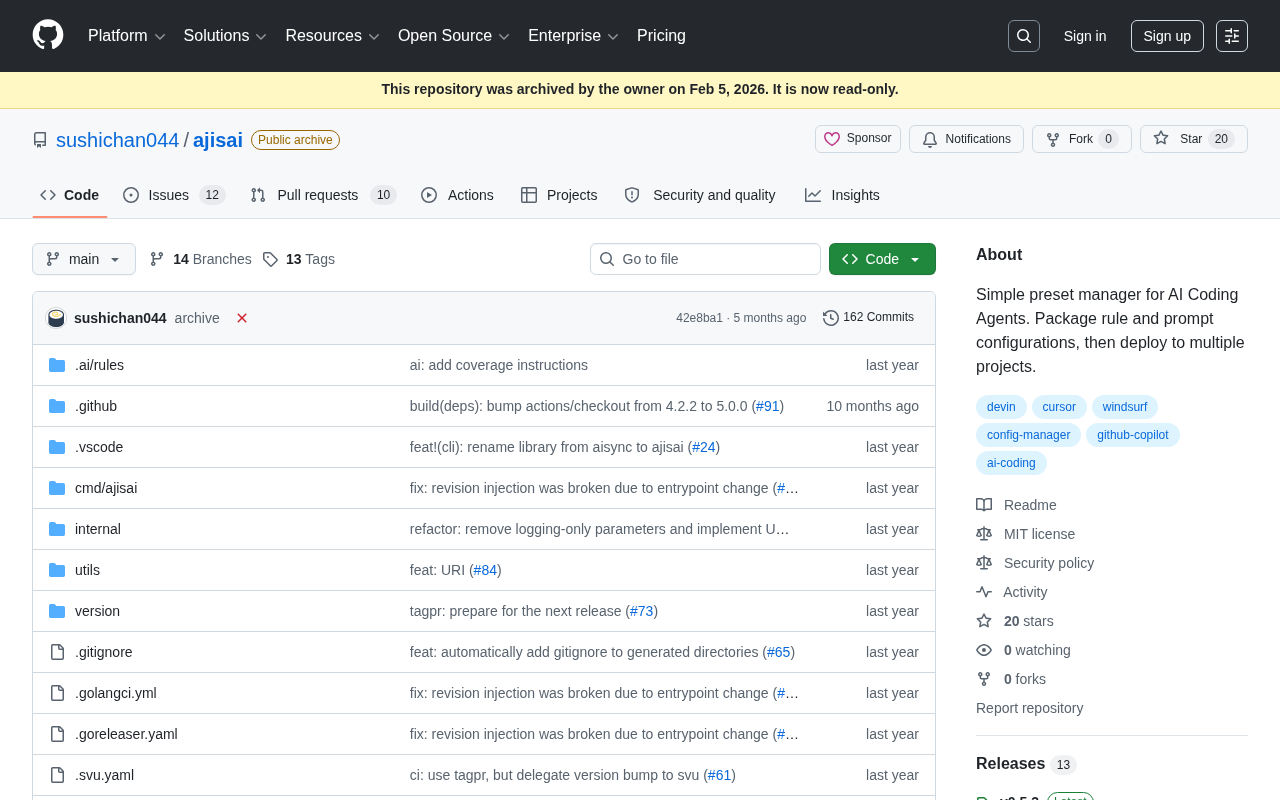
ajisai: A Preset Management Tool for Unifying Rules and Prompts Across AI Coding Assistants
ajisai is a Go-based preset manager for AI coding assistants like Cursor and Claude Code. Package rules and prompts once, deploy everywhere. Early-stage but promising.
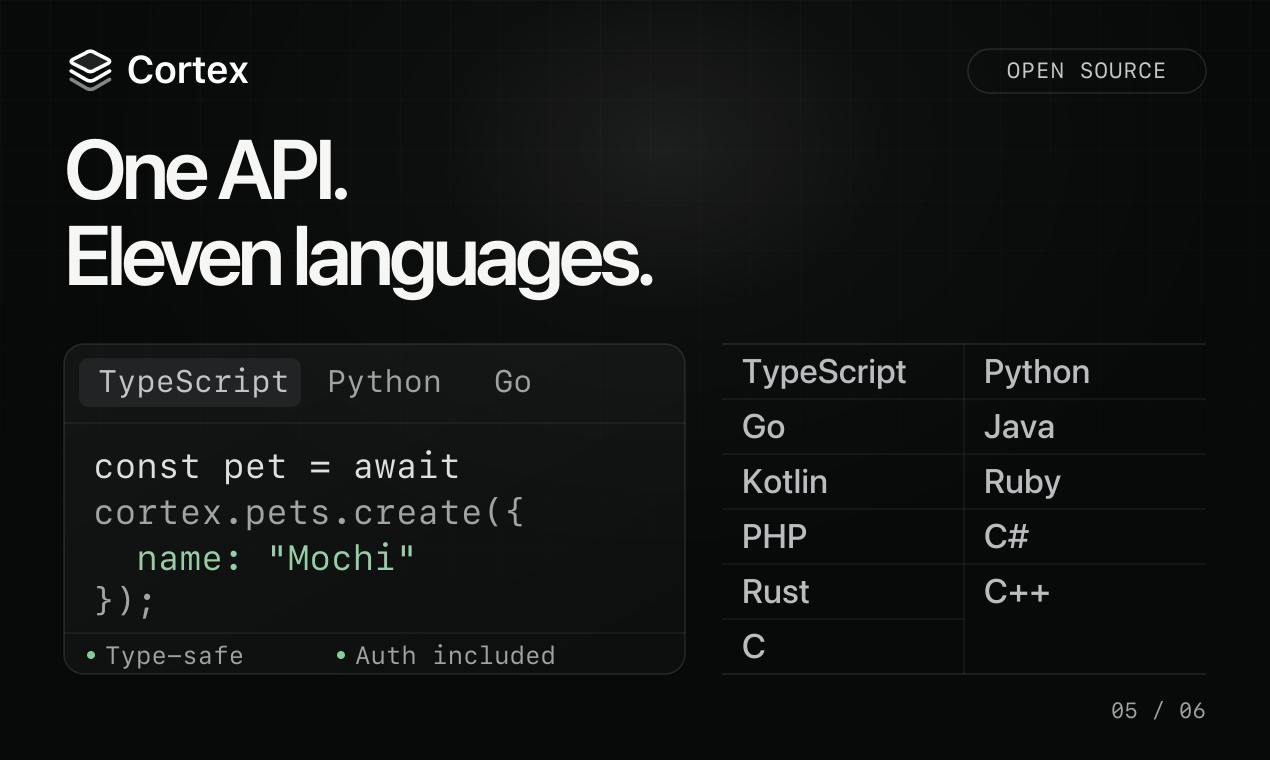
Cortex: Convert API Specs into Docs, SDKs, and MCP Servers in One Click
Cortex is an open-source tool that converts OpenAPI, GraphQL, gRPC and more into interactive docs, typed SDKs in 11 languages, and MCP servers for AI agents.
ABrush: An AI Studio Built for Digital Artists
ABrush is an AI studio for digital artists, ranked #4 on Product Hunt. It embeds leading AI models into existing workflows to remove repetitive tasks, speed up iteration, and keep artists in control.