Gemini Flash Solves a Bug That Neither GPT-5.6 nor Opus 5 Could Fix
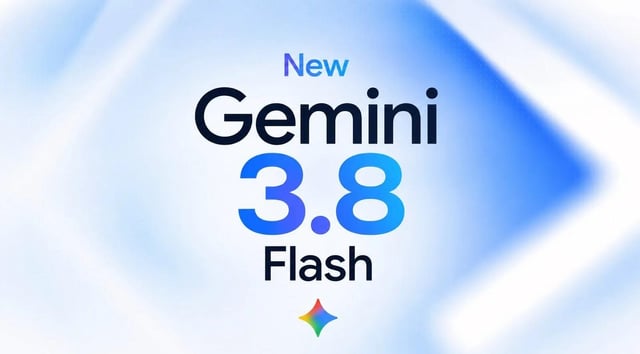
Gemini Flash fixes a bug that GPT-5.6 Sol and Opus 5 both failed to solve.
An Android developer encountered a bizarre bug where an eye-color editing tool only worked on the left eye. Both GPT-5.6 Sol and Opus 5 failed to find the root cause after 20+ minutes, but the lightweight Gemini 3.8 Flash successfully diagnosed and fixed it. The case challenges the assumption that bigger models always perform better and highlights the value of multi-model collaboration.
A Bizarre Bug Sparks a Model Showdown
As AI coding assistants become increasingly mainstream, developers are growing accustomed to throwing tricky code problems at large language models.
The Technical Foundation of AI Coding Assistants At their core, AI coding assistants are code generation and diagnostic tools built on Large Language Models (LLMs). These models learn programming language syntax, common patterns, and debugging logic by pre-training on massive code repositories (such as GitHub open-source projects) and technical documentation. A model's "weight" typically refers to its parameter count — GPT-4, for instance, has hundreds of billions of parameters, while lightweight models might only have a few billion. In theory, more parameters mean greater knowledge capacity and reasoning ability, but they also bring higher computational costs and response latency. The industry has long held an assumption: complex tasks require bigger models. However, this linear relationship doesn't always hold in practice, since model performance is also influenced by training data quality, optimization strategies, task-specific fitness, and many other factors.
The rule of thumb for model selection is usually: the "heavier" the model (more parameters, stronger reasoning), the more reliable it is. But a recent experience shared by a developer on Reddit poses a compelling challenge to this conventional wisdom.
The developer was building an Android photo editor called Vissulo, which includes a tool called Iris for changing the eye color of people in photos. The bug was bizarre: the tool only worked on the left eye — the right eye simply wouldn't change, no matter what.
The Technical Complexity of Symmetry Bugs These "half-working" bugs are often extremely deceptive — the feature doesn't crash entirely; it partially works and partially fails. In photo editing software, modifying eye color involves Facial Landmark Detection and pixel-level color mapping. The typical workflow is: first use a machine learning model to locate both eyes, then apply a color transformation to the target regions. Bugs where "the left eye works but the right eye doesn't" often stem from coordinate system confusion — for example, some image libraries use a screen coordinate system with the origin at the top-left corner, while computer vision algorithms might use a center-symmetric Cartesian coordinate system. If a developer hardcodes incorrect X-axis flip logic during left-right eye coordinate conversion (e.g., failing to account for mirrored selfies), or confuses "left side of the image" with "the person's left eye" in a conditional check, this kind of eerie one-sided failure results. This typically means the problem is hiding in some obscure symmetry logic, coordinate mapping, or conditional branch — making it far harder to diagnose than errors where things simply don't work at all.
GPT-5.6 Sol and Opus 5 Both Strike Out
The developer first called in two "heavyweights": GPT-5.6 Sol and Opus 5.
The Positioning of Two Flagship Models GPT-5.6 Sol is OpenAI's enhanced reasoning variant built on GPT-5, focused on multi-step problem solving for complex tasks. It's commonly used for mathematical proofs, code refactoring, and other high-difficulty challenges. Opus 5 is the flagship model in Anthropic's Claude series, known for its longer context window and more cautious output style, making it well-suited for scenarios requiring deep analysis. Both are flagship-tier models renowned for strong reasoning capabilities — theoretically the first choice for solving complex bugs.
The results, however, were surprising. According to the original post:
- GPT-5.6 Sol spent over 20 minutes digging deep into the problem, continuously proposing "plausible" causes and fixes, but none of them actually worked. It fell into a classic state of "sounding confident while failing repeatedly."
- Opus 5 also invested significant time investigating, but ultimately chose to honestly concede defeat, essentially saying: "To be honest, I wasn't able to find the root cause."
Differences in How Models Handle Uncertainty There's an interesting nuance worth noting here: GPT tended to keep generating seemingly plausible hypotheses, even when those hypotheses couldn't withstand verification; Opus, on the other hand, proactively admitted failure after multiple attempts. When LLMs generate answers, the process is fundamentally probabilistic sampling: given the context, the model computes a probability distribution over the next token and selects one. When facing problems outside their training distribution, different models diverge markedly in strategy. The GPT series tends toward high-confidence output even when internal probabilities aren't concentrated — a consequence of RLHF (Reinforcement Learning from Human Feedback) training that reinforces "helpfulness," with the side effect of potentially producing "hallucinations" — fabricating answers that sound plausible but are actually wrong. Anthropic's Opus series, trained with Constitutional AI, has been reinforced for honesty and is more inclined to explicitly state "I don't know" when uncertain. These two coping strategies reflect different approaches to uncertainty management — one keeps generating (with a risk of overconfidence), while the other cuts losses honestly (more conservative but more reliably communicating the state of affairs).
Gemini Flash's Unexpected Upset
The real turning point came when the developer tried Gemini 3.8 Flash.
The Technical Positioning of the Flash Series True to its naming convention, the "Flash" series has always been positioned for lightweight, fast, low-cost scenarios, emphasizing response speed over deep reasoning. Gemini 3.8 Flash is a lightweight variant in Google's Gemini family, designed for rapid responses on mobile or edge devices, typically used for real-time chat, simple code completion, and similar tasks. Flash achieves dramatic parameter reduction through model distillation, pruning, and other techniques, sacrificing some reasoning depth for speed and cost advantages. The industry widely considers Flash unsuitable for complex debugging tasks, and few people expect it to solve difficult problems.
Yet this time, Flash exhibited unusual behavior: it also spent over 20 minutes thinking about the problem.
The Technical Implications of Extended Reasoning Time The original poster specifically noted this was the first time he'd ever seen a Flash model "think" for so long. All three models in this case spent over 20 minutes — extremely rare in typical conversational scenarios. This kind of extended reasoning usually stems from Chain-of-Thought (CoT) techniques: rather than generating an answer directly, the model first generates intermediate reasoning steps, progressively approaching a conclusion. OpenAI's o-series models and Anthropic's Extended Thinking feature both fall into this category. However, reasoning duration alone doesn't guarantee quality — if the model's initial hypothesis is off-target (e.g., misdiagnosing it as a UI rendering issue rather than a coordinate system problem), no amount of additional reasoning steps will help, as they're just digging deeper down the wrong path.
The final result? Flash found the actual root cause and successfully fixed the bug.
A model positioned as "lightweight" solved a problem that two "heavyweight" models couldn't crack.
Lessons from This Case
While this case is a single developer's personal experience with a limited sample size, it reveals several phenomena worth serious consideration for anyone working with AI.
Model Capability Can't Be Judged by Parameter Count Alone
For a long time, the industry has habitually used parameter count or "flagship vs. lightweight" positioning to predict model capability. But in real-world tasks, model performance is influenced by training data distribution, reasoning paths, randomness, and many other factors. A specific bug might just happen to fall within the "sweet spot" where Flash's training or reasoning excels.
The Potential Advantages of Lightweight Models Gemini Flash's success may stem from an underappreciated factor: lightweight models are often deeply optimized for specific task distributions. Knowledge Distillation is a technique that compresses a large model's "knowledge" into a smaller model, but this process isn't simply parameter reduction — it teaches the small model to learn the large model's decision patterns on specific tasks. If Google used a large number of Android development and image processing debugging cases when distilling Flash, its performance on these types of problems might exceed that of general-purpose large models. Additionally, smaller models have a narrower search space, which might actually help them avoid the trap of "over-reasoning" — similar to the "Occam's Razor" principle in machine learning: simpler models sometimes generalize better.
In other words, no single model can dominate all others across every task.
Thinking Longer Doesn't Equal Solving Better
You might not have noticed, but all three models spent over 20 minutes, yet only Flash ultimately succeeded. This shows that "investing more reasoning time" is a necessary condition but not a sufficient one. What truly determines success or failure is whether the model can reach the real root cause during its thinking process, rather than spinning on the surface of "plausible hypotheses." This reveals a limitation of current CoT techniques: they can enhance "vertical depth" (reasoning deeper in a given direction), but don't necessarily improve "lateral search" (exploring multiple possible causes).
Multi-Model Collaboration Is the Pragmatic Strategy
For developers, the most practical takeaway from this case is: when you encounter a thorny problem, try multiple models. Different models have different blind spots and strengths, and one model's failure doesn't mean the problem is unsolvable. As AI-assisted programming increasingly becomes a mainstream workflow, treating multiple models as a complementary "advisory board" is often more effective than blindly trusting a single "strongest model."
Conclusion
This Reddit story may be just a single anecdote, but it vividly shatters the stereotype that "bigger models are always better." In real, messy engineering practice full of edge cases, model performance is far more complex than benchmark leaderboards suggest. For developers, keeping an open mind and leveraging multi-model collaboration may be the right approach to making the most of AI coding tools.
Related articles
Design Principles of AI Mathematical Solving Systems: A Complete Guide to LEAN Formal Proofs
Deep dive into AI math solving system architecture: generate-verify-iterate workflows, LEAN formal proofs, chunking strategies for long proofs, and practical paths for individual developers.
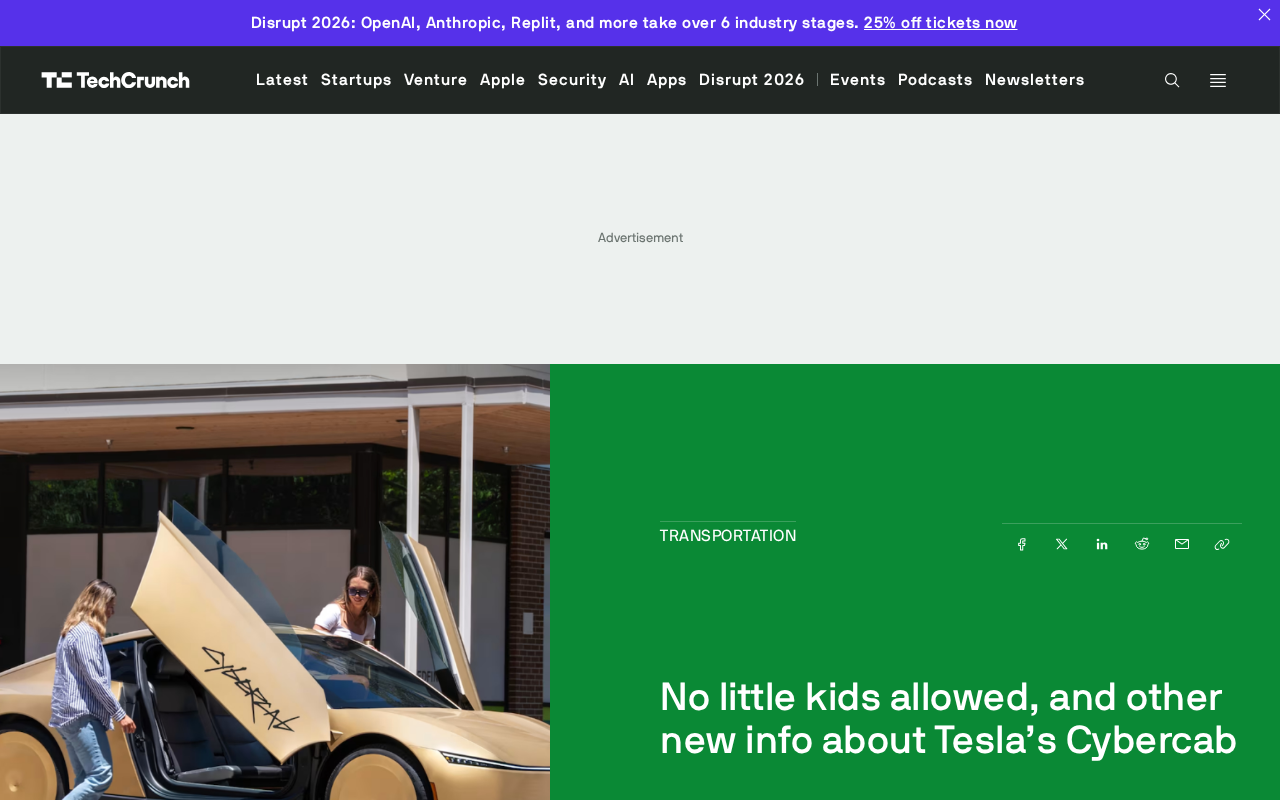
Tesla Cybercab Bans Children Under 13 — Even With a Parent Present
Tesla's Cybercab robotaxi bans riders under 13, even with a parent. The policy is stricter than Model Y robotaxis, driven by safety, liability, and operational concerns.
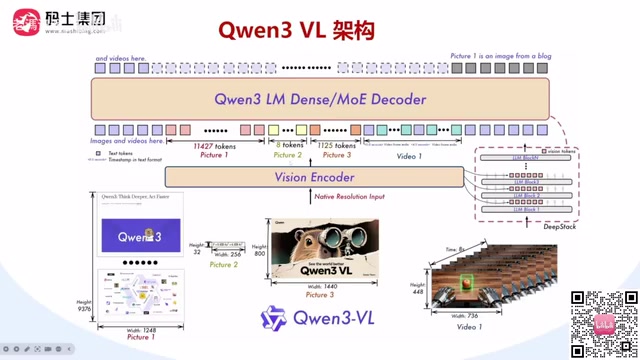
Qwen3-VL Local Deployment & Fine-Tuning in Practice: From Environment Setup to Circuit Board Recognition
A detailed guide to fine-tuning the Qwen3-VL vision-language model, covering VLM architecture, GPU selection, FlashAttention offline installation, circuit board dataset prep, and TF32 mixed-precision optimization.