Gemini Robotics 2 Empowers Apollo 2: How Whole-Body Intelligence Is Redefining Humanoid Robots

Gemini Robotics 2 powers Apollo 2's whole-body intelligence, advancing general-purpose humanoid robots.
Google DeepMind's Gemini Robotics 2 enables Apptronik's Apollo 2 humanoid robot to achieve whole-body intelligence, demonstrated through a complex equipment-packing task. By leveraging Vision-Language-Action (VLA) models, the system transforms natural language instructions into coordinated full-body movements. This hardware-AI collaboration paradigm represents a strategic approach to commercializing embodied intelligence, though challenges remain in bridging the gap between controlled demos and real-world deployment.
From Conversation to Action: The Accelerating Evolution of Embodied Intelligence
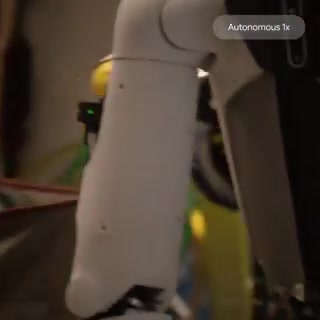
Google DeepMind's recently showcased Gemini Robotics 2 has once again pushed robotic embodied intelligence to new heights. In a public demonstration, Apptronik's humanoid robot Apollo 2, powered by Gemini Robotics 2's capabilities, completed a task that appears simple yet is extremely challenging — organizing and packing equipment needed for a sporting event.
Behind this task lies a core challenge in current robotics: how to enable a machine to understand intent, plan steps, and coordinate its entire body to complete complex actions in open, unstructured environments — just like a human would. The "whole body intelligence" demonstrated by Apollo 2 represents a key advancement in this direction.
Embodied Intelligence, as a core branch of artificial intelligence research, draws its philosophy from the theory of "embodied cognition" — intelligence is not merely abstract computation in the brain but is inseparable from physical interaction between the body and environment. This concept traces back to the 1980s when Rodney Brooks at MIT's Artificial Intelligence Laboratory proposed "behavior-based robotics," arguing that true intelligence must manifest through perception and action in the physical world. Current embodied intelligence research integrates deep learning, reinforcement learning, computer vision, and robotics, striving to enable robots to learn and adapt through continuous interaction with their environment, just as humans do.


What Is Whole-Body Intelligence? The Fundamental Difference from Traditional Robot Control
Beyond Single Manipulators: Global Coordination Capability
Traditional robot operations typically focus on precise control of a single end-effector (such as a robotic arm or gripper). Whole-body intelligence, by contrast, emphasizes the robot's ability to orchestrate all joints, the torso, and even the lower limbs during task execution, achieving human-like overall coordination.
Take packing sports equipment as an example. This task requires the robot to:
- Bend down to pick up items from the ground
- Turn and move to the storage location
- Adjust grasping posture based on object shape
- Shift its center of gravity when necessary to accomplish larger-range movements
These seemingly everyday operations actually demand a highly integrated perception-decision-action loop from the robot, far exceeding the fixed path planning of traditional industrial robots.
From a technical perspective, the Perception-Decision-Action Loop is the fundamental framework for autonomous robot behavior. The perception stage involves multi-sensor fusion (RGB-D depth cameras, force/torque sensors, Inertial Measurement Units or IMUs, etc.), requiring 3D environment reconstruction and object recognition within milliseconds. The decision stage needs to decompose high-level task goals into executable sub-goal sequences while handling uncertainty and physical constraints. The execution stage demands precise motion control, including inverse kinematics solving, collision avoidance, and compliance control. These three stages must operate in tight coupling at high frequencies (typically above 100Hz) — any delay or error in any stage can cause task failure. For whole-body motion, the computational complexity of this loop grows exponentially due to the increased number of degrees of freedom, which is precisely the core technical challenge of whole-body intelligence.
The Core Role of Gemini Robotics 2
Gemini Robotics 2 serves as the underlying Vision-Language-Action (VLA) model, providing Apollo 2 with the "brain" for understanding task semantics and generating action sequences. It can decompose high-level natural language instructions (such as "pack for the game") into a series of executable physical actions and dynamically adjust based on real-time visual input.
The Vision-Language-Action (VLA) model is one of the most important architectural breakthroughs in embodied intelligence over the past two years. In traditional approaches, a robot's perception, understanding, and execution are separate independent modules, with information bottlenecks and error accumulation between them. VLA models unify visual input (camera images), language understanding (natural language instructions), and action output (joint angles or end-effector trajectories) within a single end-to-end neural network. Google's previously released RT-2 (Robotics Transformer 2) was an early representative of VLA models, first demonstrating that large-scale pretrained vision-language models can directly output robot action tokens, achieving unified reasoning of "see it, understand it, do it." Gemini Robotics 2 further enhances spatial reasoning capabilities, long-horizon task planning, and multi-step action coherence on this foundation.
The core significance of this capability is that robots no longer depend on pre-programmed fixed procedures but can flexibly respond to environmental changes — this is precisely the essential path toward practical general-purpose robots.
Deep Integration of Hardware and AI: The Apptronik-Google Collaboration Paradigm
Why the "Hardware + Foundation Model" Combination
Apptronik specializes in humanoid robot hardware development, with its Apollo series robots demonstrating significant advantages in structural design and locomotion capabilities. Google DeepMind, meanwhile, provides industry-leading AI model capabilities. Their combination represents a typical collaboration paradigm in the current embodied intelligence field.
Apptronik is headquartered in Austin, Texas, and spun out of the University of Texas at Austin's Human Centered Robotics Lab. The company previously developed exoskeleton and humanoid robot technologies for NASA. The Apollo series humanoid robot stands approximately 1.7 meters tall, weighs about 73 kilograms, uses an electric drive system, and features high torque density and motion flexibility. Apollo 2 shows significant improvements over the first generation in joint degrees of freedom, perception system integration, and dynamic balance capabilities — particularly with dedicated optimization for coordinating upper-body dexterous manipulation with stable lower-body locomotion, making it an ideal hardware platform for validating whole-body intelligence.
This division of labor allows both parties to focus on their core strengths:
- Hardware manufacturers solve physical implementation challenges (joint precision, torque control, structural strength)
- AI companies solve intelligent decision-making challenges (task understanding, motion planning, environmental adaptation)
Apollo 2's performance demonstrates that when a powerful motion control platform meets an advanced VLA model, the robot's task generalization capability can be significantly enhanced.
From Demo to Deployment: The Reality Gap Still to Be Crossed
A realistic perspective is necessary: despite impressive demonstration videos, a gap remains between success in laboratory environments and stable deployment in the real world. The equipment-packing scenario is relatively controlled, with item types, lighting conditions, and interference factors optimized to some degree.
The real challenges lie in:
- Whether robots can maintain reliability across ever-changing real-world scenarios
- Whether they can properly handle unexpected and anomalous situations
- Whether they can complete tasks at reasonable cost and speed
These are all thresholds that must be crossed for embodied intelligence commercialization.
Industry Significance and Future Outlook of Embodied Intelligence
The Vision for General-Purpose Humanoid Robots
The collaboration between Gemini Robotics 2 and Apollo 2 points toward a grander vision: general-purpose humanoid robots capable of diverse physical tasks. From home services to industrial manufacturing, from logistics warehousing to healthcare, the application potential of embodied intelligence covers virtually every scenario requiring physical manipulation.
Currently, numerous players including Tesla Optimus, Figure, and multiple Chinese manufacturers are racing to advance humanoid robot development. The global humanoid robotics sector is in an unprecedented period of intense competition: Tesla's Optimus leverages manufacturing supply chain advantages and AI capabilities accumulated from its autonomous driving team for rapid iteration; Figure has secured investment from tech giants including OpenAI, Microsoft, and NVIDIA, with its Figure 02 robot already undergoing field testing at BMW factories; Boston Dynamics' all-electric Atlas represents the current ceiling of locomotion capabilities. In the Chinese market, companies like Unitree Robotics, AGIBOT, Fourier Intelligence, and Xpeng Robotics are also accelerating their efforts. The industry widely anticipates 2025-2027 as the critical window for humanoid robots to transition from laboratories to small-batch commercial deployment, with initial applications concentrated in manufacturing production lines, logistics sorting, and hazardous environment operations.
Google's approach of entering this arena through AI model capabilities and expanding influence by empowering hardware partners is a strategically astute move. This "AI-as-a-service" model allows Google to avoid the heavy-asset risks of hardware manufacturing while acquiring large volumes of real-world robot interaction data through partnerships, creating a data flywheel effect.
The Paradigm Shift Driven by Foundation Models
From a broader perspective, Gemini Robotics 2 represents the trend of foundation model technology extending from the purely digital world into the physical world. When language models learn to "see" and "move," AI is no longer confined to on-screen conversations and generation — it begins to truly interact with the physical world.
This extension faces the unique challenge of the "Reality Gap." In the digital world, the cost of model output errors is extremely low — an incorrect text can simply be regenerated. But in the physical world, erroneous actions can lead to hardware damage, environmental destruction, or even personal injury. This requires physical AI to possess stronger safety constraints and uncertainty handling capabilities. Current solution paths include: large-scale simulation training followed by sim-to-real transfer, collecting demonstration data through human teleoperation, and progressive safe exploration learning in real environments. Gemini Robotics 2's breakthrough lies in demonstrating that the rich world knowledge contained in pretrained foundation models can be effectively transferred to physical task planning, thereby dramatically reducing the specialized training data required for robots on each new task.
The profound impact of this transformation is difficult to fully predict, but it is certain that embodied intelligence will become one of the most important frontier directions in AI over the coming years. Apollo 2's equipment-packing demonstration may be just a glimpse of this revolution.
Conclusion
The demonstration of Gemini Robotics 2 enabling Apollo 2 to achieve whole-body intelligent packing tasks showcases the enormous potential of integrating AI foundation models with robotic hardware. Although there is still distance between demonstrations and large-scale deployment, this advancement undeniably provides strong technical evidence for the future of general-purpose humanoid robots. As VLA model capabilities continue to improve and hardware platforms mature, the day when embodied intelligence truly integrates into daily life is rapidly approaching.
Related articles

The Complete Machine Learning Learning Roadmap: From Anxiety to Clarity
Overwhelmed by machine learning? This practical ML roadmap breaks the journey into three phases—math basics, classical ML, and deep learning—with mindset tips and project strategies for engineers.

Smear Campaign Against a Legal MIT Fork? The Legal and Ethical Boundaries of Open Source Forking
A developer legally forked a MIT-licensed project and allegedly faced sock puppet smear reviews. This article explores the legal and ethical boundaries of open source forking vs. plagiarism.

A Game With No Assets: Generating All Graphics and Sound Effects in Real-Time Using Sine Waves
Indie developer Zanzlanz built a game with zero asset files—all textures and sounds are generated in real-time using sine wave math functions. Exploring the tech behind procedural generation.