George Lam's 'I Wish to Go with the Wind' Original: Jim Croce's 1972 Classic 'I'll Have to Say I Love You in a Song'

George Lam's 'I Wish to Go with the Wind' originates from Jim Croce's 1972 folk song, reflecting the hidden connection between 1970s Western folk and Hong Kong pop.
The article traces George Lam's 'I Wish to Go with the Wind' to its original, Jim Croce's May 1972 release 'I'll Have to Say I Love You in a Song.' The original uses a colloquial 'late-night call' narrative to express the awkwardness of 'having nothing to say when near you,' with a gentle melody and relaxed enunciation characteristic of folk. The Cantonese adaptation retains the melodic skeleton but weakens the original's self-referential 'confession through song,' focusing instead on emotional unfolding. This 'Western melody with Chinese lyrics' approach was common in 1970s-80s Hong Kong. The article notes that juxtaposing the two versions clearly shows how the same melody is reshaped across languages and cultural contexts, while the emotion of 'unspoken love' itself needs no translation.
George Lam's 'I Wish to Go with the Wind' has been sung in the Chinese music scene for many years, but many may not know that its original comes from American singer-songwriter Jim Croce's 'I'll Have to Say I Love You in a Song,' released in May 1972. How did a folk song about 'love that can't be spoken' cross languages and eras to become nourishment for Cantopop? Behind this lies both a coincidence of songwriting techniques and a hidden connection between 1970s Western folk and Hong Kong pop music.
A Love Song That 'Can't Express Itself'
The core emotion of 'I'll Have to Say I Love You in a Song' is not complex: when facing the person they admire, the singer always runs out of words at the crucial moment. 'Every time I try to tell you the words just came out wrong,' so the only option is to write the love into a song. This awkwardness of 'the more you care, the harder it is to say' is almost the simplest and most effective angle in love song writing.
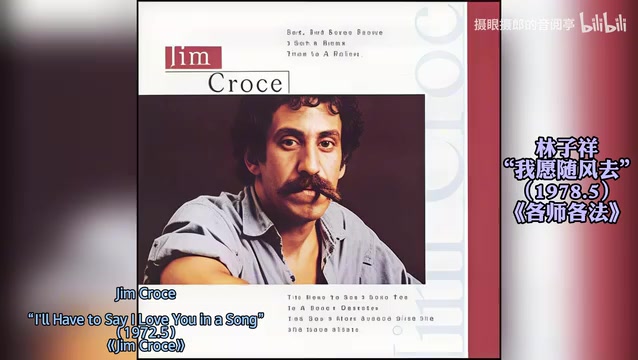
Jim Croce's approach carries clear folk narrative characteristics: a gentle melodic line, relaxed enunciation, like speaking softly into a telephone receiver. The line 'It's kind of hope I didn't wake you' directly pulls the scene into a private moment of a late-night call—not a confession on stage, but a heartfelt word in the crevices of life. This colloquial expression makes the whole song sound more like a letter sung out than a finely crafted lyric poem.
Jim Croce was an American folk and soft rock singer active from the late 1960s to the early 1970s. His work is known for concise storytelling, everyday scenes, and warm melodies, with representative songs including 'Time in a Bottle' and 'Bad, Bad Leroy Brown.' 'I'll Have to Say I Love You in a Song' was included in his album 'Life and Times,' released later in the same year after 'You Don't Mess Around with Jim' in May 1972, and is one of his commercially successful singles. Croce died in a plane crash in 1973 at the age of 30, adding a layer of legend to his work. His musical style is usually classified in the 'singer-songwriter' tradition, emphasizing personal expression and guitar accompaniment, and has deeply influenced later folk pop.
From Folk to Cantopop: A Cross-Language Translation
George Lam's 'I Wish to Go with the Wind' retains the melodic skeleton of the original, fills it with Cantonese lyrics, and shifts the emotional tone from 'a confession in a late-night call' to a lyrical expression more in line with Cantopop aesthetics. This practice of 'Western melody with Chinese lyrics' was not uncommon in the Hong Kong music scene of the 1970s and 1980s, but the reason 'I Wish to Go with the Wind' endured lies in Lam's singing style: his voice carries a restrained tenderness that resonates with the 'wanting to say but unable to express' quality of the original.
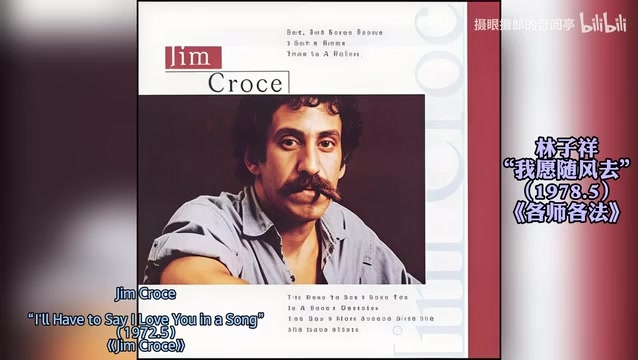
Interestingly, the original's chorus 'So I have to say I love you in a song' loses the literal self-referential layer of 'saying I love you with a song' in translation—the Cantonese version no longer emphasizes 'song' as a medium of confession, but focuses more on the unfolding of emotion itself. This is both a loss in translation and a freedom in adaptation: Chinese listeners remember the melody and emotion, not the original's meta-narrative about 'writing a song.'
'Western melody with Chinese lyrics' is an important phenomenon in the history of Cantopop. In the 1970s and 1980s, the Hong Kong music industry extensively adopted melodies from Western and Japanese pop songs, with local lyricists writing new Cantonese lyrics, forming what is called 'adapted songs.' This practice stemmed partly from a shortage of local original works and partly because familiar melodies were more easily accepted by listeners. Singers such as Sam Hui, George Lam, and Alan Tam all performed many adapted songs. The tonal fit between Cantonese lyrics and melody is highly demanding, and lyricists often need to reconstruct sentences that conform to Cantonese phonetic rules while preserving the original's emotion, making the adaptation process itself a form of re-creation.
Why This Song Deserves to Be Revisited
Placing 'I'll Have to Say I Love You in a Song' back in the context of 1972, it is not among Jim Croce's most famous works, but it represents a typical creative path: using a minimalist scene and an extremely light melody to carry an emotion that can hardly be expressed directly in words. This path has deeply influenced later creators—when language fails, music itself becomes the vessel.
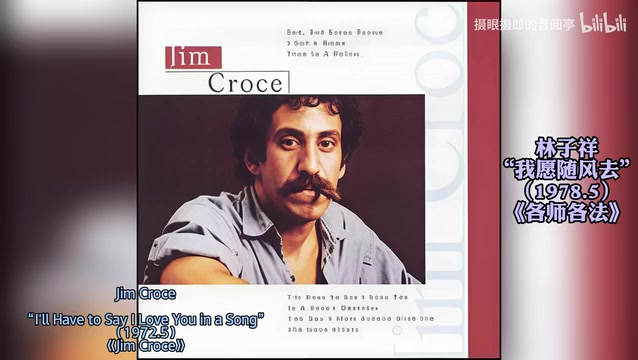
For today's listeners, the value of revisiting the original lies in 'comparison.' Placing George Lam's Cantonese version alongside Jim Croce's original clearly shows how the same melody is reshaped in different languages and cultural contexts. The line 'Every time I'm near you I just run out of things to say' is almost the key to the whole song: when I'm near you, I have nothing to say. This emotion transcends language and needs no translation.
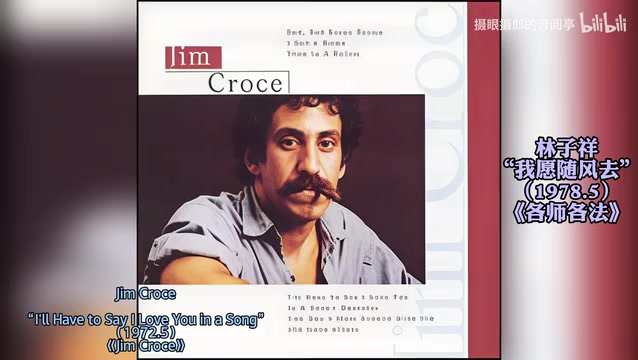
If you are familiar with George Lam's version, you might want to go back and listen to the 1972 original. It has no elaborate arrangement, no deliberate sentimentality—just a creator in the deep of night, singing out the unspoken words one by one. This is probably why it has been repeatedly covered and retold in different languages.
Related articles

Hermes Agent Beginner's Guide: Hands-On with a Self-Evolving AI Agent
A beginner's guide to Hermes Agent, the open-source self-evolving AI agent that gained 41.7K GitHub stars in two months—covering Harness Engineering, the learning loop, three-layer memory, WSL installation, and hands-on configuration.

AI Agent in Action: Building a Smart Office Assistant with WorkBuddy
A practical case study shows how Tencent WorkBuddy batch-converts and archives files, compares chat LLMs with AI Agents, and analyzes WorkBuddy's credit system, use cases, and positioning for office automation selection.

From Single-GPU Bottlenecks to Hundreds of Billions of Parameters: 6 Key Questions in Large Model Distributed Parallelism
Based on a Bilibili tutorial, this article organizes core knowledge of large model distributed parallelism: starting from decoder-only architecture's token-by-token generation and the essence of X times W computation, it analyzes six key questions including data parallelism, tensor parallelism, and pipeline parallelism under single-GPU bottlenecks. Suitable for learners in private deployment and model training scenarios to build systematic understanding.