Germany's Rheinmetall Open-Sources Its Battlesuite Weapon Interconnect Protocol: Defense Software Goes Open
Rheinmetall open-publishes its Battlesuite weapon system API, staking a claim over military interoperability standards via open-ecosystem strategy.
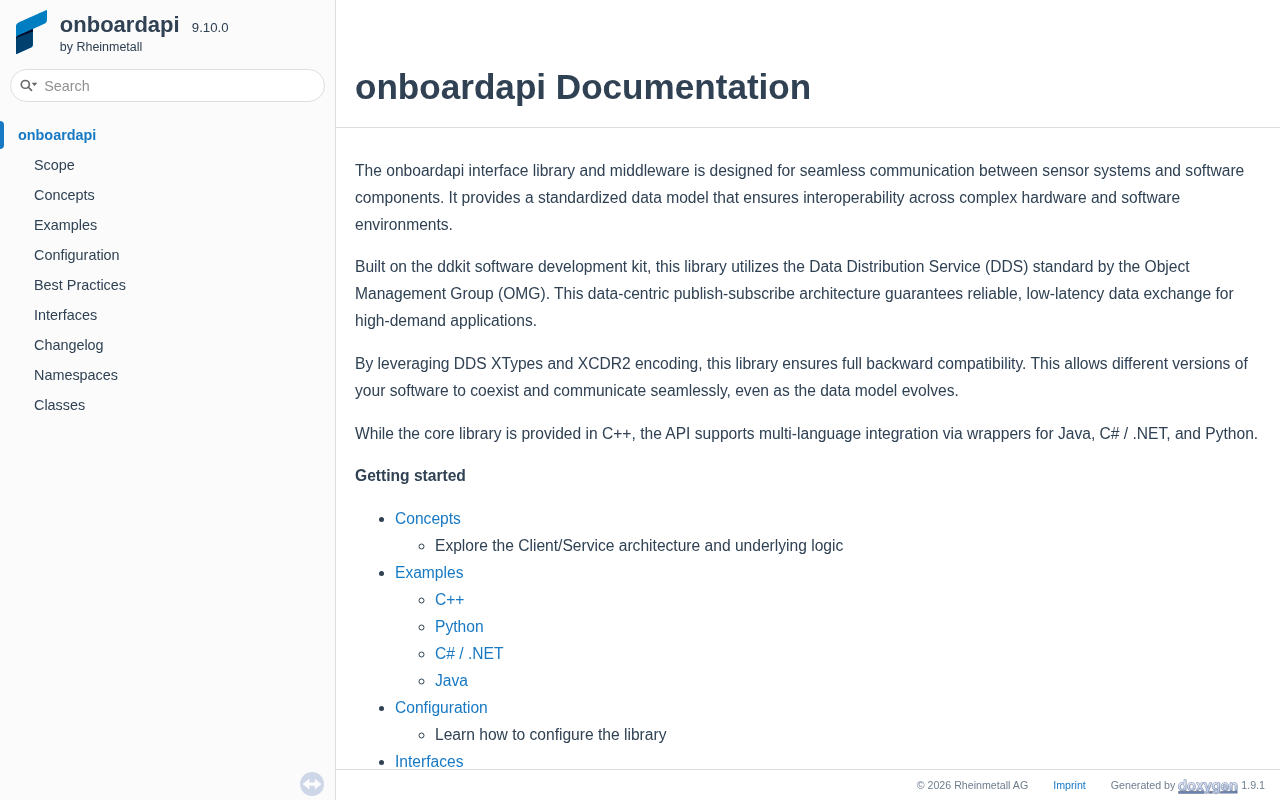
German defense giant Rheinmetall has published the OnBoard API protocol documentation (v9.10.0) for its Battlesuite connected weapon system on GitHub Pages, drawing widespread attention from the tech community. The release exposes the interface specification — how to talk to the system — not source code or weapon designs. The goal is to attract third-party integrators and allied nations into its platform ecosystem, applying the open-API playbook familiar from commercial software to compete for influence over military interoperability standards. Modern battlefield demands for rapid multi-nation coordination are the core driver. At the same time, networked weapon systems amplify cybersecurity risks and raise questions about weapon controllability. The episode reflects the accelerating software-defined transformation of defense equipment, as semantic versioning and GitHub hosting become the new normal for legacy defense contractors.
German defense giant Rheinmetall recently published the OnBoard API protocol documentation for its Battlesuite connected weapon system — a move that sparked heated discussion on Hacker News, garnering 264 upvotes and nearly a hundred comments. The public release of a core communication protocol from the defense sector in open document form is, in itself, a noteworthy event.
What Are Battlesuite and the OnBoard API?
Based on the documents Rheinmetall has published, the OnBoard API is the communication interface specification within the Battlesuite ecosystem, designed to connect weapon platforms, sensors, and combat management systems. Hosted on GitHub Pages at version 9.10.0, the documentation follows the organizational conventions common in modern software engineering — a clear signal that Rheinmetall is treating military hardware as a programmable, integrable software platform.
The core idea behind a "connected weapon system" is enabling dispersed fire control, detection, and command units to share data through a unified protocol. Historically, these interfaces were proprietary to each vendor and siloed from one another, making cross-platform coordination difficult. A public API specification means third-party system integrators, allied nations' equipment, and software developers can all implement against the documented interface.
Why Would a Defense Contractor Open Its Protocol?
The defense sector has long been synonymous with secrecy, so publishing protocol documentation might seem counterintuitive — but the commercial and strategic logic behind it is straightforward.
Opening an interface specification is not the same as open-sourcing code or weapon designs. What Rheinmetall has published is the rulebook for "how to talk to the system," not the system's internal implementation. The software industry has well-established precedent for this: opening an API is a way to attract ecosystem participants, encouraging more devices and systems to integrate with your platform and thus solidifying your position as the platform of record.
For the modern battlefield, interoperability has become a hard requirement. Multi-national joint operations under the NATO framework demand that equipment from different countries and vendors can be rapidly integrated. A documented, standardized protocol significantly reduces integration costs and makes Rheinmetall's platform easier for procurement agencies to select. From this angle, opening the protocol is a bid for influence over industry standards.
Interoperability in the NATO context is backed by a dedicated standardization framework. NATO's STANAG (Standardization Agreement) series mandates that member-state equipment meet minimum compatibility standards at the communication, data link, and tactical data exchange layers. History offers sobering lessons from coordination failures caused by incompatible equipment — such as multi-national operations where mismatched data formats prevented shared situational awareness. Rheinmetall's decision to publish its API specification can be read as a commercial-ecosystem complement to STANAG, further lowering integration barriers beyond what the formal standard requires. It allows prospective buyers to evaluate integration feasibility without enduring lengthy custom development cycles. This "open docs first, negotiate contracts later" approach closely mirrors the developer-ecosystem playbook used in the tech industry.
What the Community Is Discussing
The conversation on Hacker News reflects the complex sensibilities typical of a technical community. The nearly hundred comments range from curiosity about a weapons system adopting modern software engineering practices to debate over the security and ethical implications of networked weapon systems.
Some engineers focused on the technical layer: what does a weapon system's API actually look like, what authentication and data formats does it use, and how does it compare to civilian IoT protocols? Bringing battlefield equipment into the software-defined paradigm is, in itself, a fascinating object of technical observation.
Other threads touched on deeper issues. Networking weapon systems enables greater coordination, but it also expands the attack surface — and in this context, cybersecurity is no longer just about data breaches; it directly concerns weapon controllability. This is why the public release of a connected military system's protocol invites especially careful scrutiny.
The attack surface problem in weapon systems has concrete real-world precedents. In 2015, American security researchers demonstrated remote control of a Jeep Cherokee through its in-vehicle network — and the threat landscape for networked military equipment is far more severe than anything in the civilian world. Adversaries with nation-state resources can execute targeted jamming, protocol spoofing, or supply-chain implant attacks. A compromised connected weapon system risks not just data exfiltration but also command falsification, sensor data manipulation, or unintended weapon activation. This is precisely why military communication protocols typically incorporate encryption and authentication at both the physical and protocol layers, and are generally operated on isolated networks (air-gapped or dedicated tactical nets) rather than the public internet.
A Signal of Defense Software's Transformation
Rheinmetall's move makes most sense when viewed against a broader backdrop: modern defense equipment is undergoing a profound software-defined transformation. From software-defined radio to software-defined weapon platforms, hardware differentiation is increasingly giving way to competition at the software and ecosystem level.
Publishing API documentation, hosting on GitHub, iterating with semantic versioning — these are quintessential software product practices, and their appearance in a traditional defense contractor signals an accelerating convergence between defense and commercial software engineering. For observers tracking the intersection of technology and defense, this documentation offers a rare window into how military systems are borrowing from the open-ecosystem playbook.
It's worth noting that public documentation does not mean anyone can actually connect to or operate these systems — real deployments remain strictly controlled. But the act of publishing the protocol itself already reflects a strategic shift in the defense industry toward interoperability and ecosystem building.
The concept of the Software-Defined Weapon Platform has gained broad traction in the defense industry in recent years. Its core principle is abstracting capabilities once locked in hardware or firmware into upgradeable, reconfigurable software modules. The U.S. Department of Defense's Joint All-Domain Command and Control (JADC2) initiative and Europe's multi-domain operations frameworks both emphasize real-time data fusion across platforms and services — which requires standardized underlying communication protocols. Rheinmetall's Battlesuite was born from exactly this requirement: using a unified API to bring tanks, drones, artillery systems, and command centers into a single digital ecosystem, enabling commanders to orchestrate heterogeneous assets through one interface. This architectural philosophy has clear conceptual parallels with microservices architecture in cloud computing.
Related articles

The Siberian Ice Maiden and the Archaeological Mysteries of the Scythian World
The Siberian Ice Maiden is a Scythian female mummy from the Ukok Plateau. Her tattoos, silk garments, and grave goods reveal ancient nomadic art, social hierarchy, and cross-regional trade — alongside ongoing repatriation controversies.
SQL Row Pattern Matching: Implementing "Row-Level Regex" with MATCH_RECOGNIZE
MATCH_RECOGNIZE gives SQL regex-like power over row sequences. Detect brute-force attacks, fraud patterns, and user behavior flows with clean, declarative syntax — no more messy self-joins.
Hackers Break Into Flock Surveillance Cameras, Exposing the Inner Workings of License Plate Recognition Systems
Hackers breached Flock Safety's ALPR cameras, exposing how license plate recognition systems collect data and the privacy and security risks they pose.