Getting Started with AgentScope 2.0 Private Deployment: Deconstructing the Core Mechanisms of an Enterprise-Grade Multi-Agent Framework
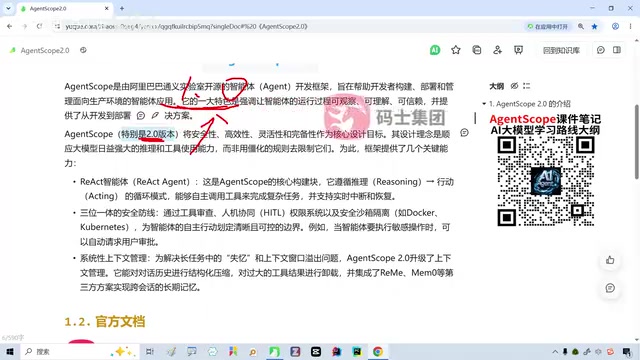
Deconstructing AgentScope 2.0's positioning, ReAct agents, three-dimensional security line, and context management.
The article systematically outlines AgentScope 2.0's positioning and core capabilities as a production-oriented agent development framework. It first distinguishes chatbots from Agents and explains that Agents' autonomous thinking, tool calling, and multi-step task execution raise development and control complexity — the very reason frameworks exist. The core capabilities fall into three parts: ReAct agents with a think-act-observe-rethink loop, wrapped with engineering support for tool calling, streaming, and interruption recovery; a three-dimensional security line of tool review, human-in-the-loop, and sandbox isolation; and systematic context management to handle context bloat in long tasks. It closes with learning path advice: start directly with 2.0, and use the Python and Java versions with official bilingual documentation for self-study.
This article is based on a public instructional video and systematically breaks down the positioning and core design of AgentScope 2.0, helping developers quickly build a cognitive map of an enterprise-grade agent development framework.
From Chatbots to Agents: Why a Development Framework Is Needed
An ordinary chatbot is only responsible for "answering questions," while an Agent can think autonomously, call tools, and execute multi-step tasks. For example, if you ask an Agent to analyze sales data and send a report by email, it will automatically read the data, run Python analysis, and call the email tool. The stronger the capabilities, the higher the complexity of development and control — how do you ensure the Agent doesn't "go off the rails," and how do you pinpoint the exact step when something goes wrong? This is precisely the problem that agent development frameworks are meant to solve.
AgentScope's positioning can be summarized as: helping developers build, deploy, manage, and run Agents — it is a production-oriented agent development framework.
Deconstructing the Core Capabilities of AgentScope 2.0
ReAct Agent: A Loop Mode of Thinking While Acting
ReAct is not the front-end framework React; it is a combination of Reasoning and Acting. Take "check the weather in Beijing and decide whether to bring an umbrella" as an example: the Agent first thinks that it needs weather data, then calls the weather tool, observes the returned result and continues thinking, and finally gives a recommendation. For complex tasks, this "think → act → observe → think again" loop is executed repeatedly — for example, first reading a web page, then running Python to analyze the data, until the final result is obtained.
AgentScope provides engineering encapsulation around capabilities such as tool calling, streaming execution, and interruption recovery for this mode, making it better suited to complex task scenarios.
Tool Calling (Function Calling) is the key mechanism that makes the ReAct mode practical. Large models themselves can only generate text and cannot directly read files, execute code, or query databases. Tool calling lets the model structurally declare in its output "I want to call a certain tool with certain parameters," which the framework layer parses and actually executes, then passes the result back to the model. Therefore, a complete Agent behavior often includes: the model generates a tool call request, the framework executes it, the result is fed back, and the model continues reasoning. AgentScope provides unified encapsulation for tool description registration, parameter validation, result injection, and exception handling, so developers only need to define tool functions according to the specification to plug into the ReAct loop.
Streaming execution and interruption recovery are also engineering priorities. Streaming execution means the model's output is returned as it is generated, so users can see the thinking and acting process in real time and avoid long waits; interruption recovery means saving state when a task is halfway through (such as waiting for human approval, a process crash, or context overflow) and then continuing from the breakpoint instead of rerunning from scratch. These two capabilities are especially critical for long tasks and high-availability scenarios.
Three-Dimensional Integrated Security Line: Keeping High-Privilege Agents Under Control
When an Agent has the authority to delete files, execute code, operate databases, send emails, or even call internal systems, the risk of fully autonomous operation cannot be ignored. AgentScope builds its security line at three levels:
- Tool review: checks calls to sensitive tools; ordinary tools can be executed directly, while high-risk operations need to be intercepted or further validated.
- Human-in-the-loop: humans make the final decision on key steps — for example, a delete operation must be approved by an administrator before execution; approval means continue, rejection means stop.
- Sandbox isolation: provides an isolated runtime space for the Agent so that code execution and file processing affect the host system as little as possible.
The three mechanisms can be used together, respectively answering "can it be done," "is it allowed to be done," and "where can it be done safely."
A Sandbox is a restricted execution environment, typically implemented through containers, virtual machines, or dedicated runtimes, imposing limits on the file system, network access, system calls, and resource usage. Code generated by the Agent runs inside the sandbox; even if the code is faulty or malicious, the impact is confined to the isolated space, and the host and other services are unaffected. The difference between the sandbox and tool review is that tool review decides "whether this operation is allowed to be initiated," while the sandbox decides "how much impact this operation can cause," and the two are complementary rather than substitutes.
Human-in-the-loop refers to embedding human confirmation nodes in automated workflows. In engineering terms, the framework needs to be able to pause Agent execution, present the operation awaiting approval and its context to the approver, and then resume or terminate the workflow after receiving approval or rejection. This requires the framework to have state persistence and breakpoint-resume capabilities; otherwise, the waiting time for human approval would prevent the task from continuing.
Systematic Context Management: Coping with Information Bloat in Long Tasks
When an Agent works for a long time, it accumulates a large amount of context: searching web pages many times, repeatedly calling tools, and reading large numbers of files quickly fill up the context window, drowning out key information. AgentScope provides a variety of context management methods to address this problem, and this is also a key module in subsequent learning.
A Context Window refers to the upper limit on the total number of tokens that a large model can receive in a single inference, including all content such as system prompts, historical conversations, and tool return results. It has a hard limit; once exceeded, it must be truncated or compressed, otherwise the request will fail. In long tasks, web page bodies, code output, and file contents are often enormous, and just a few rounds can approach the limit.
Common context management strategies include: summarizing and compressing historical messages, evicting old content based on importance or timeliness, offloading large results to external storage and retaining only references, and truncating and structurally extracting tool returns. The core trade-off of these strategies is "how much raw information to retain" versus "how much window space to save," and the choice needs to be made according to the task type. AgentScope makes these methods into composable modules precisely so that developers can allocate them by scenario rather than applying a one-size-fits-all approach.
Version Selection and Learning Path Recommendations
AgentScope 2.0 has undergone major changes compared with 1.0, and a large number of APIs have been deprecated — it has been described as a "devastating" change: developers who learned 1.0 will feel that their previous accumulation has been overturned when learning 2.0. For new learners, it is fine to start directly with 2.0, because 2.0 is already production-ready.
The framework provides both a Python version and a Java version. Current mainstream instructional content is mainly based on the Python version; developers with a Java background can extend it themselves according to the official documentation. The official documentation supports switching between Chinese and English, so developers with strong self-learning ability can learn mainly from the documentation, with courses as a supplement.
Conclusion
AgentScope 2.0, centered on the three major capabilities of ReAct agents, the three-dimensional security line, and context management, provides developers with a production-oriented engineering foundation for agents. Understanding these core mechanisms is a prerequisite for subsequent private deployment and multi-agent implementation practice.
One-line Summary
Deconstructing the positioning, ReAct agents, three-dimensional security line, context management, and other core designs of AgentScope 2.0.
Paragraph Summary
The article systematically sorts out the positioning and core capabilities of AgentScope 2.0 as a production-oriented agent development framework. First, it distinguishes chatbots from Agents, pointing out that Agents can think autonomously, call tools, and execute multi-step tasks, which brings rising complexity in development and control — precisely the reason the framework exists. The core capabilities fall into three parts: ReAct agents adopt a "think → act → observe → think again" loop mode, suitable for complex multi-step tasks, and the framework provides engineering encapsulation around tool calling, streaming execution, and interruption recovery; the three-dimensional integrated security line consists of tool review, human-in-the-loop, and sandbox isolation, respectively answering "can it be done," "is it allowed to be done," and "where can it be done safely"; systematic context management is used to address the problem of key information being drowned out by context bloat in long tasks. Finally, it gives learning path recommendations: 2.0 has a large number of deprecated APIs compared with 1.0, and new learners should start directly with 2.0; the framework provides Python and Java versions, with Python instruction as the main focus, and self-study can be combined with the official Chinese and English documentation.
Related articles
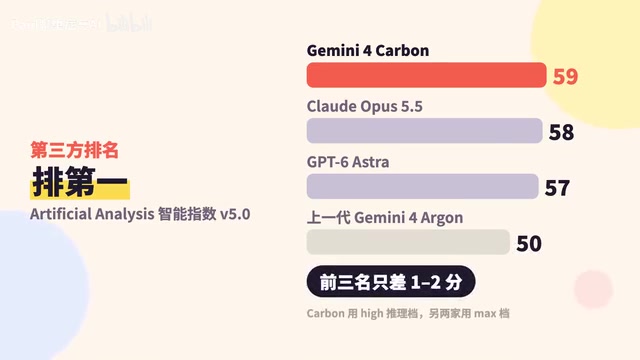
Google Releases Gemini 4 Carbon: Its Strongest Model Yet, Debuting with a Cybersecurity Focus
Google releases Gemini 4 Carbon, calling it its strongest model, with a cybersecurity focus. It tops the third-party composite ranking at 59 points but leads by only one or two. This article analyzes its security test results, staged rollout, token pricing, and the divergence between self-reported and third-party tests on hallucinations.

LangChain Adds SchemagateRetriever: On-Demand Table Retrieval Cuts Text-to-SQL Prompts by 92.9%
LangChain docs add SchemagateRetriever: retrieves only the tables needed for text-to-SQL with permission filtering, cutting median prompt size by 92.9% on Spider 2.0 large schemas via offline BM25 selection with no model calls.

Multi-Step AI Agent Guardrail in Practice: Fact-Change Detection Drives False-Alarm Rate to 0%
Developer shares first version of a multi-step AI Agent guardrail: re-verifying dependency facts before irreversible actions cut false alarms from 50% to 17% across 23 scenarios, then to 0% via conservative normalization without lowering catch rate. Runs on local qwen2.5-7b.