Getting Started with Claude Code: Comparing AI Coding Tools and Choosing the Right One

A beginner's guide to Claude Code and how it compares to Cursor, Trae, and Codex.
Claude Code is Anthropic's AI coding assistant that reads your entire project as context and automatically debugs errors—unlike conversational tools limited to code snippets. This guide compares it with Cursor, Trae, and Codex, and offers practical advice on choosing the right AI coding tool for your needs.
What Is Claude Code
Claude Code is an AI coding assistant developed by Anthropic. Unlike traditional conversational programming tools, it doesn't require logging into any website—you can use it right after installing it locally, and it integrates seamlessly into the IDE you're already familiar with. The whole setup process is remarkably straightforward.
It also boasts solid system compatibility—it supports virtually all mainstream operating systems. Understated on the outside but powerful on the inside, this is precisely why it has quickly gained popularity in the developer community.
The Fundamental Difference from Conversational Programming
Many people's first reaction is to ask: can't I already write code with DeepSeek or ChatGPT? There's a key distinction worth clarifying here.
Conversational programming (such as opening the DeepSeek client or the ChatGPT web page) can only return code snippets. Once you have the code, you still need to manually go back to your project to run and test it, and whether it actually works is anyone's guess. If something goes wrong, you can only keep going through multiple rounds of conversation to adjust it, which is limited in efficiency.
More importantly, conversational AI cannot read the full context of your project. Suppose your project contains 100 code files—it simply can't see them, and you have to manually cut and paste relevant information to feed it bit by bit.
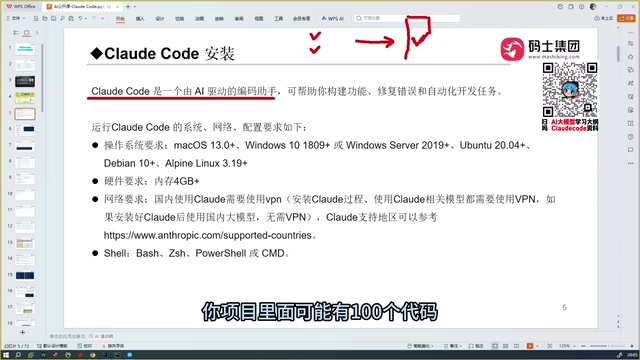
This is exactly where Claude Code's differentiated capability shines: it can read through the entire contents of your project, handing the complete codebase to the large model as context, thereby generating code that truly aligns with your business logic. Going a step further, it can also automatically debug and fix errors, iterating continuously until it produces an accurate, usable version—this is what a truly automated programming tool means.
The Evolution of AI Coding Tools
To understand why Claude Code is so powerful, it's worth reviewing the trajectory of AI coding assistants over the past few years.
From Copilot to Cursor
The first to draw widespread attention was GitHub Copilot (backed by OpenAI's technology). It appeared as an IDE plugin and began gaining popularity around 2023. At the time, developers used it for automatic code completion and generally found it revolutionary—this was the first wave of AI-assisted programming.

Subsequently, the arrival of Cursor had an equally explosive effect. It was smarter than Copilot and could already achieve automated coding, with capabilities on par with today's Claude Code.
The Newcomers: Trae, OpenCode, and Codex
More competitors emerged afterward. Trae is split into an international version and a domestic version—developers in China can simply use the domestic version. Trae has undergone extensive optimization for Chinese and understands Chinese requirements quite well, and for a time it was regarded as the most handy coding tool among Chinese programmers.
OpenCode is also an AI coding tool, but based on actual user experience, it has a relatively higher learning curve among products of its kind, so it isn't a key recommendation in this article.
Meanwhile, Codex (paired with OpenAI's GPT series models) is equally impressive. From a comparative experience standpoint, Codex configured with OpenAI models is, in theory, more than capable of rivaling Claude Code in programming ability.
Why Claude Code Stands Out
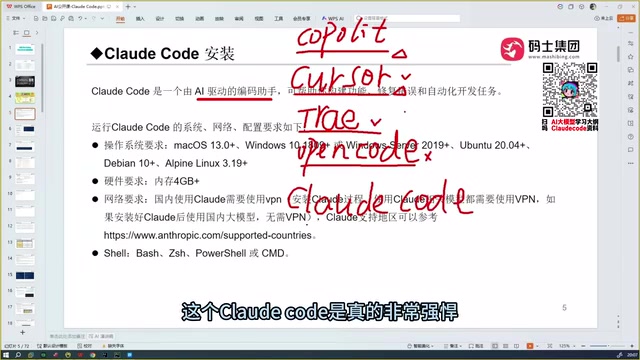
After hands-on comparative use of multiple tools including Copilot, Cursor, and Trae, the overall assessment is: Claude Code is currently the best of its kind.
The Ceiling of Coding Ability Depends on the Underlying Large Model
Why this conclusion? The core logic is: the upper limit of every AI coding assistant's capability essentially depends on the underlying large model it relies on.
Behind Claude Code is Anthropic's Sonnet series of models, which perform remarkably well on code generation tasks, and Anthropic also has even more powerful models available to call. By comparison, Trae's biggest advantage is that it's free to use in China, but its code accuracy isn't always satisfactory—when it comes to slightly complex or niche technical scenarios, the generation quality tends to drop.
Accuracy: The Key Dimension That Sets Them Apart
Cursor and Trae also have automated programming capabilities, but the most striking impression during actual use of Claude Code is: its accuracy is significantly higher. Not only can it read through the entire project context and automatically troubleshoot errors, but it also maintains code correctness consistently across multiple rounds of iteration—this puts it a level above Trae.
For this very reason, many programmers develop a strong "sense of crisis" after using Claude Code extensively—AI is now able to independently complete coding and debugging work that once required substantial human effort. The sheer strength of this capability is also the fundamental reason it has been widely shared and gone viral within the community.

Summary and Selection Advice
All things considered, AI coding tools have evolved from the initial "code completion" stage to a new phase of "full-project automated development." For different needs, here are the selection recommendations:
- For those seeking accuracy and a complete development experience: Prioritize Claude Code, especially suited for complex engineering scenarios that require reading the entire project context.
- For those prioritizing Chinese comprehension on a limited budget: The domestic version of Trae is a free option worth considering, but you'll need to accept some compromise in code accuracy.
- For those already invested in the OpenAI ecosystem: Codex paired with the GPT series models is also worth trying, with overall capabilities close to Claude Code.
It's worth emphasizing that even Claude Code, currently the strongest performer, is not one hundred percent perfect—the code it generates still needs to be reviewed and vetted by developers. AI is a powerful collaborative tool, but engineering judgment always remains in human hands. Only by clearly understanding the capability boundaries of each tool can you truly unlock their value.
Related articles

Disaster and Glory of the Apollo Program: The History We Must Revisit Before Returning to the Moon
From the fatal Apollo 1 fire to Apollo 8's daring lunar orbit to Apollo 11's successful landing—revisiting the disasters, fears, and compromises of the Apollo program and their lessons for today's return to the Moon.

Netflix Trust Exercise Turns Into Firing Trap: Where Are the Boundaries of Corporate Trust?
A Netflix employee was fired after sharing private info in a trust exercise. We analyze the risks of corporate trust exercises and how employees can protect themselves.

AMD CDNA5 Architecture Deep Dive: Technical Evolution and the AI Computing Competition Landscape
Deep analysis of AMD's CDNA5 architecture covering Chiplet packaging upgrades, HBM memory evolution, and low-precision compute optimization, examining how AMD challenges NVIDIA's AI chip dominance.