Getting Started with Claude Code: Full Project Context Understanding and Why It Beats Cursor and Trae

Claude Code reads your full project context locally and generates more accurate code than Cursor or Trae.
Claude Code is Anthropic's CLI-based AI coding assistant that combines cloud model intelligence with local execution, enabling it to read entire codebases, auto-debug, and deliver runnable code in one shot. Its 200K-token context window and tight model-tool integration give it a decisive accuracy edge over Cursor, Trae, and other AI coding tools.
What Is Claude Code
Claude Code is a local AI coding assistant developed by Anthropic, and it's fundamentally different from traditional conversational coding tools. There's no website to log into — you install it locally and invoke it directly within your development environment, enabling fully automated development on real projects.
Architecturally, Claude Code uses a local CLI (Command Line Interface) design that communicates with cloud-based models via the Anthropic API, while all context management, file read/write operations, and command execution happen locally. A CLI tool runs natively in the operating system's shell environment, with full access to the file system, process management, and system calls — a fundamental difference from web-based tools constrained by browser sandboxes. Claude Code leverages this architectural advantage to deeply integrate AI reasoning with local execution: the model handles inference in the cloud, but reading and writing files, running tests, and calling Git all happen on the developer's local machine, creating a hybrid "cloud intelligence + local execution" architecture. This means it can directly access the file system, run terminal commands, invoke compilers and test frameworks — all without requiring users to manually copy and paste code. That's the most fundamental architectural difference between Claude Code and all web-based AI tools.
Many beginners confuse it with conversational coding tools like DeepSeek or ChatGPT, but the two work in completely different ways. When you ask for code in a ChatGPT or DeepSeek chat window, you typically get isolated code snippets — you have to paste them back into your project, run your tests, return to the chat to request fixes, and repeat this cycle several times before landing on something usable. More critically, these conversational tools can't read your project's full context: if your project has hundreds of code files, they simply can't see them — you have to feed the content to them manually, piece by piece.
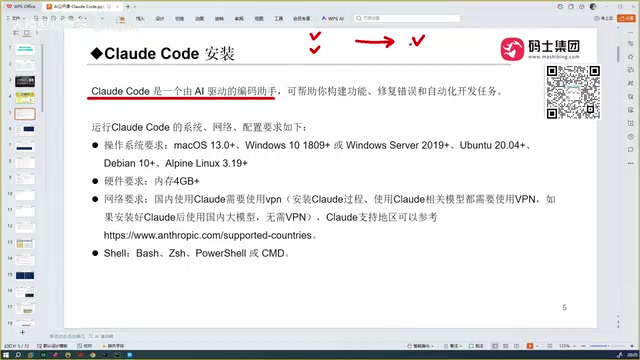
This is precisely where Claude Code differs: it can read through all the files in an entire project and pass the complete context to the underlying large language model, enabling it to generate accurate, business-logic-aware code. The technical foundation for this capability is the exceptionally large context window of Anthropic's Claude model series. A context window refers to the maximum amount of text a large language model can "see" at one time, measured in tokens — tokens are not equivalent to characters; roughly 4 English characters equal 1 token, while Chinese characters are approximately 1–2 characters per token. Early GPT-3 had a context window of just 4,096 tokens, while Claude 3.5 Sonnet supports up to 200,000 tokens — equivalent to hundreds of code files. A larger context window means the model can simultaneously "read" key portions of an entire codebase, understand cross-file dependencies, architectural design, and business logic, rather than blindly generating code from isolated snippets — this is the core technical prerequisite for project-level AI programming. Claude Code uses intelligent file indexing and selective loading strategies to cover the most relevant context possible within token limits, which is the fundamental reason it can generate "accurate business code." On top of that, it automatically debugs and fixes errors, ultimately delivering a directly runnable version of the code — that's what a truly automated programming tool looks like.
The Evolution of AI Coding Tools: From Copilot to Claude Code
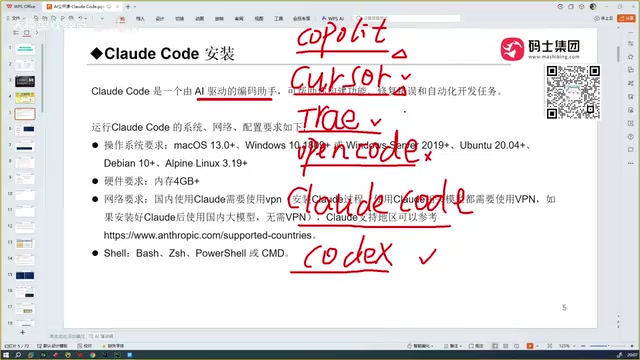
To understand why Claude Code has gained traction so quickly, it helps to trace the development of AI coding assistants in recent years. This evolution represents a continuous leap in the granularity of AI intervention in programming tasks — from character-level to project-level.
From Copilot to Cursor
GitHub Copilot launched in 2021, built on OpenAI's Codex model. At its core, it was a code autocomplete engine operating at the granularity of a single file and a single cursor. Its autocomplete capability felt revolutionary to many developers at the time. Cursor then emerged, deeply embedding GPT-4 and other large models into the VSCode editor and introducing multi-file editing capabilities like "Composer," elevating AI intervention to the "feature level" — far smarter than Copilot, capable of autonomously executing coding operations, and widely regarded as a breakout product.
The new generation of AI coding tools represented by Claude Code goes further still, expanding to the "project level" — capable of understanding overall architecture, planning tasks, and executing multi-step operations. It's essentially an autonomous agent with tool-calling capabilities, not merely a completion or generation tool. The Agentic (autonomous agent) paradigm refers to AI systems that can autonomously plan goals, call external tools, and dynamically adjust strategies based on execution results to complete complex multi-step tasks. When Claude Code receives a development task, it autonomously breaks it down into subtasks and sequentially invokes tools for file reading, code generation, command execution, and test running. Based on test results, it decides whether to continue fixing issues — this loop can run continuously without human intervention until the task is complete, representing a critical leap from AI coding tools as "assistants" to "autonomous executors."

The Divergence Between Domestic and International Tools
Trae emerged afterward, available in both international and domestic Chinese versions. For developers in China, the domestic version features specialized optimization for Chinese language comprehension, accurate intent understanding, and is completely free — its biggest competitive advantage. There's also OpenCode, though in practice it has the steepest learning curve among similar products and isn't recommended for beginners.
Also worth mentioning is OpenAI's Codex. When paired with GPT-5, its programming capabilities are comparable to Claude Code — not to be underestimated.
Why Claude Code Beats Cursor and Trae
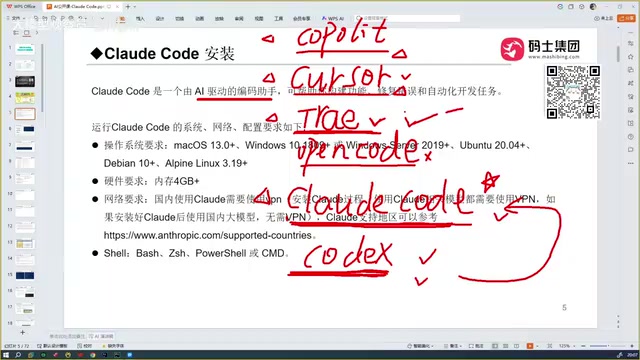
A typical tool migration path looks like this: starting with Copilot, moving through Cursor, then concluding that Trae is the ultimate coding tool — until you encounter Claude Code.
Accuracy: Claude Code's Core Competitive Advantage
Claude Code's most notable advantage over Cursor and Trae is code accuracy. While all these tools can automate programming to some degree, Claude Code generates reliable code in one shot rather than requiring repeated corrections.
By comparison, Trae is free and Chinese-friendly, but code quality is inconsistent — generation quality drops noticeably when handling more complex technical scenarios.
It All Comes Down to Model Capability
The ceiling of any AI coding assistant is ultimately determined by the underlying large language model. The current AI coding ecosystem has a clear two-layer architecture: the bottom layer consists of foundational large language models (such as Claude, GPT-4o, Qwen, GLM) responsible for the core intelligence of code understanding and generation; the top layer consists of tool frameworks (such as Cursor, Trae, Claude Code, Copilot) responsible for context management, user interaction, file operations, and workflow orchestration. Cursor's competitiveness partly comes from its smooth editor integration experience, but its underlying models rely on third-party APIs — a structural risk of dependency. Claude Code, as a vertically integrated product combining Anthropic's own tooling with Anthropic's own models, enables deep collaboration in prompt optimization, tool-calling protocols, and model fine-tuning. This is the structural source of its accuracy advantage.
Anthropic's Claude 3.5 Sonnet has consistently ranked near the top on SWE-bench, the authoritative benchmark for measuring AI's ability to resolve real GitHub issues. SWE-bench (Software Engineering Benchmark), developed by a Princeton University research team, collects thousands of resolved issues from real GitHub open-source repositories and requires AI models to read the codebase and automatically generate patches that pass official test suites — it tests not algorithmic puzzles or synthetic problems, but complex bug fixes and feature implementations in real open-source projects. It's the industry's most realistic reference metric for AI programming capability in actual engineering contexts. This "model as moat" logic is the fundamental reason Claude Code leads in overall experience. Claude Code's strength comes from Anthropic's Sonnet model itself — and Anthropic has even more powerful models available. After comparing Claude Code against Trae running domestic models like Qwen and GLM, the conclusion is clear: from a tooling perspective, Claude Code currently offers the best overall experience.
Many developers who've used Claude Code admit to feeling "a deep sense of unease" — not an emotional overreaction, but an intuitive perception of a structural shift. The Agentic programming paradigm that Claude Code represents is pushing the capability boundary of AI tools from "assistance" toward "replacing portions of development work." The traditional developer's core value lies in understanding requirements, decomposing problems, writing logic, and debugging — which is precisely the complete workflow that Claude Code is attempting to automate. This is indirect evidence that its automated development capabilities have reached the point where professional developers feel genuine pressure.
Installation and Getting Started
Claude Code has basic system requirements, but all mainstream operating systems are supported. Anthropic claims new users can complete initial setup within ten minutes, with the overall workflow being: local installation → integration into development tools → direct invocation within your project.
Note that advanced usage involves quite a few details: Claude Code supports configuring multiple models, and different models have different strengths for programming tasks — it's worth comparing and tuning them across real projects. A single quick start session is unlikely to unlock its full potential.
Summary
From Copilot's code completion (character-level intervention), to Cursor and Trae's multi-file automated coding (feature-level intervention), to Claude Code's full-project context understanding and automatic debugging (project-level agent) — the capability boundaries of AI coding tools are continuously expanding. Each generation redefines the answer to the question: "What can AI do for developers?" Claude Code's core competitive advantages can be summarized in three points: local deployment with no login required, full project context reading, and high code generation accuracy. Whether you're a professional developer looking to boost efficiency or a beginner searching for a practical entry point, it's worth taking seriously.
Related articles

The Truth Behind Codex 'Build a Website in 5 Minutes': AI Isn't Creating Sites—It's Helping You Copy Them
Exposing the truth behind viral Codex 5-minute website videos: creators aren't building original sites with AI—they're copying shared prompts or scraping others' work. Learn AI coding tools' real limits.

Getting Started with AI Agent Development: A Complete Guide from Concept to Practice
A comprehensive guide to AI Agent architecture and development, covering automated marketing, intelligent customer service, and investment analysis scenarios with single and multi-agent collaboration.

The Truth Behind Codex 'Build a Website in 5 Minutes': AI Isn't Creating Sites — It's Helping You Copy Them
Exposing the truth behind viral Codex 5-minute website videos: creators aren't building original sites with AI — they're copying shared prompts or scraping others' work.