Getting Started with Dify: Core Value of the Open-Source AI App Development Platform and Its Private Deployment Advantages
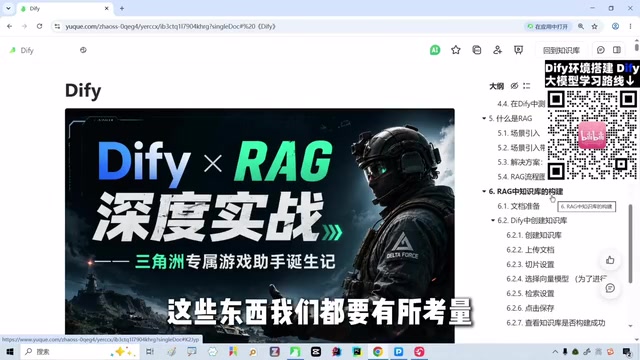
Dify is an open-source, visual AI app platform with powerful no-code workflow orchestration and private deployment support.
Dify is an open-source LLM application development platform for both developers and non-technical users, with drag-and-drop workflow orchestration for building chat assistants, AI Agents, and RAG knowledge base apps. Compared to Coze, Dify's key differentiator is its private deployment model — keeping data 100% on-premises — making it a strong fit for compliance-sensitive industries like finance and healthcare. Its combination of open-source flexibility, visual design, and enterprise-grade data control makes it an ideal starting point for learning AI application development.
What Is Dify: An AI Application Development Platform for Everyone
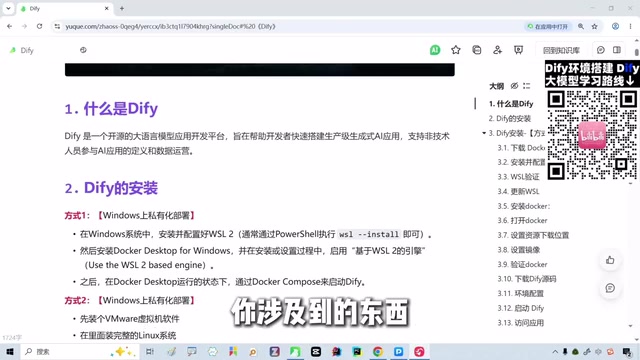
Dify is an open-source large language model application development platform. Its core mission is to help developers rapidly build production-grade AI applications, while also enabling non-technical users to participate in defining AI applications and managing data operations. This positioning is important — Dify isn't a tool built exclusively for engineers. It's designed to lower the barrier to entry for AI application development across the board.
For those new to large language models, the biggest challenge is often not understanding the concepts themselves, but the fact that those concepts feel abstract and intangible. What is an Agent? What is RAG? What is a knowledge base? Text explanations alone rarely give you an intuitive feel. This is exactly where Dify shines: it lets users visually construct an AI agent's workflow through drag-and-drop, turning abstract concepts into something concrete and actionable.
Real-World Scenarios for Building AI Agents Without Code
Dify's core features cover the most common forms of AI applications today: creating chat assistants, building Agents, generating text-based applications, and orchestrating relatively complex workflows. What these capabilities share is that anyone — regardless of programming background — can build them through simple clicks and configuration.
Dify also supports integration with enterprise tools and data to handle more complex business requirements. As demonstrated by tutorial creators on Bilibili, a complete end-to-end example can be applied to learning scenarios like thesis research or deployed as a real small-scale project. This "learn by doing" approach builds a much more intuitive understanding of agents and knowledge bases than studying theory alone.
From Visual Design to Real-World Deployment
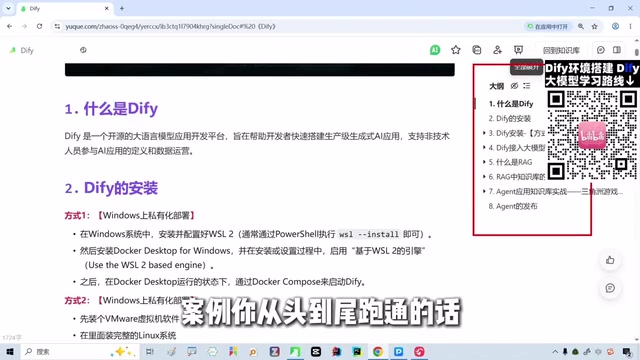
The value of a workflow platform lies in its ability to connect things together. Dify can interface with a wide range of external applications and tools, chaining together model calls, tool selection, and RAG knowledge base retrieval into a complete automated pipeline. For users looking to replace repetitive tasks with AI, this "orchestration" capability offers far more productivity value than one-off conversations.
RAG (Retrieval-Augmented Generation) is currently the most common knowledge base integration approach in AI applications. The basic idea is: when a user asks a question, the system first retrieves the most relevant document chunks from a pre-built vector database, then sends those chunks along with the user's question to the model. This allows the model to give accurate answers based on private data or up-to-date materials — without retraining the model itself. It addresses two core limitations of large language models: knowledge cutoff dates and inability to access private information. Within Dify's workflow, a RAG knowledge base is a module you can drag directly into your pipeline. Users simply upload documents (PDFs, Word files, web pages, etc.), and the platform automatically handles text chunking, vectorization, and index building — dramatically lowering the technical barrier to building a private knowledge Q&A system.
Dify vs. Coze: Hosted Cloud or Private Deployment?
Coze is another popular tool in a similar space. Like Dify, it's accessible to non-programmers — for example, you can generate a mini-app, web application, or Android client from a text description in one click, making it very convenient for generative use cases. That said, recent version updates (3.0 compared to 2.5 and earlier) introduced significant changes in design philosophy, leaving some longtime users disoriented and sparking some debate online about its direction.
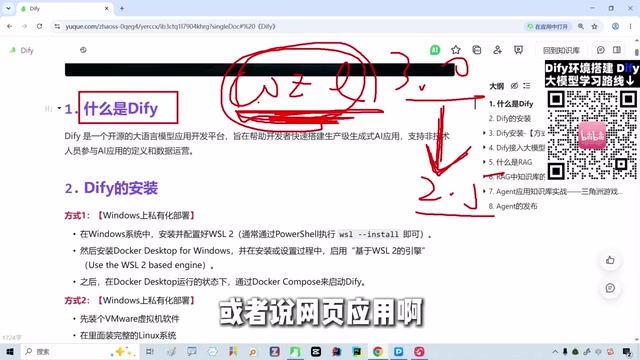
The most fundamental difference between the two is deployment model. Coze is primarily cloud-hosted, meaning your data is managed by their platform. Dify, on the other hand, supports private deployment — your data stays 100% on your own infrastructure.
Why Private Deployment Matters
For industries with strict compliance requirements — such as finance and healthcare — keeping data on-premises is essentially a non-negotiable line. Organizations simply cannot hand core business data over to a third-party cloud. Dify's private deployment capability addresses this pain point directly, giving it a clear edge in compliance-sensitive environments.
This is also why many learners choose Dify as their starting point: it handles lightweight personal projects and learning use cases just as well as enterprise-grade, compliance-level production deployments. The coverage is broader, and the skills you build have more lasting practical value.
Private deployment is typically implemented using Docker containerization. Dify provides an official Docker Compose configuration file — users simply run a few commands on their own server or local machine to spin up the complete Dify stack (frontend UI, backend API, vector database, relational database, etc.) in their local environment. This means all conversation history, knowledge base documents, workflow configurations, and API call logs never pass through any third-party server. For individual developers, deploying Dify on a personal computer or a rented cloud server is entirely feasible and cost-effective. For enterprises, deployment on an internal network server provides a network-level barrier against data leakage.
Summary: From Intuitive Exploration to Production Deployment
Dify's core appeal can be distilled into three qualities: open-source, visual, and private. Its drag-and-drop interface helps beginners quickly grasp how Agents and knowledge bases work. Tool integrations and workflow orchestration support real-world business use cases. And private deployment ensures data security remains non-negotiable. For anyone looking to systematically learn AI application development, Dify is a starting point well worth exploring in depth.
Related articles
AI Programming at Xiamen University: A Full Breakdown from Textbook to Teaching
Xiamen University's Lin Ziyu shares how he built an AI programming course — covering three coding eras, Claude Code's production-ready milestone, three methodologies, and a fully free, reproducible curriculum design.

A DeepSeek Researcher's Confession: The AI He Trained Is About to Replace Him
DeepSeek V4.1 kernel engineer Liu Shengyu admits the AI he trained will surpass his own skills within a year—yet he keeps pushing forward. Here's why.

n8n Automation in Practice: How AI Workflows Help SMBs Cut Costs and Boost Efficiency
Learn how SMBs use n8n and AI tools to automate multi-platform messaging, AI customer service replies, and bulk exam data entry — real-world workflows for cutting costs.