Getting Started with LLMs: A Complete Roadmap from Zero to Practice

A complete beginner's roadmap for learning LLMs — from learning paths and hardware to Python and cloud compute.
This guide helps beginners build a solid conceptual framework before diving into LLM development. It covers differentiated learning strategies for three types of learners (complete beginners, those with coding experience, and experienced developers), explains why 16GB RAM plus cloud GPUs is enough to get started, and outlines why Python — plus one primary language — is the right language foundation for AI development.
Before We Begin: Why "Breaking the Ice" Matters
Many beginners dive straight into syntax and hands-on exercises when learning about large language models, only to end up more confused than when they started. The truly scientific way to get started is to first build a conceptual framework of prerequisite knowledge, then gradually work your way into the technical details.
A Large Language Model (LLM) is a deep neural network built on the Transformer architecture, pre-trained on massive datasets. The reason the learning curve intimidates beginners is that it spans multiple technical layers: foundational mathematics (linear algebra, probability theory), mid-level deep learning frameworks (PyTorch/TensorFlow), high-level application development (LangChain, LlamaIndex, etc.), and ultimately production engineering (API calls, fine-tuning, deployment). Having a clear conceptual framework helps learners understand "where they currently are" on this stack, preventing the anxiety that comes from mixing up different levels.
This article is based on the introductory content of an LLM beginner course. It outlines a complete learning plan — from study paths and learning methods, to hardware and language preparation. Whether you're an absolute coding newbie or an experienced developer, you'll find an entry point that works for you and helps you avoid unnecessary detours.
Learning Paths Vary by Background
There's no single "correct" path for learning LLMs. Everyone comes in with a different foundation, different skills, and different career goals — which is exactly why a personalized learning plan matters.
Differentiated Strategies for Three Types of Learners
Complete beginners: The most important thing is to "follow the plan" — take it step by step, stay grounded, and don't try to skip ahead or chase every new trend. Staying the course almost always delivers on your initial goals, whether that's landing a job or mastering a new skill.

Learners with some programming background: If you've worked with Java or Python before, you'll likely find the early stages feel like "some things I know, some I don't." For syntax you're already familiar with, skim through it quickly and focus your energy on framework learning and tooling — that's where the real depth and difficulty lies in LLM development.
In LLM application development, frameworks like LangChain, LlamaIndex, and Semantic Kernel have become the core engineering toolkit. LangChain provides abstraction layers including Chains (sequential calls), Agents (autonomous decision-making), and Memory (context retention), letting developers build complex LLM applications without starting from scratch. The real challenge of learning these frameworks isn't the syntax — it's understanding the underlying design patterns: RAG (Retrieval-Augmented Generation) pipelines, Tool Calling mechanisms, and vector database integration. For learners with a programming background, leveling up your understanding of the framework layer is the true core challenge.
Experienced developers: If you've worked in Java, Python, data analysis, or similar fields and have hands-on experience with real business systems, this learning journey is essentially incremental learning. You can absorb the fundamentals quickly, fill in the gaps, and use deeper understanding to spark new ideas.
For experienced developers, the essence of "incremental learning" is transferring existing engineering thinking to the AI development paradigm. For example, developers familiar with Java Spring can quickly grasp LangChain's dependency injection and modular design; those with database experience will more easily understand the indexing and retrieval logic of vector databases like Chroma, Pinecone, and Milvus. Real project experience is critical because the core challenges of LLM applications rarely lie in the model itself — they lie in Prompt engineering optimization, handling hallucinations, managing multi-turn conversation state, and integrating with existing enterprise systems. These skills only develop through hands-on practice. For this group, the key is to put serious effort into real-world projects and accumulate genuine project experience.

Hardware Preparation: Don't Let "Compute Anxiety" Hold You Back
This is one of the biggest concerns for new learners: "Can my computer handle LLM development? Do I need a high-end GPU for fine-tuning?"
The answer is more forgiving than you'd expect: as long as your machine has more than 16GB of RAM, you're good to go. A dedicated GPU is not a requirement.
Cloud Services: The Best Practice Approach
Training and fine-tuning LLMs demands significant compute, primarily from GPU parallel processing. Take a mainstream 7B parameter model as an example — full fine-tuning typically requires at least 40GB of VRAM, and even with parameter-efficient techniques like LoRA (Low-Rank Adaptation), you still need 16GB or more. When you need to run compute-heavy tasks like fine-tuning, there's simply no need to spend a fortune on local hardware.
The smarter approach is to rent cloud servers — just a few dollars per hour, operated remotely through code, with an experience nearly identical to local development. Leading cloud GPU providers such as Alibaba Cloud, Tencent Cloud, AutoDL, and vast.ai all offer hourly-billed instances with high-end GPUs like A100s and 4090s. On platforms like AutoDL, an A100 instance runs roughly 3–6 RMB per hour, making it entirely feasible for everyday learners to run complete fine-tuning experiments at minimal cost — completely dismantling the myth that "you need to buy a GPU to learn AI."
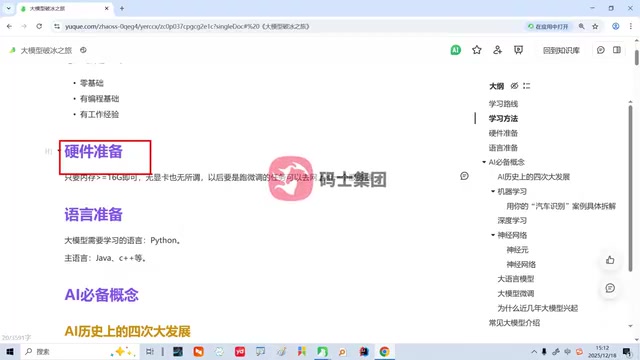
Whether you're a student, independent researcher, or aspiring entrepreneur, using cloud services for compute is the best practice for learning LLMs. This "pay-as-you-go" model dramatically lowers the barrier to entry, letting anyone experience the full LLM development workflow at minimal cost. If your budget allows, buying a high-performance GPU is certainly fine — but for those with limited budgets, the more pragmatic choice is to build your skills first and add hardware later when you actually need it.
Language Preparation: Python Is the Starting Point, But Not the End
If your goal is to learn LLMs, the most essential language to prepare upfront is Python. A well-structured learning plan will typically include a dedicated Python track — just follow along.
Python became the dominant language in LLM development for a fundamental reason: its commanding position in the AI ecosystem. Core frameworks like PyTorch, TensorFlow, and Hugging Face Transformers treat Python as their primary language; scikit-learn, NumPy, and Pandas form the standard data processing toolchain; and Jupyter Notebook has become the de facto environment for experimental development and result visualization. Python's dynamic typing and concise syntax dramatically reduce the cost of prototyping — a perfect fit for AI research's "rapid experiment, iterative validation" development cycle. It's worth noting that Python's performance bottlenecks in production are typically addressed through C++ extensions (such as PyTorch's underlying layer) or async frameworks like FastAPI, so understanding how Python collaborates with other languages is equally important.
Why You Should Also Know at Least One Primary Language
LLMs never exist in isolation — they only deliver real value when integrated with specific business applications. And real-world business systems may well be built in Java, C++, or other languages.
So if you're not going into pure LLM research, but rather hoping to bring AI capabilities into real products, knowing a mainstream "primary language" will broaden your job prospects and career development options significantly. This is especially important for developers looking to join companies or take on real-world projects.

Summary: Four Things to Prepare Before Learning LLMs
Getting started with LLMs the right way means preparing on four fronts before diving into formal study:
- Learning path — Tailor it to your own foundation, don't just copy someone else's.
- Learning method — Beginners succeed through consistency; intermediate learners through prioritization; experienced developers through incremental learning and project accumulation.
- Hardware — Start with 16GB RAM; offload compute-heavy tasks to cloud services.
- Language — Ground yourself in Python, then add a primary language based on your career direction.
Once you've clarified these foundational concepts, moving into essential AI concepts, hands-on frameworks, and advanced topics like Agents will feel much more natural. Learning LLMs is a long game that requires planning — build the right mental map first, so you don't get lost in the details along the way.
Key Takeaways
Related articles

Alibaba Launches Happy Shrimp: AI-Powered One-Click Complete Song Generation
Alibaba launches Happy Shrimp, an AI music generation tool that creates complete songs with lyrics, melody, arrangement, and vocals from natural language descriptions. In-depth analysis of its core features, differentiation from competitors like Suno, and industry impact.
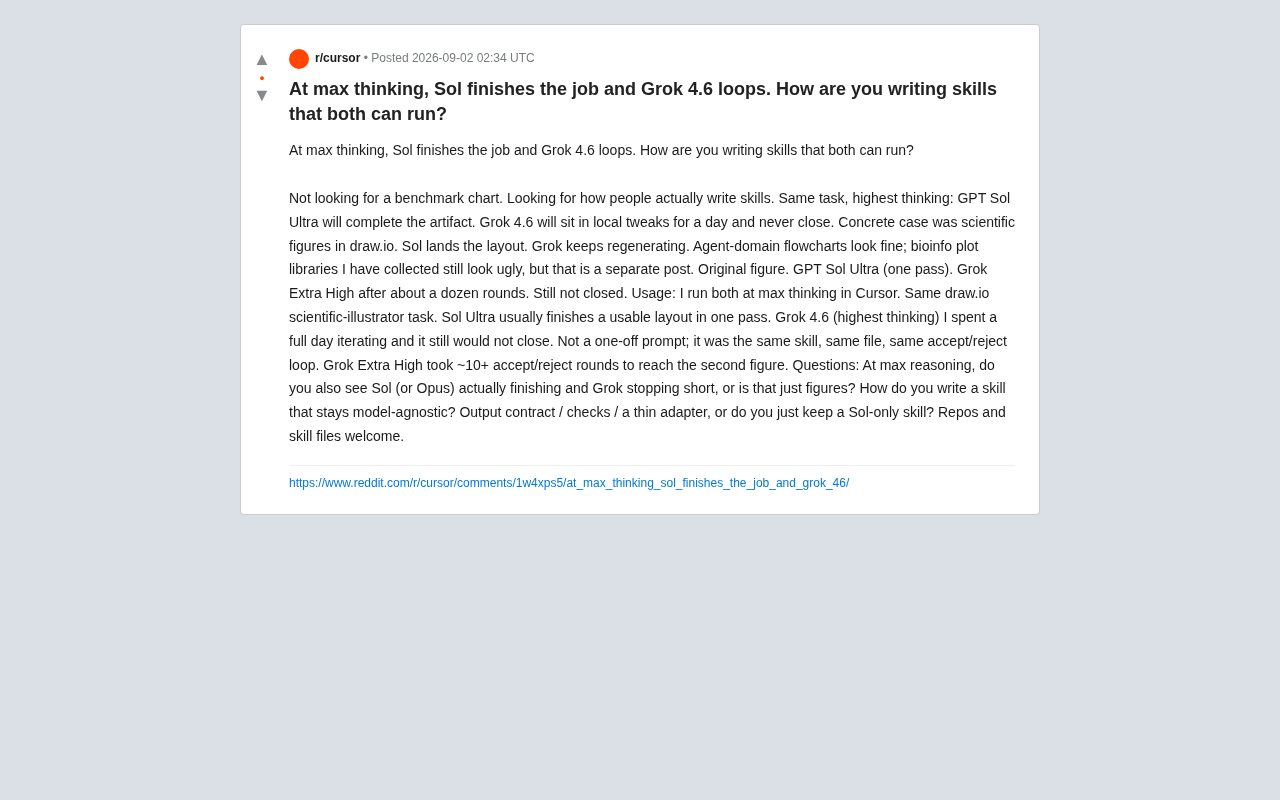
GPT Sol Ultra vs Grok 4.6: Real-World Task Completion Benchmark in Reasoning Mode
Developer benchmark reveals GPT Sol Ultra completes draw.io scientific diagrams in one iteration while Grok 4.6 fails to converge despite maximum reasoning mode, exposing that reasoning depth ≠ task delivery capability.

OpenAI Authorship Dispute: The Battle Over Academic Boundaries in the AI Era
OpenAI disputes authorship with mathematician Tristan Buckmaster over Navier-Stokes research, raising ethical questions about AI involvement in science.