Getting Started with Physical AI Robot Full-Stack Development: A Complete Tech Stack Guide from Hardware to ROS2

A complete tech stack overview for robotics development: from hardware to AI to ROS2.
This article systematically maps out the complete robotics development tech stack, covering every critical module from bottom to top: GPU/CUDA hardware fundamentals, Linux/Ubuntu operating system, Python programming, deep learning (PyTorch/tensors/neural networks), Docker containerized environment management, OpenCV and YOLO computer vision, and the ROS 2 robot operating system framework. It provides beginners with a clear layered understanding and learning roadmap.
For a robot to go from "seeing" its environment to "deciding and acting," roughly 10 different technical modules must work together behind the scenes. Most robotics tutorials assume you already know all of this, but this article doesn't. Based on the first episode of YouTube creator Yulia's tutorial series, this article maps out the complete tech stack needed to enter the world of physical AI and robotics development, helping you build a clear learning roadmap.
Starting from the Bottom: Robot Hardware Infrastructure
The robotics tech stack can be visualized as a layered model: hardware (the computational brain) at the very bottom, then the operating system, programming languages, AI modules, and robot-specific tools stacked on top. Understanding this layered structure is key to mastering the entire field.
At the hardware level, the core compute units are CPU and GPU. GPUs were originally designed for gaming, but have since become critical hardware for running advanced machine learning models like neural networks. GPUs excel at parallel processing and multithreaded computation, capable of executing many different tasks simultaneously. NVIDIA's CUDA framework allows developers to control how hardware allocates and processes tasks, distributing work across different nodes and worker threads, transforming what would otherwise be slow sequential execution into efficient parallel computation. This is crucial for matrix operations and the data science behind robotics.
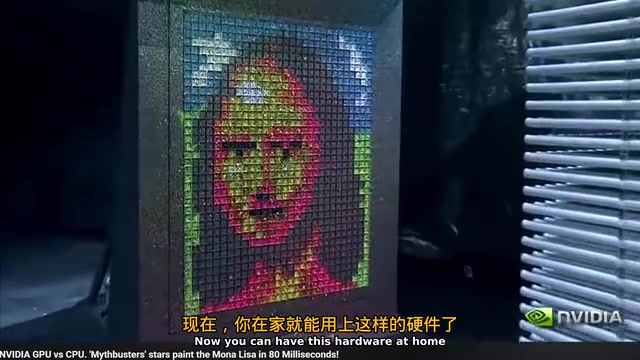
You can deploy hardware locally or use cloud services to send requests to powerful remote computers. However, in robotics, network communication introduces significant latency, so the preference is typically to integrate computing power directly into the robot. For example, Seed Studios' ReComputer combines NVIDIA hardware with peripherals like cameras and the JetPack software package, enabling developers to efficiently leverage GPU computing power.
Operating System and Terminal: Why Linux Is the Only Choice for Robot Development
Regardless of whether you're accustomed to Windows or macOS, in robotics, everything runs on Linux. ROS, the most well-known robot operating system, barely works properly on other platforms, and CUDA is a first-class citizen on Linux. Specifically, the Ubuntu distribution is recommended.
Unlike GUI-first systems like Windows, the daily workspace for robotics developers is the Terminal. This is a code-first interactive interface where nearly all operations—from navigating folders to editing files—are performed. Familiarizing yourself with basic terminal commands is the first step to getting started.
Programming Language Choice: Python's Central Role in Robot Development
Among the many programming languages available, Python is the top choice for robotics development due to the heavy involvement of AI and data science components. The good news is that Python is very beginner-friendly while sharing many core concepts with other languages. You'll need to master fundamentals like variables, lists, dictionaries, functions, and even classes.
While AI coding assistants are increasingly popular, being able to at least recognize and understand quality code remains crucial. Even if you don't plan to write all the code yourself, a solid programming foundation is indispensable.

On the toolchain side, you can use IDEs like VS Code or PyCharm to assist with debugging and development. Code can be organized in files or run in cell format within Jupyter Notebooks for quick experimentation. For package management, UV is replacing the traditional pip and venv combination, offering more modern environment management, package freezing, and other features.
AI and Deep Learning: Giving Robots Intelligent Decision-Making Capabilities
Data science, machine learning, deep learning, artificial intelligence—the relationships between these terms are worth clarifying:
- Data Science: The discipline of extracting insights from data and creating models
- Machine Learning: Models that can learn from data and improve over time
- Deep Learning: Uses advanced models like neural networks that simulate how brain neurons work
In advanced robotics, deep learning is the primary technology used. Traditional data science and basic machine learning models mainly handle numerical data (regression, classification), while deep learning can process images and video, enabling robots to understand information collected by sensors. In particular, recent developments in Foundation Models and Vision-Language-Action (VLA) Models provide robots with powerful perception and decision-making capabilities.
Tensors and Neural Networks: The Mathematical Foundation of Deep Learning
A key concept is the Tensor—a multidimensional data structure used to handle complex data like images. Simply put: a scalar is zero-dimensional, a list is one-dimensional, a matrix is two-dimensional, and tensors extend further into higher dimensions. Neural networks are essentially mathematical operations on tensors.
PyTorch and Model Inference: How It Works in Practice
In actual development, you don't need to manually perform matrix multiplication. Libraries like PyTorch and TensorFlow are highly optimized for these structures. The open-source community provides a vast array of pre-trained models that you can import directly from platforms like Hugging Face and scikit-learn. Most of the time, what we do is Inference—using existing models to process new data, rather than training from scratch. Additionally, TensorRT can optimize tensor operations for CUDA and GPU, further boosting performance.
Docker Containerization: Solving the Version Compatibility Nightmare in Robot Development
When the tech stack becomes complex, version compatibility becomes a massive pain point. The correct Python version, various packages and libraries, matching CUDA versions, ROS versions, OS versions—all of these must be compatible with each other.
Docker was created precisely to solve this problem. It freezes an entire environment inside a "container," ensuring all components coexist harmoniously. In theory, you can create a container with Linux and all necessary components, then deploy it anywhere needed. Additionally, robotics-specific tools like RobotStack and Pixy further simplify this process.
Computer Vision: Giving Robots Eyes with OpenCV and YOLO
At the core of robot perception is computer vision, which enables robots to process images and video and understand their contents.
OpenCV is the cornerstone of this field, having run reliably for over 25 years. It provides a wealth of math-based functionality including segmentation, classification, and detection—many tasks can be accomplished without even introducing AI. Combined with deep learning models like YOLO, advanced capabilities such as real-time object detection become possible.

If you're doing any work involving cameras or images, familiarity with the OpenCV library and the currently most popular models (YOLO at the moment) is essential. This combination alone can take you quite far.
Getting Started with ROS 2: The Industry Standard Framework for Robot Development
ROS (Robot Operating System) is currently the most popular and widely adopted robotics operating system framework. Whether you love it or hate it, it's the industry standard. ROS allows different components to communicate and collaborate, and many robot products on the market come with built-in ROS support, so you don't need to write custom code for every camera or motor.
The core mechanism of ROS is the Nodes system: components send messages to each other through different Topics, enabling coordinated operation. Mastering the core concepts of nodes, topics, and messages is fundamental to using ROS. It's worth emphasizing that in 2025 and beyond, you should learn ROS 2 directly—ROS 1 is no longer the mainstream choice.
The Big Picture: The Complete Puzzle of Full-Stack Robotics
Next time you see a robot completing a complex task, you'll know what's happening behind the scenes: GPU hardware at the base, controlled by CUDA; Linux operating system running on top; multiple ROS nodes separately controlling motion and cameras; the vision pipeline using OpenCV and deep learning models like YOLO; Python architecture running PyTorch or TensorRT; the entire environment possibly encapsulated in a Docker container.
All these layers work together smoothly, and you can choose to dive deep into any one of them. This isn't the end—it's the beginning. Once you understand the full-stack architecture, you have a clear learning direction and roadmap.
Related articles
 Tutorials
ChatGPT Plus Subscription Guide: Are GPT-5.5, image-2, and Codex Worth the Upgrade?
A detailed look at ChatGPT Plus features — GPT-5.5, image-2, and Codex — with a Plus vs Pro comparison and a complete step-by-step subscription guide for users outside the US.
 Tutorials
Harness AI Engineering in Practice: Using Claude Code to Master Enterprise-Level E-Commerce Development
Deep dive into Harness AI Engineering: master enterprise e-commerce development with Claude Code using the Rules, Skills, Wiki, and Changes framework.
 Tutorials
Cursor + Codex Dual-IDE Collaboration: A Practical Methodology for Open-Source Project Customization
A complete methodology for open-source project customization based on real-world experience, detailing the Cursor+Codex dual-IDE workflow, seven-stage process, MVP validation, and AI source code reading techniques.