Getting Started with Qwen3-0.6B Fine-Tuning: Core Concepts of Large Language Models and Fine-Tuning Methodology Explained

A systematic introduction to LLM fundamentals and fine-tuning methodology for beginners
Based on a Qwen3-0.6B fine-tuning tutorial, this article systematically introduces the three core characteristics of large models (massive parameters, enormous training data, Transformer architecture), compares major domestic and international models (DeepSeek, Qwen, Claude, GPT, etc.), clarifies the distinction between large models and large model applications, and explains the value of fine-tuning — making general models more precise in specific domains.
Introduction
Large model fine-tuning is one of the most practical skills in AI today. For small and medium-sized enterprises and individual developers, training a large model from scratch is virtually impossible — but fine-tuning on top of an open-source model is a completely viable path. Based on a systematic Qwen3-0.6B fine-tuning tutorial series from Bilibili, this article starts from fundamental LLM concepts to help you build a complete knowledge framework for fine-tuning. Once you master the methodology, you'll be able to fine-tune not just Qwen3, but any open-source model.
What Is a Large Language Model? Three Core Characteristics
The definition of a large model can be summarized in one sentence: a deep learning model with massive parameter counts, trained on enormous datasets, built on the Transformer architecture. These three key characteristics are worth examining one by one.
Massive Parameter Counts: From Hundreds of Billions to Trillions
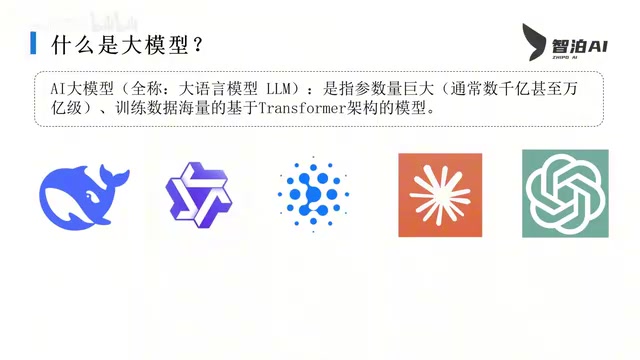
In the early days, hundreds of billions of parameters qualified as a "large model." But today, trillion-level parameters have become the entry threshold for major players. DeepSeekAd V4 has 1.6 trillion parameters, while overseas models like GPT-5.5 and Claude Opus have parameter counts that are even higher. This explosive growth in parameter counts has directly driven leaps in model capabilities.
Notably, DeepSeek V4 employs a MoE (Mixture of Experts) architecture — a sparse activation neural network design. Unlike traditional dense models that activate all parameters during every inference, MoE models contain multiple "expert" sub-networks, dynamically routing each input to activate only a few experts (typically 2–8). Although DeepSeek V4's total parameter count reaches 1.6 trillion, only about 37 billion parameters are actually activated per inference, dramatically reducing inference costs. This is one of the key technical reasons DeepSeek can offer its API service at extremely low prices.
Enormous Training Data: Internet-Scale Knowledge Injection
Take GPT-5.5 as an example — its training data volume reaches approximately 45PB (Petabytes). 1 PB = 1024 TB ≈ 1 million GB. For comparison, the entire English Wikipedia text is about 20GB, and the entire crawlable public web data (Common Crawl) is about 400TB. This essentially means all publicly available data on the internet has been collected.
However, data volume is only one aspect. Training data for large models typically undergoes multiple rounds of deduplication, quality filtering, and proportion adjustments, covering diverse sources including web text, books, code, academic papers, and multilingual content. Data quality and mixing strategies often have as much impact on final model capabilities as the total data volume itself. The reason models are "intelligent" is fundamentally because they "read" the massive amount of high-quality knowledge accumulated by humanity during training.
Transformer Architecture: The Unified Technical Foundation of All Large Models
Transformer is a deep learning algorithm architecture that currently underlies virtually all mainstream large models. It was proposed in 2017 by the Google Brain team in the paper Attention Is All You Need, completely revolutionizing natural language processing. Its core innovation is the Self-Attention mechanism, which allows the model to simultaneously attend to the contextual relationships of all other words in a sequence when processing each word, rather than processing sequentially like earlier RNN/LSTM approaches. This parallelized design dramatically improves training efficiency, making it possible to train on ultra-large-scale datasets.
Modern large models (such as the GPT series, Qwen, and DeepSeek) generally adopt the Decoder-only variant of Transformer, focusing on autoregressive text generation tasks. While different models may introduce local innovations (such as attention mechanism optimizations, MoE, etc.), the overall framework remains Transformer. Understanding the Transformer architecture is a prerequisite for understanding large model fine-tuning.
Comparison of Major Domestic and International Large Models
Understanding the positioning and characteristics of mainstream models helps us choose the right base model for fine-tuning.
Representative Chinese Open-Source Models
-
DeepSeek: Arguably the "pride of Chinese AI" — not only are model weights open-sourced, but API pricing is extremely affordable. One million input tokens costs just 1 RMB, an order of magnitude cheaper than overseas models, truly achieving "AI for everyone."
-
Qwen (Tongyi Qianwen): Alibaba's open-source model series, with extremely high adoption rates in the open-source community. Many small and medium enterprises lack the capability to train large models from scratch, so they choose to fine-tune on the Qwen series, making Qwen the top choice as a base model for domestic open-source fine-tuning.
-
Zhipu GLM: Outstanding in coding capabilities, another excellent representative of Chinese open-source large models.
International Model Landscape
- Claude: Has long led in code generation and comprehension, with excellent performance in coding scenarios.
- GPT-5.5: Quickly became the strongest comprehensive model after release. It consumes roughly only 60% of the tokens needed by its predecessor for the same tasks, offering significantly better cost-effectiveness.
Large Models vs. Large Model Applications: A Crucial Distinction
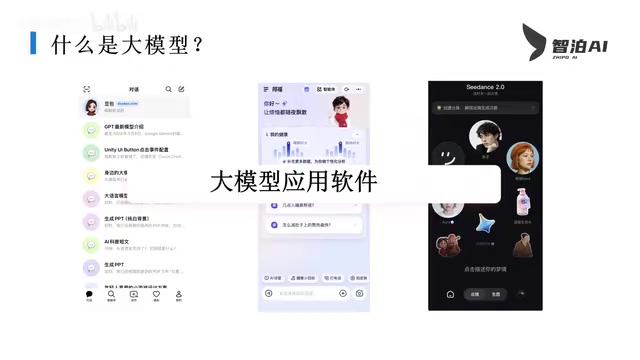
Many people refer to products like Doubao or Kimi directly as "large models," but this is actually a common misconception. Clarifying this distinction is crucial for understanding the role of fine-tuning.
The Engine and Car Analogy
The relationship between a large model and a large model application is like the relationship between an engine and a car:
- A car is not an engine, and an engine is not a car
- But the engine is the most core component of a car
- An engine alone isn't enough — you still need a steering wheel, tires, seats, and other components to form a complete car
Similarly, a large model is the most core component of an AI application, but a complete large model application also requires databases, middleware, caching, frontend interfaces, and other modules working together.
Using Doubao as an Example: What Role Does the Large Model Play in an Application?
When a user asks "Who is Doubao?" in the Doubao app, the complete interaction flow is as follows:
- Doubao APP (frontend) receives the user's question but cannot answer it itself
- Forwards the question to the Doubao backend service
- The backend service passes the question to the Doubao large model
- The large model generates an answer and returns it to the backend service
- The backend service returns the answer to the APP
- The APP displays the result to the user
In this flow, the large model is the only component that actually "generates answers" — other components handle data routing and display. This clearly illustrates the core position of the large model within the entire application system — and fine-tuning is precisely about optimizing this core component.
Why Fine-Tune Large Models? The Value and Use Cases of Fine-Tuning
After understanding the basic concepts of large models, a natural question arises: since powerful general-purpose large models already exist, why do we still need fine-tuning?
The core reason is: while general models have broad knowledge coverage, their performance in specific domains is often not precise enough. For example, a medical consultation scenario requires the model to deeply understand medical terminology and diagnostic logic; a legal consultation scenario requires the model to be familiar with statutes and case law. Through fine-tuning, we can use domain-specific data to "teach" the model specialized knowledge and behaviors, making it more accurate and reliable in specific application scenarios.
Related articles
 Tutorials
ChatGPT Plus Subscription Guide: Are GPT-5.5, image-2, and Codex Worth the Upgrade?
A detailed look at ChatGPT Plus features — GPT-5.5, image-2, and Codex — with a Plus vs Pro comparison and a complete step-by-step subscription guide for users outside the US.
 Tutorials
Harness AI Engineering in Practice: Using Claude Code to Master Enterprise-Level E-Commerce Development
Deep dive into Harness AI Engineering: master enterprise e-commerce development with Claude Code using the Rules, Skills, Wiki, and Changes framework.
 Tutorials
Cursor + Codex Dual-IDE Collaboration: A Practical Methodology for Open-Source Project Customization
A complete methodology for open-source project customization based on real-world experience, detailing the Cursor+Codex dual-IDE workflow, seven-stage process, MVP validation, and AI source code reading techniques.