Getting Started with Vibe Coding: The Core Logic and Methods of Programming with an AI Mindset

Master Vibe Coding: use AI thinking and prompt engineering to program efficiently without memorizing syntax.
Vibe Coding is a new programming paradigm where developers use natural language prompts to direct AI in writing code, shifting the focus from memorizing syntax to clear requirement expression and logical decomposition. This guide covers prompt engineering techniques, multi-AI tool orchestration, code debugging strategies, and project-driven practice to help beginners and experienced developers alike harness AI for efficient, production-ready programming.
What Is Vibe Coding: A New Programming Paradigm for the AI Era
Vibe Coding is an entirely new development paradigm that has emerged alongside the rapid advancement of large language models' programming capabilities. Its core philosophy isn't about memorizing syntax — it's about leveraging AI tools, describing requirements in natural language, and breaking down logic so that AI handles most of the code writing. Developers take on the role of "director" and "reviewer."
The reason large language models (LLMs) can handle code writing lies in their pretraining on massive code corpora. Models like OpenAI's GPT series, Anthropic's Claude, and Google's Gemini have been exposed to billions of lines of open-source code from GitHub, Stack Overflow Q&As, technical documentation, and more during training. This enables them to not only understand natural language but also master the syntax rules, design patterns, and best practices of hundreds of programming languages. Since 2023, as model parameter scales have surpassed the hundred-billion mark and code-specific fine-tuning has been introduced (such as Code Llama, DeepSeek-Coder, etc.), AI pass rates on programming benchmarks like HumanEval have climbed from under 30% to over 90% — this is the technological foundation that makes Vibe Coding viable.
According to the creator of this comprehensive Bilibili tutorial series, in order to properly organize this methodology, they not only watched virtually every related course on Bilibili but also studied overseas developers' tutorials on YouTube. Their conclusion: over 85% of the content out there is "a mixed bag" — most only teach you to "copy code" without explaining the underlying logic, leaving learners unable to adapt flexibly.
This highlights a real pain point of the AI programming era — the more powerful the tool, the more you need a clear thinking framework to harness it. Otherwise, it's easy to fall into the trap of "accepting whatever AI gives you and not knowing how to fix things when they go wrong."

From Memorizing Code to AI-Driven Thinking: A Fundamental Shift in Learning Paths
The traditional programming learning path typically goes: grind through syntax first, then learn data structures, then write algorithms. The barrier to entry is high, the timeline is long, and it easily discourages beginners. Vibe Coding aims to flip this order.
The Core Isn't Syntax — It's Expressing Requirements
Under the AI-assisted programming model, the focus shifts from "remembering how to write it" to "thinking clearly about what you want." What you need to master is no longer the specific parameters of every function, but rather how to take a vague requirement and break it down into clear instructions that AI can understand and execute step by step.
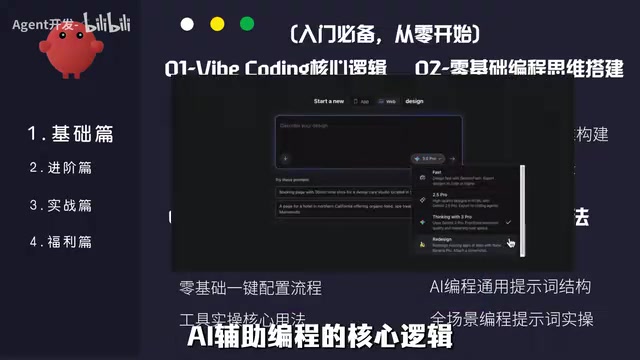
This tutorial distills the logic into several key competencies:
- Core Logic Understanding: Grasping the fundamental principles of how programs run
- Computational Thinking Development: Building the ability to decompose problems in a structured way
- AI Tool Configuration: Selecting and setting up the right AI coding assistants
- Universal Prompt Writing: Mastering efficient prompt engineering techniques
Among these, the quality of your prompts directly determines the usability of AI-generated code — and this is the most rewarding area to explore deeply within the entire Vibe Coding methodology.
Prompt Engineering: The Developer's New "Programming Language"
If developers once communicated with computers through Python and JavaScript, then in the Vibe Coding era, natural language prompts have become the new interface. Writing a high-quality prompt requires clearly specifying the following elements:
- Context: The current project background and tech stack
- Objective: A clear definition of what you want AI to accomplish
- Constraints: Performance requirements, coding style, compatibility limitations, etc.
- Expected Output Format: Code structure, commenting conventions, file organization
This may seem simple, but it's actually a skill that requires deliberate practice. A good prompt can get AI to produce near-usable code in one shot, while vague descriptions often lead to endless revisions and wasted effort.
Prompt Engineering has in fact developed into a systematic field of research. The Chain-of-Thought prompting method proposed by Wei et al. in 2022 demonstrated that having models "think step by step" significantly improves reasoning accuracy. Since then, numerous prompting strategies have emerged, including Tree-of-Thought, ReAct (Reasoning + Acting), and Few-shot Learning. In code generation scenarios, research shows that providing specific input/output examples, specifying programming language versions, and describing edge cases can improve first-pass code generation success rates by over 40%. Companies like Google and Microsoft have established dedicated Prompt Engineering roles with salaries reaching $200,000–$300,000, underscoring how seriously the industry takes this skill.
Advanced Practice: Getting AI to Write Production-Ready Code
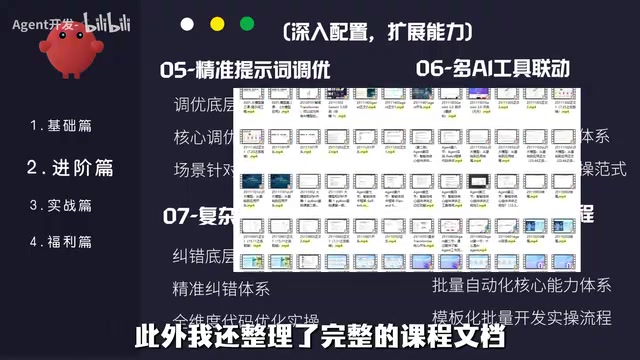
Getting started as a beginner is just the beginning. What truly sets people apart is engineering capability at the advanced stage. The tutorial's advanced section highlights several directions worth paying attention to:
Precision Prompt Tuning
Through iterative feedback, gradually converge on ideal output rather than expecting AI to "nail it in one shot." Each time AI returns a result, adjusting your instructions based on the deviation is itself an exercise in training your requirement decomposition skills.
Multi-AI Tool Orchestration
Different large models have different strengths. Learning to combine them can significantly improve output quality. For example, use one model to generate an initial code draft, then use another for code review and security scanning, forming a complementary workflow.
The current mainstream AI coding assistants have formed a multi-layered tool ecosystem. Among IDE-integrated tools, GitHub Copilot is the flagship, embedding directly into editors like VS Code to provide real-time code completion and generation. Cursor takes things further by redesigning the entire IDE around AI interaction, supporting multi-file context understanding and codebase-level refactoring. Conversational tools like ChatGPT and Claude excel at handling complex architectural design discussions and code explanations. There are also domain-specific tools: Replit's AI features focus on cloud-based collaborative development, V0 (by Vercel) specializes in frontend UI generation, and Bolt.new supports one-click generation and deployment of full-stack applications. Understanding each tool's strengths and limitations is a prerequisite for effective orchestration.
Complex Code Debugging and Optimization
This is the key capability that separates "knowing how to use AI" from "using AI well." When AI-generated code contains errors, your ability to quickly locate problems and provide accurate feedback determines the upper limit of your development efficiency.
The potential issues in AI-generated code are far more complex than they appear on the surface. Common risks include: security vulnerabilities (such as SQL injection, XSS cross-site scripting, and other OWASP Top 10 issues), performance pitfalls (such as O(n²) complexity algorithms being used on large datasets), dependency risks (referencing deprecated libraries or those with known vulnerabilities), and "hallucinated code" (where the model fabricates non-existent APIs or function names). A 2023 Stanford study found that code written by developers using AI assistants actually contained a higher proportion of security vulnerabilities than the control group that didn't use AI — partly because developers placed excessive trust in AI output. Therefore, code review skills, basic security awareness, and performance analysis abilities have not become obsolete in the AI programming era; they've become even more critical.
Batch Automated Programming
Streamline repetitive development tasks to leverage AI's scale advantage. Crystallizing common development patterns into reusable prompt templates can dramatically boost day-to-day development efficiency.
These points reveal a clear trend: AI won't replace developers, but it will reshape the developer skill set. What will become scarcer in the future are people who can harness AI and maintain code quality — not mere "code couriers."
Project-Driven: Real-World Applications of Vibe Coding
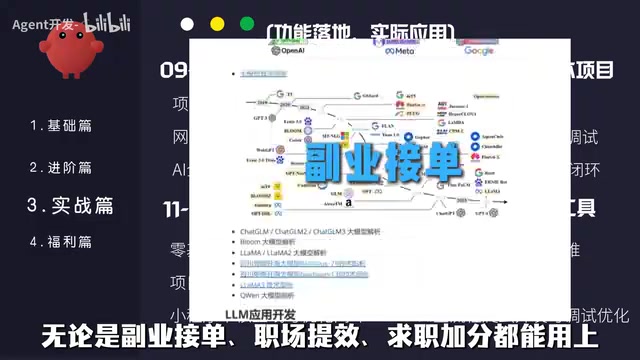
The tutorial's third section covers project-based practice — the part that best demonstrates "learning by doing." The author lists a series of commercial-grade implementation scenarios:
- Building a Personal Website Independently: The complete process from design to deployment
- Office Automation Scripts: Using AI to write efficiency tools for Excel processing, file management, etc.
- Mini Program Development: Rapid prototyping for WeChat mini programs
- Web Scraping Tools: Automated information collection and organization
- AI Tool Integration Projects: Calling various APIs to build custom AI applications
- Web Feature Development: Common web functions like frontend interactions and form handling
These projects cover a range of needs from personal side hustles to workplace productivity boosts. This "theory + hands-on practice" approach is far more aligned with how skills are actually acquired than just explaining concepts — only by building real, runnable projects can abstract methodologies be internalized into practical abilities.
A Balanced View of Vibe Coding: Sober Thinking Behind the Opportunity
As a free introductory tutorial, its value lies in lowering the entry barrier to AI programming and giving more beginners the courage to take their first step. However, learners should maintain rational judgment when encountering titles claiming to be "the best on the internet" or "a hundred times better than paid courses."
Vibe Coding does represent a significant evolution in programming paradigms, but it's not a shortcut to "becoming a programmer without studying." Quite the opposite — to truly leverage AI programming effectively, you need three foundational abilities:
- Logical Thinking: The ability to break complex problems into executable steps
- Clear Requirement Expression: The ability to accurately describe the results you want
- Basic Code Quality Judgment: The ability to identify potential issues in AI output
The smarter the tools become, the higher the demands on the user's "meta-abilities."
From a broader perspective, the democratization of programming isn't a new concept born of the AI era — it's a thread running throughout the history of computing. In the 1950s, assembly language freed developers from machine code. In the 1960s, the birth of BASIC allowed non-specialists to program. In the 1990s, visual tools like Visual Basic and Dreamweaver made "drag-and-drop programming" possible. In the 2010s, No-Code/Low-Code platforms (like Bubble, Airtable, and Webflow) further lowered the barrier to building applications. Vibe Coding can be seen as the latest link in this evolutionary chain — instead of simplifying programming languages themselves, it eliminates technical barriers by introducing natural language as the "highest level of abstraction." Gartner predicts that by 2026, 80% of software products globally will involve non-traditional developers in their creation — a trend that aligns closely with Vibe Coding's philosophy.
For readers looking to get started, I recommend treating tutorials like this as a starting point for building your thinking framework. Focus on logical decomposition and prompt engineering — these two transferable core competencies — rather than getting hung up on the operational details of any specific tool. After all, in today's rapidly iterating AI landscape, tools will change, but clear thinking will always hold value.
The rise of Vibe Coding is fundamentally another step in the democratization of programming. It gradually opens up "writing code" — once a skill reserved for a select few professionals — to a much broader community of creators. Whether you're looking to take on freelance projects, boost workplace productivity, or strengthen your resume, understanding and mastering the core logic of AI-assisted programming will become a foundational competitive advantage.
What matters isn't how powerful the tool itself is — it's whether you can think clearly about "what you want it to do."
Related articles
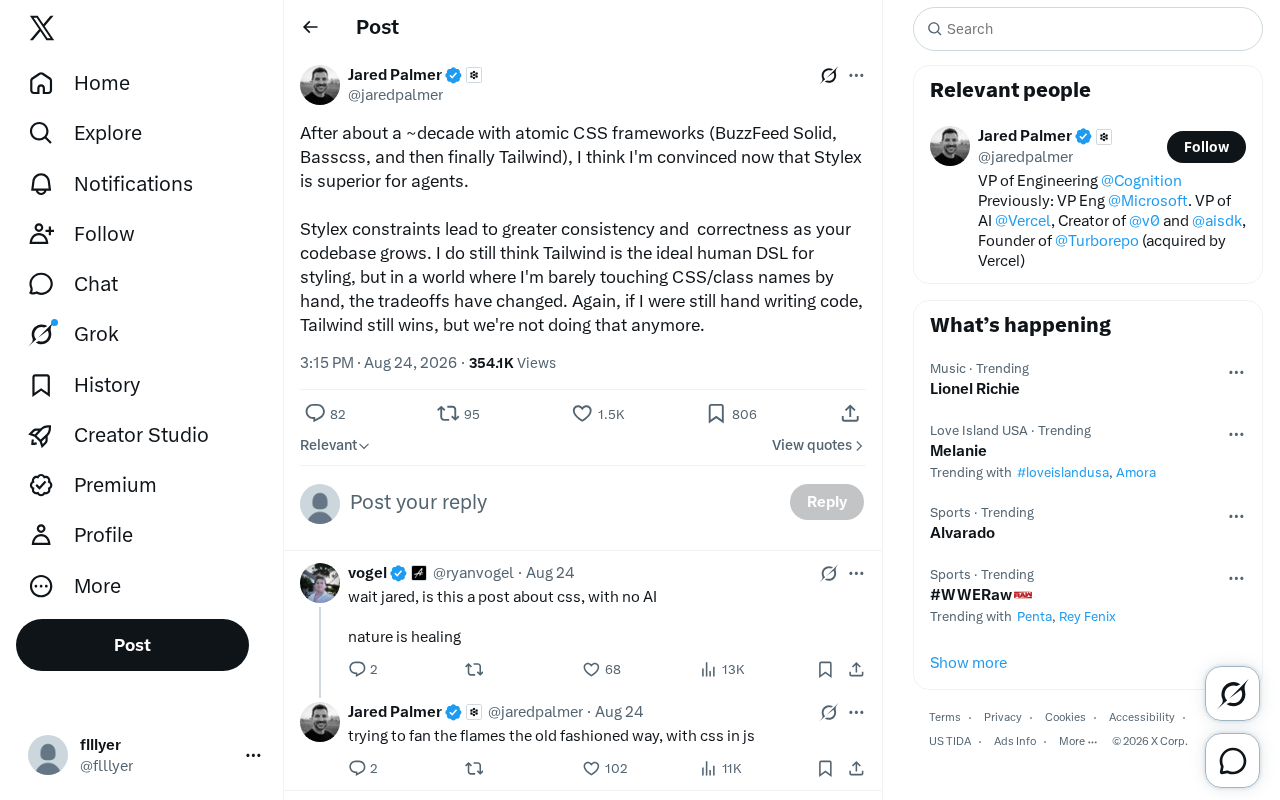
StyleX vs Tailwind: Choosing a CSS Framework in the Age of AI Agent Coding
Analyzing why Meta's StyleX may outperform Tailwind CSS when AI Agents write code—from type safety and compile-time checks to correctness at scale.

The AI Pivot Myth: From Buzzword Bandwagoning to Real Transformation
From the joke about Allbirds pivoting to AI compute, we analyze the "everything is AI" hype, show how to spot real vs. fake AI pivots, and why business fundamentals still matter.
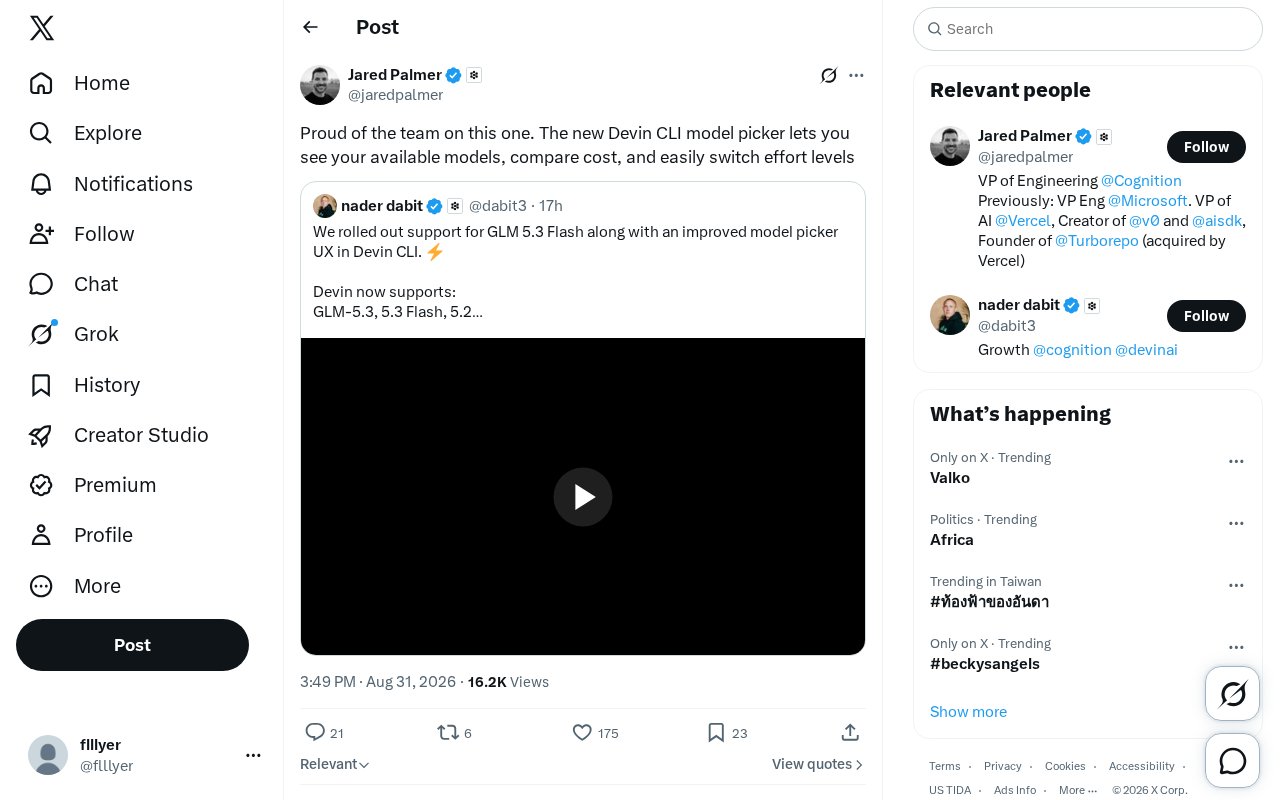
Devin CLI Model Picker: A Deep Dive into One-Click Model Switching and Cost Comparison
Devin CLI adds a Model Picker feature for viewing available models, comparing costs, and switching effort levels. A deep dive into its three core capabilities and practical value for AI coding workflows.