GitHub Daily · July 27: AI Agent Skill Ecosystem Explodes, Claude's Capability Boundaries Keep Expanding

AI Agent Skills emerge as the hottest open-source category, extending model capabilities through external tooling.
Today's GitHub Trending reveals AI Agent Skills as a booming open-source category. Three standout projects — claude-video (letting Claude watch videos), impeccable (+413 stars, teaching AI design aesthetics), and last30days-skill (cross-platform research agent) — all extend model capabilities through external tools rather than modifying models themselves. Meanwhile, infrastructure classics like Jenkins, Cassandra, and Dear ImGui hold steady, proving foundational engineering never goes out of style.
GitHub Daily · July 27: AI Agent Skill Ecosystem Explodes
Today's Trending list sends a very clear signal: AI Agent capability extensions (skills/tooling) are becoming the new battleground of the open-source world. Three projects on the list are directly focused on "giving AI models new skills" — from enabling Claude to watch videos, to cross-platform research agents, to a design language that improves AI's aesthetic sense. Meanwhile, classic infrastructure projects (Jenkins, Cassandra, Dear ImGui) remain firmly on the list, proving that "battle-tested" foundational engineering projects have never lost their relevance.
What's particularly interesting is a curious pattern in today's data — a "disconnect between total stars and daily growth rate." Some projects have 50k+ stars but only gained a few hundred today, while others are clearly in an explosive growth phase. Let's break them down one by one.
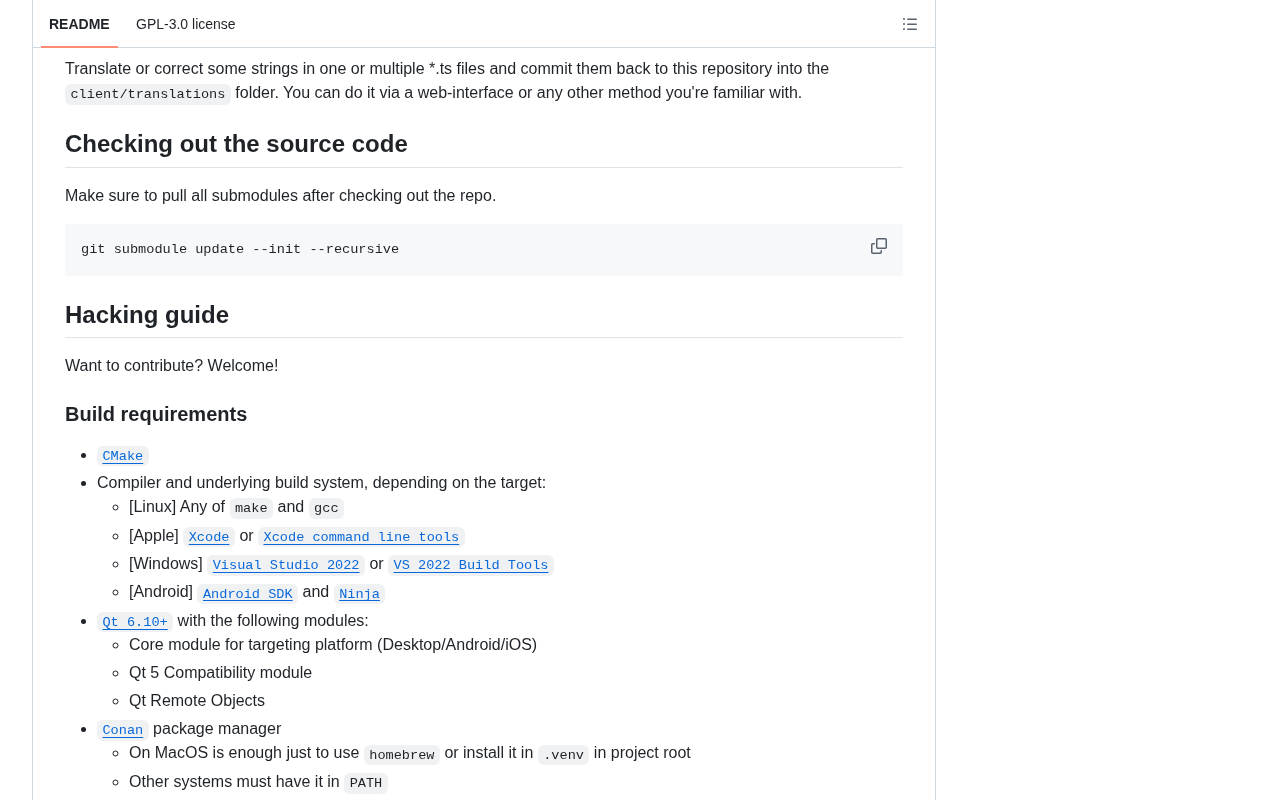
amnezia-vpn/amnezia-client: The Open-Source Benchmark for Anti-Censorship VPN
Project positioning: An open-source VPN client covering desktop and mobile platforms, focused on "anti-detection and anti-blocking."
Problem it solves: Traditional VPN protocols (like OpenVPN and WireGuard) have distinctive traffic signatures that are easily identified and blocked by Deep Packet Inspection (DPI). Amnezia's core value lies in its built-in DPI-resistant obfuscation protocols (AmneziaWG, etc.) that make VPN traffic look like regular traffic, keeping it usable even in heavily censored environments.
Key features: Users can set up their own server, and the client supports one-click deployment to your own VPS — meaning you don't need to trust any third-party VPN provider; the entire privacy chain stays in your hands. Full cross-platform support (Windows/macOS/Linux/iOS/Android) is another major plus.
Use cases: Privacy-conscious users, journalists, researchers, and technical users who need to stay connected in network-restricted environments.
Tech stack: Primarily C++, balancing performance with cross-platform capability. A valuable reference for developers interested in cross-platform desktop/mobile application architecture.
Data analysis: 13,558 stars, +35 today. This is a "steady growth" project — no viral buzz, but consistently searched and bookmarked, indicating it fills a long-term need rather than riding a short-term trend.
NanmiCoder/MediaCrawler: The Ultimate Chinese Social Media Crawler
Project positioning: A multi-platform content and comment crawler framework covering Xiaohongshu, Douyin, Kuaishou, Bilibili, Weibo, Baidu Tieba, and Zhihu.
Problem it solves: Chinese internet data is scattered across various walled-garden platforms, each with its own anti-scraping mechanisms. MediaCrawler unifies the scraping logic for all these platforms, drastically reducing the engineering cost of data collection. For anyone doing sentiment analysis, content research, or market research, this is practically a plug-and-play weapon.
Key features: Supports session persistence, deep scraping of comment threads, and a unified interface across platforms. Rather than brute-force JS reverse engineering, it uses more stable approaches to maintain sessions, reducing the risk of account bans.
Use cases: Data analysts tracking brand reputation, researchers conducting social sentiment analysis, content operators monitoring competitors.
Tech stack: Python, with a mature ecosystem and developer-friendly extensibility.
Data analysis: 57,925 stars, +349 today. One of the highest-star projects on the list, and still growing strong. Its persistent presence on the trending list shows that demand for Chinese data collection is extremely robust — but it also reminds users to pay attention to compliance boundaries and platform robots protocols.
pbakaus/impeccable: A Design Language That Teaches AI to "Understand Design"
Project positioning: A "design language" aimed at improving the design quality of AI-generated interfaces and visual output.
Problem it solves: Models like GPT-5 and Claude 4/Fable 5 are already excellent at writing code, but the UIs they generate tend to be "functional but ugly" — messy spacing, random color choices, unclear hierarchy. Impeccable attempts to feed a structured set of design principles into AI harnesses (AI coding/generation workflows), so models follow professional design principles during generation.
Key features: It essentially makes "designers' tacit knowledge" explicit and rule-based, turning it into context that AI can consume. This fills the gap of "AI can write code but can't do aesthetics."
Use cases: Anyone using tools like Cursor, Windsurf, or Claude Code for front-end development can integrate Impeccable into their prompts/context to significantly improve the quality of AI-generated interfaces.
Tech stack: JavaScript.
Data analysis: 51,085 stars, +413 today — one of the fastest-growing projects of the day. This explosion reflects a real pain point: the next bottleneck in AI-assisted programming isn't feature implementation — it's aesthetics and user experience. Impeccable has hit this trend squarely.
bradautomates/claude-video: Giving Claude "Eyes"
Project positioning: A tool that enables Claude to "watch videos" — using the /watch command to download videos, extract frames, transcribe audio, and then feed all the information to Claude for processing.
Problem it solves: Video is an extremely information-dense medium, but having large models directly process long videos is costly and context-hungry. claude-video breaks videos down into "key frames + transcribed text" — a model-friendly format that lets Claude understand video content within limited context windows.
Key features: An end-to-end pipeline — download, frame extraction, speech-to-text, and context organization, all in one command. It's a textbook "Agent Skill" approach: instead of modifying the model itself, you bolt on a preprocessing capability.
Use cases: Anyone who wants AI to summarize a tech talk, analyze a tutorial, or review a meeting recording.
Tech stack: Python, with a lightweight implementation.
Data analysis: 10,613 stars, +412 today. This growth rate relative to its total star count is staggering — daily growth accounts for nearly 4% of total stars, indicating it's in an explosive topic phase. A rising dark horse.
mvanhorn/last30days-skill: Cross-Platform Information Research Agent
Project positioning: An AI agent skill that can search any topic across Reddit, X, YouTube, HN, Polymarket, and the broader web, then synthesize a fact-based summary.
Problem it solves: A single search engine gives you links, but what people really want is a structured overview of "what happened regarding topic X in the past 30 days." This skill aggregates, denoises, and synthesizes real-time information from multiple platforms, directly tackling the pain point of information overload.
Key features: Multi-source fusion, with the particularly interesting inclusion of Polymarket (a prediction market) as a source — it introduces quantitative signals like "the market's probability pricing of an event," making summaries not just text compilations but data-backed judgments.
Use cases: Investment research, trend analysis, and topic research before content creation.
Tech stack: Python.
Data analysis: 53,934 stars, +221 today. High total stars with sustained growth indicates that the "AI research assistant" category addresses very real demand.
jenkinsci/jenkins: The Evergreen of CI/CD
Project positioning: A veteran automation server and one of the de facto standards for DevOps pipelines.
Problem it solves: Automation orchestration for continuous integration and continuous delivery. Despite the rise of challengers like GitHub Actions and GitLab CI, Jenkins remains irreplaceable thanks to its massive plugin ecosystem and the controllability of self-hosting.
Key features: An unmatched plugin ecosystem, high customizability, and enterprise-grade self-hosting capability.
Use cases: Medium to large enterprises that need private deployments and complex pipeline orchestration.
Tech stack: Java.
Data analysis: 25,800 stars, +18 today. Modest growth — a classic "infrastructure evergreen project" that doesn't rely on hype but persists through steady demand.
apache/cassandra: A Reliable Choice for Distributed Databases
Project positioning: An open-source distributed transactional database focused on linear scalability and fault tolerance.
Problem it solves: In scenarios demanding massive write throughput, high availability, and cross-datacenter deployment, traditional relational databases struggle to scale linearly. Cassandra solves this with its decentralized architecture.
Key features: No single point of failure, linear scalability, cross-region replication, and stable performance on both commodity hardware and cloud infrastructure.
Use cases: Large-scale time-series data, logs, IoT data, and any workload requiring high write throughput.
Tech stack: Java.
Data analysis: 9,887 stars, +7 today. Another classic case of steady infrastructure growth.
ocornut/imgui: The Classic of C++ GUI
Project positioning: Dear ImGui, a bloat-free, minimal-dependency C++ immediate-mode graphical user interface library.
Problem it solves: Game engines and tool software need to quickly build debug interfaces and tool panels, but traditional GUI frameworks are heavy and slow. ImGui uses an "immediate mode" paradigm that lets developers draw interactive interfaces with just a few lines of code.
Key features: Minimal, zero-dependency, pluggable rendering backends — virtually the standard debug tool in game and graphics development.
Use cases: Debug UIs for game engines, tool panels for graphics programs, and any C++ project needing quick visualization.
Tech stack: C++.
Data analysis: 75,109 stars, +48 today. The highest-star project on the list — a timeless classic that keeps going strong.
Trend Watch: AI Skills Are Becoming a New Open-Source Category
Connecting the dots across today's list, a clear trend emerges: AI Agent capability extensions (Skills) are forming an independent open-source ecosystem.
- claude-video lets models "watch videos"
- last30days-skill lets models "do research"
- impeccable lets models "understand design"
The common logic across these three projects is: rather than modifying the model itself, they extend the model's capability boundaries through external tools, context specifications, and preprocessing pipelines. In an era where flagship models like GPT-5 and Claude Fable 5 are already highly capable, "how to use models well" is a more accessible battlefield for average developers than "building stronger models." These projects typically involve modest codebases and low barriers to entry, yet precisely solve pain points — hence their explosive growth.
Another undercurrent is data and privacy: MediaCrawler represents the demand for data collection, while Amnezia represents the need for privacy and anti-censorship. In an age where AI devours all data, "how to obtain data" and "how to protect yourself" are equally important.
And Jenkins, Cassandra, and Dear ImGui remind us: beyond the hype, solid engineering infrastructure is always needed.
Today's Must-See TOP 3
- pbakaus/impeccable: Hits the core pain point of "AI can write code but can't do aesthetics," with the highest growth rate today. A must-know if you're using AI for front-end development.
- bradautomates/claude-video: A dark horse project that gives Claude eyes — extremely high growth relative to its total stars, and a textbook example of the Agent Skill paradigm.
- mvanhorn/last30days-skill: A multi-source research agent. Its creative use of Polymarket as an information source is worth studying for anyone building information aggregation tools.
Looking ahead: As model capabilities approach saturation, open-source hot spots in the second half of 2026 will most likely continue to tilt toward the "Agent Skill/Tooling layer." Those who can package model capabilities into plug-and-play skills that precisely address pain points will earn genuine attention on the Trending charts.
Related articles

The Truth Behind Codex 'Build a Website in 5 Minutes': AI Isn't Creating Sites—It's Helping You Copy Them
Exposing the truth behind viral Codex 5-minute website videos: creators aren't building original sites with AI—they're copying shared prompts or scraping others' work. Learn AI coding tools' real limits.

Getting Started with AI Agent Development: A Complete Guide from Concept to Practice
A comprehensive guide to AI Agent architecture and development, covering automated marketing, intelligent customer service, and investment analysis scenarios with single and multi-agent collaboration.

The Truth Behind Codex 'Build a Website in 5 Minutes': AI Isn't Creating Sites — It's Helping You Copy Them
Exposing the truth behind viral Codex 5-minute website videos: creators aren't building original sites with AI — they're copying shared prompts or scraping others' work.