GitHub Daily · October 29: AI Colleagues Get Their Own Computers

Three trending GitHub projects give AI agents independent VMs or computers, making isolation and trust the new frontier.
Today's GitHub Trending reveals a shift: agents are getting their own computers. OpenMausBot provides a VM for unrestricted bot operation, CopilotKit/OpenBot offers AI colleagues with isolated environments and full audit trails, and Claude-Code-Game-Studios orchestrates 49 agents into a game studio hierarchy. Isolation and observability are becoming must-haves.
Today's GitHub Trending shows a fascinating shift. A few months ago, everyone was competing over whose agent framework was more complex. But the three projects that climbed the charts today are all doing the same thing: giving AI its own computer. A virtual machine, a browser, a file system, and a record of every step taken.
This is no coincidence. As agents move from chat windows into real workflows, isolation and security become unavoidable hurdles. Who would dare let AI operate on their home directory? So today's theme can be summed up in one sentence: carve out a territory for AI and let it tinker inside.

milind-soni/OpenMausBot: Give the Bot Its Own VM
Project positioning: An open-source Grok Bot alternative, built around giving the bot a virtual machine it can use freely.
Problem it solves: Most AI bots today run in sandboxes with very limited capabilities. Ask it to install a dependency or run a script, and it either lacks permission or messes up the host machine. OpenMausBot's approach is direct: just give the bot its own VM, let it install whatever it wants and run whatever it wants inside. The host stays untouched.
Core features: VM isolation is the biggest highlight. The bot has a complete OS environment where it can execute arbitrary commands and install arbitrary software. This offers far more freedom than traditional sandbox solutions. You don't have to worry about it running rm -rf on your project directory, because it can't even reach it.
Use cases: Suited for tasks that need long-running autonomous operation. For example, automated data processing pipelines, or code experiments that require repeated trial and error. Developers can throw the dirty work in and watch the results from outside.
Tech stack: Written in TypeScript. A pragmatic choice—the frontend ecosystem is mature, and it's easy to integrate with various APIs. For developers who want to build their own agent runtime environment, its VM management logic is worth studying.
Stars & Forks analysis: Over 7,000 stars, over 1,000 forks, and gained 1,100+ stars today. That growth rate is the most explosive on the list. It shows the demand for "giving a bot its own machine" is real. The 1,000+ forks are also interesting—it means many people plan to modify it for their own use.
CopilotKit/OpenBot: AI Colleagues, Each with a Computer
Project positioning: An open-source AI colleague system where every AI has its own computer, complete with browser, files, and tools.
Problem it solves: This project captures a key pain point—agent controllability. One line in its description is crucial: every action is decided before execution and recorded after. This addresses the trust problem. If you let AI do work, you need to know what it did, right? OpenBot separates decision-making from execution: plan first, then act, with a full audit trail.
Core features: First, every AI colleague has an independent work environment with a full browser and file system. Second, that "decide-then-execute" mechanism is essentially a flight recorder for the agent. Third, it claims to integrate with any AG-UI agent without binding to a specific framework—that openness is a plus.
Use cases: Suited for team collaboration scenarios. Imagine several AI colleagues each handling a piece—one researches, one writes code, one runs tests—each with its own workstation, interfering with no one. Humans just need to review the operation logs.
Tech stack: Also TypeScript. CopilotKit itself has accumulated experience in agent frontend integration, and this project essentially productizes that experience. Valuable reference for teams building multi-agent collaboration.
Stars & Forks analysis: Over 7,700 stars, gained 240+ today. The growth rate is more moderate than OpenMausBot, but the base is higher. It's a more mature project, not one that just exploded today. The 1,000+ forks also indicate strong practicality.
Donchitos/Claude-Code-Game-Studios: Turning Claude Code into a Game Studio
Project positioning: Transforms Claude Code into a complete game development studio—49 AI agents, 72 workflow skills, and a coordination system that mimics real studio hierarchy.
Problem it solves: What do indie game developers lack most? Manpower. Art, design, programming, testing—one person does it all. This project aims to fill that gap with agent division of labor. It's not just having one AI write code; it builds an organizational structure where different agents play different roles and coordinate with each other.
Core features: 49 agents and 72 skills—the numbers alone show ambition. The key is that coordination system mimicking real studio hierarchy. There's someone in charge of overall planning and someone in charge of execution, with clear levels. This is closer to a real development process than a lone-wolf agent.
Use cases: Best suited for small teams or indie developers prototyping games. Want to quickly validate a gameplay idea? Let this system run through art assets, code frameworks, and testing pipelines. It can also be used to learn the complete game development process.
Tech stack: Written in Shell. A smart choice, because its essence is orchestration—stringing together Claude Code's various capabilities. Shell scripts are simple and direct, and easy for developers to read and modify. For those working on agent orchestration, its layered design approach is highly instructive.
Stars & Forks analysis: Over 28,000 stars, over 4,000 forks, gained 538 stars today. This is the largest project on today's list by volume. 28,000 stars means it has gone mainstream—not just geeks playing with it. Over 4,000 forks is even more astonishing, indicating a large number of developers are customizing it. This may be today's most underrated project.
Today's Trend: Agents Are Moving from "Can Talk" to "Can Work"
Looking at these three projects together, a clear thread emerges. First, isolation has become essential. Two projects emphasize giving agents independent VMs or computers, showing that people no longer dare let AI operate directly on the host environment. Second, observability has become a selling point. OpenBot's "decide-first, record-after" approach addresses the trust problem. Third, organization is the direction. Game-Studios uses 49 agents to build hierarchy, indicating that the capability boundary of a single agent has been reached—collaboration is the next frontier.
One more detail worth noting: two of today's three projects are in TypeScript, one in Shell. No Python. This suggests the battleground for agent infrastructure is being entered from the frontend angle, because ultimately it needs to integrate with user interfaces and toolchains.
Today's Must-See TOP 3
#1: Donchitos/Claude-Code-Game-Studios. Those 28,000 stars didn't come from nowhere. It demonstrates a possibility—using agent organization to simulate real workflows. Even if you don't make games, its layered coordination approach is worth studying.
#2: CopilotKit/OpenBot. The "decide-then-execute" design hits the core pain point of agent deployment. Teams wanting to use agents in the enterprise should look at how it solves the trust problem.
#3: milind-soni/OpenMausBot. Today's fastest-growing project. The VM isolation approach is simple, direct, and effective. If you want to quickly set up an agent environment where it can freely tinker, this is the most straightforward starting point.
Outlook
Today's list tells us that agent competition has shifted from "how smart is the model" to "how reliable is the environment." Giving AI a computer is easy; the hard part is making humans comfortable handing over work to it. Next, we'll likely see more projects focusing on observability and permission control. Whoever solves "trust" first will win the enterprise market.
One-line Summary
Today's three trending projects share a common trend: giving AI agents independent virtual machines or computers, with isolation becoming essential; CopilotKit/OpenBot's "decide-then-execute with full logging" mechanism hits the agent observability pain point; Donchitos/Claude-Code-Game-Studios uses 49 agents to simulate studio hierarchy, showcasing organizational collaboration.
Related articles
Google Releases Gemini 4 Carbon: Its Strongest Model Yet, Debuting with a Cybersecurity Focus
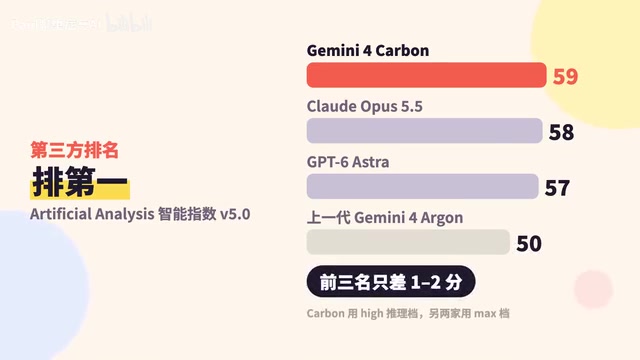
Google releases Gemini 4 Carbon, calling it its strongest model, with a cybersecurity focus. It tops the third-party composite ranking at 59 points but leads by only one or two. This article analyzes its security test results, staged rollout, token pricing, and the divergence between self-reported and third-party tests on hallucinations.

LangChain Adds SchemagateRetriever: On-Demand Table Retrieval Cuts Text-to-SQL Prompts by 92.9%
LangChain docs add SchemagateRetriever: retrieves only the tables needed for text-to-SQL with permission filtering, cutting median prompt size by 92.9% on Spider 2.0 large schemas via offline BM25 selection with no model calls.

Multi-Step AI Agent Guardrail in Practice: Fact-Change Detection Drives False-Alarm Rate to 0%
Developer shares first version of a multi-step AI Agent guardrail: re-verifying dependency facts before irreversible actions cut false alarms from 50% to 17% across 23 scenarios, then to 0% via conservative normalization without lowering catch rate. Runs on local qwen2.5-7b.