GLM 5.3 Models Land on Ollama Cloud: A New Option for Private Deployment
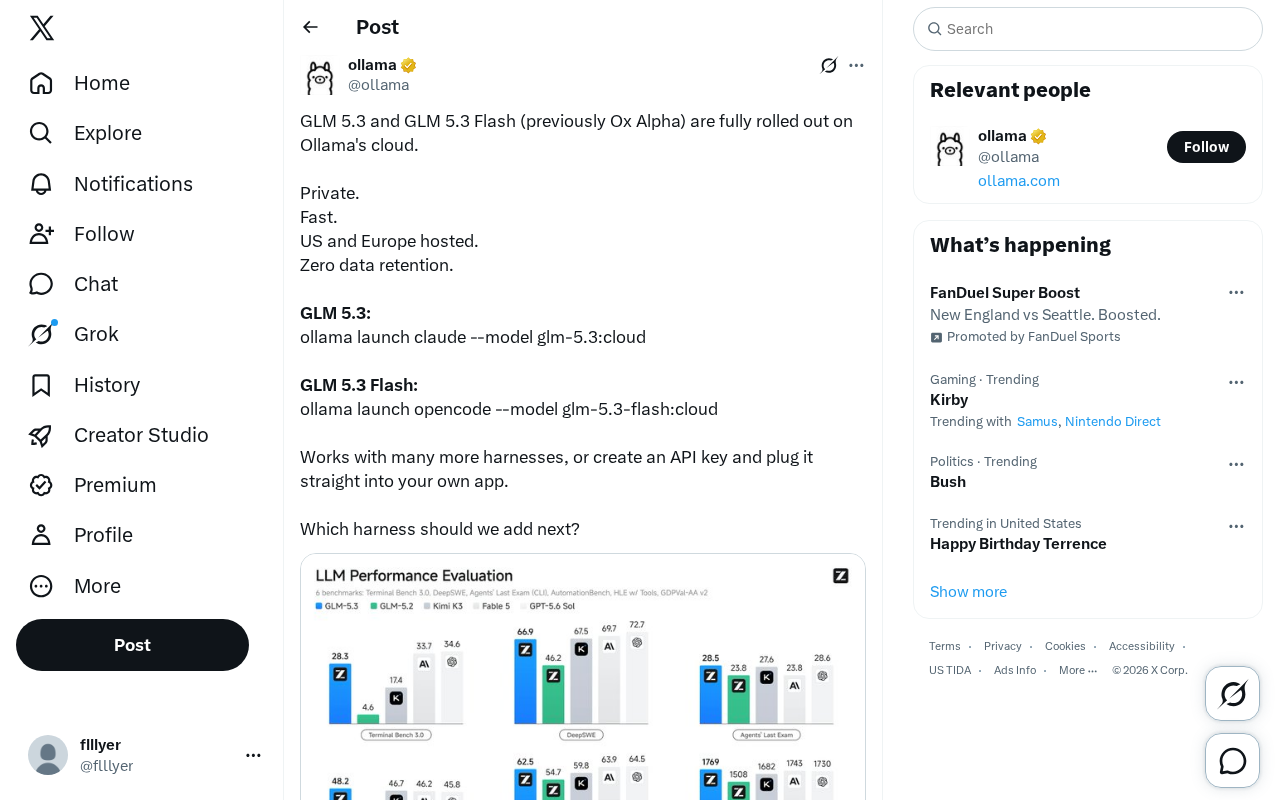
GLM 5.3 and GLM 5.3 Flash deploy on Ollama cloud with zero data retention and global access.
Zhipu AI has deployed its GLM 5.3 and GLM 5.3 Flash models on the Ollama cloud platform, offering developers a private, fast, and zero-data-retention deployment solution. The service supports simple command-line deployment, multi-framework integration, and direct API key access, enabling seamless adoption into existing applications. With servers in the US and Europe, this launch marks a significant step for Chinese-developed LLMs reaching global developers.
Zhipu AI's GLM 5.3 series models have been fully deployed to the Ollama cloud platform, offering developers a more convenient private deployment solution. This launch includes two versions: GLM 5.3 and GLM 5.3 Flash, the latter previously codenamed Ox Alpha.
Zhipu AI is a leading Chinese artificial intelligence company incubated from Tsinghua University's Knowledge Engineering Laboratory. Its GLM (General Language Model) series is built on a proprietary GLM pre-training architecture. Unlike the pure Decoder architecture used by the GPT series, GLM originally adopted an autoregressive blank-filling training approach, achieving unified modeling across both understanding and generation tasks. The GLM series has evolved from ChatGLM to GLM-4 and now GLM 5, progressively closing the gap with top international models in bilingual Chinese-English capabilities, long-context processing, and tool calling.
Ollama, on the other hand, is an open-source tool platform focused on local and cloud deployment of large language models. It initially gained recognition for enabling users to run open-source models like Llama and Mistral on personal computers with a single command. By encapsulating complex underlying operations such as model quantization and inference engine configuration, Ollama simplifies large model deployment into a Docker-like command-line experience. Ollama's cloud service is an extension of its local deployment capabilities, allowing users to host and run models on remote servers — combining the privacy benefits of local deployment with the convenience of cloud services.
Core Features and Advantages
Privacy and Performance Guarantees
The GLM 5.3 series on Ollama cloud highlights three key features: Private, Fast, and Zero data retention. Zero data retention refers to the technical commitment that the service provider retains no input or output data on its servers after processing user requests. This mechanism typically involves techniques such as memory-level inference processing, real-time data destruction, and audit log anonymization, effectively preventing business secrets and user privacy from leaking through model service providers. This means users' inference requests are neither logged nor stored by the platform, meeting enterprises' stringent data security requirements. Servers are distributed across the United States and Europe, providing low-latency access for users worldwide.
Quick Deployment
Developers can quickly spin up model services with simple command-line instructions. For the standard GLM 5.3, the command ollama launch claude --model glm-5.3:cloud initiates deployment; the lightweight GLM 5.3 Flash is launched via ollama launch opencode --model glm-5.3-flash:cloud. This cloud deployment approach eliminates the need for complex local environment configuration — no more manually installing CUDA drivers, configuring Python dependencies, or troubleshooting GPU memory allocation — significantly lowering the barrier to entry.
Ecosystem Integration and Extensibility
Multi-Framework Compatibility
The GLM 5.3 series already supports integration with multiple AI development frameworks (harnesses), allowing developers to choose the right toolchain for their tech stack. AI development frameworks serve as middleware between large language models and real-world applications. Common examples include LangChain, LlamaIndex, Semantic Kernel, and Dify. These frameworks provide standardized components such as prompt management, Retrieval-Augmented Generation (RAG), Agent workflow orchestration, and memory management, enabling developers to rapidly build LLM-powered applications without starting from scratch. A model's compatibility with multiple frameworks directly impacts its ecosystem penetration — the more frameworks supported, the lower the migration cost for developers, and the higher the likelihood of adoption. Ollama is actively collecting community feedback and plans to support additional mainstream frameworks to expand the model's application scenarios.
Direct API Key Access
Beyond pre-built integrations, users can also create API keys to connect GLM 5.3 directly to their own applications. This flexible access method enables enterprises to quickly integrate large model capabilities into existing business systems — whether chatbots, code assistants, or content generation tools — all through a unified API interface. For applications already using OpenAI-compatible API interfaces, theoretically only the endpoint address and key need to be changed to seamlessly switch to GLM 5.3, dramatically reducing the effort required for technical migration.
Market Significance and Outlook
The arrival of the GLM 5.3 series on Ollama cloud marks a significant breakthrough for Chinese-developed large models in terms of overseas infrastructure presence. As a well-known platform in the open-source model deployment space, Ollama's cloud service provides a convenient channel for GLM models to reach global developers. The GLM 5.3 Flash version, in particular, with its faster inference speed and lower cost, is poised to compete with mainstream international lightweight models such as GPT-4o mini and Claude 3 Haiku in real-time interaction scenarios.
Lightweight large models represent a critical competitive track in the current AI industry. Through techniques like model distillation, architecture optimization, and inference acceleration, these models dramatically reduce computational costs and response latency while maintaining core capabilities close to those of full-size models. Lightweight models are particularly well-suited for high-concurrency real-time interactions, mobile deployment, and cost-sensitive enterprise applications — making them a key link in the transition from technical validation to large-scale commercialization. GLM 5.3 Flash's entry into this arena puts it in direct competition with OpenAI's GPT-4o mini, Anthropic's Claude 3.5 Haiku, and Google's Gemini Flash series.
The zero data retention commitment also aligns with the growing AI compliance requirements in Western markets. As privacy regulations like GDPR are strictly enforced — GDPR requires data processing to follow the principles of data minimization and purpose limitation, with non-compliant companies facing fines of up to 4% of global annual revenue — this feature could become a key differentiator for the GLM series in the enterprise market. Going forward, it will be worth watching whether Ollama further expands framework support and how GLM 5.3 performs in real-world production environments.
Related articles
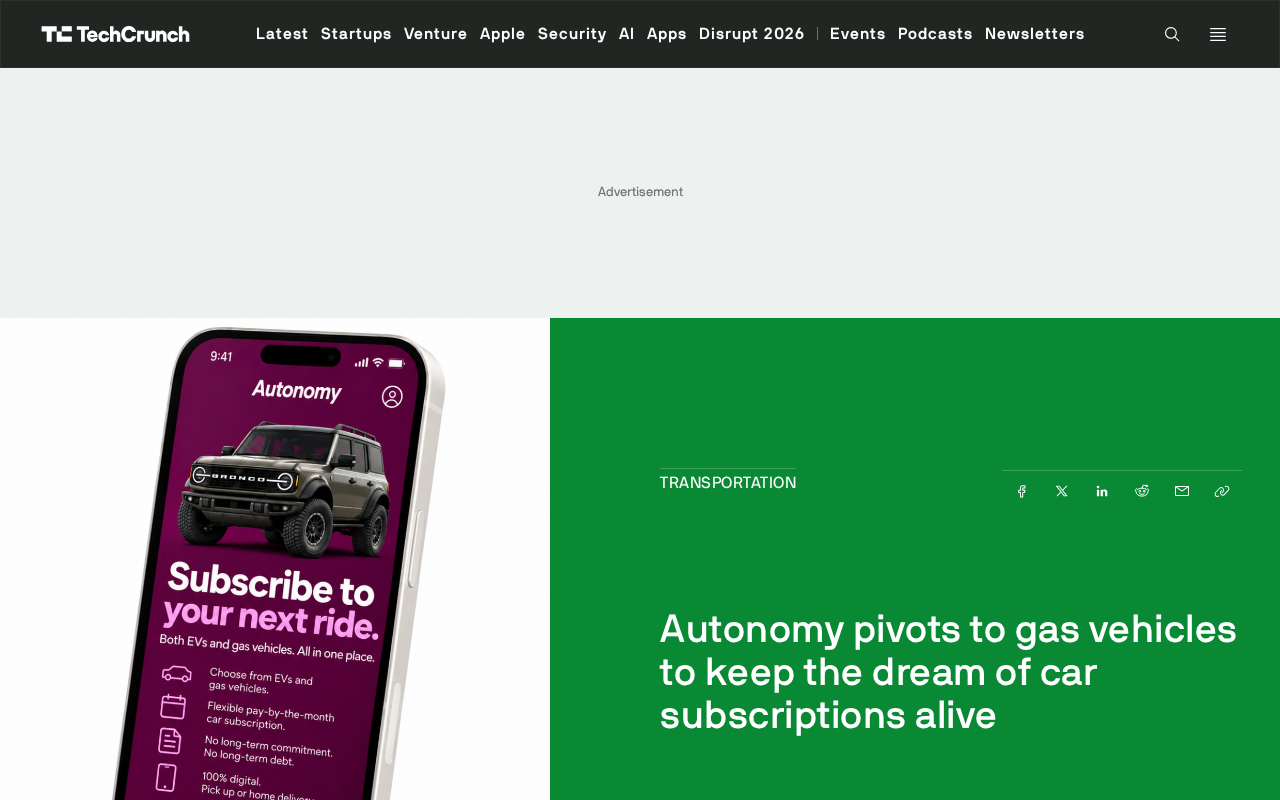
Autonomy Pivots to Gas-Powered Cars: A Survival Play for the Car Subscription Model
Autonomy pivots from EV to gas-car subscriptions. This article analyzes the heavy-asset challenges, EV residual value risks, and lessons for mobility innovation.
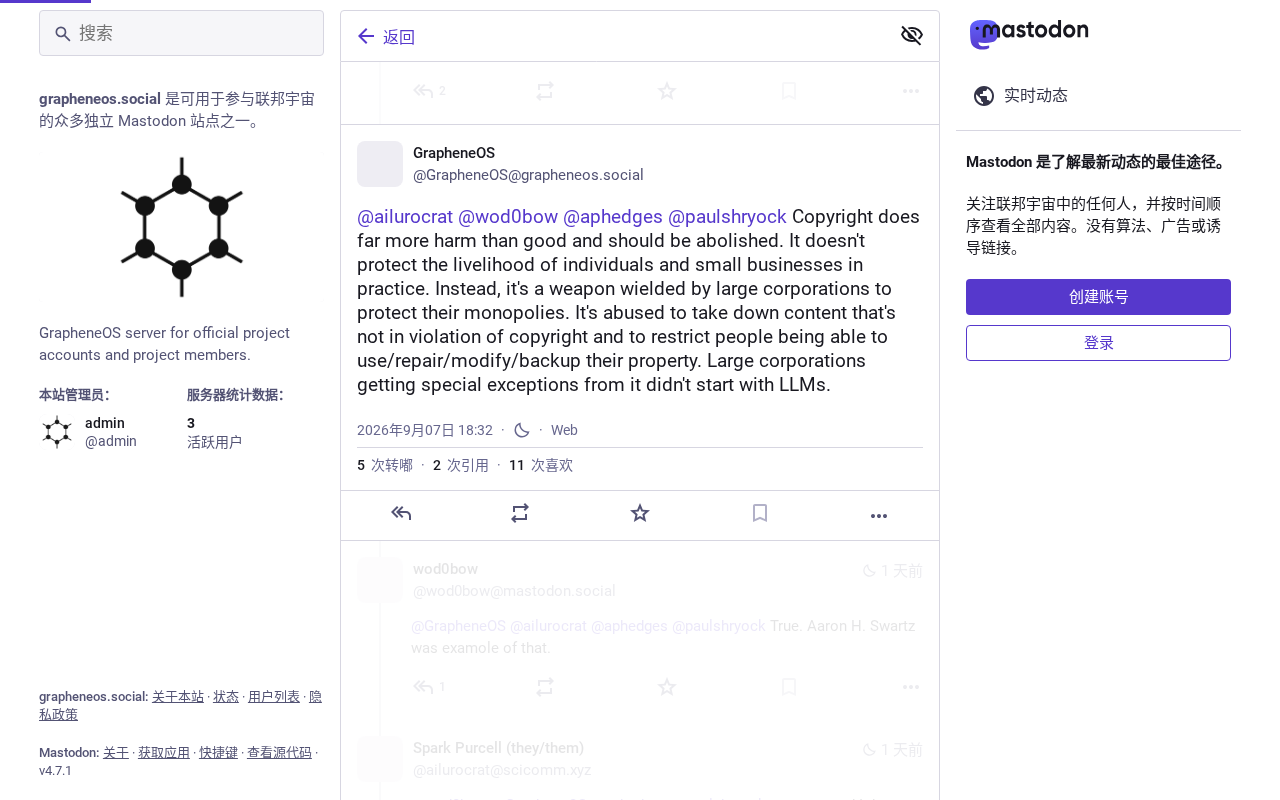
Abolish Copyright? Core Arguments and Reflections in the Intellectual Property Debate
Should copyright be abolished? This article analyzes core arguments for and against, covering excessive protection terms, AI training data disputes, open-source movements, and possible IP reform.
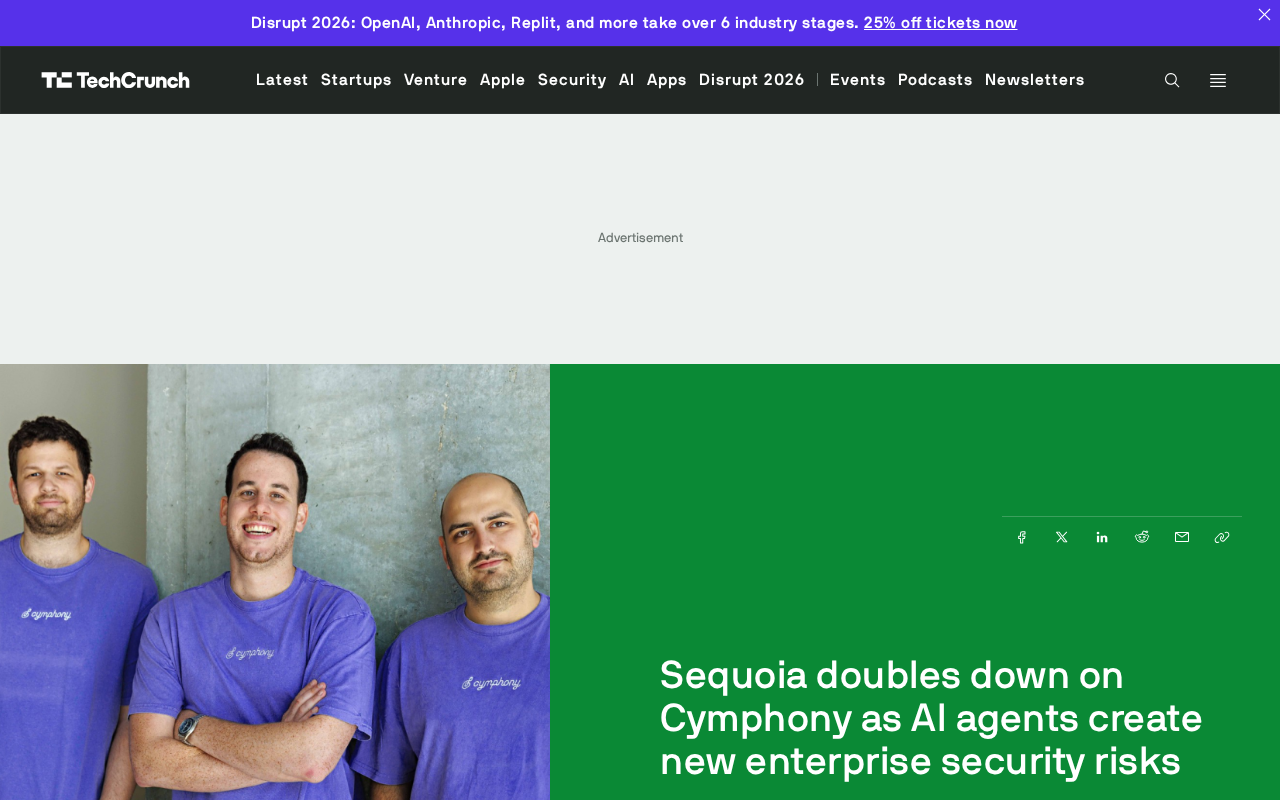
Cymphony Raises $25M Series A Led by Sequoia: AI Agent Enterprise Security Challenges and Opportunities
Sequoia leads Cymphony's $25M Series A for AI agent security, valued over $100M. Exploring enterprise AI agent security challenges, permission management, and emerging market opportunities.