GLM 5.4 Looped Transformer: 750B Parameters Challenge 2T-3T Intelligence

GLM 5.4 loops middle layers twice to deepen the network without adding parameters, claiming parity with 2-3T parameter models but lacking public benchmark verification.
GLM 5.4 proposes a new path beyond the parameter race: instead of adding any new parameters, it makes a middle block of layers run twice with the same weights, deepening the network. To control costs, the team designed three optimizations: per-token gating, reusing the first round's KV cache in the second round with only a sliding window kept, and reusing sparse attention indices. In a 30B parameter controlled experiment, about 10% more training compute brought significant gains in math, scientific reasoning, and long context, with answer length shortened by 10-14%, suggesting some thinking shifted into the loop internal. However, the biggest capability claim—reaching the level of 2-3 trillion parameter models—has not been verified by any public benchmark or third party; all data are vendor-reported. The publisher also states that looping is not a replacement for scaling, and larger models are coming.
A New Direction Beyond the Parameter Race
For a long time, there seemed to be only one path to improving large model capabilities: add more parameters, feed more data, and stack more GPUs. But recently, a model called GLM 5.4 has proposed a different approach—it has only 750 billion parameters, yet claims to reach the intelligence level of 2 to 3 trillion parameter models. The key isn't in adding new parameters, but in making the model run some of its layers twice.
This claim comes from the xAI blog (note: the original host misspoke as xAI; the actual publisher should be Zhipu AI). According to analysis by the YouTube channel The Solo Engineer, this release has both its biggest highlight and its most caution-worthy aspect: behind the strongest capability claims, there are currently no public benchmarks available for verification.
Core Mechanism: Making the Middle Layers Run Again
To understand this innovation, let's return to the basic structure of the Transformer. Your input text is split into tokens, each token becomes a string of numbers, and passes through dozens of layers in sequence, with each layer refining the semantics a bit more. The attention mechanism is responsible for determining which words are related to which others—for example, in "the engineer opened the laptop because it was running slowly," the model needs to know that "it" refers to the laptop.
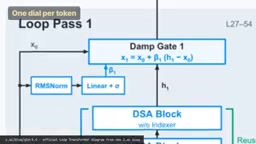
In a normal Transformer, each layer runs only once. To get a deeper model, you add more layers, and parameters increase accordingly. GLM 5.4's approach is: take a middle segment of layers and run the same weights and same layers through a second pass. It's like an engineer inspecting a machine—the first round understands the overall design, and the second round uses that picture to dig into details. Same machine, same person, one more round of work.
This doesn't mean the model thinks like a human—it just means the numbers go through one more round of processing before outputting an answer. The network thus becomes "deeper" without adding a single new parameter. This is not an entirely new concept either: the xAI blog itself cites the 2018 Universal Transformer, and just last week, Thinking Machines released a small looped model for laptops called Inkling 2 Mini.
Universal Transformer is a model architecture proposed by Google in 2018. Its core idea is to apply the same set of Transformer layers repeatedly along the time dimension, rather than passing through each layer only once as in a standard Transformer. It borrows the deep looping concept from recurrent neural networks (RNNs) but retains the parallel computing capability of Transformers. Each loop step shares the same set of weights, so it doesn't increase parameter count while significantly increasing computational depth. Universal Transformer also introduced a dynamic stopping mechanism, allowing the model to adaptively decide the number of loops based on task difficulty. Unfortunately, due to training instability and inference cost issues, this architecture did not become mainstream in the following years, until looped models recently regained attention and it came to be regarded as an important intellectual pioneer.
Why No One Had Done This at This Scale Before
The problem is cost. Looped models trained from scratch still lag behind ordinary models under the same training compute. GLM 5.4's clever trick is: instead of training from scratch, take an already-trained model and use additional training to teach it to "loop."
Making a 750 billion parameter model loop twice would be very expensive, so the team implemented three controls:
Gating mechanism: If the second round directly overwrites the first round's writes, the model's internal values would blow up and subsequent layers would be chaotic. Therefore, each round sets a gate for each token, deciding how much of the new result to write back. After training, the first round builds the global picture with light writing, and the second round opens the gates for a full update. For harder tokens, the first round writes more into the mixed KV cache—this is the model's short-term memory of what it has read, avoiding recomputing everything for each new token.
Cache reuse: The simplest loop would keep a complete second cache, directly doubling memory. GLM 5.4's second round reuses the first round's cache, keeping only a small sliding window. The additional loop's memory cost is said to be just a sliding window, not a full copy.
Attention index reuse: The base model uses sparse attention, selecting only relevant earlier tokens. The second round directly reuses the first round's selections, with nearly identical results to re-selecting, it is claimed.

The key to this design is that the architecture and inference serving system were built together—no matter how clever a design is, it's meaningless if it can't run.
KV Cache (Key-Value Cache) is a key optimization mechanism during Transformer inference. In autoregressive generation, each time the model generates a new token, it needs to recompute its attention relationship with all previous tokens. Without caching, each new token would require recomputing over the entire history, with computation growing quadratically with sequence length. KV caching stores the already-computed Key and Value vectors for each layer, and when generating a new token, directly reuses them—only computing the Query for the new token and its attention with the cached Keys. The cost is that memory usage grows linearly with sequence length—the longer the context, the larger the cache. For looped models, if a complete second set of caches were kept for the second round, memory would directly double, which is precisely the fundamental reason GLM 5.4 chose to reuse the first round's cache and keep only a sliding window.
Sparse Attention differs from standard full attention in that it doesn't compute attention between each token and all other tokens in the sequence, but selects only a subset of relevant tokens to participate in computation. Common approaches include local window-based attention, content similarity-based dynamic selection of top-k key tokens, or learnable routing mechanisms. The core benefit of sparse attention is reducing computational complexity from O(n²) to approximately O(n log n) or O(n·k), making long-context scenarios engineering-feasible. GLM 5.4's base model uses sparse attention, so the first round has already completed an index construction of "selecting relevant earlier tokens." The second round directly reuses this index, effectively saving the overhead of re-scoring and re-sorting—this is the technical basis for what the original article calls "reusing attention indices."
Test Data and What Remains Unproven
xAI tested looping at four scales: 1 billion, 4 billion, 30 billion, and 750 billion parameters. The cleanest comparison is at 30 billion: two models with the same design and same parameter count, one with looping and one without. With about 10% more training compute, the looped version achieved significant gains, with the largest improvements in math, scientific reasoning, and long-context tasks.
There's also an intriguing finding: on benchmarks like GPQA Diamond and MLU Pro, the looped model's answers were 10% to 14% shorter, mainly because the written reasoning was shorter. xAI believes some thinking shifted into the loop internal, rather than being written out as tokens.
But it must be made clear: these are all xAI's own tests on the 30 billion model. The benchmark scores of GLM 5.4 itself have not been published. In other words, the biggest claim—"reaching the intelligence level of 2 to 3 trillion parameter models"—has not been verified by any external party.
GPQA Diamond and MLU Pro are two representative benchmarks for evaluating large model reasoning capabilities. GPQA (Graduate-Level Google-Proof Q&A) consists of graduate-level science questions written by domain experts, and the Diamond subset is the highest-quality, hardest portion, covering physics, chemistry, biology, and other disciplines, emphasizing the model's ability to perform multi-step reasoning when simple search is not possible. MLU Pro is a large-scale multi-task language understanding benchmark in the Chinese context, covering a wide range of fields including STEM, humanities, and social sciences, focusing on the model's breadth of knowledge and depth of professional reasoning. Both use multiple-choice format for easy automated scoring, but are therefore susceptible to targeted optimization, which is one reason the industry emphasizes the need for independent third-party evaluation.
General Coding: Code as a Universal Tool
This release has a second storyline. xAI calls it "general coding"—code isn't just for building software; code can be a tool for making almost anything.
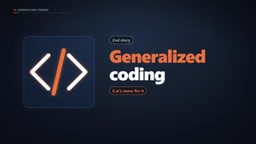
Four demos include: a music video "Hello World" narrated by the model itself, generated through code; a complete game with character movement, physics, maps, combat, and art; a six-axis robotic arm modeled in FreeCAD (a free design tool for engineers); and an interactive 3D birdwatching scene built purely with math and shaders. This version also adds visual capabilities, allowing it to "see" what it's building.
Same caveat: these are carefully selected demos. A robotic arm that looks right on screen is not the same as a tested, safe design.
Speed, Availability, and Four Limitations
On speed, xAI reports up to 200 tokens/second during off-peak hours, and 70-80 tokens/second under peak load. Again, these are vendor-reported figures.
GLM 5.4 is currently available for trial in the ZCode tool and Zhipu Qingyan. Coding plan weekly quota users are said to get 50% more quota than GLM 5.3. The API is marked as coming soon after safety evaluation, and open-source weights are also planned for release after safety hardening—that is, you can use it today, but you can't download it yet.
As for limitations, at least four points are worth remembering:
- xAI admits the model can get stuck in so-called "marathon thinking loops," spending too long on reflection and self-correction.
- GLM 5.4 has only two public scores, with no independent testing yet.
- Shared weights save memory, not computation—the second round still has to actually compute.

- Currently there are only two loops. The team says it is still exploring adaptive compute, giving harder tokens more rounds, and where the boundary of looping's benefits lies.
Looping Isn't a Replacement for Scale, But Another Way to Scale
For four years, the theme of the AI race has been scale: more parameters, more data, more GPUs. GLM 5.4 demonstrates another direction—using the same model more deeply.
But note xAI's own statement: it is not choosing between depth and scale, but doing both, and larger models are coming. So looping is not replacing larger models, but adding another scaling method. Two labs released looped models within a week, which is worth following closely. As for whether it's the future, it's too early to say—let's wait for the benchmarks.
Related articles
GLM-5.4 Released: Analysis of the First Recurrent Transformer and Claude Code Configuration Guide
Zhipu AI releases GLM-5.4, its first recurrent Transformer: 28 layers run twice with gating. We analyze the architecture, benchmark limitations, coding plan pricing, and Claude Code setup.
GLM-5.4 Loop Transformer: Three Times Smarter Without Stacking Parameters
An analysis of ZAI Research's GLM-5.4 Loop Transformer: 28 layers looped twice, 750B parameters rivaling trillion-scale models, using gated updates, hybrid KV cache, and index reuse to achieve low-cost deep reasoning and general coding.

GLM-5.4 Loop Transformer Tested: Full Guide to Claude Code Integration
Z.ai releases GLM-5.4, a loop transformer coding model with ~750B parameters, million-token context, and vision. Architecture, Claude Code setup, King Bench results, and the compute cost of marathon thinking.