Goku: A Browser-Based LLM Inference Engine and Model Manager Built on WebAssembly
Goku: A Browser-Based LLM Inference En…
Goku runs large language models entirely in the browser using WebAssembly and wllama — no server or API required.
Goku is an open-source browser-based LLM inference engine and model manager powered by WebAssembly and wllama (a WASM binding for llama.cpp). It enables local AI inference directly in the browser with no cloud API, offering privacy protection, zero deployment cost, and offline capability. It also includes a built-in model manager for downloading, caching, and switching between quantized models.
What Is Goku
Recently, an open-source project called Goku made its debut on Hacker News as a Show HN post. It is a large language model (LLM) inference engine and model manager powered by WebAssembly (WASM) and driven by wllama. The core value proposition is simple: run large language models directly in the browser, with no remote server or cloud API required.
For developers who have long followed AI deployment trends, Goku represents a rising paradigm — Edge Inference and local AI. It attempts to answer an increasingly important question: can AI models run safely and privately on a user's own device, inside a browser sandbox?
The Technical Foundation: WebAssembly and wllama
Why WebAssembly Suits AI Inference
WebAssembly is a portable binary instruction format originally designed to let languages like C/C++ and Rust compile and run in the browser at near-native speed. Compared to JavaScript, WASM offers a significant performance advantage for compute-intensive tasks — and LLM inference is a quintessential example.
WebAssembly became a W3C official standard in 2019, making it the fourth native web language format alongside HTML, CSS, and JavaScript. Its design philosophy traces back to the asm.js project, with the goal of bringing near-native execution performance to the web platform. WASM's key strengths lie in its deterministic execution model and sandboxed security mechanism — code runs in a strictly isolated virtual machine environment with no direct access to OS resources, which aligns well with the security requirements of AI inference. After 2022, broad support for WASM SIMD (Single Instruction, Multiple Data) extensions further enhanced vector computation capabilities. Matrix multiplication — the core operation in neural network inference — is precisely the kind of workload SIMD instructions are built for.
By compiling model inference logic to WASM, Goku breaks through the browser's traditional performance ceiling, bringing inference tasks that once required backend servers down to the client side. This delivers three direct benefits:
- Privacy protection: User data never leaves the local device; all inference happens within the browser.
- Zero deployment cost: No GPU servers to maintain, no paid APIs to call.
- Offline availability: Once downloaded, models run without any network connection.
The Role of wllama
Goku's inference capability is built on wllama — a WebAssembly binding for the well-known open-source project llama.cpp, bringing llama.cpp's highly optimized C++ inference engine to the web platform.
llama.cpp was released by Georgi Gerganov in January 2023, initially targeting Meta's LLaMA model running on a MacBook. Through a pure C/C++ implementation, aggressive quantization strategies, and the unified GGUF format, it fundamentally lowered the barrier to deploying open-source LLMs. Quantization compresses model weights from 32-bit floats down to 4-bit or lower integers, shrinking model size by over 75% with minimal accuracy loss — making it practical to run 7B-parameter models on consumer-grade CPUs. The GGUF (GPT-Generated Unified Format) packages model weights, tokenizer configurations, and metadata into a single file, and is currently the most widely adopted standard format in the local LLM ecosystem.
By leveraging wllama, Goku avoids reinventing the wheel and directly reuses the mature quantization, KV cache, and sampling mechanisms from the llama.cpp ecosystem. This also means Goku can theoretically support a wide range of open-source models, as long as they can be converted to a compatible quantized format.
The Model Manager: A Critical but Overlooked Component
Goku is more than just an inference engine — it also includes a fully integrated Model Manager. This is a component that many comparable browser-based AI projects tend to overlook.
When running LLMs locally, model files can be substantial in size. Even after quantization, a 7B-parameter model may still occupy several gigabytes. How efficiently you can download, cache, switch between, and delete these models has a direct impact on user experience. By treating model management as a first-class concern, Goku's author has clearly accounted for the real engineering challenges that arise in production use.
Browser-side model management relies on several Web API layers. IndexedDB is the browser's built-in key-value database that supports storing binary large objects (Blobs), theoretically allowing tens of gigabytes per origin (constrained by the user's available disk space). The Cache API is designed specifically for resource caching and, paired with a Service Worker, enables true offline access. However, browsers apply automatic eviction policies for persistent storage — under storage pressure, non-persistent data may be deleted without user confirmation. This requires the model manager to proactively request the Storage Persistence API for stronger storage guarantees, and to track model integrity at the metadata level to prevent load failures caused by partial caches.
A robust model manager typically needs to handle:
- Chunked model downloads with resume-on-failure support
- Capacity scheduling across browser storage (e.g., IndexedDB or Cache API)
- Fast switching between multiple models
- Persistent tracking of version information and metadata
The Promise and Practical Challenges of Browser-Based AI
The Value of Decentralized Deployment
The emergence of projects like Goku reflects a broader trend: AI deployment is shifting from centralized cloud infrastructure toward distributed edge environments. For use cases that prioritize data privacy, educational demos, offline tools, or development teams looking to cut API costs, browser-based inference offers a highly compelling path forward.
Furthermore, WebAssembly's cross-platform nature means the same codebase can run in desktop browsers, mobile browsers, and even embedded WebViews — dramatically lowering the distribution barrier for AI capabilities.
Unavoidable Technical Limitations
Browser-based LLM inference still faces several real-world constraints:
- Performance ceiling: Even with WASM and SIMD optimizations, browser inference speed still falls well short of native GPU acceleration, resulting in relatively high latency when running large models.
- Memory constraints: Browsers impose memory limits per tab, and loading large model files may push against those limits.
- Initial download overhead: A multi-gigabyte model download is a one-time but non-trivial cost for users' bandwidth.
Based on the currently modest attention Goku has received on Hacker News, the project is still in early-stage exploration and awaits broader community validation. But the direction it charts — truly decentralized AI running in everyone's browser — carries significant long-term value.
Conclusion
Goku is a worthwhile experiment in the browser-based LLM ecosystem. It combines wllama's mature inference capabilities with practical model management features, offering developers a ready-to-use local AI solution. Performance and memory ceilings are real constraints, but as new standards like WebGPU gain wider adoption and hardware continues to improve, the browser is poised to become one of the important platforms for AI inference.
WebGPU is the next-generation web graphics and compute API succeeding WebGL, officially landing in Chrome in 2023. Unlike WebGL, WebGPU provides direct access to modern GPU compute shaders, making GPU-accelerated neural network inference in the browser genuinely feasible. The WebGPU-based WebLLM project has already demonstrated that the same model runs more than 10× faster under WebGPU acceleration compared to a pure WASM approach. From a technical evolution standpoint, Goku's current WASM approach and WebGPU are not mutually exclusive — the former offers broader device compatibility (including older devices that don't support WebGPU), while the latter represents the direction for breaking through the performance ceiling. The convergence of these two paths will likely define the medium-term landscape of browser-based AI inference.
For teams focused on privacy protection, offline capability, and low-cost deployment, Goku is a project well worth tracking.
Related articles
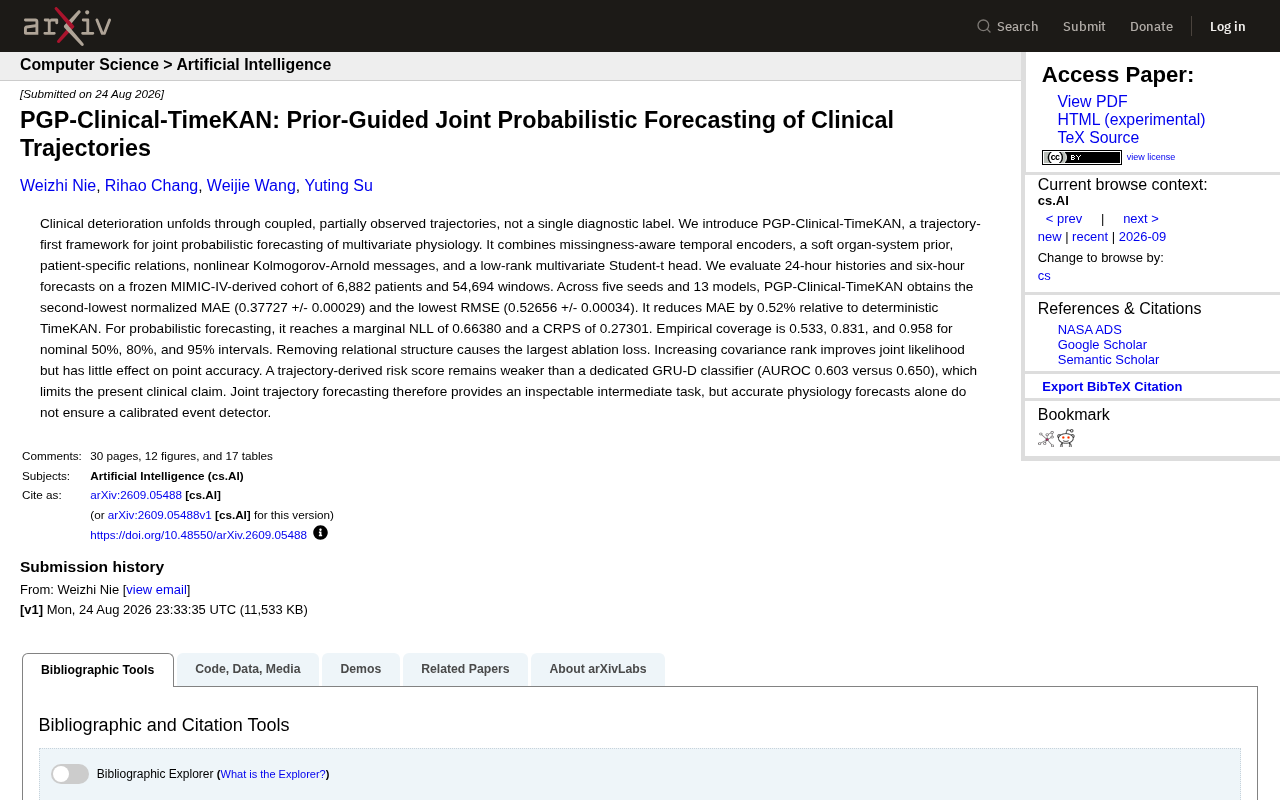
PGP-Clinical-TimeKAN: A Detailed Guide to the Multivariate Physiological Indicator Joint Prediction Framework
An in-depth analysis of the PGP-Clinical-TimeKAN framework for joint probabilistic prediction of multivariate physiological indicators, covering trajectory-first paradigm, KAN message passing, MIMIC-IV validation, and ablation studies.
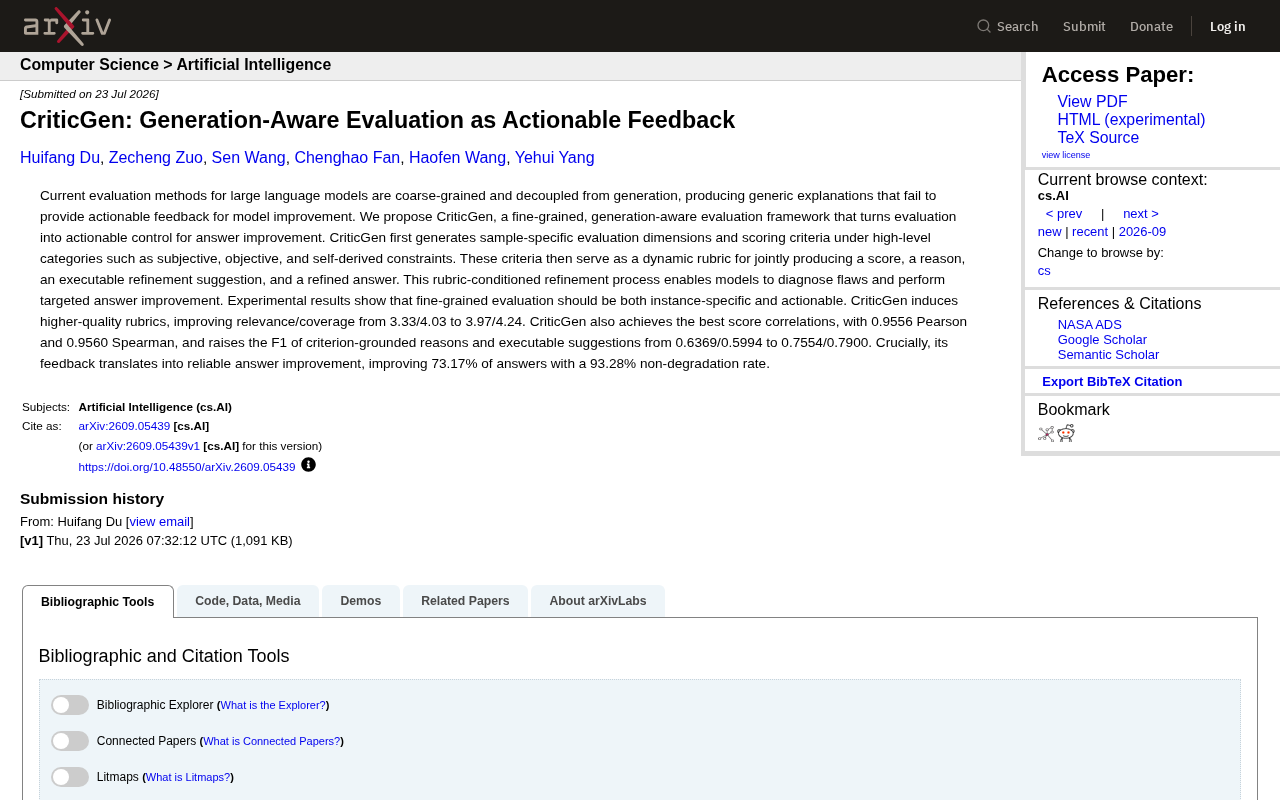
CriticGen: A New Framework That Transforms AI Evaluation into Actionable Improvement Feedback
CriticGen proposes a generation-aware evaluation framework that transforms AI assessment from passive scoring to an active optimization loop, achieving 73.17% answer improvement and 93.28% non-degradation rate.
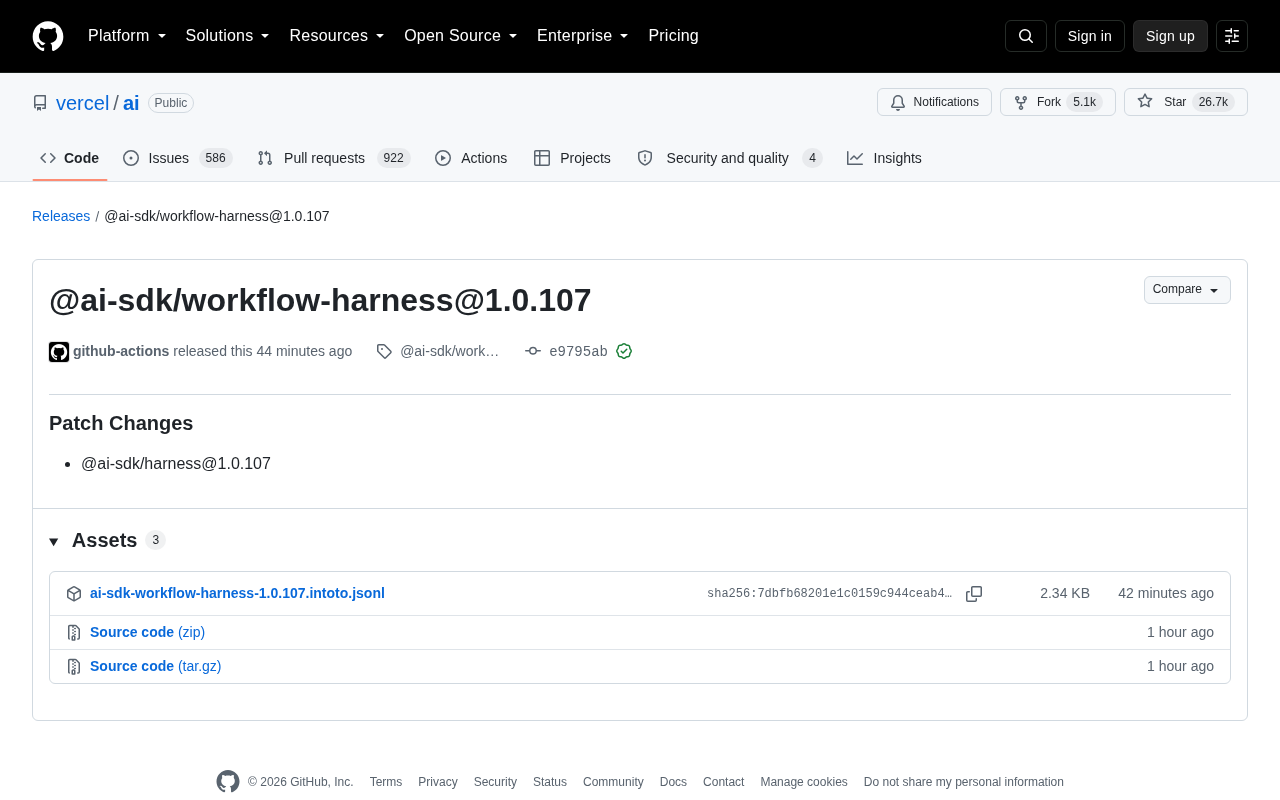
Vercel AI SDK workflow-harness Update Analysis
Deep analysis of Vercel AI SDK workflow-harness 1.0.107 update: architecture design, engineering practices, and developer value for building reliable AI apps.