Goodbye Paid Subscriptions: A Complete Practical Guide to Self-Hosting

A practical guide to self-hosting open-source alternatives to replace costly cloud subscriptions.
This guide explores why more tech-savvy users are turning to self-hosting to replace paid subscriptions like Dropbox, Google Photos, and Bitwarden. It covers top open-source projects including Nextcloud, Jellyfin, Immich, and Vaultwarden, along with practical advice on Docker deployment, the 3-2-1 backup rule, and securing remote access with Tailscale or a reverse proxy.
From Paid Subscriptions to Full Control
Not long ago, an IT systems engineer shared his experience on Reddit and struck a chord with many. He said he had "finally started replacing paid services with my own small projects" and asked the community for ideas and recommendations. Behind those words lies a growing trend among tech professionals and everyday users alike — self-hosting.
Self-hosting means deploying and running software services on hardware you control — a home server, NAS, Raspberry Pi, or private VPS — rather than relying on third-party cloud providers. The concept itself isn't new; most services in the early days of the internet were self-hosted. But as public clouds like AWS, Azure, and GCP became dominant and the SaaS subscription model took hold, self-hosting faded into a niche pursuit. In recent years, the maturation of container technology (Docker), the proliferation of low-power ARM single-board computers, and a thriving open-source community have dramatically lowered the barrier to entry, bringing self-hosting back into the spotlight.
As subscription-based services have multiplied, many people find themselves paying monthly for cloud storage, password managers, note-taking apps, media streaming, and more. Each individual fee seems modest, but the cumulative annual cost can be substantial. For those with reasonable technical skills, building your own alternatives with open-source tools not only saves money — it gives you complete ownership of your data.
Why More People Are Choosing to Self-Host
Cost Considerations
The most immediate motivation is often money. The subscription-as-a-service model — low per-unit price, recurring revenue — has become the dominant commercial model in software. But for users, "subscription fatigue" is increasingly common. Consider a typical user: iCloud 2TB at roughly $9/month, Notion Plus at ~$16/month, Dropbox Plus at ~$12/month, Netflix Standard at ~$15/month. Just these four add up to over $600 a year.
Netflix, Spotify, iCloud, Dropbox, and various SaaS tools each seem trivial in isolation, but the total is significant. By contrast, a low-power home server (such as a refurbished HP EliteDesk, costing roughly $75–$200 to acquire) paired with open-source software typically pays for itself within 18 months, after which ongoing costs are mainly the 15–30W draw in electricity.
Data Sovereignty and Privacy
For IT systems engineers, privacy and control over data are often the deeper motivators. Data sovereignty isn't just a privacy issue — it encompasses legal, regulatory, and business control dimensions. When user data is stored on third-party cloud services, multiple risks arise: data compliance requirements under different jurisdictions (GDPR, CCPA, etc.) may conflict with user expectations; service providers can scan, analyze, or even delete user data under their Terms of Service; and service shutdowns or account bans can instantly revoke data access — Google Photos ending unlimited free storage in 2021 and Evernote repeatedly reducing its free tier are classic examples. Self-hosting fundamentally eliminates this single-point dependency on third-party platforms, keeping all data in your own hands.
Learning and Technical Growth
For technical people, building and maintaining self-hosted services is an excellent hands-on training ground. From container orchestration and network configuration to reverse proxies and backup strategies, every step builds real practical skills — far more effectively than purely theoretical study.
A Curated List of Self-Hosting Projects Worth Trying
Here's a curated list of self-hosting projects from beginner to advanced, especially suitable for practitioners with an IT background.
Media and File Management
- Nextcloud: Built on PHP with a rich plugin ecosystem (Apps), it's a fully featured private cloud drive that can replace Dropbox and Google Drive. Its architecture resembles a self-hosted Google Workspace — beyond file sync, it integrates collaborative documents (Nextcloud Office/Collabora), video conferencing (Nextcloud Talk), calendar, and contact management.
- Jellyfin: An open-source fork of the Emby media server, completely free with no premium feature locks. Supports hardware transcoding (Intel QSV, NVIDIA NVENC, VA-API) to convert high-bitrate H.265 video on the fly for client playback. A great replacement for Plex and streaming subscriptions to manage your local media library.
- Immich: A highly regarded photo management solution built on a modern stack (NestJS + Flutter), with built-in machine-learning-based face recognition and object classification running entirely offline on local ML models. The interface closely resembles Google Photos, making it an ideal replacement for cloud photo services.
Password and Security Management
- Vaultwarden: A lightweight community implementation of Bitwarden rewritten in Rust, consuming under 10MB of RAM (the official server requires several GB). Perfect for running a self-hosted password manager on a home server.
Productivity Tools
- Paperless-ngx: A document digitization and archival system that automatically performs OCR and categorizes scanned paper documents.
- Joplin / Obsidian (with sync): Local-first note-taking solutions to replace Notion or Evernote.
- Vikunja / Planka: Self-hosted task management and kanban tools to replace Trello or Todoist.
Networking and Infrastructure
- Pi-hole / AdGuard Home: Network-wide ad and tracking blocking — once deployed, your entire home network benefits.
- Home Assistant: A local smart home control hub that integrates devices of all kinds, completely eliminating reliance on manufacturer clouds.
Practical Advice for Setting Up a Self-Hosted Environment
Start with Docker
Docker and Docker Compose have become the de facto standard for modern self-hosting projects. Docker uses Linux kernel namespaces and cgroups to create isolated runtime environments for each application. Unlike traditional virtual machines, containers share the host kernel, making them faster to start and lighter on resources. Docker Compose defines the orchestration logic for multi-container applications through YAML configuration files, allowing complex setups (like Nextcloud, which requires a database, cache, and web server working together) to be deployed with a single docker compose up -d command. Containerized deployment dramatically simplifies installation, isolates runtime environments, and makes upgrades and migrations far more convenient. Beginners are advised to start with projects that provide official Docker images.
Take Backup Strategy Seriously
With self-hosting, you are the sysadmin — there's no vendor to bail you out if data is lost. Set up automated backups from day one, following the 3-2-1 rule: keep 3 copies of your data (1 original + 2 backups); store them on 2 different storage media (e.g., local disk + NAS, to guard against single-medium failure); keep 1 copy offsite (e.g., cloud storage like Backblaze B2 or Wasabi, or a physically separate location, to protect against disasters like fire or theft).
Commonly used backup tools include Restic (supports encryption and deduplication), BorgBackup, and Duplicati. A critical point worth emphasizing: automated backups are only as reliable as your last successful restore test. Pair automated backups with regular restore drills — a backup whose recovery process has never been tested has unknown reliability.
Be Careful About Public Internet Exposure
If you need to access self-hosted services from outside your home network, never directly expose ports to the internet. A reverse proxy sits between users and your backend services, handling request forwarding, TLS termination, and access control. The recommended approach is a reverse proxy (such as Nginx Proxy Manager, Caddy, or Traefik) with HTTPS certificates — Nginx Proxy Manager offers a GUI suitable for beginners, Caddy is known for automatically obtaining Let's Encrypt certificates, and Traefik integrates deeply with Docker and supports dynamic service discovery.
A more secure approach is to use a VPN like Tailscale or WireGuard to create a private tunnel. Tailscale builds a zero-configuration VPN mesh network on top of the WireGuard protocol, enabling point-to-point encrypted communication between devices via NAT traversal — no public ports need to be opened. This fundamentally eliminates the attack surface of your server being directly reachable from the internet, and is currently one of the most recommended remote access solutions in the self-hosting community.
A Realistic Perspective: Self-Hosting Isn't a Silver Bullet
The benefits of self-hosting are clear, but the costs deserve equal acknowledgment. It requires ongoing time investment for maintenance, updates, and troubleshooting — when something breaks at 2 AM, you're the one who has to fix it. For scenarios with high availability requirements or mission-critical workloads, mature paid services still have their place.
The approach of "gradually replacing paid services with your own projects" is sound — start incrementally, beginning with non-critical, easy-to-manage services, build experience, and expand from there rather than dismantling all your dependencies at once.
Conclusion
Moving from paid subscriptions to full self-ownership is, at its core, a pursuit of data sovereignty, cost control, and personal growth for technology enthusiasts. For IT systems engineers and their peers, self-hosting is both a way to cut expenses and a continuous technical practice ground. Start with something small — a Vaultwarden instance or a Nextcloud setup. You'll gradually discover that taking control of your own digital life is a deeply rewarding experience.
Key Takeaways
Related articles

PGP-Clinical-TimeKAN: A Detailed Guide to the Multivariate Physiological Indicator Joint Prediction Framework
An in-depth analysis of the PGP-Clinical-TimeKAN framework for joint probabilistic prediction of multivariate physiological indicators, covering trajectory-first paradigm, KAN message passing, MIMIC-IV validation, and ablation studies.
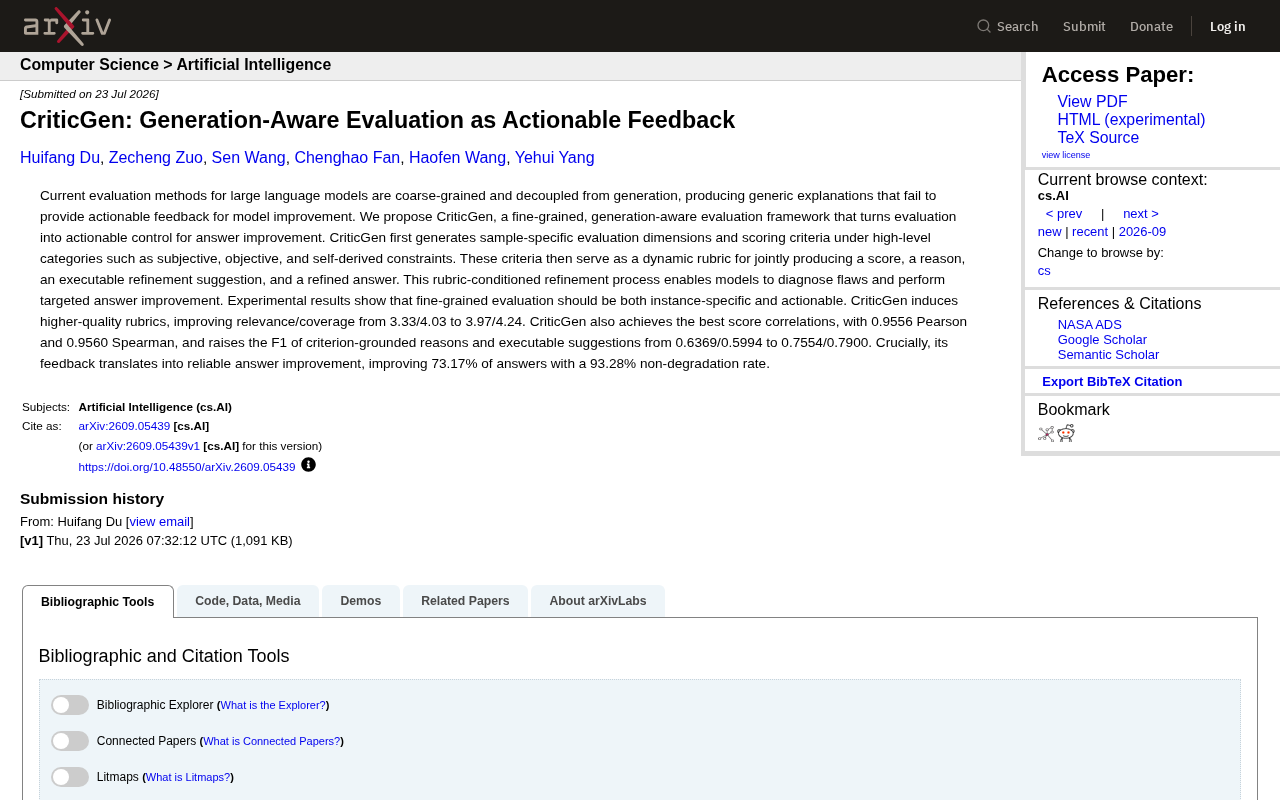
CriticGen: A New Framework That Transforms AI Evaluation into Actionable Improvement Feedback
CriticGen proposes a generation-aware evaluation framework that transforms AI assessment from passive scoring to an active optimization loop, achieving 73.17% answer improvement and 93.28% non-degradation rate.
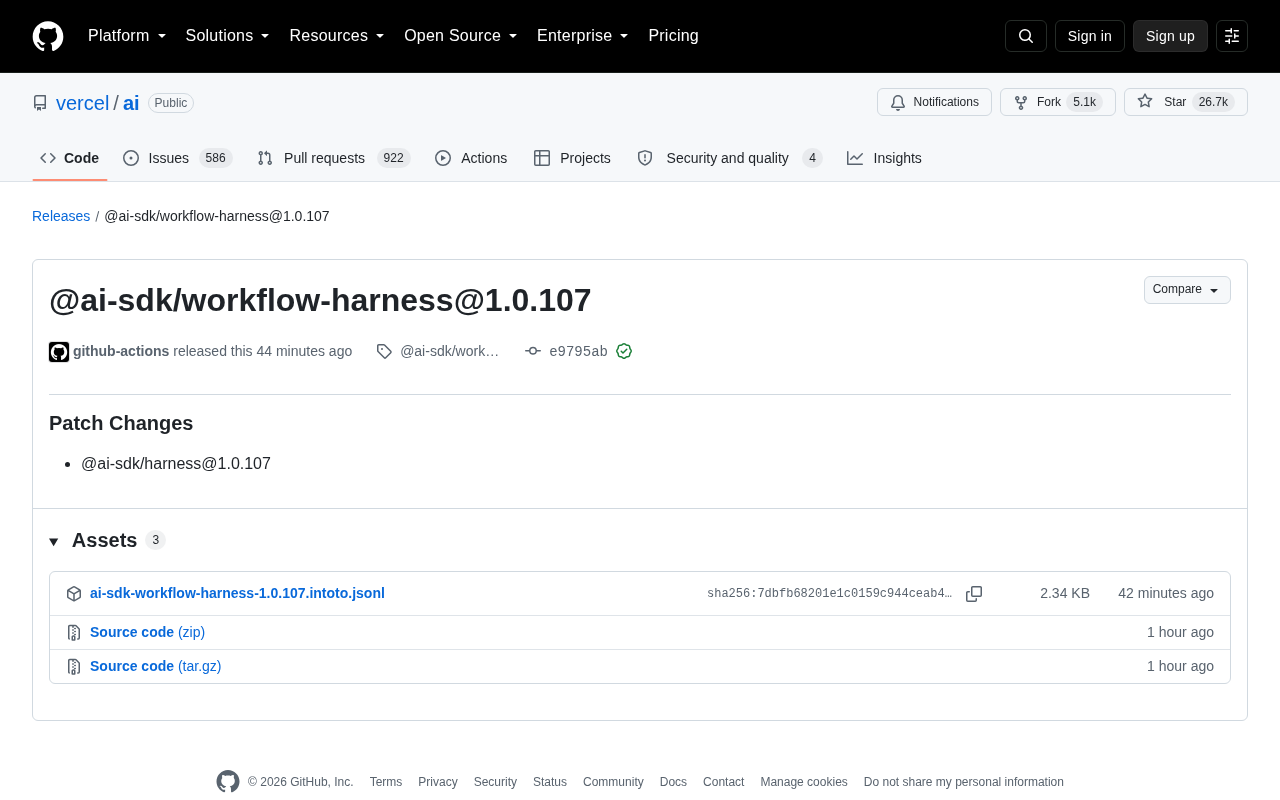
Vercel AI SDK workflow-harness Update Analysis
Deep analysis of Vercel AI SDK workflow-harness 1.0.107 update: architecture design, engineering practices, and developer value for building reliable AI apps.