Google Fitbit Edge Launches: 7-Day Battery + Repairable Design, a New Benchmark for Fitness Bands

Fitbit Edge packs ECG, skin temperature, GPS, and 7-day battery life into a band for $179.99, with a replaceable battery for the first time.
Fitbit Edge is a slim fitness band launched by Google after acquiring Fitbit, priced at $179.99 and available on October 27. It features built-in GPS, over 50 workout modes, ECG, and a skin temperature sensor, with up to 7 days of battery life. It's also Fitbit's first repairable device with a replaceable battery. The product includes 3 months of Google Health Premium, and Health Coach and Health Guardian require the subscription.
After being acquired by Google, Fitbit's product line has been searching for a new identity. The newly launched Fitbit Edge offers a fairly clear answer: pack professional health monitoring, long battery life, and repairability into a slim device, priced at $179.99.
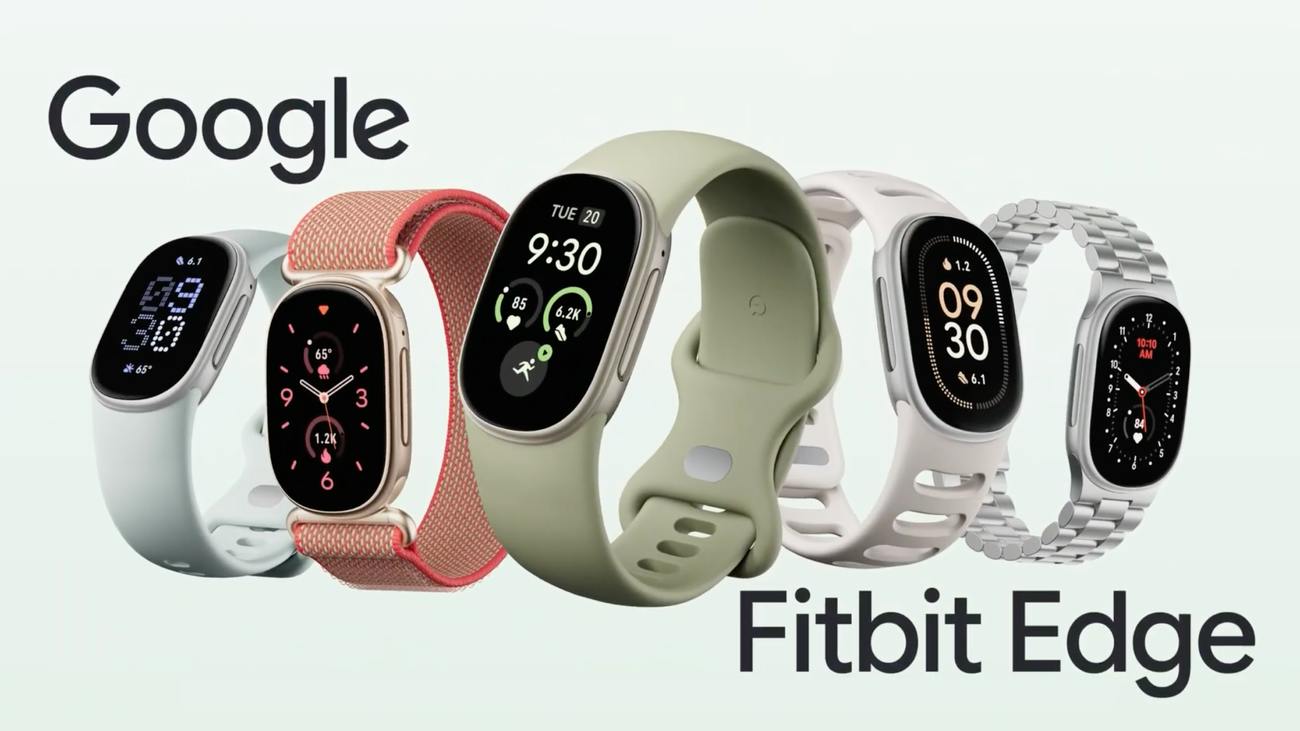
Core Specs: Everything They Could Fit, Fitted In
Fitbit Edge is a slim fitness band with a screen, designed for everyday wear and workout scenarios. In terms of hardware, it features built-in GPS, support for over 50 workout modes, ECG, and a skin temperature sensor. As for battery life, Google officially claims up to 7 days.
This combination of specs is rare among similar products. ECG and skin temperature are relatively medical-grade monitoring capabilities, typically found on higher-priced smartwatches; meanwhile, 7-day battery life is clearly superior to most smartwatches that need daily charging. Fitbit Edge attempts to find an intersection between "the lightweight battery life of a band" and "the professional monitoring of a watch."
ECG (Electrocardiogram): By setting up electrodes on the device to record the heart's electrical activity, it can be used to detect arrhythmias such as atrial fibrillation. Implementing ECG on a band requires additional electrodes and algorithm certification, making both cost and technical barriers higher than conventional heart rate sensors.
Skin Temperature Sensor: Rather than measuring absolute body temperature, it monitors relative changes in skin temperature at night, used to help assess sleep quality, menstrual cycles, or potential disease signals.
GPS: Built-in GPS on a band means you can record workout routes without your phone, but it also significantly increases power consumption—one of the reasons the 7-day battery life shrinks dramatically when GPS is enabled.
Repairable Design: A First for Fitbit
Fitbit Edge is the first repairable tracking device under the Fitbit brand, with a replaceable battery.
This point deserves special mention. One of the long-criticized issues with wearables is that "after two years of battery degradation, the whole device has to be scrapped," because the battery is sealed with glue and ordinary users simply can't remove or replace it. Fitbit Edge makes the battery replaceable, directly extending the device's lifespan and reducing long-term usage costs. For environmentally conscious users, this is a practical reason to buy.
As consumer electronics as a whole moves toward "repairability," Fitbit choosing to take its first step with this product carries more symbolic significance than the product itself.
Repairability: Refers to devices being designed from the start to allow users or third parties to disassemble and replace components, typically involving screws, modular batteries, and publicly available repair manuals. The EU's recent ecodesign regulations and US right-to-repair bills are pushing manufacturers to improve repairability scores. For wearables, the battery is often the first component to degrade, and a replaceable battery directly determines whether a device can last three to five years.
Subscription Lock-In: 3 Months Free, Then What?
Fitbit Edge comes with a 3-month Google Health Premium subscription. It's worth noting that two features—Health Coach and Health Guardian—require this subscription to use.
This means the $179.99 buys not just hardware, but also a time-limited software service experience. After 3 months, users need to decide for themselves whether to renew. This "hardware + subscription" model is increasingly common in the fitness tracking space, but for consumers, the total cost of ownership needs to be calculated upfront.
Total Cost of Ownership (TCO): Buying the hardware is just a one-time expense; subscription fees accumulate annually. If Google Health Premium costs roughly $80-100 per year, after three years the total spend could approach twice the hardware price. When evaluating such products, you need to first confirm whether you'll actually keep using the subscription features.
Pricing and Availability
Fitbit Edge is priced at $179.99 and is now available for pre-order, with official availability on October 27. On Product Hunt, the product received 91 upvotes, ranking 11th for the day, categorized under Health & Fitness, Wearables, and Fitness.
In terms of pricing, Fitbit Edge falls in the mid-range—more expensive than basic bands, but below flagship smartwatches. Its competitiveness depends on whether users genuinely need professional monitoring like ECG and skin temperature, and whether they value the long-term value of a replaceable battery.
Who Is This Product For
If you need a device that doesn't require daily charging, can track multiple workouts, and offers ECG and body temperature monitoring, the Fitbit Edge's spec combination is attractive at the $179.99 price point. The replaceable battery further reduces long-term ownership costs.
But if you're not interested in features that depend on Google Health Premium, or if you value the ecosystem expansion capabilities of a smartwatch more, then the Edge's positioning may not be a perfect match. Its core value lies in "focused health tracking," rather than being an all-in-one wrist terminal.
The Difference Between Health Tracking and All-in-One Wrist Terminals: The former centers on sensor data accuracy, battery life, and wearing comfort, with relatively closed functionality; the latter emphasizes app ecosystems, calling, payments, and other expansion capabilities, but often sacrifices battery life. Fitbit Edge clearly chooses the former, suited for users who treat it as a health data collector rather than a phone extension.
One-line Summary
Fitbit Edge packs ECG, skin temperature, GPS, and 7-day battery life into a band for $179.99, with a replaceable battery for the first time.
Paragraph Summary
Fitbit Edge is a slim fitness band launched by Google after acquiring Fitbit, priced at $179.99 and available on October 27. It features built-in GPS, over 50 workout modes, ECG, and a skin temperature sensor, with up to 7 days of battery life, attempting to balance the lightweight battery life of a band with the professional monitoring of a watch. It's also the first repairable device under the Fitbit brand, with a replaceable battery that extends lifespan and reduces long-term costs. The product includes 3 months of Google Health Premium, and Health Coach and Health Guardian require the subscription, so users need to consider the total cost of ownership from subsequent renewals.
Related articles

NVIDIA's 30,000 Developers Use Cursor, Code Commit Volume Triples
Cursor engineer Chris Diaz breaks down five organizational gaps blocking enterprise AI coding scale—strategy, risk tiering, governance, metrics, and operating model. NVIDIA's 30,000 developers use Cursor daily, tripling code commits while defect rates stay flat. The key: rewrite the SDLC, not add tools.

Ponytail: Giving AI Coding Agents a Senior Engineer's Mindset
Ponytail is a free GitHub tool that injects a senior engineer's mindset into AI coding agents, making them ask whether code is even necessary first. According to TamilDeck, it can compress 200 lines of AI-generated code to 30, cutting token costs, with support for Cursor rules and Claude Code skill integration—though security review still requires human oversight.

Complete Guide to Connecting Cursor AI to the GitHub MCP Server
A step-by-step guide to connecting Cursor AI to the GitHub MCP server: create a personal access token, configure mcp.json, store the token in the ENV block, and verify with a PR query.