Google's Major AI Search Upgrade: Search Engines Enter the Era of Intelligent Q&A

Google announces major AI search upgrade, deeply integrating traditional search with large language models.
Google announces AI search entering a new phase, deeply integrating search engine indexing advantages with LLM semantic understanding to leap from "finding pages" to "providing answers." Under pressure from competitors like Perplexity and ChatGPT, Google faces an inherent tension between its ad-based model and AI direct answers. This transformation will reshape SEO strategies and traffic distribution, with future search evolving toward multimodal, personalized, and conversational experiences.
Google's Major AI Search Upgrade: Deep Integration of Search Engines and Artificial Intelligence
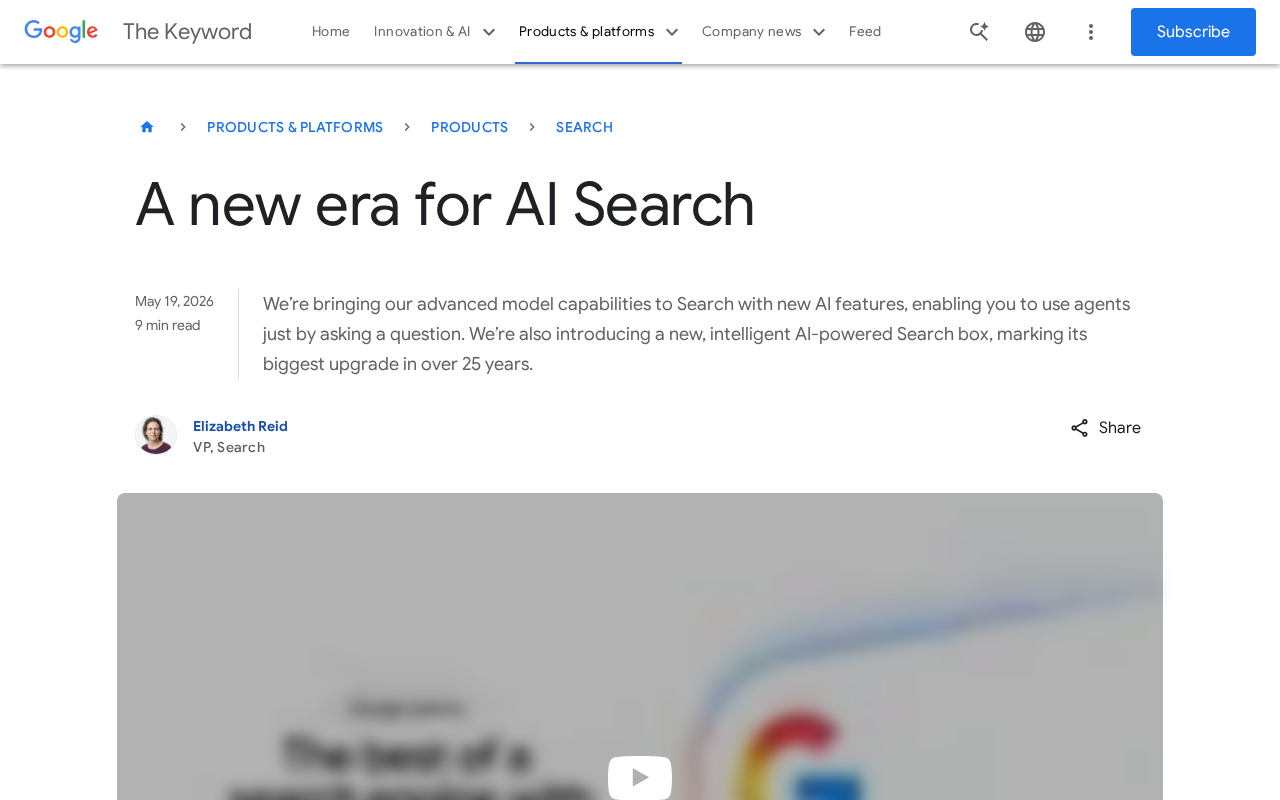
Google recently announced its latest advances in AI search, marking a new phase in the fusion of traditional search engines with artificial intelligence. This upgrade combines the search engine's decades-long advantage in information indexing with AI's semantic understanding capabilities, delivering a user experience leap from "searching for web pages" to "getting answers."
Why Traditional Search Engines Need AI Enhancement
The Bottleneck of Keyword Matching
For over two decades, search engines have primarily relied on keyword matching and page ranking algorithms like PageRank to provide information to users. PageRank was proposed by Google co-founders Larry Page and Sergey Brin at Stanford University in 1998. Its core concept treats the internet as a directed graph, measuring a page's "authority" by counting the quantity and quality of links pointing to it from other pages. This algorithm revolutionarily solved the problem of spam-ridden results caused by early search engines' reliance on keyword stuffing, establishing Google's technological moat for over twenty years. However, PageRank is essentially a statistical model based on link structure that cannot understand language semantics, context, or users' true intent — this mechanism worked well when information volume was relatively limited, but now faces clear bottlenecks: internet content has grown explosively, user queries have become increasingly complex, and often require multiple searches and browsing through several pages to piece together a complete answer.
The New Paradigm of AI-Powered Intelligent Search
The core approach of Google's AI search direction is to deeply integrate the search engine's accumulated strengths in information indexing, real-time coverage, and breadth with the capabilities of large language models in semantic understanding, comprehensive analysis, and natural language generation. Large Language Models (LLMs) are deep learning models based on the Transformer architecture, trained on massive text datasets. Representative products include Google's Gemini and OpenAI's GPT-4 series. Unlike traditional keyword matching, LLMs acquire semantic associations between words, logical reasoning abilities, and contextual understanding through pre-training, enabling them to decompose users' natural language questions into intents, entities, and relationships, then generate coherent and accurate responses. The core challenge of introducing LLMs into search is that the model's training data has a temporal cutoff point, requiring integration with real-time indexing systems (i.e., RAG — Retrieval-Augmented Generation) to ensure answer timeliness and factual accuracy. Simply put, the goal of search has evolved from "helping you find relevant web pages" to "understanding your question and providing a direct answer."
AI Search Industry Competitive Landscape Analysis
Multiple Forces Competing for the Search Market
Google's move comes amid intensifying competition in AI search. The competition in the AI search space is essentially a contest between two technical approaches: first, "AI-native search" represented by Perplexity, which builds conversation-centric search products from scratch, abandoning traditional blue link lists; second, "AI-augmented traditional search" represented by Google and Microsoft, which layers AI capabilities onto existing search infrastructure. OpenAI has added real-time search functionality to ChatGPT; Perplexity, with its clean Q&A interface and real-time source citation design, has rapidly built reputation among technical users, with its valuation exceeding $9 billion; Microsoft continues strengthening Copilot's AI capabilities by deeply integrating GPT-4 into Bing and the Edge browser, attempting to leapfrog competitors through AI. As the dominant player with over 90% global search market share, Google's advantage lies in possessing the world's largest web index and user data accumulation. However, its business model is highly dependent on ad clicks, and AI directly providing answers may compress ad display space — this is the inherent contradiction it faces when advancing AI search. Explicitly defining AI search as a "new era" sends a strong strategic signal.
Impact on Website Operators and SEO Strategies
The evolution of AI search will profoundly change traffic distribution logic. SEO (Search Engine Optimization) has long been the core channel for content websites and e-commerce platforms to acquire free traffic. Its core logic involves optimizing website content, structure, and external links to improve organic rankings. However, when search engines generate comprehensive answers directly at the top of results pages (known as "AI Overview" or "zero-click search"), users can obtain needed information without clicking through to original websites, cutting off content creators' traffic sources — a phenomenon the industry calls the "traffic black hole effect." For regular users, information acquisition efficiency improves dramatically, eliminating the need to click through links one by one. For content creators and website operators, traditional SEO strategies face redefinition. Future SEO strategies may need to shift from "optimizing keyword rankings" to "becoming an authoritative source cited by AI" — that is, improving content's professional depth, structured data markup, and brand authority so that AI models prioritize citing and attributing sources when generating answers.
Future Directions for Google AI Search
Google has established AI search as its core strategy for the next phase. As large language model capabilities continue to improve and multimodal technology matures, future search experiences will become more personalized, conversational, and intelligent. Multimodal technology refers to AI models' ability to simultaneously process and understand multiple forms of information including text, images, audio, and video — Google's Gemini model natively supports multimodal input, meaning future search interactions will no longer be limited to text input. Users will be able to photograph a plant to ask its name, upload a video for technical support, or conduct continuous conversational queries through voice. Meanwhile, personalized search will also deepen as AI capabilities improve, with models combining users' historical preferences, geographic location, and current context to provide truly individualized search results. The boundary between search engines and AI assistants will blur further, ultimately evolving into an intelligent information platform that truly understands user intent and delivers precise services.
This AI-driven search revolution has only just begun, but it already heralds a fundamental transformation in how we access information on the internet. Whether you're a user, content creator, or business, adapting to this new landscape sooner rather than later is essential.
Key Takeaways
- Google announces AI search entering a new era, deeply integrating search engine advantages with AI intelligent capabilities
- The new paradigm shifts from "finding web pages" to "understanding questions and providing answers," with core technical support from the combination of LLMs and RAG (Retrieval-Augmented Generation)
- AI search competition intensifies as Google faces challenges from ChatGPT Search and Perplexity, with two technical approaches (AI-native vs. AI-augmented traditional search) in direct confrontation
- AI search transformation will reshape content distribution logic and SEO strategies — "becoming an authoritative source cited by AI" will replace traditional keyword ranking optimization
- Multimodal search and deep personalization are the core evolutionary directions for the next phase
Related articles
 Tech Frontiers
A Rare Quiet Day in AI: Recursive Self-Improvement Stirs Beneath the Surface
A rare quiet day in AI sees multiple sources go silent simultaneously. Behind the calm, Recursive Self-Improvement (RSI) research continues. What this means for the industry.
 Tech Frontiers
Reve 2 vs. Ideogram 4: A Deep Dive into Layout Control in AI Image Generation
A deep comparison of Reve 2 and Ideogram 4's layout control capabilities, covering technical approaches, real-world use cases, and industry trends for designers and creators.
 Tech Frontiers
In the Weights: Check Your Influence Score in the AI World
In the Weights is an AI influence search engine that quantifies your presence in the AI world with a score. Explore how it evaluates practitioners and what it means for digital identity.