Google's SL2T Model: Real-Time Sign Language-to-Text Technology Arrives on Pixel 11

Google's SL2T model brings real-time ASL-to-text conversion to Pixel 11 via Gboard and Live Transcribe integration.
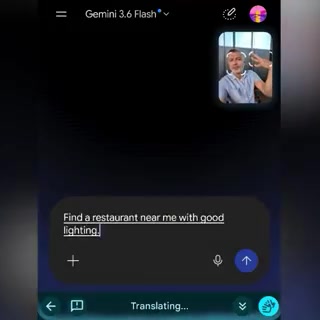
Google has unveiled SL2T (Sign Language-to-Text), a model that converts American Sign Language to English text in real time. Deeply integrated into Gboard and Live Transcribe rather than being a standalone app, it provides system-level sign language input across the Android ecosystem. Deploying on-device on Pixel 11, the model addresses privacy and latency concerns while tackling the complex challenge of translating multi-dimensional visual language into text.
A Digital Breakthrough in Sign Language Communication
Google recently unveiled a sign language-to-text model called SL2T (Sign Language-to-Text), which the company describes as a "breakthrough" technology. The model will first support real-time conversion of American Sign Language (ASL) to English text, debuting on Pixel 11 devices to deliver an entirely new interaction experience for Deaf and hard-of-hearing users.
For the Deaf and hard-of-hearing community, everyday digital interactions often present barriers — they need to type out words on a keyboard character by character or rely on third-party translation tools. SL2T means users can now sign directly at their camera, and the system will convert their signing into text, integrated into a system-level input experience. This is not just a technical upgrade — it's an important step forward in accessibility design philosophy.
SL2T Deeply Integrated with Gboard and Live Transcribe
According to Google, SL2T is not a standalone app but is deeply integrated into two core features of the Android ecosystem:
Gboard Input Method Supports Sign Language Input
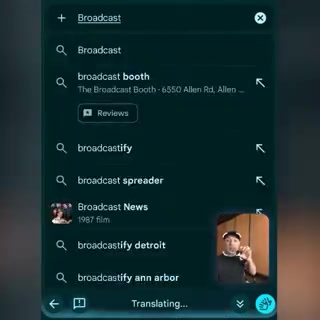
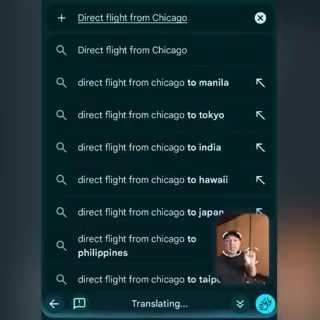
Users can "sign" directly to Gboard (Google's keyboard) to complete text input, rather than tapping keys one by one. This means that in any scenario supporting text input — whether sending messages, writing emails, or commenting on social media — sign language users can express themselves in their most natural language.
As one of the most widely used input methods in the Android ecosystem, Gboard covers over 1 billion users and supports more than 900 languages. It previously integrated voice input, handwriting input, glide typing, and other modalities. The addition of sign language input makes it a truly "all-modality input method." From a system architecture perspective, Gboard functions as an IME (Input Method Editor) framework component in Android that can be called by any third-party app. This means sign language input capability works universally across the entire app ecosystem without requiring individual app adaptation — precisely the core advantage of system-level integration over standalone apps.
Live Transcribe Gains Sign Language Recognition
The other integration point is Live Transcribe. This feature was originally designed to convert surrounding speech into text in real time. With sign language recognition added, its accessibility toolkit is further enhanced, forming a bidirectional assistive loop covering both "hearing" and "seeing."
Live Transcribe was first released in 2019, using a hybrid on-device and cloud-based speech recognition approach to convert environmental sounds into text in real time, supporting over 80 languages. Its typical use case is for Deaf users to view text transcriptions of what others are saying during face-to-face conversations. With sign language recognition added, Live Transcribe upgrades from a one-way assistive tool (helping Deaf users "hear") to a bidirectional communication platform — Deaf users can "speak" through sign language, while hearing users' speech is transcribed into text for Deaf users to "see," creating a complete two-way communication loop without the need for pen and paper or third-party sign language interpreters.
This system-level integration approach is far more significant than developing a standalone sign language translation app. It makes sign language input a "native capability" of the operating system, lowering the barrier to use and increasing the potential for widespread adoption.
Technical Significance and Industry Value of SL2T
Sign language recognition has long been a challenging problem at the intersection of computer vision and natural language processing. Unlike speech recognition, sign language involves hand shapes, motion trajectories, facial expressions, and even body posture — multi-dimensional information — and sign language systems vary enormously across regions. Accurately parsing continuous signing into semantically complete text places extremely high demands on a model's temporal understanding and contextual reasoning capabilities.
From a technical standpoint, sign language recognition differs fundamentally from speech recognition. Speech recognition processes one-dimensional temporal signals (audio waveforms), while sign language recognition requires extracting three-dimensional spatial information from two-dimensional video frames. Specifically, sign language expression involves fine-grained finger joint configurations, arm movement trajectories through space, subtle facial muscle movements (such as raised eyebrows indicating a question), and upper body posture tilts — all requiring coordinated multi-channel encoding. Even more complex is the fact that sign language is not a word-for-word mapping of spoken language — ASL has its own independent grammatical structure, different word order from English, and extensively uses non-manual signals to carry grammatical functions. This makes sign-to-text conversion fundamentally a cross-language translation problem rather than simple transcription.
Linguistic Characteristics of ASL and Model Design
American Sign Language is a complete natural language with its own grammar, syntax, and morphological system independent of English. ASL has approximately 500,000 to 1 million users (in the United States and Canada). It is mutually unintelligible with British Sign Language (BSL) but shares historical roots with French Sign Language. ASL grammar typically follows a "topic-comment" word order, and tense is expressed through a timeline (a virtual temporal axis in front of the signer's body) rather than verb conjugation as in English. This means the SL2T model must not only recognize individual signs but also understand ASL's unique grammatical structures and reorganize them into text that conforms to English expression conventions — making this a true "translation" rather than "transcription" task.
SL2T's choice to start with the relatively mature ASL-to-English combination is a pragmatic first step. American Sign Language has relatively rich corpus resources and a strong research foundation. Validating model reliability in this scenario first, then gradually expanding to other sign language systems, represents a sound technical evolution path.
Technical Breakthrough of On-Device Deployment
Notably, Google has deployed this capability on-device (Pixel 11). This likely involves model lightweighting and on-device inference optimization, which both safeguards user privacy (sign language video doesn't need to be uploaded to the cloud) and enables low-latency real-time response — critical for the interactive experience of "signing while text appears."
Deploying a sign language recognition model on a mobile device rather than in the cloud faces dual constraints of computational resources and power consumption. Video understanding models typically have large parameter counts and are computationally intensive, requiring pose estimation and feature extraction for each frame, followed by temporal modeling of frame sequences. On-device deployment likely employs techniques such as model distillation, quantization (compressing floating-point weights to INT8/INT4), and operator optimizations targeting mobile NPUs/TPUs. The Tensor chip series in Pixel 11 features dedicated machine learning acceleration units specifically designed for AI inference, providing the hardware foundation for running such real-time vision-language models. Another important advantage of on-device inference is zero network latency — for interaction scenarios requiring real-time feedback, even a few hundred milliseconds of cloud round-trip delay can severely impact user experience.
Rethinking the Value of AI Accessibility Technology
The release of SL2T once again highlights AI's enormous potential in the accessibility domain. Tens of millions of Deaf and hard-of-hearing people worldwide have long had limited channels for expression in the digital world. The World Health Organization estimates that approximately 430 million people globally have some degree of hearing loss, with a significant proportion using sign language as their primary means of communication. Applying cutting-edge multimodal AI capabilities to such real needs often carries social value that exceeds pure technical showmanship.
Of course, there remains a gap between demonstration and widespread availability. Regional diversity of sign languages, recognition accuracy, robustness in complex contexts, and whether support will expand to other systems such as Chinese Sign Language are all questions worth continued observation. There are currently over 300 different sign language systems worldwide, and the differences between them are far greater than those between spoken languages. For example, ASL and BSL correspond to the same spoken language (English) but are mutually unintelligible; Chinese Sign Language (CSL) is likewise an independent language system with hand shape inventories and grammatical structures entirely different from ASL. Achieving global coverage for sign language recognition requires building separate training datasets and language models for each sign language — particularly challenging for low-resource sign language systems where data is scarce. Currently, this feature is limited to Pixel 11 and restricted to ASL, making its coverage relatively limited.
Conclusion
SL2T represents a substantive advance by Google in the direction of AI accessibility. By deeply embedding sign language-to-text capability into Gboard and Live Transcribe, Google gives sign language users a more natural and equitable way to interact digitally. While this is still an early stage, the future this model points toward — technology that truly serves every community — is undoubtedly worth anticipating.
Key Takeaways
Related articles

Why Does the Tesla Roadster Need to Fly? A Deep Dive into Musk's Wild Demo
Tesla's Roadster launch showed wall-climbing, upside-down driving, and flying stunts—but The Vergecast notes the demo car may lack a battery, the Rocket version is invite-only and not street-legal, and the website terms don't guarantee delivery. After nine years of delays, why does this car still need to exist?

AI Is Not a Replacement: Human-AI Collaboration Through the Lens of Factory Root Cause Analysis
Starting from factory root cause analysis, this article explains how AI accelerates evidence chain construction rather than replacing human experts, exploring the pragmatic implementation logic and business value of 'AI supporting people rather than replacing them.'

AI Agent Decision Auditing: Building an Evidence Chain in Regulated Workflows
Starting from a Reddit discussion, this article analyzes three core issues in AI agent decision auditing within regulated workflows: what fields audit records should contain, how to handle feedback latency for erroneous decisions, and how to continuously calibrate LLM judge consistency with human judgment.