GPT-5.6 Hands-On Deep Dive: ChatGPT and Codex Merge, Full Analysis of the Sol Model

GPT-5.6 merges ChatGPT and Codex, launching the Sol/Terra/Luna tiers—16 hands-on tests analyzed.
OpenAI's GPT-5.6 merges ChatGPT and Codex into a unified app and introduces three product forms (Chat/Worker/Codex) and three model tiers (Sol/Terra/Luna). This hands-on review covers 16 tests including web generation, 3D modeling, and financial analysis, plus benchmark gains, multi-agent orchestration, and enhanced security safeguards.
GPT-5.6 Release: Deep Integration of ChatGPT and Codex
OpenAI has officially released GPT-5.6, and the biggest highlight of this generation isn't simply piling on parameters, but making every token produce more useful work. According to hands-on testing shared by Bilibili creator Kate, with the release of GPT-5.6, the Codex and ChatGPT apps have officially merged, now unified under the name ChatGPT—users can directly invoke Codex functionality within the same app.
Codex was originally launched by OpenAI in 2021 as an AI model focused on code generation, fine-tuned from GPT-3, and it was also the underlying engine of GitHub Copilot. It's worth noting that Codex's training data covered tens of millions of public code repositories from GitHub, spanning dozens of programming languages including Python, JavaScript, Go, and Ruby. Its core breakthrough lay in the ability to map natural language intent into executable code, making the "comment-as-code" development experience possible. This merger with ChatGPT marks OpenAI's clear strategic shift from "parallel multiple product lines" to a "unified platform entry point"—code generation capabilities have evolved from a standalone tool into general-purpose intelligent infrastructure. Users no longer need to switch between different applications and can complete the entire workflow from requirement analysis to code delivery within a single conversation flow.
Interestingly, when selecting Codex mode to invoke the GPT-5.6 Sol model, the credits consumed are twice that of GPT-5.5. The creator noted that even with a Pro membership offering 5x quota, she clearly felt it was insufficient during intensive testing—her quota was reset twice in a single day (one of which was an active reset by OpenAI). This indirectly reflects that the new model's compute consumption is indeed substantial.
Three Product Forms and Model Tiers
GPT-5.6 currently presents three product forms:
- Chat: Everyday quick conversation, Q&A, analysis, and writing
- Worker: Similar to Claude's Code Worker, capable of creating spreadsheets, documents, PPTs, websites, and more
- Codex: A programming agent aimed at developers
At the model tier level, GPT-5.6 is split into three levels: the flagship Sol, the everyday-work-oriented Terra, and the fastest, lowest-cost Luna. This tiering strategy converges with mainstream industry practices—Anthropic's Claude similarly distinguishes between Haiku/Sonnet/Opus, and Google's Gemini also has Flash/Pro/Ultra. There's economic logic behind this trend: the cost of a single flagship model call can be a hundred times that of a lightweight model. The tiering system is essentially an engineering implementation of the "Pareto optimum"—80% of user needs can be met by lightweight models, and only 20% of highly complex tasks require flagship model intervention, allowing AI providers to significantly reduce service costs for mainstream users without sacrificing the experience of high-end users.
This tiered architecture also involves the application of "Knowledge Distillation" in its technical implementation: the lightweight Terra and Luna aren't simply parameter-trimmed versions, but rather compress capabilities by having smaller models learn the output distribution of larger models, enabling them to achieve near-flagship results in specific task domains (such as everyday Q&A and simple code completion) at extremely low inference cost. This "teacher-student" training paradigm has become standard industry practice for deploying large models, and is the core technical foundation that allows AI companies to bring flagship capabilities down to free tiers. Among these, Sol is OpenAI's most powerful coding model to date, scoring 80 on the coding agent index while pushing cost-effectiveness to new heights using less than half the output tokens and time.
Benchmark Performance: A Leap in Output Per Unit Cost
Judging from the officially released data, the GPT-5.6 Sol model performs outstandingly across multiple benchmarks. In professional knowledge work, it surpasses GPT-5.5; in coding, it and 5.5 each have their advantages; in science, health, computer use, cybersecurity, multimodal, and other areas, its advantages are more pronounced.
Several key hard metrics deserve particular attention:
- BrowseComp (browsing tasks) reached 92.2%—this benchmark was designed by OpenAI's research team specifically to measure AI's ability to complete multi-step information retrieval and interactive operations in real web environments. Unlike traditional static Q&A benchmarks, BrowseComp requires the model to dynamically parse web structure, track information across pages, handle dynamically loaded content, and make strategic adjustments when facing anti-scraping mechanisms. 92.2% means the model can now reliably perform composite tasks in most everyday browsing scenarios; the remaining 7.8% failure cases typically concentrate in scenarios requiring login verification or highly dynamic page structures, which are also the main technical bottlenecks of current browser agents.
- OSWorld 2.0 (computer operation) reached 62.6%, surpassing Opus 4.8 while reducing output tokens by 85%—OSWorld 2.0 tests AI's ability to complete tasks via GUI in real operating system environments, covering scenarios like file management and application operation. 62.6% is the leading level among currently public models. The "85% reduction in output tokens" metric is noteworthy—in agent tasks, token consumption represents not only cost but also the conciseness of the reasoning path. A substantial reduction in tokens without a drop in performance indicates the model has developed a more efficient "thought compression" capability, able to skip redundant intermediate reasoning steps and jump straight to key decision points. This is highly analogous, at the cognitive level, to the "intuitive decision-making" of human experts in familiar domains.
- ExploitBench (cybersecurity) jumped from GPT-5.5's 40% to 73.5%—ExploitBench evaluates a model's ability to discover and exploit software vulnerabilities by simulating CTF (Capture The Flag) competition scenarios and real CVE vulnerability environments. 73.5% means GPT-5.6 can now automatically complete moderate-difficulty vulnerability discovery and exploit chain construction, offering major value for defensive security—security teams can use AI to shorten penetration tests that originally took weeks down to hours. However, this substantial leap has also sparked discussion in the security research community: if powerful vulnerability discovery capabilities are exploited by malicious actors, they could lower the technical barrier to launching cyberattacks. This is precisely the core dilemma in "capability alignment" research, and one of the direct reasons OpenAI simultaneously strengthened its security safeguards.
This time OpenAI particularly emphasized "stronger performance per dollar"—meaning the same budget can complete more successful tasks—which is widely interpreted as a direct response to competitors' high pricing. On third-party leaderboards, the GPT-5.6 Sol Max model already ranks second, and multiple bloggers report that 5.6 Sol is more practical than the previous generation, especially skilled at coordinating sub-agents.
The Trade-offs Between Max and Ultra Modes
Faced with more complex tasks, Max mode invests more reasoning time; Ultra mode, by default, coordinates four agents advancing in parallel, trading higher compute for higher quality and faster completion, at the cost of a sharp rise in token consumption. The core challenges of a multi-agent parallel architecture span three levels: task decomposition (accurately identifying dependency relationships between subtasks to avoid running tasks with prerequisite dependencies in parallel), state synchronization (requiring each sub-agent to share a consistent understanding of task progress to prevent duplicated work or omissions), and conflict resolution (making authoritative rulings when sub-agents return contradictory conclusions).
From a distributed systems perspective, four-agent parallelism is essentially a "Consensus Problem"—which in computer science is highly isomorphic to the problems solved by distributed consistency protocols such as Paxos and Raft. The difference is that in traditional distributed systems, node failures are random hardware errors, whereas AI agent "failures" often manifest as reasoning deviations or context loss, which are harder to detect through traditional means like heartbeat detection. GPT-5.6 Sol being praised as "skilled at coordinating sub-agents" is precisely a reflection of its excellent performance across all three of the above dimensions, and is the core reason for its superiority over the previous generation in agent orchestration tasks. Currently, the web version offers options like X-High and Pro, and in Worker mode, Pro users can enable Ultra mode (launching four agents to collaborate simultaneously).
A Significant Leap in Design Generation
GPT-5.6 shows marked improvement in design judgment, capable of starting from high-level requirements, inspecting real interfaces, and iteratively refining to a directly deliverable state. Below are the core findings from the creator's various hands-on tests.
Web Page and Interface Generation Tests
In the headphone product webpage test, 5.6 Sol presented a delicate brushed-metal texture, handled the earcup structure appropriately, supported color switching and multi-page navigation, and displayed technical specifications with professional standards. Compared to previous models that leaned toward minimalist 2D presentation, the completion level improved dramatically this time—the key being that before generating the page, it first invokes an image generation tool to produce multiple reference images. This two-stage strategy of "generating visual references first, then writing code to implement" effectively compensates for the inherent weaknesses of language models in spatial imagination and pixel-level layout. Understood at a technical level, the Transformer's autoregressive generation mechanism excels at sequential logic but is relatively weak at the implicit expression of two-dimensional visual space; the two-stage strategy decouples the expression of visual intent from the precise implementation of code—in the first stage, the image generation model concretizes vague design intent into referenceable visual anchors, and in the second stage, the code generation model performs precise implementation based on clear visual targets, effectively avoiding the hallucination risks in pure text-to-visual-code conversion.
Even more impressive are the music player and image replication tasks. In the task of "implementing a webpage based on a screenshot," 5.6 Sol employed a clever trick: placing the original image in the bottom layer of the frame as a reference, while implementing adaptive layouts for both mobile and desktop widths. The fidelity was extremely high—almost flawless.
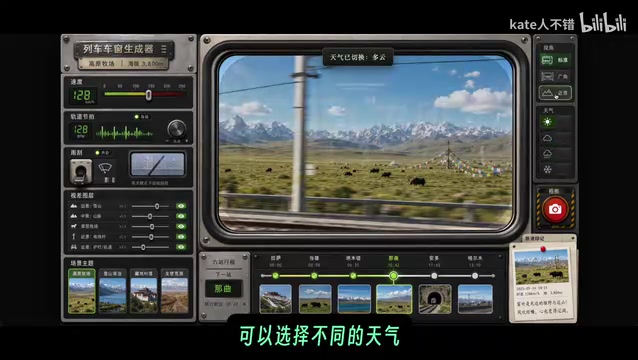
In the weather app replication, numerous elements within the page were interactive, including scene theme switching and wiper intensity adjustment. Achieving such fidelity with a single prompt is quite impressive.
The Value of the Skill Plugin System
According to the creator's observations, 5.6 Sol invoked the image to code skill during its reasoning process, and follow-up questioning revealed this is part of the Product Design plugin. This plugin contains four skills: image to code, design QA, user context, and index. The index skill is responsible for routing decisions—if the user asks to implement a webpage from a screenshot, it invokes image to code; if the user wants to 100% replicate a specific webpage URL, it routes to url to code.
This plugin design embodies the engineering philosophy of "tool invocation routing," corresponding in engineering terms to a combined application of the "Command Pattern" and "Strategy Pattern": the intent classifier acts as a lightweight routing layer that classifies user natural-language requests before dispatching them to specialized tools, with each tool deeply optimized for a specific task type rather than pursuing generality. The advantage of this architecture lies in maintainability and extensibility—adding new capabilities only requires developing a new Skill plugin and registering the routing rules in index, without retraining the main model. This is highly consistent with the "API gateway + specialized microservices" design philosophy of microservice architectures, and echoes the "Single Responsibility Principle" in software engineering, epitomizing the evolution of current agent systems from "one all-powerful large model" to "expert team collaboration." The creator praised this plugin design as "very well done," showing that GPT-5.6's power lies not only in the model itself but also in the careful design of its toolchain and skill routing.
Complex Tasks and 3D Modeling Tests
In more complex scenarios, 5.6 Sol likewise shone:
- Desktop planetarium: The Earth's texture is realistic and delicate
- Along the River During the Qingming Festival: The overall effect is far superior to GPT-5.5, though there are still flaws in boat construction and shop signage
- Suzhou Museum: Took about 30 minutes; the bonsai texture is excellent, but there is some flickering in the visuals
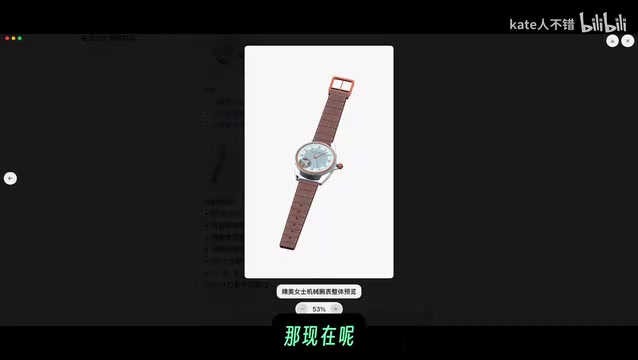
In the 3D modeling segment, the creator asked the model to generate OpenSCAD modeling based on a reference image. OpenSCAD is a script-based open-source 3D modeling software that builds complex models by combining basic geometric shapes through CSG (Constructive Solid Geometry) operations—union, difference, and intersection—describing geometric shapes with code rather than mouse dragging. It is widely used for parametric design of engineering parts. Unlike visual modeling tools like Blender, OpenSCAD requires describing three-dimensional forms in pure mathematical language, constituting an extremely challenging test scenario for AI—the model must not only "translate" the visual features in the image into precise numerical parameters (such as radius, height, and rotation angle), but also understand the topological relationships and occlusion hierarchies between geometric shapes, while possessing spatial geometric reasoning and precise code generation abilities.
From a cognitive science perspective, this type of task requires the model to complete a triple-encoding cross-modal conversion of "visual-spatial-symbolic": first parsing the two-dimensional image into a three-dimensional spatial structure (visual→spatial), then mapping the spatial structure to mathematical parameters (spatial→symbolic), and finally generating syntactically correct OpenSCAD code (symbolic→code). Each conversion step carries the risk of information loss, which is why this task is several orders of magnitude harder for AI than writing ordinary code. The test exposed a practical problem: the model initially failed to recognize that the locally installed version was a development build and attempted to download an older official release, only switching to the local version after being interrupted. The rendered result still differs from the original image, but compared to 5.5, it has eliminated typical problems like the dial and strap separating and extra protrusions, directly reflecting its improved three-dimensional spatial reasoning ability.
Financial Report Analysis and Data Visualization
The Tesla financial report analysis task took about 40 minutes, with all data obtained by the model on its own. The delivered Excel spreadsheet had a style noticeably superior to 5.5, containing multiple sheets, a dashboard with quarterly visualizations, financial charts, and attached sources for the original official financial report files. This fully demonstrates GPT-5.6's ability to integrate search, analysis, and document generation into a complete workflow.
Worker Mode and Developer Upgrades
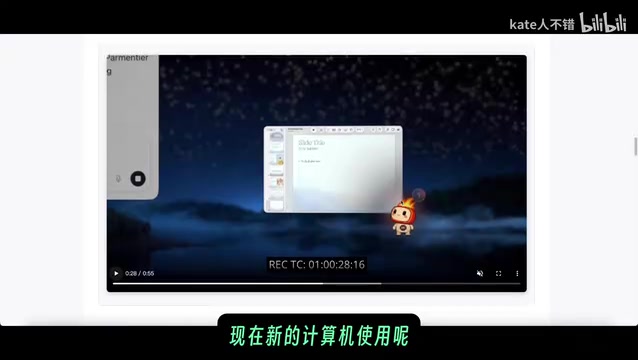
The new Worker mode is presented as a tab on both mobile and web. The computer-use feature received a brand-new interaction design: the original Codex "pet" image has migrated to the ChatGPT app, and when executing a task, a small window pops up next to the pet—move closer to check the progress; when multiple apps are invoked, multiple small windows are displayed side by side.
The in-app browser has also been strengthened, supporting authenticated sites, multiple tabs, and file downloads. The newly added Chrome extension allows GPT to collaborate with users to complete tasks within the browser. The technical core of this type of browser extension is embedding AI's "perceive-decide-act" loop into the browser environment—the extension reads the current page's DOM structure through the Chrome DevTools Protocol (CDP) and simulates user clicks and inputs, enabling the model to perceive page state and intervene in real time, truly achieving human-machine collaboration rather than mere conversational interaction. CDP is essentially a WebSocket-based debugging interface, originally designed for developer tools, and has now become the standard channel for browser automation (Playwright, Puppeteer, etc.) and AI agents controlling browsers—this means GPT's browser extension shares the same underlying protocol as traditional automation tools like Selenium, but achieves a qualitative leap at the level of intent understanding and dynamic decision-making.
For developers, Codex upgrade highlights include: directly editing files, viewing and reviewing PRs without leaving the app, and invoking Pro models within the Chat interface (switch by clicking the popup on the right side of the chat).
Full-Process Application Development Test
What best demonstrates GPT-5.6's productivity is the complete app improvement and development workflow. When optimizing an app previously generated with 5.5, 5.6 Sol first invoked the auditor skill to inspect visuals, interaction, and information structure—it even automatically connected to the phone through wireless debugging mode, took screenshots of the app, and then output a detailed list of problems (such as insufficient home page health, the need to restructure the settings page, and the dark-reading green color scheme affecting the experience). "Wireless debugging mode" refers to ADB over Wi-Fi (Android Debug Bridge)—ADB is a core debugging protocol in the Android development ecosystem, supporting dozens of operations such as app installation, log reading, screenshots, and simulated input. Since Android 11, it has become a built-in system feature, enabling wireless debugging within the same LAN without ROOT. The model's ability to automatically identify the enabled ADB wireless connection in the local development environment, proactively obtain the device IP, and establish a connection shows its deep contextual awareness of the developer toolchain—this is not just code knowledge but marks a qualitative leap in AI-assisted development from "code completion" to an "environment-aware development partner."
When developing a watermark app, 5.6 took about 19 minutes; when encountering bugs during the build, it automatically looped through fixes. The UI quality was noticeably superior to 5.5, and the avatar and name rendered correctly on the first attempt. Finally, the model also proactively checked for performance and privacy leak issues, and generated an attractive app icon using the technique of converting a magenta background to a transparent alpha. The "magenta background to transparent alpha" here is a classic cutout technique in icon design: magenta (#FF00FF) rarely appears in natural scenes, so setting it as the background color allows the cutout algorithm to precisely identify and remove background pixels, generating a PNG icon with a smooth alpha channel and avoiding edge aliasing problems caused by complex backgrounds—the model's autonomous choice of this professional technique reflects its deep mastery of visual engineering details.
Security Safeguards and Overall Assessment
Alongside the capability leap, OpenAI has also simultaneously strengthened security safeguards. According to official information, GPT-5.6 combines human red team testing, large-scale automated testing, and layered real-time monitoring, and invested approximately 700,000 A100 GPU hours in black-box red team evaluations. Red Teaming originates from the concept of military adversarial exercises, and in the AI security field specifically refers to systematically discovering a model's security vulnerabilities, value drift, and harmful output tendencies by simulating malicious user behavior, covering hundreds of risk categories such as jailbreak prompts, harmful content inducement, privacy leaks, and misinformation generation. 700,000 A100 GPU hours is a considerable amount of compute—renting a single A100 in the cloud costs about $3-4 per hour, meaning the compute cost for the red team evaluation alone exceeded $2 million, which indirectly shows that OpenAI's investment in security evaluation is now on the same order of magnitude as model training itself. "Layered real-time monitoring" refers to deploying multiple independent security filtering layers during the model's inference phase, requiring malicious requests to break through protections across different detection dimensions to succeed, greatly increasing the cost of attacks. This development model of "synchronized iteration of capability evaluation and security evaluation" is becoming an industry standard practice for responsible AI development.
Overall, the core design philosophy of GPT-5.6 is "make efficiency the default, and make the highest capability accessible whenever needed." Through the merger of ChatGPT and Codex, the three usage forms of Chat/Worker/Codex, and the three-tier Sol/Terra/Luna model system, OpenAI has found a new balance point among capability, cost, and ease of use. Judging from the creator's 16 hands-on test results, this generation's progress in design generation and end-to-end workflows is substantial, although there is still room for improvement in 3D fidelity and complex scene details.
Key Takeaways
Related articles

Cursor AI Programming in Practice: Build a Student Management System from Scratch in 30 Minutes
A Bilibili creator demonstrates Cursor AI programming: generating a student management system in 30 minutes with natural language. Details on Agent mode, Claude selection, prompt techniques, and thresholds.

Top 20 AI Coding Tools Ranking: From Rock-Solid to Lackluster, a Scored Matrix
Bilibili creator releases top 20 AI coding tools ranking, tiered T0–T4 from rock-solid to lackluster, with Claude Code and Codex tied at T0. This article details the scoring dimensions (capability, reliability, robustness, durability, cost, domestic availability) and tool performances to help developers choose the right AI coding assistant.

Vibe Coding Systematic Tutorial: Master AI-Assisted Programming from Zero
A three-month Vibe Coding tutorial from a Bilibili creator covering Codex, ClaudeCode, and Cursor, from core logic to commercial project practice for beginners.