GPT-5.6 Proves 50-Year Graph Theory Conjecture in Under an Hour — A Milestone for AI Mathematical Reasoning

GPT-5.6 solves a 50-year graph theory conjecture in under an hour, marking a milestone for AI mathematical reasoning.
OpenAI's GPT-5.6 Soul Ultra reportedly proved the Cycle Double Cover Conjecture — a 50-year-old graph theory problem — in under an hour using 64 parallel agents. Other highlights include a semi-invasive BCI approved in China for paralysis rehab, Apple suing a former engineer over OpenAI trade secrets, xAI's Grok Build silently uploading user files, and the EU preparing rules against dark patterns.
AI Cracks a Half-Century-Old Math Problem
According to Evan Tech, a tech news channel on Bilibili, OpenAI's latest model GPT-5.6 Soul Ultra completed a proof of the Cycle Double Cover Conjecture — a problem that has stumped mathematicians for roughly half a century — in under one hour, automatically generating a three-page PDF document.
The Cycle Double Cover Conjecture was independently proposed by mathematicians Seymour and Szekeres in 1979 and stands as one of the most famous unsolved problems in graph theory. It asserts that for any bridgeless connected graph (one where no single edge, when removed, disconnects the graph), the edge set can be covered by a collection of cycles such that each edge is covered exactly twice. Its significance lies in its deep entanglement with topological graph theory and embedding theory — proving the conjecture is equivalent to proving that any bridgeless graph can be embedded in some surface without crossings. Over the past half-century, leading mathematicians have made partial progress on special cases, but a general proof has remained elusive, placing it alongside the Riemann Hypothesis and P vs NP as a "holy grail" challenge in mathematics.
What makes this achievement remarkable is not just the result itself, but the leap in AI reasoning it demonstrates. According to reports, the model tackled the problem by spinning up 64 agents running in parallel, with the core strategy being to convert the abstract graph-theory conjecture into a solvable system of equations, then use algebraic methods to close in on a proof. The "multi-agent parallel" approach refers to a Multi-Agent System (MAS) architecture — breaking a complex task into sub-problems, advancing them simultaneously with multiple independent AI instances, and integrating results through a coordination mechanism. A single model tackling a highly open-ended mathematical problem is prone to getting stuck in local optima or suffering reasoning chain failures; multi-agent parallelism dramatically improves exploration efficiency through broad search and multi-path verification. OpenAI had already introduced chain-of-thought and self-verification mechanisms in its o-series models; this latest upgrade to a multi-agent collaborative mode is seen as a critical leap from "single-threaded reasoning" to "concurrent cognition." This paradigm of multi-agent collaboration combined with problem transformation marks a methodological breakthrough for large language models in tackling open-ended mathematical problems.
OpenAI also published the complete prompt, providing transparency for the academic community and developer ecosystem to verify and reproduce the results. That said, until the proof undergoes peer review in an authoritative mathematics journal, this "AI proof" should be treated with caution. Machine-generated mathematical proofs face unique credibility challenges — the most famous historical precedent is the 1976 computer-assisted proof of the Four Color Theorem, which sparked years of controversy in the mathematics community because it relied on exhaustive computations too numerous to verify manually. Since then, formal proof systems such as Lean, Coq, and Isabelle have emerged as a potential solution: translating proofs into logical languages that machines can automatically verify, sidestepping the question of whether humans can follow the reasoning. If an AI-generated proof can be validated by such systems, its reliability improves dramatically; if it is only presented in natural language or a semi-formal PDF, the bar for peer review will be higher and the process considerably longer.
What This Means
If the proof withstands rigorous scrutiny, this would mark the first time AI has cracked a long-standing open conjecture in pure mathematics without substantive human intervention — not merely assisting in verification. It blurs the line between "tool" and "collaborator," and resurrects an old question: when machines can generate proofs that humans struggle to fully understand, does mathematics need to redefine its standard of "comprehensibility"?
AI Talent Wars Spark Legal and Data Security Disputes
As the AI race heats up, conflicts over talent and data are erupting in quick succession.
Apple Sues Former Engineer Who Joined OpenAI
Apple has filed a lawsuit against a former iPhone engineer, alleging that when he left to join OpenAI, he took his company-issued MacBook and exploited a software vulnerability to continue accessing Apple's internal file servers, downloading large volumes of hardware design documents, manufacturing details, and testing procedures. Several other Apple employees had previously joined OpenAI's hardware division.

The lawsuit reflects a deeper industry trend: AI companies are aggressively expanding into hardware, making hardware giants like Apple prime targets for talent drain. The boundaries of trade secrets are under unprecedented pressure in a world of rapid talent mobility.
Privacy Controversy Over xAI's Coding Tool
Security researchers discovered that xAI's coding tool Grok Build, under default settings, uploads the contents of any files a user reads — including secrets files and entire code repositories — to xAI servers in Git Bundle format. More alarmingly, this upload behavior cannot be stopped even when the user disables the "improve model" toggle.

This finding raises renewed concerns: AI coding tools that boost productivity may simultaneously become vectors for sensitive data leakage. Enterprise developers must carefully evaluate data handling boundaries and compliance risks before adopting such tools.
Brain-Computer Interface Achieves Clinical Breakthrough
In medical technology, a 36-year-old patient with high-level paralysis successfully performed fine motor actions — including grasping and writing — through a coin-sized wireless device implanted in the brain.
The system, called NEO, is a semi-invasive brain-computer interface (BCI) co-developed by BrainCo and Tsinghua University. It has received regulatory approval in China for use in rehabilitation of quadriplegic patients. Understanding this breakthrough requires some context on the BCI technology landscape: BCIs are generally classified into three categories by electrode implant depth — non-invasive (e.g., scalp EEG caps), which are safe but produce weak signals; fully invasive (e.g., Neuralink's N1 chip, with electrodes penetrating deep into the cortex), which offer the best signal quality but carry higher surgical risks and long-term biocompatibility concerns; and semi-invasive, which place electrodes on the epidural space or cortical surface, capturing relatively clear cortical signals while avoiding the bleeding and inflammation risks associated with direct cortical penetration. The NEO system implants a wireless chip between the skull and the dura mater — an approach consistent with the ECoG (electrocorticography) interface previously developed by the Tsinghua team, representing a differentiated strategy that strikes a critical balance between safety and signal quality, and moves BCI technology a meaningful step closer from the laboratory to clinical application.
Against a backdrop of intense international attention on projects like Neuralink, a Chinese team achieving clinical deployment and regulatory approval signals substantial domestic progress on this frontier.
Regulatory Crackdown: From Dark Patterns to Hardware Backdoors
Hardware Security Vulnerabilities Surface
A previously undisclosed authentication backdoor was found in the firmware of Tenda network routers, allowing attackers to gain full administrative access to the device with a specific password and no username required. The vulnerability (CVE ID: QI202611405) currently has no official patch; users are advised to disable remote management and change the default login IP to reduce exposure.
Regulators Strike Back
The U.S. Federal Communications Commission (FCC) fined eight companies $25,000 each for allegedly helping DJI evade import restrictions by disguising DJI drones as other brands for sale in the United States.

Meanwhile, the EU's Commissioner for Justice revealed that the EU plans to propose new rules by year-end targeting addictive website design, subscription traps, and other dark patterns. The term "dark patterns" was formally coined by UX researcher Harry Brignull in 2010 to describe a range of interface design techniques that manipulate users into decisions they didn't intend to make — including hiding unsubscribe buttons, pre-checking paid options, disguising ads as content, and using "confirmshaming." The EU had already classified certain dark patterns as violations under the 2022 Digital Services Act (DSA), but enforcement authority was distributed across member states. The key breakthrough in the new rules is granting the European Commission direct enforcement power — the ability to fine platforms that violate consumer protection laws, and not only large tech companies — meaning platforms can no longer exploit inconsistent national enforcement to evade accountability. This creates a transatlantic regulatory pincer alongside the U.S. FTC's intensive enforcement actions against subscription traps in recent years, signaling a shift in regulatory focus beyond antitrust into the realm of user experience ethics.
Product and Market Highlights
Spotify Introduces Playlist Fine-Tuning
Spotify is rolling out a new feature that lets users actively customize their weekly Release Radar playlists through options like "Discover new artists" and "Edit picks." The recommendation algorithm has also been updated for greater personalization, and the playlist's visual appearance has been refreshed.

The change reflects a broader push by streaming platforms to give users more active control beyond algorithmic recommendations, striking a balance between serendipitous discovery and precise matching.
New Energy Vehicles Accelerate Toward a Consumer Electronics Lifecycle
A report from Zhongji Association found that the average age of new energy passenger vehicles in China is just 1.8 years — far below the 8.2-year average for internal combustion engine vehicles — with vehicles aged one to three years accounting for over 90% of the fleet. The underlying logic: electric vehicles have shifted the core competitive battleground from mechanical drivetrains to battery energy density, BMS management algorithms, and intelligent driving software stacks. These three dimensions iterate at a pace closely mirroring that of smartphones — typically a new technology generation every 18 to 24 months. At the same time, the steep residual value depreciation of used EVs due to battery degradation (some models lose over 50% of their value within three years) further lowers the barrier to switching; automakers continuously stimulate upgrade demand through "subscription-based OTA upgrades" and "trade-in subsidies," creating a consumer cycle fundamentally different from the traditional auto market. Rapid technological iteration is making new energy vehicles increasingly resemble fast-moving consumer electronics — users no longer expect to drive a car for ten years, but instead chase newer smart cabins, longer range, and faster advanced driver assistance upgrades.
Closing Thoughts
From AI cracking a mathematical conjecture, to brain-computer interfaces reaching clinical deployment, to tightening global regulation of tech ethics, today's technology landscape traces a clear through-line: the boundaries of technical capability are expanding rapidly, while governance frameworks around data, talent, and user rights are scrambling to keep pace. In an era of accelerating AI capability, how to strike a balance between innovation and safety, efficiency and ethics, remains an unavoidable long-term challenge for the entire industry.
Key Takeaways
Related articles

Alibaba Launches Happy Shrimp: AI-Powered One-Click Complete Song Generation
Alibaba launches Happy Shrimp, an AI music generation tool that creates complete songs with lyrics, melody, arrangement, and vocals from natural language descriptions. In-depth analysis of its core features, differentiation from competitors like Suno, and industry impact.
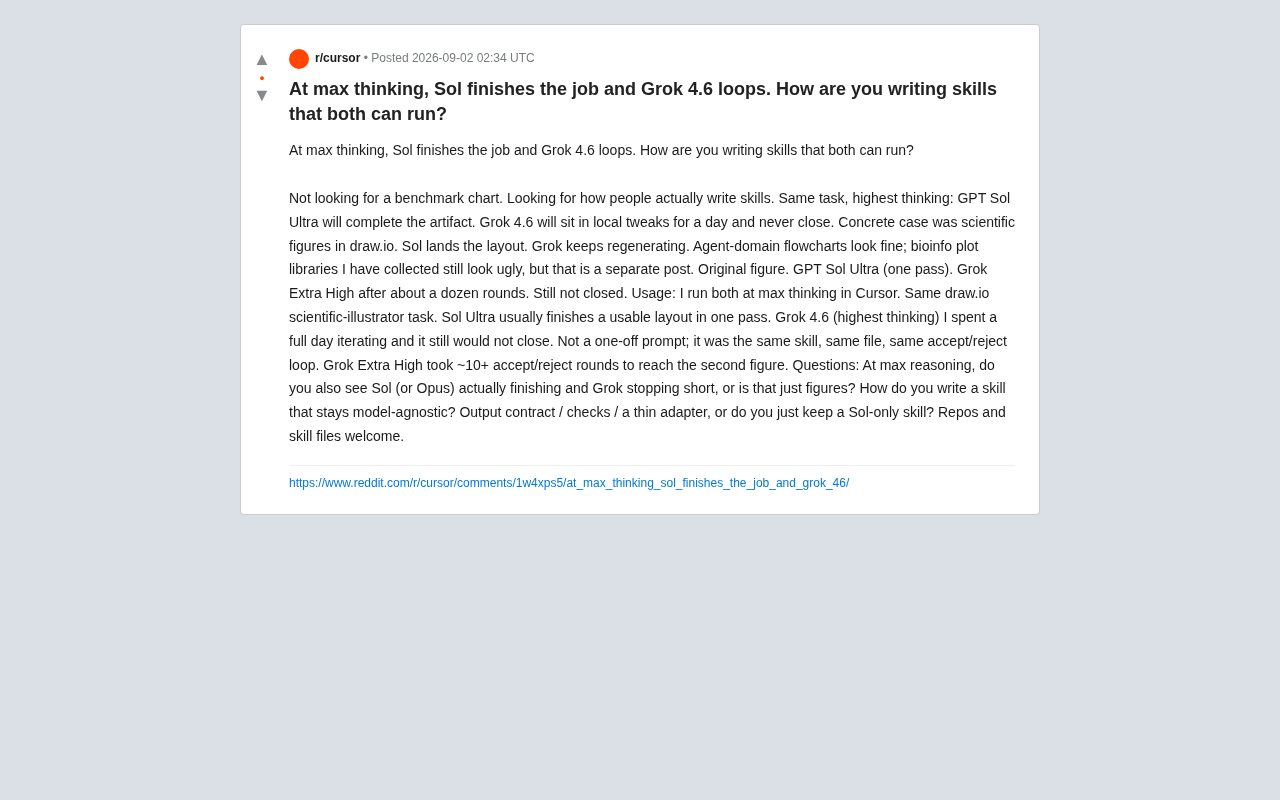
GPT Sol Ultra vs Grok 4.6: Real-World Task Completion Benchmark in Reasoning Mode
Developer benchmark reveals GPT Sol Ultra completes draw.io scientific diagrams in one iteration while Grok 4.6 fails to converge despite maximum reasoning mode, exposing that reasoning depth ≠ task delivery capability.
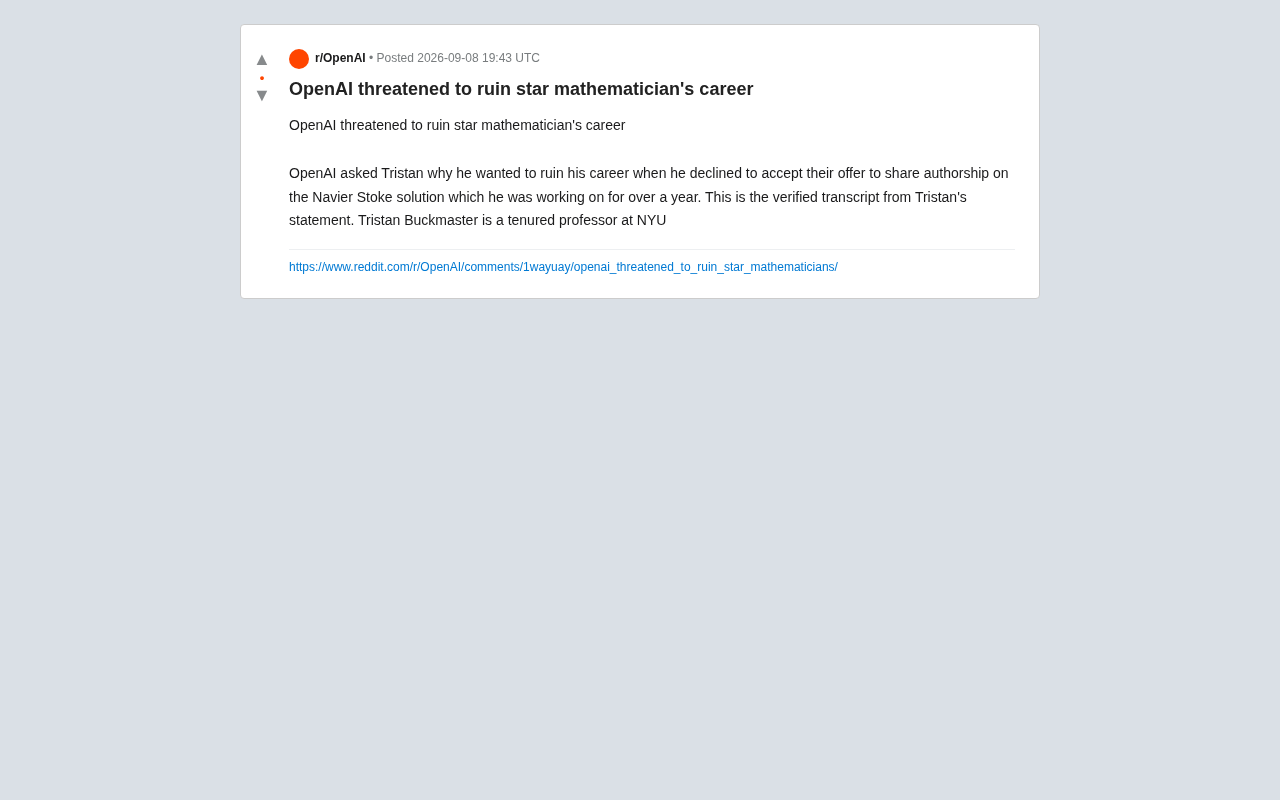
OpenAI Authorship Dispute: The Battle Over Academic Boundaries in the AI Era
OpenAI disputes authorship with mathematician Tristan Buckmaster over Navier-Stokes research, raising ethical questions about AI involvement in science.