GPT-5.6 Three-Model Showdown: A Complete Breakdown of So, Terra, and Luna

GPT-5.6's So, Terra, and Luna deliver near-flagship agentic performance at half the price of GPT-5.5.
OpenAI's GPT-5.6 preview launches three tiered models — So, Terra, and Luna — with all three scoring perfect marks on demanding long-horizon agentic tasks. Terra matches GPT-5.5 performance at 50% lower cost, and Luna offers agentic capability at just $1/million input tokens. The series closes the gap with Fable 5 while resetting API market pricing expectations.
OpenAI Launches GPT-5.6 Series: Three Tiers, One Release
OpenAI has officially unveiled the GPT-5.6 preview series, releasing three clearly differentiated models in a single drop. According to early-access reviewers, the three models are: the flagship So, the balanced everyday workhorse Terra, and the ultra-fast, budget-friendly Luna.
What's particularly notable is OpenAI's new naming logic — the number represents the model generation, while So, Terra, and Luna serve as permanent "capability tier" labels that will each evolve independently. In other words, these names are here to stay, not just a one-time marketing gimmick.
Currently, the models are available in limited preview via API only, with Codex access extended to select partners. A full public rollout is expected within a few weeks.
A Notable Detail: Phased Release
According to reviewers, before the public launch, OpenAI first demonstrated the models' capabilities to the U.S. government — and adopted a "phased release" strategy at the government's request. This marks a first in OpenAI's history.
This approach reflects the deeper tensions playing out in AI governance. Since 2023, U.S. executive orders have required frontier AI labs to brief federal agencies (such as NIST and NSA) on safety before releasing new models, with particular focus on "dual-use" risk areas like cyberattack assistance and bioweapon design. OpenAI had previously committed in its Preparedness Framework to additional safety evaluations and release controls for high-risk capabilities. This phased rollout is both a signal of regulatory compliance and a credible endorsement of the models' cybersecurity-relevant capabilities — since governments tend to scrutinize the most disruptive capability dimensions.
Benchmarks: Backend and Agentic Tasks Are the Real Standouts
The evaluation used a custom test suite covering frontend development (React, SVG generation), challenging math problems, and a high-difficulty long-horizon agentic task — requiring the model to autonomously generate a dataset, fine-tune a model locally, and independently build a Web UI.
Overall scores:
- So: 55/70 (~78.6%)
- Terra: 44/70 (~62.9%)
- Luna: 31/70 (~44.3%)
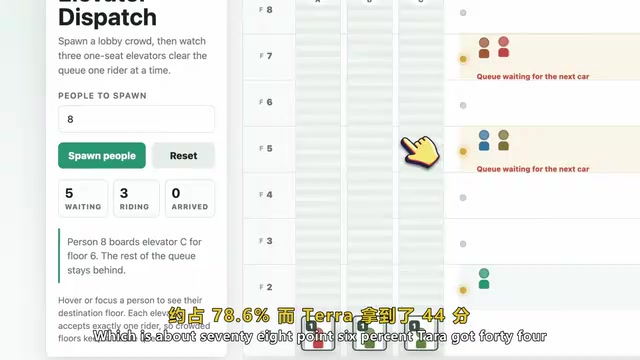
At first glance, So's total score seems unremarkable — but breaking down the subcategories reveals where the real story lies.
Long-Horizon Agentic Tasks: Perfect Scores Across All Three Models
On the most demanding test — the agentic fine-tuning task — all three GPT-5.6 models scored a perfect 10/10. Even the entry-level Luna independently completed the full pipeline of dataset generation and Web UI fine-tuning, matching top-tier model Fable 5.
It's worth explaining the technical bar here. Long-horizon agentic tasks are fundamentally different from single-turn Q&A: the model must maintain consistent goal-tracking and state management across multi-step, cross-tool, extended-context environments. It doesn't just need to understand the initial instruction — it must autonomously plan subtask sequences, call external tools (such as code executors, file systems, and Web UI frameworks), and self-correct when intermediate steps fail. These tasks place extreme demands on "persistent memory," "tool-call stability," and "error recovery" — which is precisely why GPT-5.5 and Opus 4.7 typically score only 2–3 points on the same task. GPT-5.6's across-the-board perfect scores on this dimension signal a qualitative leap in long-horizon backend agentic capability.
Persistent Weaknesses: Frontend and Visual Tasks
The models' clear weak spot remains frontend and visual work. On React animation and SVG generation tasks, So scored only 6–7 points, while Fable 5 consistently hits 9–10.

Since the custom test suite is itself weighted toward frontend and visual tasks, these losses dragged down GPT-5.6's overall score significantly. As the reviewer put it: "Frontend development is still not OpenAI's strong suit." This serves as a reminder that a single composite score doesn't tell the full story.
Pricing Strategy: The Real Killer Feature Is Value
If capability improvements are par for the course, the pricing this time is the most aggressive move of all. Per-million-token pricing:
| Model | Input | Output |
|---|---|---|
| So | $5 | $30 |
| Terra | $2.5 | $15 |
| Luna | $1 | $6 |
OpenAI states that Terra delivers GPT-5.5-level performance at half the cost. The models also feature an improved prompt caching mechanism with cache breakpoints and a guaranteed minimum cache duration of 30 minutes.
Prompt caching is an important cost-optimization technique in large model API services. The core idea: when users send repeated prefix prompts (such as system prompts or long document contexts) across multiple API calls, the server retains the KV Cache (key-value cache) for that prefix in VRAM, allowing subsequent requests to reuse it without recomputation — dramatically reducing latency and compute costs. GPT-5.6's "cache breakpoint" mechanism adds finer-grained cache control: developers can explicitly mark cache boundaries, and the 30-minute TTL balances hit rate against VRAM usage. This has real practical value for agentic applications with long contexts and frequent calls, such as coding assistants and customer service systems.
So will also be available on the Cerebras platform, with inference speeds reaching approximately 750 tokens per second. Cerebras is a Silicon Valley AI inference chip company whose flagship WSE (Wafer Scale Engine) is currently the world's largest single-die chip. Unlike NVIDIA GPUs, which excel at parallel computation, Cerebras architecture is specifically designed to reduce memory bandwidth bottlenecks — the core performance constraint in autoregressive token-by-token decoding for large models. At 750 tokens per second, roughly 3–5x faster than traditional GPU clusters, this translates to a meaningfully better user experience in latency-sensitive scenarios like real-time coding assistance and interactive agents. From both cost and speed perspectives, this combination is highly competitive.
New Capabilities: Ultra Mode and Maximum Reasoning Intensity
GPT-5.6 also introduces a "maximum reasoning intensity" setting and a new Ultra Mode — supporting multiple agents collaborating on complex tasks.
Ultra Mode represents an important paradigm shift in AI applications: Multi-Agent Systems. In traditional single-model inference, all tasks are processed serially within the same model context. Multi-agent architectures allow complex tasks to be decomposed into subtasks handled by different "specialist agents" in parallel or collaboratively, with an orchestrator consolidating the results. The advantages include: breaking through single-context length limits, enabling parallel task acceleration, and improving quality at each stage through specialization. GPT-5.6's perfect scores across all three models on long-horizon agentic tasks are likely partly attributable to the systematic task decomposition and coordination capabilities that Ultra Mode enables.
Head-to-Head Comparison: Closing In on Fable, But Not There Yet
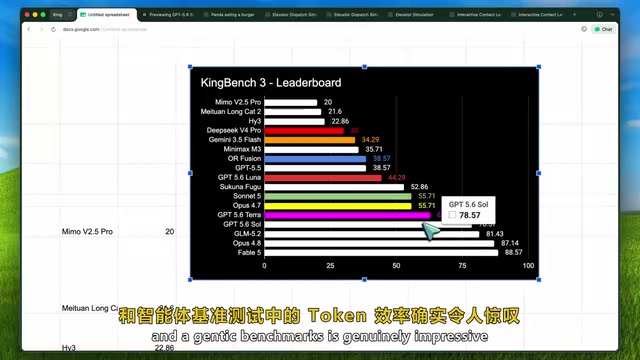
Overall benchmark leaderboard:
- Fable 5: 88.57% (top)
- Opus 4.8: 87.14%
- GM 5.2: 81.43%
- So (GPT-5.6): 78.57%

The key comparison: GPT-5.5 previously sat around 87.4%, making So appear to be a step backward. But reviewers note this is largely because the test suite is heavily weighted toward frontend. Judged by actual capability improvements, So represents a near-doubling of progress over the previous generation.
Model Selection Guide: Three Scenarios, Three Answers
First, this is an iteration, not a paradigm shift. GPT-5.6 is fundamentally a solid upgrade to GPT-5.5. The So/Terra/Luna naming has clear marketing intent — possibly OpenAI's response to Anthropic positioning Fable as a "new category of model," giving their own launch a fresher feel.
Second, Fable hasn't been dethroned. Overall, Fable remains the strongest model, leading in nearly every category. But So is very close — impressive on cybersecurity, agentic benchmarks, and token efficiency, and fully on par with Fable on analytical tasks. Fable's main weakness is cost: it's one of the most expensive options on the market.
Third, scenario-based recommendations:
- Frontend or visually intensive tasks: Fable or Opus 4.8 remain the top choices.
- Backend agents or long-horizon tasks: So offers exceptional value for money.
- Cost-sensitive agentic workloads: Luna, at just $1/million input tokens, is arguably the most cost-effective agentic model available right now.
Closing Thoughts: A Pragmatic and Aggressive Price War
Taken together, GPT-5.6 isn't a revolutionary paradigm shift — but it is a strong, high-value iterative upgrade. It significantly closes the gap with Fable, particularly in backend agent and long-horizon agentic tasks where its performance is genuinely impressive.
For developers, the more important signal may not be whether it tops the leaderboard, but that OpenAI has once again lowered the pricing baseline across the entire API market — delivering near-top-tier capability at half the cost. When the preview graduates to general availability, this value war is likely just getting started.
Note: This article is based on a single reviewer's evaluation. Model names and some data points may differ from the final release due to preview-stage changes or transcription errors. Treat all details as preliminary until confirmed by official announcements.
Related articles

AgentCore in Practice: Connecting Custom Tools and MCP Servers to Agents
DebuggerCafe tutorial shows how to connect custom tools and MCP servers to Amazon Bedrock AgentCore agents, covering tool contract design, MCP reuse, and production concerns.

816B Parameters Scores Only 39? The Real Cost-Effectiveness of the Open-Source LLM Parameter Race
Meta's 816B Muse Spark Open scores just 39 on Artificial Analysis, while 180B Qwen3.8-Flash-Next scores 40. This article analyzes 11 open-weight models' parameters vs. scores, exploring the real impact of activated parameters, quantized size, and deployment cost.

Aerial Manipulators: The Next Step for Drones from 'Seeing' to 'Changing'
Starting from a Reddit discussion, this article analyzes the technical challenges, potential applications, and deployment bottlenecks of aerial manipulators, exploring the key challenges for drones moving from environmental perception to physical manipulation.