GPT-5 Codex vs Claude Sonnet 4: A Code Quality Experiment for AI Programming
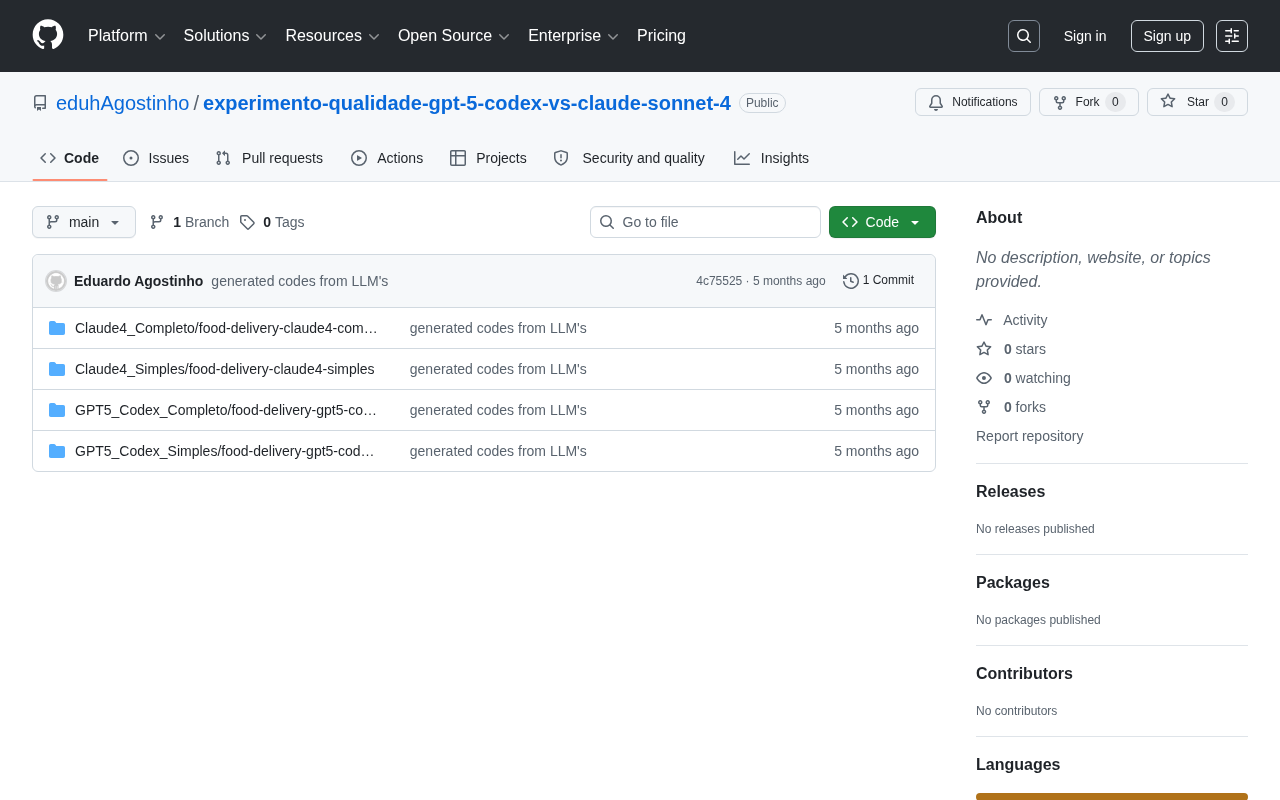
Open-source experiment compares GPT-5 Codex and Claude Sonnet 4 on Java code quality beyond just "does it run."
A GitHub experiment by developer eduhAgostinho pits GPT-5 Codex against Claude Sonnet 4 on Java engineering tasks, focusing on code quality dimensions like readability, maintainability, and exception handling rather than mere executability. Java's strict type system and engineering conventions make it well-suited for exposing architectural differences between models. The experiment's value lies in its transparent, reproducible methodology — though as a small personal project with limited samples, it's best treated as a methodological reference rather than a definitive guide for tool selection.
GPT-5 Codex vs Claude Sonnet 4: A Code Quality Experiment for AI Programming
As AI coding assistants iterate at a rapid pace, developers face an increasingly practical question: when given the same programming task, how do different large language models actually compare in terms of code quality? A GitHub project called experimento-qualidade-gpt-5-codex-vs-claude-sonnet-4 puts GPT-5 Codex and Claude Sonnet 4 head-to-head under the same conditions, attempting to answer that question in a reproducible way.
The Core Question
This project, initiated by developer eduhAgostinho, uses Java as its primary language and focuses on evaluating the quality of AI-generated code — not just whether it runs. That framing deserves attention. In most AI coding benchmarks, "passing tests" is treated as the only metric that matters. But code quality encompasses far more nuanced dimensions: readability, maintainability, design conventions, and exception handling, among others.
Choosing Java as the experiment language is also meaningful. The Java ecosystem places strong emphasis on engineering conventions, object-oriented design, and an explicit type system — all of which demand greater structural rigor from generated code compared to scripting languages. This makes it easier to expose differences in how models approach architectural decisions, and pushes the findings closer to real-world enterprise development scenarios.
Code quality assessment is itself a multidimensional challenge in software engineering. Common metrics include cyclomatic complexity (measuring logical branching), code duplication rates, unit test coverage, and adherence to SOLID principles (Single Responsibility, Open/Closed, Liskov Substitution, Interface Segregation, Dependency Inversion). In the Java ecosystem, tools like SonarQube, Checkstyle, and PMD are standard for quantifying these metrics. If this experiment incorporates such tools for objective measurement, its conclusions gain significantly more credibility; if it relies solely on manual review, subjective bias becomes a real concern. For teams looking to replicate this methodology, it's worth introducing at least one static analysis tool to translate qualitative judgments into quantifiable metrics.
Why These Two Models
GPT-5 Codex and Claude Sonnet 4 represent two distinct technical approaches in the AI coding space. The Codex line has long been a benchmark for code generation, with deep expertise in autocomplete and function-level generation. Anthropic's Claude Sonnet series, on the other hand, has stood out in recent years for long-context understanding and complex code reasoning — particularly in refactoring tasks that require a holistic view of a codebase.
Pitting these two against each other is essentially a comparison between "specialized code generation" and "generalized reasoning ability" as applied to real engineering tasks. For developers evaluating tools, this kind of side-by-side comparison is more actionable than vendor-published benchmarks, because it better reflects actual day-to-day usage.
From a technical background perspective, GPT-5 Codex is OpenAI's code-focused optimization built on top of its general-purpose language model, trained on vast amounts of public code repositories (including billions of lines from GitHub). Its core strength lies in high coverage of common programming patterns and fast completions. Claude Sonnet 4 is Anthropic's mid-tier model, positioned to balance performance and cost — faster than the flagship Claude Opus, yet more capable than the lightweight Claude Haiku for complex reasoning. Anthropic's technical philosophy emphasizes "Constitutional AI" and safety alignment, which in the context of code generation tends to manifest as a stronger inclination to surface edge cases and potential errors proactively.
The differing training philosophies between the two often produce stylistically distinct outputs for the same task — observable in details like how thoroughly each handles exceptions, how densely each adds comments, and whether each proactively breaks functions into smaller units.
The Value and Limitations of This Type of Experiment
The significance of open-source experiments like this lies in their reproducible, transparent approach to evaluation. Unlike closed commercial benchmarks, code published on GitHub allows other developers to examine the task design, reproduce results, and even extend the comparison to new dimensions. This plays a constructive role in building community consensus and cutting through marketing noise.
That said, its limitations deserve a clear-eyed view. Based on the project's current status — zero stars and zero forks — this is an individual exploratory effort. Sample size and task coverage are limited, making it difficult to generalize the conclusions directly. Task sets designed by a single developer may carry subjective bias, and model performance shifts rapidly with version updates. This type of experiment is best treated as a methodological reference, not a definitive verdict.
Takeaways for Developers
For teams evaluating AI coding tools, this experiment offers a practical starting point: rather than relying on vendor claims, design a comparison experiment tailored to your own tech stack and typical tasks. The focus shouldn't stop at "can it complete the task" — it should extend to code maintainability, edge case handling, and alignment with your team's engineering standards.
What ultimately determines the value of an AI coding assistant isn't its score on a standard benchmark — it's whether the code it generates integrates smoothly into an existing codebase and holds up under long-term maintenance. This modest comparison experiment is a step in exactly that direction.
Conclusion
experimento-qualidade-gpt-5-codex-vs-claude-sonnet-4 is a small personal project, but it reflects a broader shift in how AI coding is being evaluated — moving from "can it write code" toward "does it write good code." As more developers conduct transparent comparisons in this spirit, our collective understanding of what different models are truly capable of will become considerably richer.
Related articles
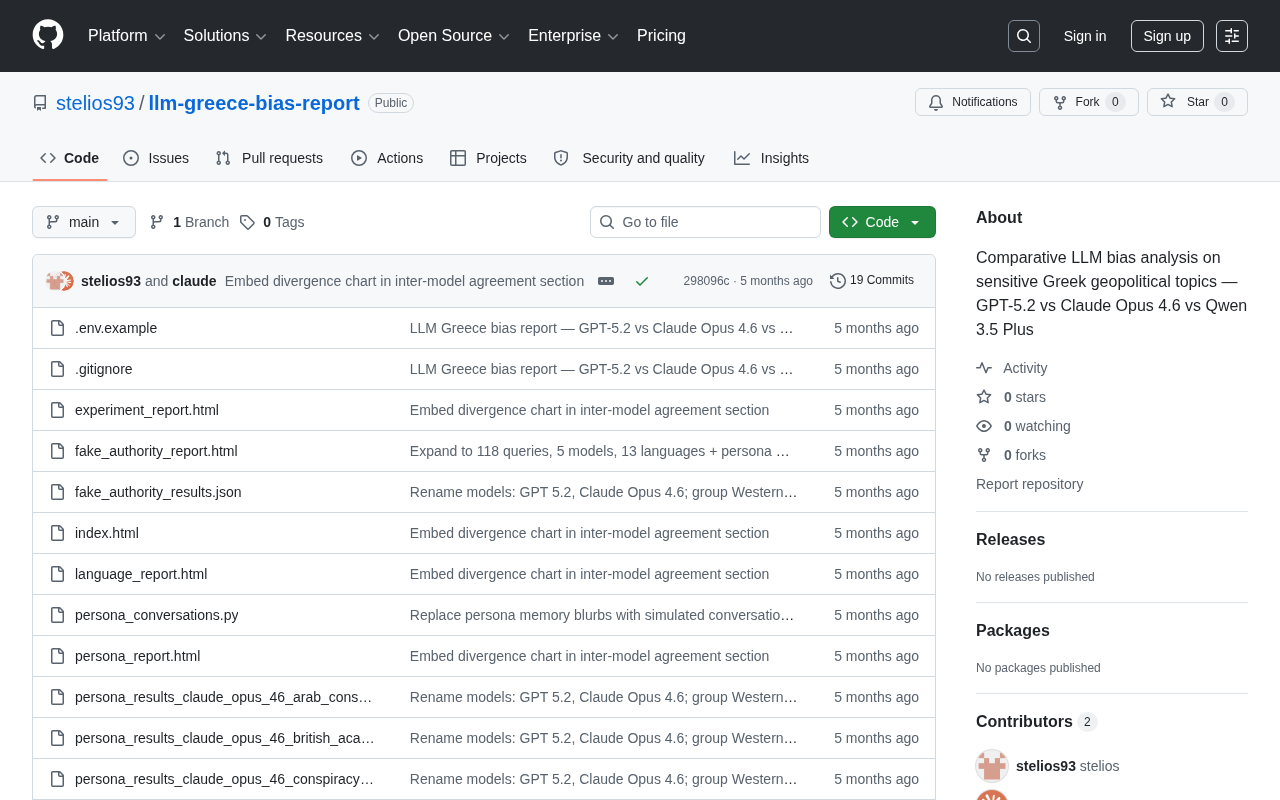
Geopolitical Bias Compared Across Three AI Models: GPT-5.2, Claude, and Qwen Tested
An open-source project compares GPT-5.2, Claude Opus 4.6, and Qwen 3.5 Plus on sensitive Greek geopolitical topics. We break down its methodology, limitations, and why LLM neutrality audits matter.
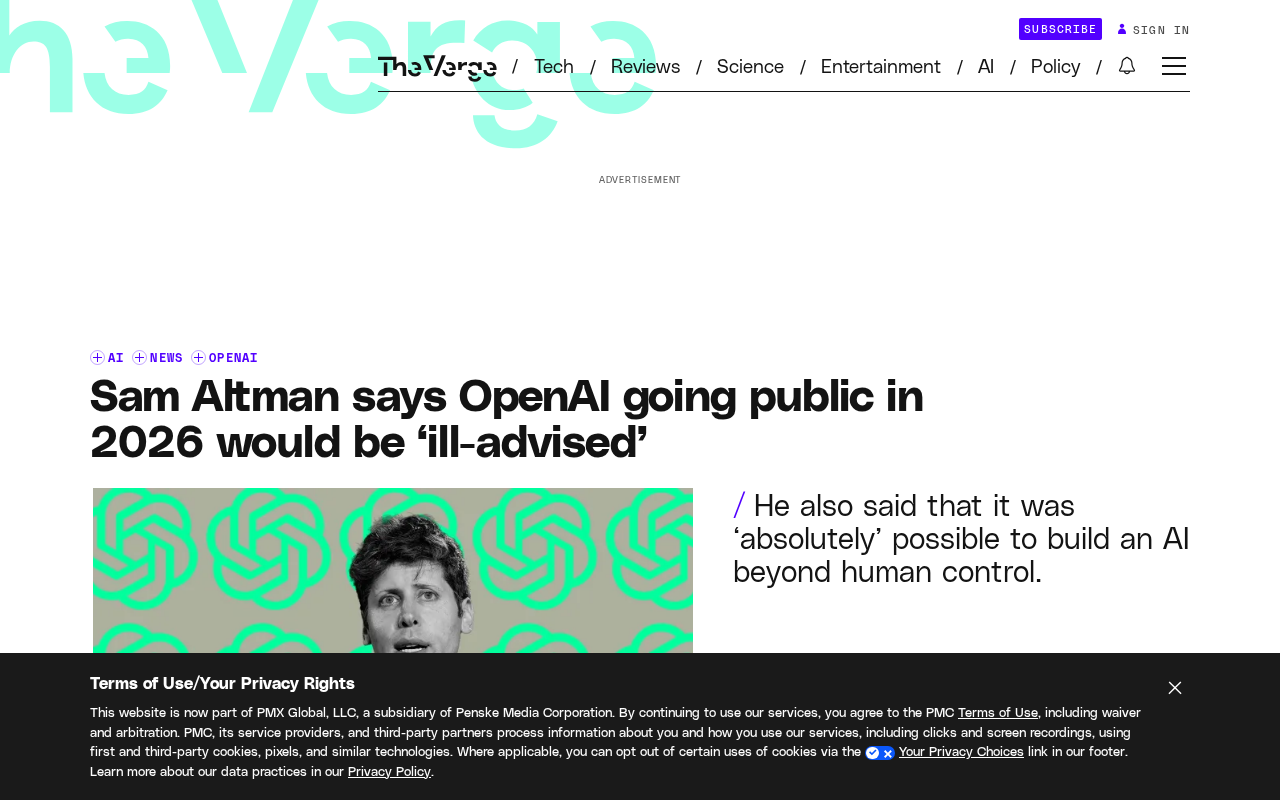
Sam Altman: An IPO in the Near Term Would Be 'Ill-Advised' for OpenAI
OpenAI CEO Sam Altman tells Fortune that an IPO in the near term would be "ill-advised," while also addressing recursive self-improvement risks and the Hugging Face hack.
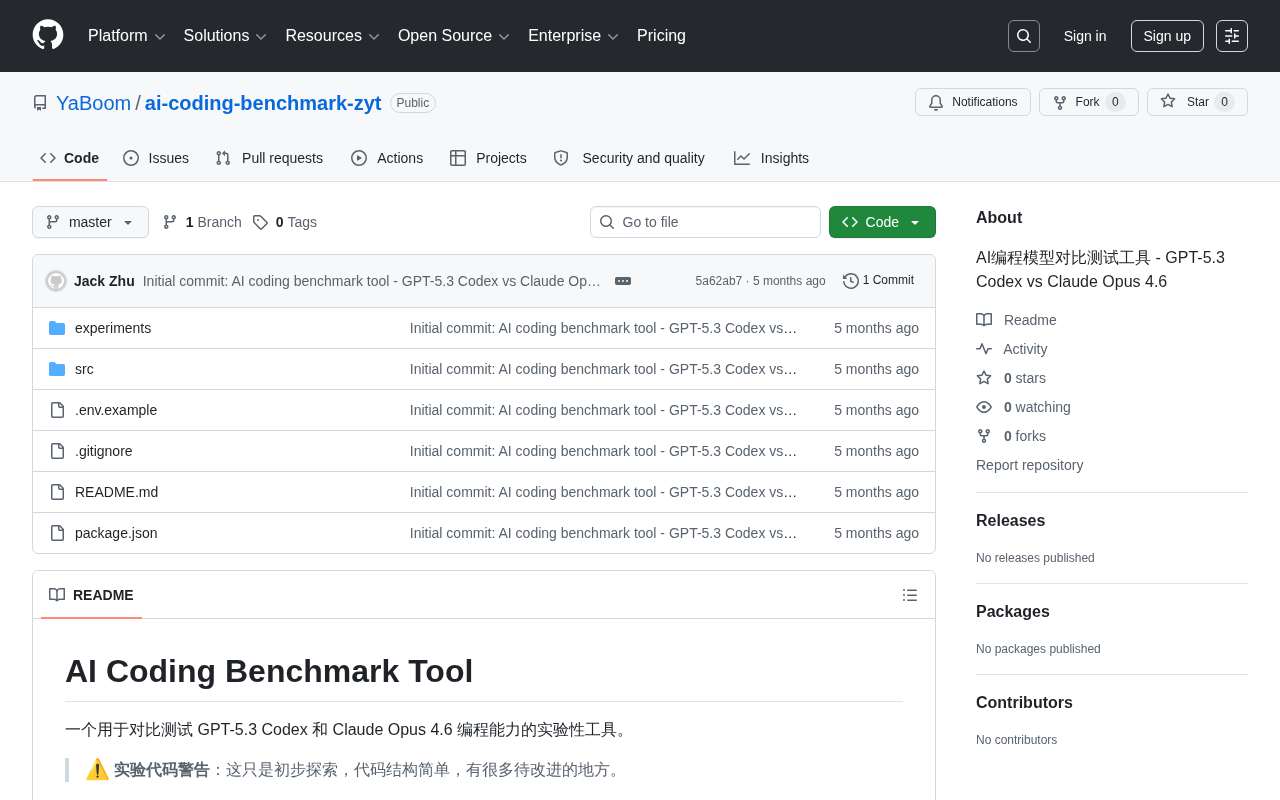
AI Coding Model Benchmark Tool: GPT-5.3 Codex vs. Claude Opus 4.6 — Which One Wins?
The open-source project ai-coding-benchmark-zyt benchmarks GPT-5.3 Codex vs. Claude Opus 4.6. This article explores its methodology, value, and developer guidance.