GPT-6.1 vs Sonnet 5.5 vs Luna: Which Model Delivers Better Generation Quality?

GPT-6.1 matches Astra's quality at one-fifth the cost, accelerating the democratization of top-tier AI.
A Bilibili creator ran a head-to-head comparison of GPT-6.1, Sonnet 5.5, and Luna using Astra as a benchmark. GPT-6.1 came remarkably close to Astra's generation quality at just one-fifth the price, offering a compelling cost advantage. Sonnet 5.5 had aesthetic shortcomings in color output but showed a dramatic leap in 3D modeling capability over its predecessor. Luna was serviceable but error-prone in modeling. The test highlights three industry signals: top-tier capability windows are shrinking fast, model evaluation must distinguish hard from soft metrics, and stability — not peak performance — is what determines real-world reliability.
New Models Everywhere: A Side-by-Side Comparison
The large language model space has been buzzing again recently. Rumors emerged that GPT-6.1 could be found and tested, and one Bilibili content creator decided to put it to the test — running a head-to-head comparison against Sonnet 5.5 and Luna, using the previously benchmarked Astra as a reference point.
The overall takeaway: this latest wave of models has made notable strides in generation quality, especially on detail-intensive tasks like 3D modeling and visual rendering. The gap between players is being reshuffled.
GPT-6.1: Near Astra's Level, at a Fraction of the Cost
The creator's core verdict on GPT-6.1: its generation quality "is genuinely very close to Astra's level." Astra, tested just the week before, had been the gold-standard reference throughout this comparison.
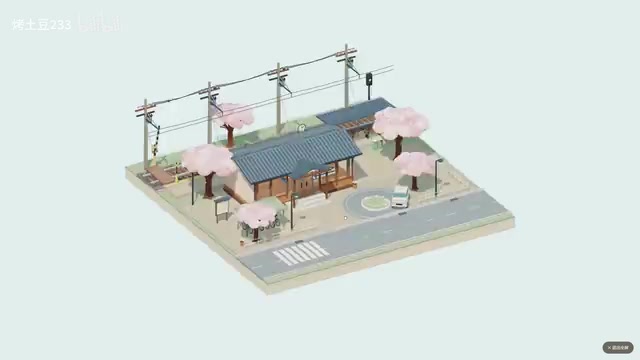
What makes this significant is the price factor. According to the tester, Astra costs roughly 5× more than GPT-6.1 — yet GPT-6.1 has now caught up in capability. That means within the same quality tier, GPT-6.1 offers substantially better value for money, which often matters more than raw capability when it comes to real-world adoption.

For everyday users and developers alike, "getting near-top-tier results at a lower price" is the genuinely meaningful milestone here. The creator also mentioned that the relevant prompt resources are linked in the video description, making it easy for viewers to upload their own work and replicate the tests.
In the commercial AI race, "cost-effectiveness" tends to drive market penetration more than raw capability rankings. API pricing is typically measured per million tokens, so a 5× price difference means GPT-6.1 can handle far more workload on the same budget as Astra. For enterprise applications that require high-volume calls — content generation pipelines, automated code review, and similar workflows — cost directly defines the feasibility boundary. This is why the moment a model "catches up to the top tier" is often seen as a commercial inflection point, not just a technical milestone.
Sonnet 5.5: Weak Color Palette, But a Major Leap in Modeling
The creator's take on Sonnet 5.5 is nuanced. On one hand, the "color choices aren't great" — a clear aesthetic shortcoming. On the other, in terms of core modeling capability, it "is so much better than Sonnet 5."
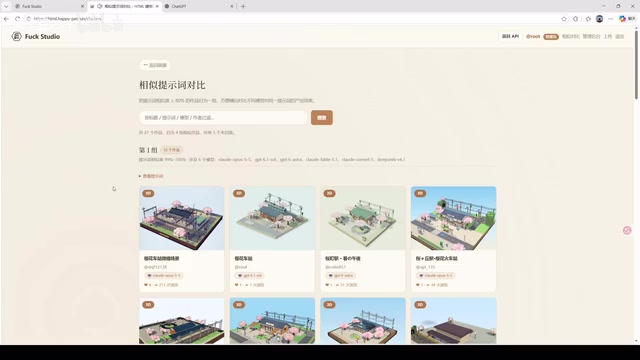
This kind of "aesthetics vs. capability split" isn't unusual in model iterations. Color and style are surface-level preferences, while modeling precision and structural integrity reflect deeper model capability. The improvement from Sonnet 5 to Sonnet 5.5 suggests the team made substantive optimizations in geometric understanding and spatial construction.
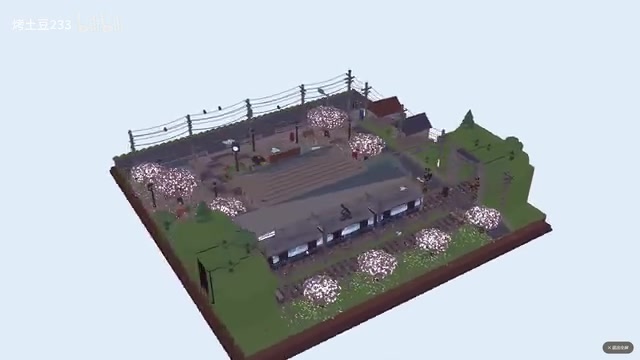
If the color palette issue can be treated as a problem addressable through post-processing or prompt engineering, then Sonnet 5.5's gains in modeling are actually the rarer and more valuable improvement.
The terms "modeling" and "3D modeling" here refer specifically to AI-generated 3D structures or geometric forms — not statistical model training. In 3D content generation tasks, a model must understand topological structure, proportional relationships, and spatial occlusion logic, which places very high demands on spatial reasoning. "Color" belongs to the material and rendering layer and can be adjusted via style descriptions in the prompt. Geometric accuracy, however, is a foundational issue — if it goes wrong, you get deformed meshes and intersecting faces that are extremely difficult to fix in post-processing. The two dimensions differ fundamentally in technical difficulty and correctability.
Luna: Serviceable, But Prone to Modeling Errors
By comparison, Luna was described as "middle-of-the-road." The tester noted it made a fair number of modeling errors, falling behind the other two in overall stability and accuracy.
For use cases that demand production-ready outputs, modeling errors translate directly into manual correction overhead — which undermines the model's practical value in real workflows. The creator suggested checking the previous video for a more detailed look at Luna's performance.
A Few Observations Worth Noting
While this comparison comes from a single creator's subjective testing, it surfaces a few broader industry signals.
First, top-tier capability is commoditizing fast. Astra was the benchmark, but within just one week, GPT-6.1 matched it at one-fifth the price. The window for capability leadership is shrinking, with price competition and performance competition running in parallel.
Second, evaluation criteria need to be layered. The Sonnet 5.5 case is a reminder that "does it look good" isn't enough to judge a model. Hard metrics like modeling precision and structural correctness are better indicators of genuine capability.
Third, stability is the real dividing line. Luna's modeling errors illustrate that the floor of generation quality matters just as much as the ceiling. For real-world applications, a model that makes fewer mistakes is often more reliable than one that occasionally dazzles.
A caveat: these tests reflect the experience of a single Bilibili creator, with limited samples and inherent subjectivity. The specific data and conclusions here are for reference only. For more rigorous evaluation, larger-scale, standardized benchmarks remain essential.
Related articles

Why Does the Tesla Roadster Need to Fly? A Deep Dive into Musk's Wild Demo
Tesla's Roadster launch showed wall-climbing, upside-down driving, and flying stunts—but The Vergecast notes the demo car may lack a battery, the Rocket version is invite-only and not street-legal, and the website terms don't guarantee delivery. After nine years of delays, why does this car still need to exist?

AI Is Not a Replacement: Human-AI Collaboration Through the Lens of Factory Root Cause Analysis
Starting from factory root cause analysis, this article explains how AI accelerates evidence chain construction rather than replacing human experts, exploring the pragmatic implementation logic and business value of 'AI supporting people rather than replacing them.'

AI Agent Decision Auditing: Building an Evidence Chain in Regulated Workflows
Starting from a Reddit discussion, this article analyzes three core issues in AI agent decision auditing within regulated workflows: what fields audit records should contain, how to handle feedback latency for erroneous decisions, and how to continuously calibrate LLM judge consistency with human judgment.