GPT-6.2 Astra Leak Hands-On: OpenAI's Safety Controversy and the AGI Declaration
GPT-6.2 Astra leaks, Google's periodic-table model matrix, and Tencent's low-cost HY4 Flash land in the same week as AI competition shifts to a three-way tug between capability, safety, and cost.
This week in AI was dense: OpenAI's unreleased GPT-6.2 Astra leaked through API relays, with demos showing a single prompt generating a complete playable dungeon game, and a hidden benchmark claiming a 22% gain over the previous generation on the hardest scientific benchmark—all unverified. OpenAI delayed release over alignment and safety concerns and opened internal access to four independent organizations. Google iterated on the Gemini Mini series with periodic-table density and tested Neon subscription tiers; Tencent's HY4 Flash entered high-frequency tasks at roughly 18x lower cost and 150 tokens per second. On the toolchain side, Codex slashed capacity error rates, Claude Code strengthened code verification, and OpenCode was rewritten in Rust. Altman's AGI remark and Anthropic's short timeline added a longer question to the week.
OpenAI's next-generation flagship model GPT-6.2 Astra hasn't been released yet, but leaks, benchmark tests, and internal controversies surrounding it have already surfaced. Meanwhile, Google is naming new models after the periodic table, Tencent launched the ultra-low-cost HY4 Flash, and Anthropic is strengthening code verification—this week's information density is unusually high.
GPT-6.2 Astra: Leaked Demos and Benchmark Shock
According to a roundup by the Bilibili AI news channel "World of AI," GPT-6.2 Astra has already been accessed by some users through Chinese API relay services, around November 11. Early feedback is quite optimistic: the model runs noticeably more efficiently than GPT-6 Astra, and its tendency toward cautious evasion has decreased.
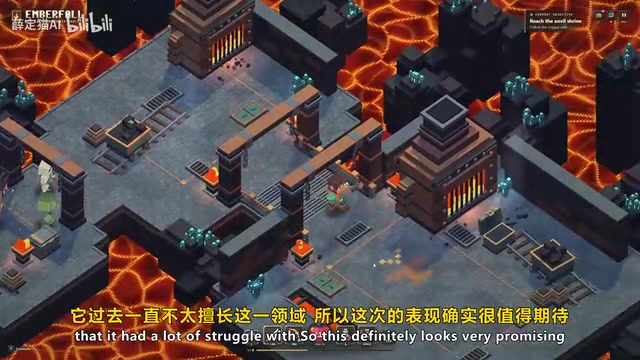
Even more striking are the generative demos. One Chinese viewer claimed to have gained access and used a single prompt to generate a complete dungeon adventure game inspired by Minecraft: Dungeons—including textures, creatures, dynamic behavior, and playable logic. Another demo showed the model generating a AAA-grade game scene with boats, cranes, and environmental details, all built from scratch in code with no external assets. By comparison, the previous-generation Astra produced noticeably crude placeholder assets in similar tasks.
In web development and front-end capabilities, this generation's improvement is described as "much stronger." The source material specifically notes that open-source models have long been dominant in programming, and OpenAI may be reclaiming ground with Astra this time.
On the benchmark front, someone allegedly ran JavaScript commands via browser developer tools on the interactive charts in OpenAI's official blog to surface a hidden GPT-6.2 model. That model scored 89% on the hardest scientific benchmark, while the model labeled GPT-6.2 Astra scored 67%—a 22% improvement. This finding has not been independently verified, and the relevant entry point is said to have been patched.
Safety Protocols and Release Delays: Why OpenAI Is Hesitating
The unusual release cadence is the focus of discussion. According to the source material, OpenAI took about 29 days from GPT-5.1 to GPT-5.2, about 28 days each from 5.2 to 5.3 and 5.3 to 5.4, after which version intervals stretched to 49–77 days. And it has now been about 75 days since GPT-6 Astra's release, with no flagship upgrade yet.
OpenAI is reportedly working through alignment issues with GPT-6.1 and safety issues with GPT-6.2 and later versions. Some critics argue that OpenAI has become more cautious about safety than Anthropic, causing strong models to be repeatedly delayed. In response, OpenAI announced partnerships with four independent organizations—Mater, Apollo Research, Goodfire, and Transluce—granting them deeper internal model access for risk investigation and safety evaluation.
There's an intriguing tension here: if the leaked performance data is accurate, Astra's delay may not be because it's "not good enough," but because it's "too strong." The speculation cited in the source material is that OpenAI needs more time to polish the model to the point where it is both releasable and sufficiently safe.
AI alignment refers to the technical problem of making AI systems' behavior consistent with human intent, values, and goals. It's not just about surface-level rules like "don't swear"—it covers deep risks such as whether a model will deceive, whether it will pursue goals different from its designers', and whether it can be reliably supervised as capabilities grow. The article's mention of OpenAI handling "alignment issues with GPT-6.1" typically refers to discovering and correcting harmful tendencies through reinforcement learning from human feedback (RLHF), adversarial testing, red-team evaluation, and similar methods. Alignment slows releases because the stronger the model, the harder it is to exhaustively enumerate potential failure modes, and verification costs rise non-linearly with capability.
Apollo Research, Goodfire, and Transluce are three independent research organizations focused on AI safety and interpretability. Apollo Research is known for evaluating "scheming" in models—that is, whether a model will feign compliance during evaluations; Goodfire and Transluce focus on mechanistic interpretability and visualizing internal model features. OpenAI granting external organizations internal model access is a "third-party red team" model, intended to use outside perspectives to compensate for blind spots in internal evaluation.
Google's Model Menu: Neon, Oxygen, and the Periodic Table
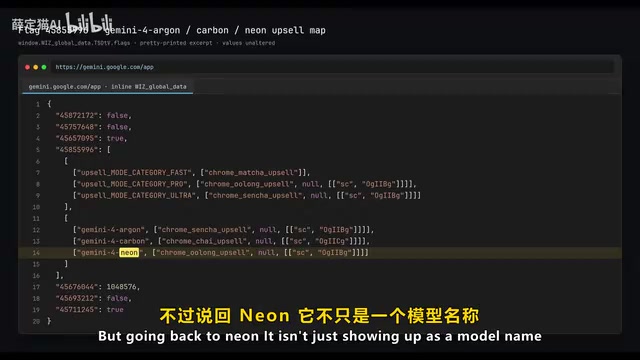
Google continues to iterate on the Gemini Mini series at a very fast pace. The source material mentions two new codenames: Neon and Oxygen. Oxygen's logs suggest it may be a new version of Flash, with outstanding front-end and web development capabilities, generation speeds far exceeding the previous Hydrogen, and output quality beating Carbon in multiple tests. Neon's identity remains unclear—it could be an enhanced version of Carbon, or an entirely new model series.
Neon isn't just a model name. The logs also revealed an entirely new Neon subscription plan, a Neon tier associated with Gemini Ultra, and a level called Helium S, along with a mechanism to alert users when budget usage is insufficient, covering video generation budgets and deep research features. One unconfirmed speculation is that Google is preparing a dedicated subscription plan for the Neon model with separate usage limits.
The source material's jab at Google's naming system is quite apt: since every model is named after the periodic table, why not just put a periodic table in the model catalog?
Tencent HY4 Flash: A Different Kind of Competition on Cost and Speed
Tencent's HY4 Flash focuses on extreme speed and low price. According to Tencent's own blind test, 85 users tested 259 real tasks, and HY4 Flash scored 2.79 in its highest thinking mode versus Claude 3.5 Sonnet's 2.81—nearly identical. More critically, the cost: about 4 cents per task on average, versus about 71 cents per run for the comparison model—nearly 18 times cheaper.
In terms of parameters, HY4 Flash has 224 billion total parameters, about 12 billion activated parameters, a context window of 1 million tokens, native multimodal support, generation speeds exceeding 150 tokens per second, and API pricing as low as 7 cents per million input tokens and about 20 cents for output. The source material notes it can be used for free through WorkBuddy, with a 50% API discount running until November 30, and Tencent also plans to release the model weights publicly.
However, the source material also honestly presents the shortcomings: in an SVG generation comparison with Queens Max, HY4 Flash performs reasonably well as a Flash-tier model, but still has clear deficiencies at higher reasoning levels, and it isn't particularly good at certain design-related tasks (such as Figma-related work). Its positioning is more like a high-cost-performance alternative for high-frequency tasks rather than a comprehensive competitor to top-tier models.
Total parameters vs. activated parameters—this distinction comes from the Mixture of Experts (MoE) architecture. HY4 Flash's 224 billion total parameters are not all activated for every inference; instead, routing mechanisms activate only about 12 billion parameters for computation. This allows the model to maintain large-capacity knowledge storage while keeping inference costs close to a ten-billion-parameter small model—the structural reason it can achieve over 150 tokens per second and API pricing as low as 7 cents per million tokens. The cost of MoE is that some experts are undertrained when routing is imbalanced, causing performance fluctuations on tasks requiring deep reasoning—which also explains the "clear deficiencies at higher reasoning levels" mentioned in the article.
A 1 million token context window means the model can process input about 750,000 English words long in a single pass—enough to hold an entire mid-sized codebase or hundreds of pages of documentation. Long context is an alternative to retrieval-augmented generation (RAG), but effectively utilizing long context is still constrained by issues such as "lost in the middle."
Toolchain Updates: Codex, Claude Code, and OpenCode
Codex's capacity error problem has improved significantly. A chart in the source material shows that between October 15 and November 12, model capacity errors affected as much as 6.89% of daily active Codex users; after retry mechanism optimization, automatic delays, and improved error handling, the November 6 update brought that down to just 0.085%, and by November 12 the affected daily active user share had dropped about 99% from peak. This doesn't mean more compute—it means better overload handling.
Anthropic, meanwhile, released the Claude Code verification workflow: Claude now runs and reviews nearly 90% of the code written by the team, tests applications with thousands of different inputs, compares results, and automatically fixes errors before submission. The team maintains 39 checks based on past errors and selects the most relevant one for each change. If three attempts fail to resolve an issue, it escalates to a human. The judgment in the source material is that the competitive focus in AI programming is shifting from "how much code can it generate" to "can it prove the code actually runs."
OpenCode's official release was rewritten in Rust, cutting memory usage to one twenty-fifth and tool size to one twenty-third, completely eliminating its dependency on Playwright, with browser operations now directly callable by AI agents.
Codex capacity errors refer to failure responses returned by the model's server when concurrent requests exceed compute quotas. The 6.89% of daily active users affected means nearly one in fourteen programming requests failed outright during peak hours. OpenAI's improvements focused on client-side retry strategies—exponential backoff, request queuing, and graceful degradation—rather than scaling up, which is why the article specifically emphasizes "doesn't mean more compute." The impact of such engineering optimizations on developer experience is often underestimated: a reliable but slightly slower interface is often more valuable than a fast one that fails randomly.
OpenCode's Rust rewrite matters for memory safety and zero-cost abstractions. Rust has no garbage collection and rules out data races at compile time, making it suitable for building long-running local agent processes. Dropping the Playwright dependency means browser control no longer requires a heavyweight Node runtime—agents can drive browsers directly through native protocols, enabling faster startup and lighter deployment.
The AGI Declaration and a Longer Question Mark
The most controversial line in the source material comes from Sam Altman: he reportedly said in an interview, "We didn't have AGI before, but now we do." The source author is skeptical, believing more context is needed to confirm what he specifically meant, but paired with the slowdown in model releases, this statement forms an intriguing combination—if some threshold has already been crossed internally, then delaying releases may be precisely due to safety considerations around self-improving AI.
Public judgments from Anthropic researchers offer a timeline: AI with broad superhuman capabilities may emerge in just about a year and three months, matching or exceeding top experts in almost every domain.
Research released by OpenAI around the same time shows that more than 1,800 scientists participating in ChatGPT's academic research program self-reported that using AI nearly doubled their work efficiency, with uses spanning ideation, data analysis, coding, and process acceleration. It should be noted that these efficiency figures come from respondents' self-reports, not controlled experiments. OpenAI is also expanding in healthcare, releasing a stronger computer-operating agent and more than 20 healthcare plugins, with partners including CVS Health and other institutions.

AGI (Artificial General Intelligence) has no unified definition; a common one is "reaching or exceeding human level on most economically valuable work." Altman's statement that "we didn't have AGI before, but now we do" is controversial because, by a strict definition, current models still have clear shortcomings in continual learning, long-horizon autonomous planning, and physical-world interaction; by a loose definition, the AGI threshold can be lowered arbitrarily. This definition drift is itself part of the discussion—the wording choices of releasers often serve both technical narrative and commercial expectations.
Anthropic researchers' "about a year and three months" timeline is an extrapolated prediction, typically based on the accelerating trend of capability curves, but benchmark saturation, evaluation contamination, and deployment bottlenecks could all make predictions inaccurate. Reading such judgments alongside the slowdown in model releases is more informative than trusting either side alone.
Summary: The Three-Way Tug Between Capability, Safety, and Pace
In this round of information, what's most noteworthy isn't any single model but the strategic divergence among the three leading companies: OpenAI is repeatedly weighing capability against safety, Google is rolling out a model matrix with periodic-table density while testing subscription tiers, and Tencent is carving into developers' high-frequency scenarios with cost and speed. For developers, the variables in model selection have expanded from "who's smartest" to "who's fast enough, cheap enough, and can prove their output is reliable."
A reminder: the GPT-6.2 Astra leak, hidden benchmark tests, and AGI statements discussed in this article all come from secondhand accounts and reports that have not been independently verified. Actual release details should be based on official information.
Related articles

Inside Honey Trap Training: Emotional Dissociation and Anchoring Techniques
How are spies trained for honey trap missions? A trainee reveals emotional dissociation, perfume and keyword anchoring, and target photo binding—psychological techniques that condition reflexes for intelligence work.

Frontier AI Risk Management: Full-Pipeline Practices from Training to Deployment
OpenAI outlines a frontier AI risk management framework: from training-stage model alignment to deployment-stage sandboxing and blocking safeguards, plus post-deployment monitoring—a layered risk control system across the model lifecycle.
DaisyRose-27B: 1,200-Task RL Boosts Qwen3.8 from 5.6% to 12% on Terminal-Bench 4.1
DaisyRose-27B uses RL training on 1,200 tasks to boost Qwen3.8's Terminal-Bench 4.1 score from 5.6% to 12%, showing lightweight RL can more than double terminal task performance.