GPT-6 Astra Game Development Test: AI Robots Are Already Working at Bars
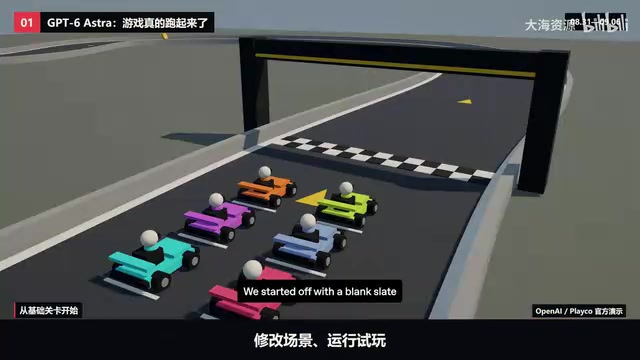
GPT-6 Astra builds playable games, while AI robots start serving drinks at Hong Kong bars.
This week's AI highlights include OpenAI's GPT-6 Astra demonstrating agent-based game development, Claude and Gemini upgrades turning old data and manuals into interactive tools, AI robots deployed in Hong Kong's Lan Kwai Fong bar, Google's WeatherNext 3 for hourly global forecasts, and Waymo-Uber autonomous taxis launching in London. Creative barriers are falling fast, but real-world costs and limitations deserve clear-eyed assessment.
This week brought another wave of dense updates across the AI landscape: OpenAI launched GPT-6 Astra and showcased its game-building capabilities, Claude, Gemini, and Qwen all received collective upgrades, and perhaps most notably — AI is no longer confined to demo screens. It has walked into a bar in Hong Kong's Lan Kwai Fong and started actually "working."
GPT-6 Astra: From Writing Code to Watching the Screen and Making Games
The most eye-catching release this week was undoubtedly OpenAI's GPT-6 Astra. Unlike the usual rush to show off benchmark scores, this time the company chose a far more intuitive scenario to demonstrate its capabilities — making games.
In the demo, the go-kart game Astra created was fully playable, and 3D scenes could be explored in real time. More importantly, it wasn't just "writing code" — it was operating modeling software and game engines, turning an idea into a visible, playable experience. Behind this lies a fundamental shift in capability paradigm: the model can watch the screen, click interface elements, inspect its own work, and continue making revisions. This has moved beyond "generation" into "operation and self-verification."
Technically, this falls under the Agent paradigm — the model's input is no longer limited to user queries but also includes real-time screenshots, interface states, and program feedback, forming a perception-action loop. It relies on the combination of Vision Language Models (VLMs) and Tool Use / Function Calling, layered with reinforcement learning mechanisms that teach the model when to confirm and when to keep going. Game development happens to be the perfect scenario for validating this capability, as it simultaneously requires creative generation, code execution, visual feedback, and multi-round revision — covering nearly every core capability dimension of an agent model.
It's worth maintaining a level head here: everything OpenAI showed was carefully curated demo content, not proof that anyone can casually produce a commercial-grade game with a single prompt. That said, a real-world case from game studio Plico was more convincing: after connecting Astra to their development tools, they could modify scenes, run playtests, and even generate game prototypes with different themes from the same base level. The team reported that the issues requiring manual fixes were reduced by half.
That number might be the most substantive signal from this release. It's not an effect everyone can achieve immediately, but the barrier from "having an idea" to "making a playable prototype" is genuinely coming down. Beyond game development, Astra can also handle spreadsheets, documents, and multi-step computer tasks. It's currently being rolled out in phases, with specific access depending on account status.
Claude and Gemini Upgrades: AI Is Turning Manuals into Tools
Anthropic's Claude also received upgrades, with Fable 5.1 and MyFast 5.1 launching simultaneously. The company shared a remarkably imaginative example: using radar data from over 30 years ago to help reconstruct the terrain of Venus, covering roughly a third of the planet, with previously indistinguishable volcanoes now revealing much more detail.
This data came from synthetic aperture radar (SAR) raw echoes collected by NASA's Magellan probe in the early 1990s, which had long been limited to generating low-resolution terrain maps due to processing algorithm constraints. Claude's value here wasn't in directly "understanding" radar signals but rather in assisting with writing data processing pipelines, optimizing interpolation algorithms, and automating comparison and verification steps — dramatically compressing the time researchers spent on repetitive computational tasks. This is the classic pattern of AI's value in science: not replacing scientists' judgment, but letting scientists focus their energy on hypothesis construction and result interpretation.
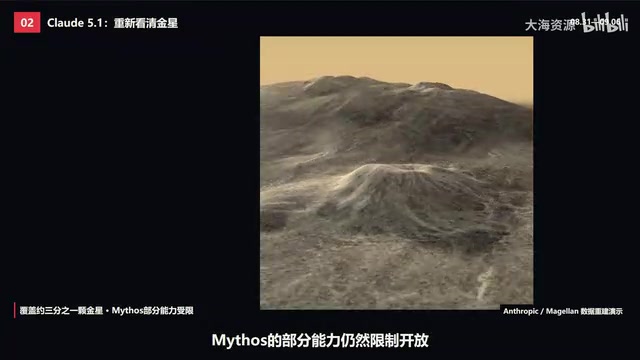
The significance of this case is clear — old data hasn't become obsolete; it just finally found a "new colleague" capable of fully mining its potential. Fable is aimed at general users, while some MyFast capabilities remain in limited access.
On Google's side, Gemini 3.8 was updated with demos showing draggable, deconstructable 3D hardware models, and even turning Google Maps into a retro computer interface where routes and street views are fully interactive. These kinds of demos are far more effective than a leaderboard at helping people understand AI's value: it's turning static manuals into hands-on exploratory tools.
However, there's a hidden cost worth noting: current mainstream large models charge by token, and as model capabilities improve, users naturally tend to submit more complex tasks — long document analysis, multi-turn agent workflows, code generation plus debugging — tasks that often consume 10 to 100 times more tokens than simple Q&A. Additionally, "deep thinking" modes generate large volumes of intermediate reasoning tokens before returning an answer, which are typically billed but invisible to users. Just because unit prices haven't gone up doesn't mean your final bill won't — evaluating the true cost of AI tools should track "task completion cost" rather than "per-request price." This is a reality all users relying on large models need to be aware of.
AI Robots at Work: From Exhibition Booths to Real Service Scenarios
If model upgrades still belong to the software layer, then this week's most down-to-earth development was AI robots genuinely entering the service industry.
ZhiPingFang's Aibo robot was deployed at a bar in Hong Kong's Lan Kwai Fong, mixing cocktails for customers and engaging in interactions. The difficulty here far exceeds exhibition demos: noisy music, people moving around, constantly changing lighting — these are the real test for service robots. The industry typically uses "unstructured environment robustness" to measure a robot's real capability level — in a real bar, alternating bright light and shadows, background noise exceeding 85 decibels, and randomly moving crowds all dramatically reduce the accuracy of a robot's visual perception and speech recognition. Cocktail mixing itself involves grasping irregular containers, precise liquid control, and understanding ambiguous semantic instructions — each an open challenge in robotics. The significance of this Lan Kwai Fong deployment is that it provides real-world stress test data, which is far more telling about a robot's actual usability than any lab report.

Of course, it's too early to declare "human bartenders unemployed." Whether the robot can provide consistently stable service still depends on long-term performance. To sum it up in one sentence: humans handle the buzz, robots handle staying sober on the job.
Similar progress appeared in firefighting — robot dogs equipped with firefighting gear participated in reconnaissance and fire suppression demonstrations, showcasing AI's potential for replacing human labor in high-risk scenarios.

Weather Prediction and Autonomous Driving: AI Cares Whether You Bring an Umbrella
Google also released WeatherNext 3, a notably practical update. It directly leverages satellite observations to update global forecasts every hour, covering temperature, humidity, and other data at a spatial resolution of 5 kilometers, and will be integrated into Google Search, Maps, and other products.
WeatherNext 3 represents the latest development in the competitive landscape between AI weather prediction and traditional Numerical Weather Prediction (NWP). Traditional NWP is based on fluid dynamics equations, using supercomputers to perform grid-based numerical integration of the atmosphere — extremely computationally expensive with limited update frequency. AI weather models, trained on historical reanalysis datasets like ERA5, learn the statistical patterns of atmospheric systems and can complete global forecasts in minutes. WeatherNext 3's key advancement is directly fusing real-time satellite observations rather than relying on pre-processed analysis field data, enabling it to capture rapidly developing weather systems (such as convective storms) more quickly. The 5-kilometer spatial resolution also outperforms most global NWP products (typically 9–25 km), carrying practical significance for city-level fine-grained forecasting.
Its goal isn't to guarantee accuracy for every rainstorm but to keep up with weather changes more promptly. In a landscape full of "AI anxiety," it's refreshing to see a technology earnestly caring about a small thing — whether you should bring an umbrella when you head out.
In the mobility space, Waymo and Uber launched autonomous ride-hailing services in London, though it's important to note that vehicles still have safety drivers on board at this stage — a gradual rollout approach. This is the industry's standard "incremental commercialization" path — the core objective during the safety driver phase isn't profitability but rather accumulating long-tail scenario data in real traffic in new cities. London roads present several unique challenges: left-hand driving, dense roundabouts, irregular road networks in historic districts, and high-density bicycle traffic — all requiring the autonomous driving system to supplement training data and adjust decision-making strategies accordingly. Having safety drivers present is both a compliance requirement within the regulatory framework and a necessary transitional step for building trust with the public and insurance institutions.
Other Notable AI Developments
Several more quick updates from this week:
- Qwen 3.8 Max released an update with enhanced programming and collaborative workspace capabilities, though model weights were not made open this time;
- Meta released Muse Spark 1.3, demonstrating stronger programming and tool-use capabilities, with the highest reasoning mode now available;
- World Labs unveiled the Atlas world model, capable of constructing coherent 3D scenes from a small number of photos — currently at the early demo stage;
- TCL's AI companion robot AIM debuted at IFA Berlin, focusing on family interaction — it's genuinely adorable, but you'll still need to handle the parenting yourself.
Conclusion: Creative Barriers Are Dropping, Deployment Costs Are Shifting
Looking across this week's developments, two clear threads emerge. First, creative barriers continue to fall: from Astra building games to Gemini turning manuals into tools, AI is making the distance from "idea to finished product" ever shorter. Second, AI is moving from demos to real-world scenarios: whether it's a bartending robot or autonomous ride-hailing, technology is directly confronting the complexity of the real world.
But beneath the excitement, a clear head is still needed: official demos don't equal universally accessible capabilities, stable unit prices don't mean stable bills, and robots showing up doesn't mean humans are immediately replaced. Beyond AI anxiety, what we really need is a rational sense of proportion about each advancement.
Related articles
How Short-Form Video Creators Are Using AI Video Generation Tools
Exploring the real-world application of AI video generation tools in short-form video creation. From Seedance to Runway, how do creators integrate AI assets? Revealing the gap between demos and production use.

Home Data Center Setup Guide: A Complete Self-Hosted Private Cloud Implementation
Deep dive into building a home data center: hardware selection, software architecture, cost analysis, and operational challenges. From data sovereignty to technical implementation, build your private cloud infrastructure and control your digital assets.
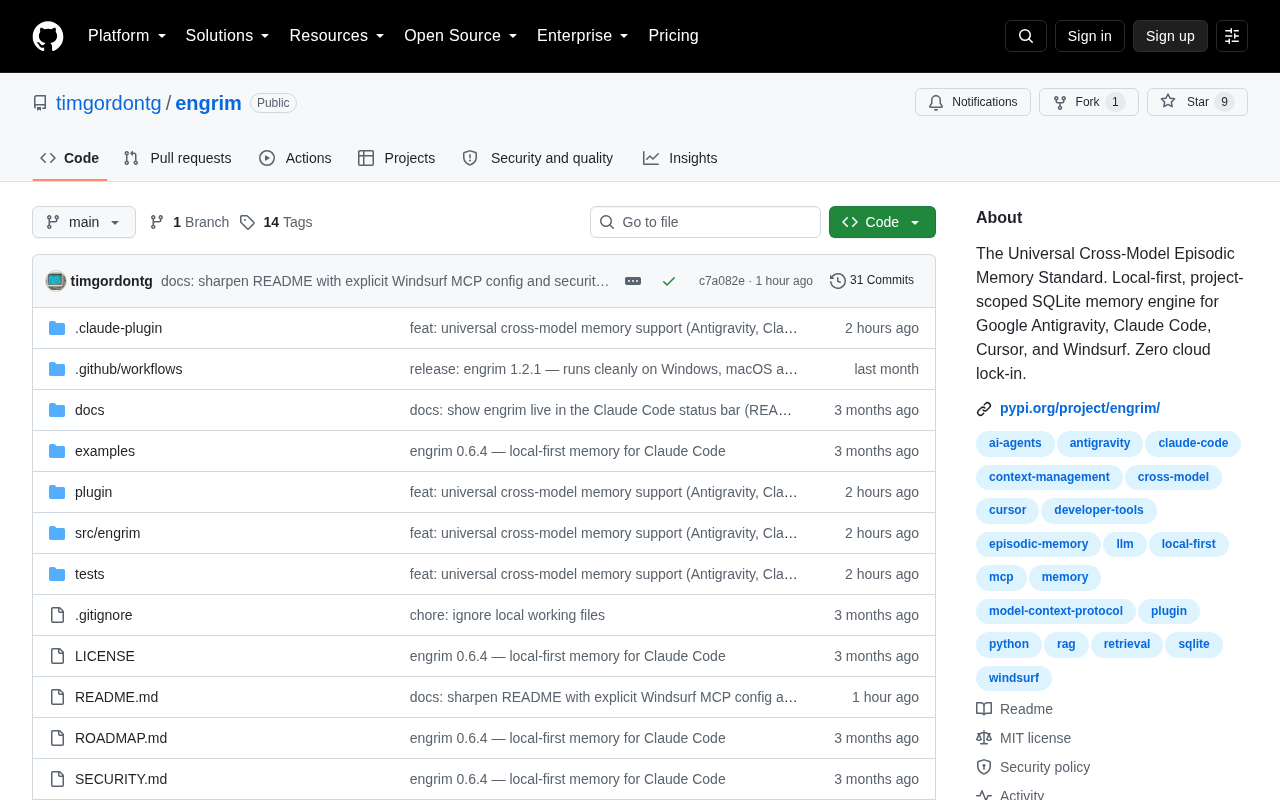
Engrim: A Local Memory Engine Solution for AI CLI Tools
Engrim is an open-source, local-first SQLite memory engine built for AI CLI tools like Claude Code and Aider, solving context loss while keeping data private.