GPT-6 Astra Spent 500M Tokens Building an Island City: How AI Architecture Could Transform the Minecraft Ecosystem

A Minecraft creator used GPT-6 Astra to build an AI workflow 50–200x faster than manual architecture.
A Minecraft server developer spent a month using GPT-6 Astra to train an AI workflow that consistently generates archipelago city architecture at 50–200x human speed. The experiment reveals AI's real limits — strong on large-scale distant structures, weak on close-up detail — and shows that the skill barrier hasn't vanished, only shifted from manual craft to aesthetic judgment. More broadly, it highlights a deeper problem: Minecraft's server ecosystem has stagnated as large operators coast on proven formats while small innovative teams run out of resources. AI's real value may lie in helping creative small teams break through production bottlenecks and finally bring good ideas to life.
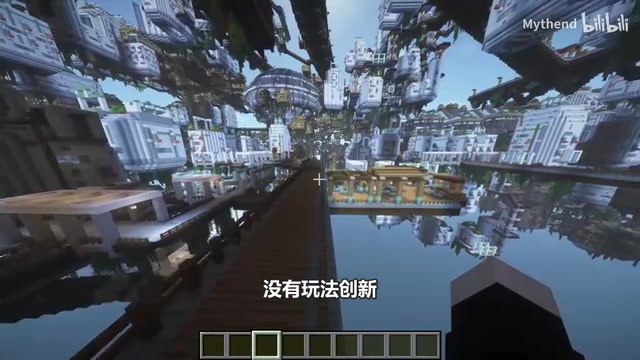
A Bilibili content creator focused on Minecraft server development spent the entire month of September doing something that sent ripples through the community: using GPT-6 Astra — reportedly a powerful modeling-capable model — he trained a workflow capable of consistently generating archipelago-style urban architecture. His conclusion was striking: in specific architectural styles, AI is 50 to 200 times more efficient than he is himself, more consistent, less error-prone, and cheaper to run.
This isn't a sponsored post pushing an AI product. It's a genuine experimental record of how AI-generated content is infiltrating game creation communities. What makes it worth paying attention to isn't some new AI trick — it's what it reveals about how a stagnant community might be disrupted once the barrier to creation drops.
The Real Capability Limits of AI Architecture
Many people have tried using AI to generate Minecraft buildings and maps, and the results are often disappointing. The creator identified two core problems: first, logical coherence — AI-generated structures can be chaotic; second, close-up detail that never matches the craftsmanship of human builders. One-prompt-generated buildings only work as background scenery because distance hides the flaws. The moment you need a small building with detail, the output is, in his words, "an absolute mess."
The reason is that MC architecture isn't like conventional 3D modeling — sometimes you need to understand what a single block means to the overall structure. That kind of understanding of a pixelated medium is precisely what general-purpose modeling capabilities can't directly cover.
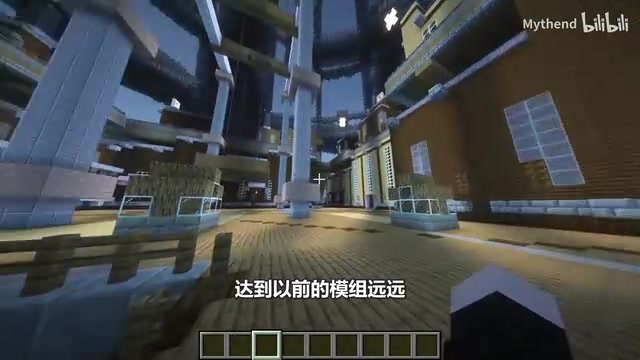
But his conclusion was: AI actually can do it — users just haven't found the right approach yet. To that end, he spent roughly 500 million tokens training a skill capable of consistently building island cities — or as he put it, "essentially cloning myself." He organized his past architectural work as reference samples, wrote extensive lore documents, and even fed his own prepared plant asset library directly to the model because Astra's vegetation generation looked "ugly."
The Barrier Didn't Disappear — It Just Moved
It's worth emphasizing that this workflow has clear prerequisites for reproducibility. The creator repeatedly stressed: reaching this level of output requires extensive training. You need to already have a foundational architectural vocabulary and aesthetic sensibility — you need to know something about building, then apply that to professionally training the AI. If you can't clearly articulate what you want, you might actually "get worse the more you train."
In other words, AI hasn't eliminated the barrier to architectural creation — it has shifted it from "hands-on construction technique" to "aesthetic judgment and requirement articulation." The human role has transformed from craftsman to reviewer and director.
MC architecture technically belongs to a specialized form of "Voxel Modeling" — all structures are assembled from fixed-size blocks, with no free-form surfaces. Detail can only be simulated through combinations and offsets of blocks. This is fundamentally different from mainstream 3D modeling software like Blender or Maya, which allow free manipulation of vertices and curvature. MC architects must translate concepts like "diagonal lines," "arcs," and "texture gradients" into discrete block sequences. This constraint is both a barrier and a unique aesthetic language. General-purpose large language models struggle here because they lack an understanding of "the spatial semantics of a single block within an overall structure" — they know what a tower is, but may not know how to arrange 64 blocks into a convincing curved wall. This is precisely why the creator needed to invest so heavily in sample materials and lore documents for specialized training.
This "barrier shift" phenomenon is widespread as AI tools become mainstream. Academics and industry practitioners typically describe it as a dynamic interplay between "skill substitution" and "skill complementarity." In image generation, for example, the emergence of Midjourney and Stable Diffusion lowered the barrier for pixel-level operations — but simultaneously raised the bar for prompt engineering and aesthetic discernment. People without compositional knowledge often can't write prompts that consistently produce high-quality images. The creator's case is highly analogous: AI has taken over the most time-consuming part of MC architecture — placing blocks — but judgments like "what kind of architectural language accurately expresses this world's lore" and "something's off here, but why" still require a human. This means the learning curve for AI tools hasn't disappeared; it has shifted from "practicing a craft" to "developing cognitive skills." For users without an aesthetic foundation, the barrier to entry may actually be higher than before.
From Concept to Finished Product: Who's Responsible for the "Soul"?
On the question of whether AI-built structures have soul, or whether they'll drift from the creator's intentions, his answer was: that's the job of a person responsible for aesthetic oversight — and the constraints you can give AI are far greater than most people imagine.
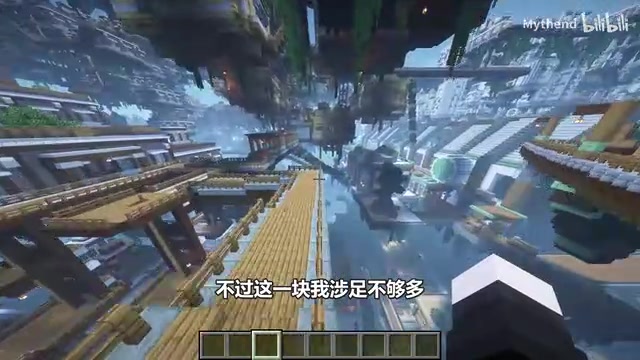
The workflow he described is illuminating: with proper training, you can write a single lore document and have AI generate every building an entire world requires from start to finish. You review each piece of output, cut anything that exceeds expectations while telling it "why this doesn't work," and supplement what's needed while having it summarize "why this works." Through this continuous feedback loop, AI gradually aligns more closely with the creator's architectural vision.
He was candid that AI will occasionally make mistakes — "it definitely will" — but errors can be slowly corrected through review. This is a human-AI collaboration paradigm, not a full replacement model.
The Value That Gets Handed Over
The creator didn't shy away from the costs of this model. He pointed out that when creators personally execute their ideas, the act of making things itself generates new inspiration that feeds back into the original concept. If you hand all execution over to AI and only serve as judge, you lose that — and it's often the key to how creators improve.
This is an honest trade-off: in a reality where most people lack the time or energy to meticulously craft something to perfection, AI lets good ideas be seen earlier. For those who aren't skilled at — and aren't interested in learning — architecture, AI removes "producing the output" as a major obstacle.
The Real Pain Point: A Stagnant MC Server Ecosystem
Behind this experiment lies a larger motivation. He was blunt in criticizing the current state of large MC servers — not that the tech or monetization is failing; quite the opposite: many servers are very successful at "running a business" but "absolutely terrible" at "making a game."
The design logic he observed is straightforward: servers copied whatever older servers had, transplanted whatever successful games offered, and prioritized whatever was cheap and profitable. The result is that after ten years, players are still playing the same handful of old mini-games — Bed Wars, Sky Block, HiPixel — while RPG servers are all just "piling on art assets."
He takes particular issue with the art-stacking approach: Minecraft is fundamentally a pixel-art medium, and forcing high-fidelity 3D model aesthetics onto it looks jarring. Many servers have abandoned gameplay innovation in pursuit of visual spectacle. Those who genuinely want new gameplay tend to be small servers — they experiment, then shut down one by one. Large servers coast on their existing content, surviving off legacy goodwill.
Good Ideas Are the Most Valuable Thing
"Minecraft was originally a game full of creativity," he reflected — but today, mods are moving forward, maps are moving forward, the official game is slowly but surely advancing, yet community servers have essentially stagnated. The root cause: making new things is harder and riskier, while old content is both sustainable and recognized, so server operators would rather be curators than creators.
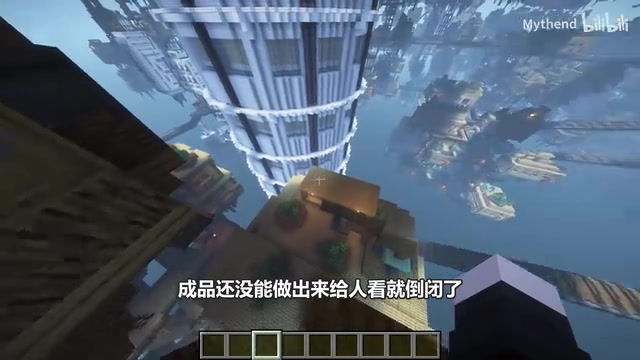
That's where AI's value becomes clear — it solves the problem of "people who want to innovate don't have enough resources and shut down before the product is finished." He compared it to the current AI video landscape: good ideas are the most valuable thing. Architecture and maps used to have an extremely high barrier to entry, and he predicts that within six months to a year, using AI for architecture will become significantly more accessible.
Unlike AI helping write code or develop plugins — which accumulates maintenance costs and compounding problems — architectural maps don't have significant ongoing maintenance burdens. That makes them better suited for AI batch production. He even argued that a barrier isn't entirely a bad thing — it filters out careless work and prevents the MC community from being flooded with low-quality content the way short fiction platforms have been.
The commercial structure of the Minecraft server ecosystem largely explains the cause of this stagnation. Large servers' primary revenue model relies on in-game purchases — items, skins, VIP privileges — and that income is highly dependent on a stable daily active user base. Introducing experimental gameplay raises player churn risk. By contrast, market-validated mini-games like Bed Wars and Sky Block carry clear user expectations and minimal operational risk. This "preservation over innovation" incentive structure isn't unique to the game industry, but it's further reinforced in the MC community by the low barrier to entry for servers and intense competition — when a new gameplay format fails, small servers shut down immediately, and large servers are unwilling to absorb the cost of experimentation. Innovation thus falls almost entirely to passion-driven small teams, who are precisely the ones who most lack the resources to survive the early content-building phase.
What This Means for Creators
For the creator's own island server, this workflow directly solves a production bottleneck: the game content and mechanics are solid, but map output capacity has been insufficient. He's always wanted to build the kind of massive architecture that "players can explore endlessly, with rich detail in every corner" — only that level of world-building supports genuine lore and immersion. AI now gives him a chance to break through his previous production constraints and realize the new game modes he's always envisioned.
For broader creative contexts, AI-generated architecture is a massive advancement for mod development, community maps, and server building alike. Adventure mods need precisely generated natural structures; CTM maps require enormous volumes of architecture — AI can batch-generate hundreds or thousands of more refined, detail-rich pieces at a scale previously unachievable by any mod.
What this experiment ultimately points toward may not be the technical question of "can AI build architecture" — but rather: when the barrier to creation drops dramatically, will a community that has long been surviving on legacy content finally find renewed motivation to innovate? The answer still needs time to prove out. But the direction is clear.
Related articles

A Single Prompt Triggers a Global PHP Security Storm: Is AI a Savior or a Hidden Risk?
A single AI prompt triggered a global PHP security crisis affecting Wikipedia and the Internet Archive. This article reviews the incident, analyzes the OpenAI-Amazon controversy, and explores the security paradox of lowered vulnerability discovery barriers in the AI era and developer response strategies.

When AI Is Taken Away: How Reliance on Shortcuts Undermines Your Problem-Solving Resilience
A study of 1,222 people found that after using AI to answer questions, once AI was removed, people gave up on more problems than a control group that never used AI. The article analyzes the impact of AI reliance on learning resilience and metacognition, and explores design implications for AI learning tools.

Carta and NewView Partner to Let Startup Employees Cash Out Equity Early
Carta and NewView Capital partner to simplify startup tender offers, helping employees sell equity early. Analysis of the mechanism, liquidity pain points, and impact.