GPT-Live-1 Arrives in the API: A Deep Dive into Full-Duplex Voice Conversation

OpenAI's GPT-Live-1 brings full-duplex voice to the API at $0.05/min, enabling real-time interruptions and noise-robust conversation.
OpenAI has officially introduced GPT-Live-1 to its API — a full-duplex voice model that can listen and speak simultaneously, letting users interrupt naturally and leaving behind the half-duplex turn-based experience of traditional voice assistants. The model features built-in noise robustness for reliable recognition in loud environments. Architecturally, it decouples a frontend conversation model from a backend reasoning model: GPT-Live-1 handles low-latency, expressive dialogue on the frontend, while complex reasoning and tool calls are offloaded to the backend. Frontend pricing is $0.05 per minute, with backend costs billed separately. The model is now open to developers and suits scenarios like customer service bots, in-car assistants, and wearables.
What Is GPT-Live-1
OpenAI has officially brought GPT-Live-1 to its API — a full-duplex voice model built for natural, expressive conversational scenarios. Unlike traditional voice interaction systems, full-duplex means the model can seamlessly switch between listening and speaking. Users can interrupt at any time, and the model can listen and talk simultaneously, without waiting for the other party to finish.
OpenAI describes it as "a portable ChatGPT Voice," with a core mission of bringing natural, conversational voice capabilities into production environments. In the launch demo, the model interacted with the interviewer at a human-like pace throughout, showcasing its ability to handle real-time conversation.
Full-duplex originates from telecommunications, referring to a communication mode where both parties can send and receive signals simultaneously — analogous to a phone call. Its counterpart, half-duplex, allows only one party to transmit at a time, like a walkie-talkie. Traditional voice assistants (such as early Siri or Alexa) are mostly built on a serial pipeline of voice activity detection → recognition → generation → playback — essentially half-duplex: the user finishes speaking, then the system starts processing and replies; interrupting often requires a specific wake word or button press. Full-duplex voice models parallelize listening and speaking: the model continuously monitors input while generating audio output, and can instantly adjust or stop output the moment it detects user speech. This places significantly higher demands on the underlying audio stream processing and model inference scheduling.
Full-Duplex and Noise Robustness: Solving Voice Interaction's Oldest Problems
Two of the most frustrating pain points in voice assistant experiences are the inability to interrupt naturally, and poor recognition in noisy environments. GPT-Live-1 is specifically designed to address both.
In the demo, the interviewer deliberately interrupted mid-sentence, and the model immediately stopped and responded: "You can jump in anytime — I can listen and talk at the same time." This is the key breakthrough of full-duplex architecture over the traditional turn-based model: interaction feels much closer to how humans actually talk, rather than a mechanical back-and-forth rhythm.

Noise robustness is equally emphasized. When background noise appeared on-site and the interviewer asked "Can you still hear me clearly?", the model replied: "Your voice is clear — I can follow along even with noise around you." For voice applications in mobile, outdoor, or multi-person environments, this kind of robustness directly determines whether a product is usable at all.
A Split Architecture: Frontend + Backend
GPT-Live-1 doesn't work in isolation. It uses a frontend conversation model + backend reasoning model architecture. GPT-Live-1 itself is responsible for maintaining a smooth, natural conversational experience, while complex reasoning tasks and tool calls are handled by a paired backend model.
In the demo, the model explained how it "delegates actions to the robot and display while keeping the conversation uninterrupted." The significance of this decoupled design: the voice layer can focus entirely on low-latency, high-expressiveness interaction without being slowed down by heavy reasoning workloads; the backend can flexibly integrate different reasoning and tool services on demand.

For developers, this means the ability to flexibly combine frontend and backend capabilities — preserving the immediacy of conversation without sacrificing the intelligence behind it.
This frontend-backend decoupling approach is conceptually similar to the "router + expert" paradigm that has become popular in large model applications. The lightweight frontend model focuses on low-latency perception and generation — for voice applications, end-to-end latency exceeding 300ms makes conversation feel sluggish — while heavy reasoning, database queries, and API calls are asynchronously dispatched to the backend. From an engineering standpoint, the backend can be different-scale reasoning models like GPT-4o or o3, and can integrate with tool-calling frameworks such as Function Calling or MCP. Developers need to weigh in their architecture design: which tasks must be completed in real time on the frontend to maintain conversational fluency, and which can tolerate asynchronous delays of hundreds of milliseconds or even a few seconds. This division also implies fault isolation — the frontend conversation layer won't freeze due to backend reasoning timeouts, and can fill waiting gaps with transition phrases like "Let me check on that."
Pricing: Built for Scale
Cost is one of the decisive factors in whether voice applications can realistically go to market. GPT-Live-1's frontend model is priced at $0.05 per minute, with OpenAI explicitly stating that this pricing is "designed for scale."
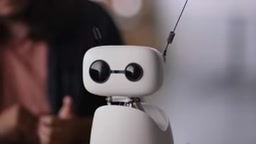
It's important to note that this covers only the frontend model. Backend reasoning and tool service costs are calculated separately. So when budgeting, developers need to factor in backend call overhead — the actual per-unit cost will be higher than the $0.05/minute baseline. Even so, this frontend pricing is quite attractive for large-scale deployment of conversational voice applications.
What This Means for Developers
GPT-Live-1 is now available in the API, letting developers bring conversational voice capabilities into production immediately. Its value proposition is clear:
- More natural interaction: Full-duplex makes interruptions and real-time responses the default experience;
- Stronger environmental adaptability: Noise robustness suits mobile and loud environments;
- Flexible architecture: Decoupled frontend and backend, freely combinable with reasoning and tool capabilities;
- Controllable costs: Frontend pricing designed for scale.
For use cases that require "listening while speaking" — such as customer service voice bots, in-car assistants, wearables, and real-time translation — this model provides a ready-to-productize foundation. That said, real-world performance and total cost will still need to be validated in actual business contexts, and the choice of backend services in particular will significantly impact both final quality and overall spend.
Related articles
AI Agent Terminology Too Confusing? One Interactive Concept Map to Untangle 40+ Core Terms
Confused by AI Agent terms like MCP, harness, orchestration, and skills? AI Concept Atlas is an interactive map visualizing 40+ concepts and their relationships, with cited sources.
Meta's Broken Promise: Community Demands to Know Where the Muse Spark Weights Are
Meta promised to open-source Muse Spark model weights over a month ago, but still hasn't delivered. The community questions how this squares with Zuckerberg's "can't delay even a month" stance.
Running Qwen3 27B Locally on a Single RTX 5090: What Can It Actually Do?
A developer runs Qwen3 27B locally on a single RTX 5090 via the Row-Bot Agent framework, generating an 8-scene, 105-second interactive animation from one prompt — including real-time math, fractals, and physics.