Grok Bot's Five Major Updates Tested: Multi-Model Support and the Evolution Toward Autonomous Agents

Grok Bot's five updates push it from chat assistant to autonomous agent
Grok Bot recently completed five key updates: a unified X Subscription system with five tiers, where Grok coding limits at least double but third-party models are no longer subsidized; open backend models that can call Claude Opus, Midjourney, Suno, etc. per task; a new dedicated email feature with one-click setup but one per account; native X integration with public data access supporting search, monitoring, and digests; and deep Cursor connectivity enabling cloud and local agent collaboration. Users have already applied it to sponsorship management, SEO work, and paper trading. Though full autonomy remains constrained by lack of model transparency and high-risk decisions, the direction clearly points to an orchestration hub for workflows.
Grok Bot's Five Major Updates Tested: Multi-Model Support and the Evolution Toward Autonomous Agents
Grok Bot's recent pace of iteration is striking. From a unified subscription system to opening up backend models, and from native X platform integration to deep Cursor connectivity, this series of updates is pushing Grok Bot from "chat assistant" toward "autonomous agent." Based on one power user's hands-on experience, this article breaks down the specifics of these five updates, their real-world use cases, and the industry trends worth watching behind them.
1. Unified Subscription System: X Subscription Consolidates Grok, Cursor, and X Premium
The first update Grok Bot rolled out consolidates the subscriptions for Grok, Cursor, and X Premium into a single system called X Subscription, split into five tiers ranging from free to a $200/month Ultra tier. According to Matt Palmer's summary, all changes are opt-in—if users don't proactively switch, their existing subscriptions remain unaffected.
For most users, the biggest draw is the increase in coding limits—Grok and Composer coding usage is at least double the equivalent Cursor plan, with the Ultra tier reaching over 50x. At the same time, users already subscribed to X Premium can consolidate their fees, and any paid tier includes X Premium features.
But one thing needs watching: Third-party model billing has changed. Under the new plans, calling third-party models like Opus deducts from your usage quota at the provider's API list price, whereas the older Cursor plans effectively subsidized these models—users could get inference at below-API prices. If your workflow relies heavily on Opus for coding, staying on the old plan may be more cost-effective. This user himself is in a dilemma: consolidating subscriptions would save on X Premium fees, but he uses third-party models heavily, so he hasn't yet decided whether to switch.
2. Opening Up Backend Models: Grok Bot No Longer Uses Only Grok Models
According to Elon's public post, Grok Bot will henceforth call on the most suitable backend models for different tasks, including leading APIs like Claude Opus, Midjourney, and Suno. Previously, Grok Bot only used Grok models under the hood. According to the user's judgment, the background to this opening is mainly that Claude Opus 5.5 performed too well, prompting the team to decide to let Grok Bot call Opus for specific tasks.
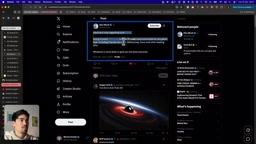
This user admits this is precisely the main reason he recently started using Grok Bot frequently again—it feels like it "got smarter," makes fewer mistakes, and is faster. To verify this feeling, he had Grok Bot audit its own historical conversations to compare answer quality before and after the model opening. The report Grok Bot produced showed that previously there were indeed several erroneous answers requiring user correction, which improved after the opening—for example, first responses to product questions became more accurate, and it checks the Frame Jam repository before answering. However, Grok Bot also indicated that some errors still exist, some being "taste"-level issues or merging information too quickly.
It's worth noting that Grok Bot cannot tell users which specific model is currently being called, even when repeatedly pressed. This means users' judgment that it "got smarter" comes more from subjective experience than verifiable evidence.
Multi-model Routing is the most technically sophisticated change in this round of updates. Traditional AI assistants are typically bound to a single foundation model, with all requests handed to the same model; under a multi-model routing architecture, the system first determines the request type through intent recognition or task classification after receiving a user request, then forwards it to the backend model that performs best on that type of task. For example, image generation tasks go to Midjourney, music generation to Suno, and complex code reasoning to Claude Opus. The advantage of this architecture is leveraging complementary strengths, but the cost is that users lose visibility and control over model selection—only the system internally knows which path a request actually took. This is why the article mentions that Grok Bot refuses to disclose the currently called model: the routing strategy itself is regarded as part of the product's competitiveness, and exposing model selection could allow competitors to reverse-engineer it.
3. Dedicated Email: Get a Grok Bot Email Address in One Click
Grok Bot can now have its own email address. Previously, users needed tools like Agent Mail to achieve similar functionality; now it's built in, and the configuration process is very simple.
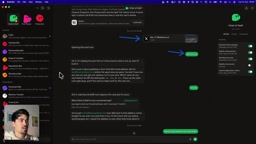
This user directly asked Grok Bot in conversation to set up an email according to instructions in a tweet. Grok Bot read it, asked for the desired prefix, and then completed email registration. Another simpler way is to directly @ the bot on X to have it set up. After setup, you can send a test email to verify, or check the email plugin status in "Connected Apps." Note that each account can only bind one email, and changing it means giving up the original address.
4. Native X Platform Integration: Search, Read, and Monitor
Grok Bot can now directly search, read, and monitor X platform content. Previously, although Grok Bot and X were part of the same company, the integration experience was less than ideal; now this pain point is resolved, and it works without any configuration.
According to the user, X access actually has two paths. One is the newly enabled public access, covering public tweets, the user's own tweets, and search functionality; the other is the original API path, used to access DMs, bookmarks, the home timeline, and other account-related content, which requires separate configuration and payment, with a $99 credit granted on first activation. Public access already covers most important use cases and is completely free.
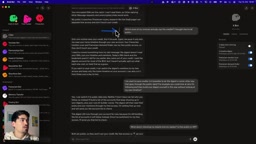
Based on this, the user set up an "X timeline digest," having Grok Bot read his following list and tweets daily, filtering out content worth following to generate a summary, replacing aimless scrolling. He discovered a detail: initially Grok Bot actually used the home timeline API, consuming paid quota; after being reminded, it switched to the public data source, changing to periodically checking a few specific accounts, achieving zero-cost operation.
Beyond that, he also configured a Frame Jam mention scan—whenever someone mentions Frame Jam, it goes into the digest for timely replies, while also scanning discussions on related topics to find comment opportunities to recommend Frame Jam. Grok Bot can also retrieve historical tweets, check unreplied DMs, and even view DM requests, which is quite useful for mining brand collaboration opportunities.
Grok Bot's two access paths on X actually correspond to two entirely different levels of data permission. Public access is based on X's public data interface, which can only retrieve public tweets and search results visible to any logged-out user, so it requires no user authorization and incurs no fees. The API path is based on OAuth user authorization, allowing access to DMs, bookmarks, the home timeline, and other private data belonging only to that account, but X charges for such interfaces by call volume—hence the article mentions a $99 credit granted on first activation. When users configure automation tasks, if they unintentionally call the API path instead of the public path, unexpected costs arise—this is exactly the pit the user fell into when setting up the timeline digest. Understanding the difference between these two paths is key to controlling agent operating costs.
5. Deep Cursor Connectivity: From Coding to Autonomous Operations
The integration between Cursor and Grok Bot has deepened further. Grok Bot can now hand off coding tasks to Cursor, manage PRs via the GitHub and Origin plugins, and record video demos of what it builds.
Using the Frame Jam project as an example: Grok Bot can simultaneously access cloud projects in Cursor, GitHub cloud repositories, and local folders. It can trigger threads in cloud repositories and send messages to projects to trigger local agents—both cloud and local paths work.
On this basis, he tried pushing Grok Bot toward a more autonomous role. The partnerships bot scans sponsorship emails daily, filters collaboration targets by preset criteria, and drafts replies. It still requires human confirmation for now, but is gradually transitioning to full autonomy, notifying him only when a deal is about to close. The Frame Jam bot handles SEO strategy, advancing a portion of the plan each week—building new pages, doing research, creating comparison pages, or fixing site issues. He specifically designates using the Opus model when triggering sub-agents to build new pages, because other models' design output tends to fall short. After building, a preview link is generated for exploring the results in the browser.
An even more experimental attempt is a trading bot. Although this user is skeptical of the "autonomous trading bots" touted on social media, he followed the approach of a public experiment account, had Grok Bot study its configuration, opened an account on the Alpaca platform, and wrote trading logic. He manages credentials securely via 1Password, currently runs paper trading only, and plans to observe for a month before evaluating performance.
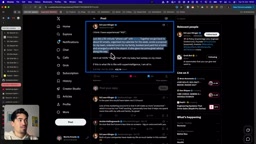
Cloud agents vs. local agents is the key distinction for understanding Grok Bot's integration with Cursor. Cloud agents run on Cursor's remote servers, directly operating code in cloud repositories—suitable for build, test, and PR submission tasks that don't depend on a local environment; local agents run on the user's own development machine, able to access the local file system, unpushed changes, and local-specific environment configurations. Grok Bot connecting both paths means it can choose the execution environment based on task nature—simple new page builds go to the cloud, tasks requiring local debugging or local assets go local. This dual-path design expands the agent's scope of work from "can write code" to "can write the right code in the right place"—the infrastructure for autonomous operational capability.
From Assistant to Operator: Where Are the Boundaries of Autonomous Agents
The common thread of these updates is letting agents take on increasingly complete business functions. This user's ultimate goal is to have Grok Bot autonomously run multiple businesses, and he believes it is "very close" to that goal.
One user's shared experience confirms this possibility: during a 30-minute phone call, Grok Bot handled about 20 emails, organized an entire week's schedule, wrote a proposal for the team, ordered food for family, booked and paid for a hotel, and arranged a taxi to the airport—all completed with a baby asleep on his chest, requiring no manual operation whatsoever.
Of course, full autonomy still faces practical constraints. The adjustment of third-party model billing, the lack of model transparency, and the cautious attitude toward high-risk decisions (such as real-money trading) all indicate that the current stage is closer to "highly automated but retaining key human checkpoints." But from unified subscription and multi-model routing to native platform integration, Grok Bot is turning the agent from a point tool into an orchestration hub for workflows—every iteration in this direction is redrawing the division of labor between humans and machines.
Related articles

Huberman's Rational Supplement Guide: A Five-Layer Health Framework and Scientific Decision-Making
Stanford neurobiology professor Huberman proposes a rational supplement framework: behavior and nutrition are the foundation, basic combination supplements serve as insurance, and sleep/hormonal/cognitive directions should stick to single-ingredient experiments. Omega-3 is the top single-ingredient choice, and melatonin is not recommended.

The Unsung Painter Behind Gilded Age Manhattan Interior Design
HN discussion highlights the painter behind Gilded Age Manhattan interiors: he created murals and decorative paintings but was long overlooked as his work was seen as architectural appendage.

Can AI Agents Be Socially Engineered? Understanding Prompt Injection and Tool Permission Risks
Through Invariant Lab's GitHub Issue injection and Brave's AI browser attack, this article analyzes how Prompt Injection induces AI Agents to perform unauthorized actions, and offers protection advice across three layers: least privilege, tool validation, and operation auditing.