Guide to Building a DeepSeek V4 + Claude Code Hybrid Programming Workflow

Combine DeepSeek V4 with Claude Code for a low-cost, high-efficiency hybrid AI programming workflow
This article introduces a hybrid programming workflow combining DeepSeek V4 with Claude Code. By routing Claude Code traffic to DeepSeek through a local proxy gateway, DeepSeek V4 handles basic coding tasks (scripts, unit tests, etc.) while Opus 4.7 tackles complex work (UI optimization, architecture design), achieving optimal balance between cost and quality. A practical demo building an AI dashboard cost only about 15 cents while effectively bypassing rate limit issues.
Why Combine DeepSeek V4 with Claude Code?
As AI programming tools become increasingly prevalent, a core contradiction continues to plague developers: top-tier models deliver great results but are expensive with rate limits, while cheaper models struggle with complex tasks. Combining DeepSeekAd V4 with Claude Code is a cost-effective solution to this dilemma.
The core logic of this approach is simple—let DeepSeek V4 handle basic tasks, and save Opus 4.7 or GPT 5.5 for the critical moments that truly need them. DeepSeek V4 is a large language model released by Chinese AI company DeepSeek, built on a Mixture of Experts (MoE) architecture with 671 billion total parameters, but only approximately 37 billion parameters are activated per inference. This design allows it to maintain top-tier performance while dramatically reducing inference costs. As a leading open-source model, it supports a million-token context window and is released under the MIT license, allowing developers to freely use it commercially, modify, and distribute it—providing tremendous flexibility for local and customized deployments.
More notably, DeepSeek V4's average input/output token cost is approximately 76% cheaper than GPT 3.5, and far cheaper than Opus 4.7. This means you can complete a large volume of basic coding work at minimal cost.
DeepSeek V4's Capability Boundaries: What It's Good At and What It's Not
In agentic coding-related benchmarks, DeepSeek V4 performs quite robustly across multiple dimensions including software engineering tasks, browser compatibility, and terminal benchmarks. Agentic coding refers to a new paradigm where AI models can not only generate code snippets but also autonomously execute terminal commands, read/write files, invoke external tools, and complete multi-step complex tasks—fundamentally different from traditional code completion tools, and the core capability of tools like Claude Code. The key isn't that it's the world's best model, but that it's affordable, efficient, and good enough to get the job done.
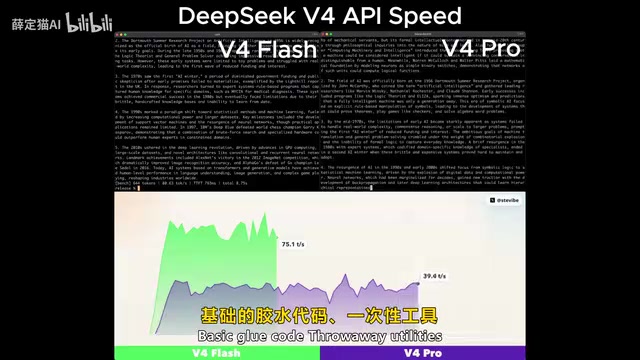
Recommended Scenarios for DeepSeek V4
- Quick configuration and automation: Repetitive work like environment setup and script writing
- One-off tools and basic glue code: Simple logic connecting different modules
- Algorithm problem solving and logic puzzles: Standard algorithm implementation and logical reasoning
- Code review and unit testing: Basic-level code quality checks
- Tool calls and browser tasks: Basic operations in agent workflows
Scenarios Where DeepSeek V4 Is Not Recommended
- Critical SaaS product development
- High-quality documentation writing
- Security audits and in-depth code reviews
Additionally, a special note: if using DeepSeek through a cloud API, be mindful of sensitive data security. This concern is greatly reduced when running the open-source model locally.
Hybrid Coding Workflow Architecture Design
The core of this approach is a hybrid coding pattern, not simply using DeepSeek within Claude Code. It routes Claude Code's traffic to DeepSeek, OpenRouter, and other services through a local Anthropic-compatible proxy, allowing you to use DeepSeek directly within Claude Code's integrated environment.
The technical key here is the concept of a Model Gateway: since Claude Code natively only supports the Anthropic API format, running a local proxy service (such as LiteLLM, one-api, etc.) automatically translates and forwards Anthropic-formatted requests to third-party services like DeepSeek and OpenRouter, achieving complete decoupling between the tool layer and the model layer. This "unified inference layer" architecture is becoming increasingly common in LLM engineering, allowing developers to freely switch underlying models without changing their toolchain.

Specific Workflow
- DeepSeek V4 Instance: Handles scripts, unit tests, and other basic tasks at minimal cost
- Native Claude Code Instance: Uses Opus 4.7 for complex prompts, UI optimization, and architecture design
- OpenRouter Routing: Optional access to models beyond Anthropic
The benefits of this layered strategy are obvious: DeepSeek acts as a low-cost scaffolding tool, while Opus plays the role of a senior product engineer responsible for refining and perfecting everything. From a token economics perspective, the pricing differences between input/output tokens and context window size directly determine actual usage costs—DeepSeek V4's million-token context window allows it to handle large codebases without frequently truncating context, further amplifying the cost advantage.
Environment Setup: Configuring DeepSeek + Claude Code from Scratch
Prerequisites
- Install Claude Code: Ensure it's fully installed on your computer
- Sign up for Antigravity: Free registration with a Google account; this tool helps you quickly complete project configuration
- Top up DeepSeek API: Add a few dollars on the DeepSeek platform (usually no more than two dollars)
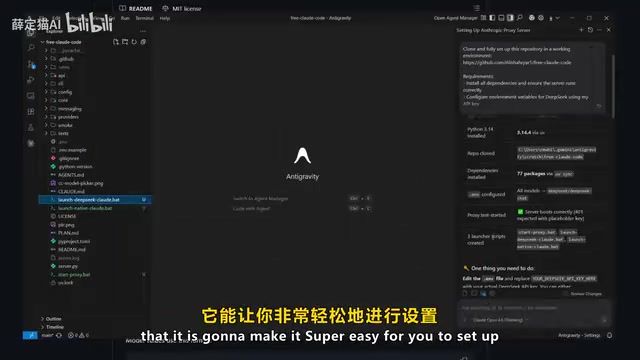
Detailed Configuration Steps
Using Antigravity significantly simplifies the configuration process. It automatically completes all configuration on your computer, including creating the proxy backend and batch files. Key point: Always start the proxy backend before launching any instances, otherwise the entire setup won't work properly.
Once configured, you'll have two instances:
- DC Cloud Instance: Powered by the DeepSeek model
- Native Claude Code Instance: Using Opus 4.7 with a Claude Pro subscription
Practical Demo: Building an AI Dashboard with the Hybrid Workflow
To verify the practical effectiveness of this workflow, here's a demonstration of building a modern AI dashboard from scratch. This project is perfectly suited for the hybrid workflow:
Phase One—DeepSeek V4 Handles the Foundation:
- Create a React TypeScript project
- Build the basic structure, layout components, and pages
- Handle mock data and API routes
- Construct basic components
Phase Two—Opus 4.7 Handles the Polish:
- UI detail optimization and layout design
- Interaction effects implementation
- Component structure improvements
- Bring the product to market-ready quality
This two-phase division of labor essentially simulates the "scaffolding engineer + senior engineer" collaboration model in software engineering: the former quickly builds a runnable skeleton, while the latter focuses on quality polishing and architecture optimization. Their capability boundaries and cost structures complement each other perfectly.

The final results are impressive: the entire project was completed using two models without triggering any rate limits, at a total cost of only about 15 cents. If Claude Code Pro had been used exclusively throughout, you would likely hit numerous rate limits before completing the project, or even exhaust your Pro subscription quota.
Conclusion: Who Is This AI Programming Workflow For?
The DeepSeek V4 + Claude Code hybrid workflow is essentially a resource optimization strategy. It's not about replacing top-tier models like Opus or GPT with DeepSeek, but rather about allocating tasks wisely so that every dollar and every token is spent where it matters most.
This approach is particularly suited for:
- Heavy users constrained by Claude Code rate limits
- Independent developers looking to control AI programming costs
- Teams that need frequent prototyping and rapid iteration
Rate limits on current AI programming tools are indeed a pain point, but combining DeepSeek with Claude Code can nearly bypass this bottleneck entirely. It may not be the most perfect workflow, but it's certainly one of the most practical and cost-effective AI coding solutions available today.
Key Takeaways
- Combining DeepSeek V4 with Claude Code creates a cost-effective hybrid programming workflow where DeepSeek handles basic tasks and Opus handles complex ones
- DeepSeek V4's token cost is approximately 76% cheaper than GPT 3.5, with real-world project costs of only about 15 cents
- Routing Claude Code traffic to DeepSeek through a local proxy enables using multiple models within the same integrated environment
- DeepSeek V4 is suitable for quick configuration, unit testing, script writing, and other basic tasks, but not for security audits or critical product development
- This approach effectively circumvents Claude Code's rate limits and prevents exhausting Pro subscription quotas
Related articles
 Tutorials
ChatGPT Plus Subscription Guide: Are GPT-5.5, image-2, and Codex Worth the Upgrade?
A detailed look at ChatGPT Plus features — GPT-5.5, image-2, and Codex — with a Plus vs Pro comparison and a complete step-by-step subscription guide for users outside the US.
 Tutorials
Harness AI Engineering in Practice: Using Claude Code to Master Enterprise-Level E-Commerce Development
Deep dive into Harness AI Engineering: master enterprise e-commerce development with Claude Code using the Rules, Skills, Wiki, and Changes framework.
 Tutorials
Cursor + Codex Dual-IDE Collaboration: A Practical Methodology for Open-Source Project Customization
A complete methodology for open-source project customization based on real-world experience, detailing the Cursor+Codex dual-IDE workflow, seven-stage process, MVP validation, and AI source code reading techniques.