Guide to Token Freedom: 5 Money-Saving Strategies for Using Codex and GPT at Low Cost

A systematic overview of five strategies to drastically reduce Token costs for AI users.
This article introduces the concept of "Token freedom" and systematically presents five core strategies for reducing large language model Token costs: choosing cost-effective models based on task difficulty, leveraging relay APIs to lower unit prices, streamlining Token consumption through Prompt engineering, deploying open-source models locally for near-zero marginal cost, and controlling output length. These practical techniques help heavy AI users significantly reduce expenses without sacrificing the user experience.
Introduction: In the Age of Token Anxiety, How's Your Wallet Holding Up?
As AI tools like ChatGPT and Codex fully permeate daily workflows, more and more developers and content creators are becoming heavily reliant on large language models. But the accompanying problem is very real—the cost pressure from Token consumption grows day by day, especially for users who frequently call APIs. The bill at the end of the month can be painful.
"Achieving Token freedom" is becoming a hot topic in the AI user community. This article will systematically outline the current mainstream money-saving strategies and practical solutions to help you get more Token usage for less money.
What Is Token Freedom?
The Basic Concept of Tokens
A Token is the smallest unit that large language models use to process text. In the GPT series of models, one Chinese character typically corresponds to 1 to 2 Tokens, while one English word corresponds to roughly 1 to 1.5 Tokens. Whether it's the Prompt you input or the response the model generates, every character consumes Tokens.
Behind Token measurement lies a complete Tokenization mechanism. GPT series models use the Byte Pair Encoding (BPE) algorithm to split text into Tokens. BPE was originally a data compression algorithm that was later introduced into the NLP field—it encodes common words as single Tokens by statistically identifying high-frequency character combinations in a corpus, while rare words are split into multiple sub-word Tokens. This also explains why Chinese is "more expensive" than English: Chinese lacks space delimiters and has complex character combination patterns, resulting in lower tokenization efficiency compared to English. OpenAI provides the open-source tool tiktoken, which allows developers to estimate Token counts before calling the API, enabling them to avoid excess consumption at the design stage.
So-called "Token freedom" means no longer needing to penny-pinch over consumption when using AI tools—being able to fully leverage the capabilities of large models without constantly watching your bill.
Why Token Costs Deserve Serious Attention
Taking OpenAI's GPT-4o as an example, API pricing is $2.5 per million input Tokens and $10 per million output Tokens. A developer averaging hundreds of calls per day can easily exceed several hundred dollars in monthly fees. And when Codex handles complex programming tasks, Token consumption multiplies further due to the large amount of code context that needs to be passed in.
This is why mastering Token optimization strategies is crucial for every heavy AI user.
Five Core Strategies for Achieving Token Freedom
Strategy 1: Choose the Most Cost-Effective Model Based on Task Difficulty
Not all tasks require the most powerful model. OpenAI offers multiple tiers of options, and properly matching task difficulty with model capability is the most direct way to reduce Token costs:
- GPT-4o mini: Priced at roughly one-tenth of GPT-4o, fully capable of handling everyday conversations and simple coding tasks
- GPT-3.5 Turbo: Even lower cost, still performs excellently for formatting, text summarization, and similar tasks
- Local deployment of open-source models: Open-source models like Llama 3, Qwen, and DeepSeekAd have near-zero marginal cost once deployed locally
The feasibility of locally deploying open-source models has dramatically improved over the past two years, primarily driven by breakthroughs in quantization technology. The GGUF format (popularized by the llama.cpp project) and quantization schemes like GPTQ and AWQ can compress models that originally required tens of gigabytes of VRAM down to 4-8GB, enabling them to run on consumer-grade GPUs or even CPUs. Tools like Ollama and LM Studio further lower the barrier to local deployment, allowing users without deep technical backgrounds to run mainstream open-source models such as Llama 3, Qwen2.5, and DeepSeek-R1 on their local machines. For high-frequency call scenarios, a one-time hardware investment can often pay for itself within months through saved API fees, with marginal costs approaching zero.
A practical rule of thumb: use small models for simple tasks, and only bring out the big models for complex reasoning. This step alone can cut Token spending by over 50%.
Strategy 2: Leverage Relay APIs and Third-Party Platforms to Lower Unit Prices
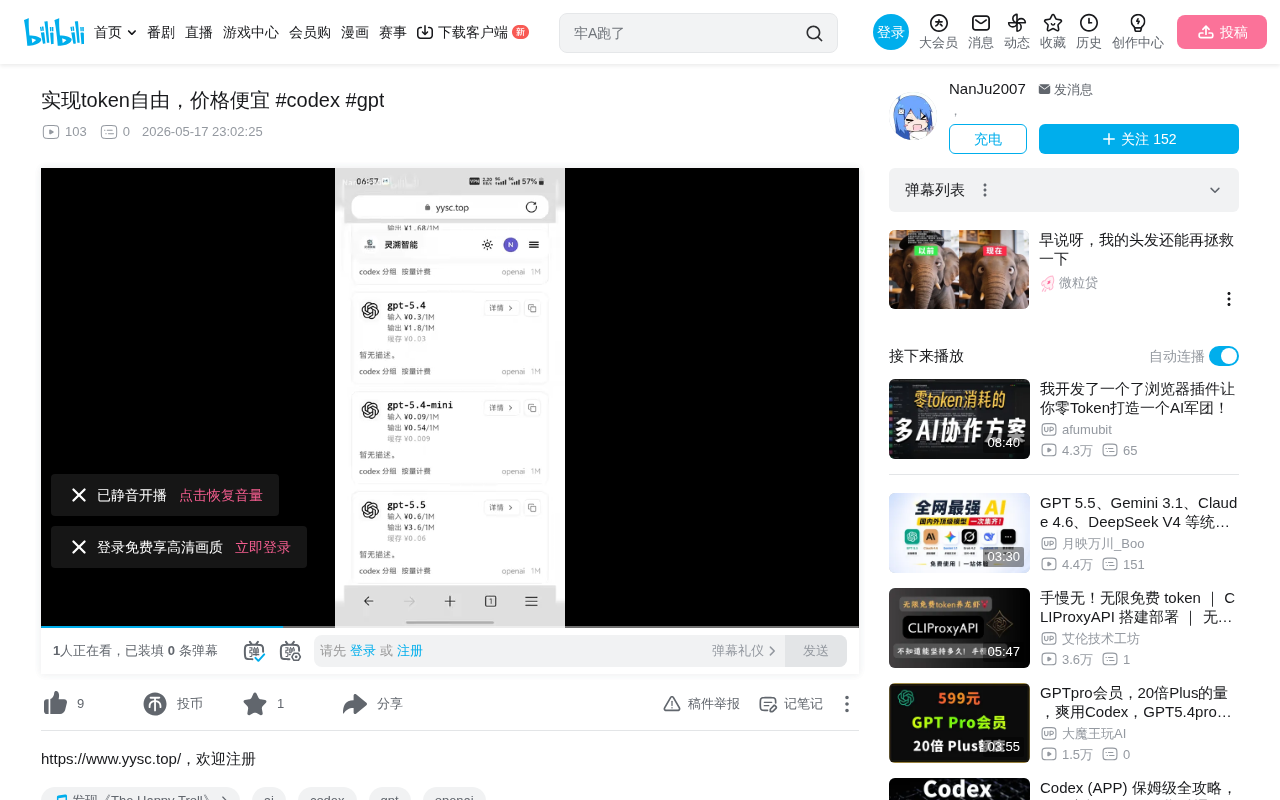
A large number of API relay service providers have emerged both domestically and internationally. They offer lower-priced API access through bulk purchasing and resource pooling. Some platforms also support pay-as-you-go pricing, eliminating the financial pressure of pre-depositing funds.
However, when choosing relay services, there are several key points to keep in mind:
- Data security: Confirm the service provider's privacy policies to avoid sensitive data leaks
- Service stability: Low-cost services may come with high latency or frequent rate limiting, affecting development efficiency
- Compliance: Ensure your usage complies with the original API provider's terms of service to avoid account suspension risks
Strategy 3: Reduce Token Consumption at the Source Through Prompt Engineering
The reason Prompt Engineering effectively reduces Token consumption is rooted in the Attention Mechanism of large language models. In Transformer architecture, each Token needs to compute attention weights with all other Tokens in the context, and computational complexity grows quadratically with sequence length. This means redundant Prompts not only directly increase input Token billing but also dilute the attention weights on key information, actually reducing output quality. The reason few-shot examples are efficient is that they activate the model's In-Context Learning capability in the most compact way, allowing the model to complete tasks through pattern matching rather than complex reasoning, balancing both quality and efficiency.
The design quality of Prompts directly determines Token consumption. Here are proven optimization techniques:
- Streamline system prompts: Remove redundant descriptions and convey clear instructions with minimal text
- Replace lengthy explanations with few-shot examples: 1 to 2 precise examples often outperform lengthy paragraphs of explanation
- Actively control output length: Use the
max_tokensparameter to limit response length and prevent the model from being overly verbose
Related articles
 Tutorials
ChatGPT Plus Subscription Guide: Are GPT-5.5, image-2, and Codex Worth the Upgrade?
A detailed look at ChatGPT Plus features — GPT-5.5, image-2, and Codex — with a Plus vs Pro comparison and a complete step-by-step subscription guide for users outside the US.
 Tutorials
Harness AI Engineering in Practice: Using Claude Code to Master Enterprise-Level E-Commerce Development
Deep dive into Harness AI Engineering: master enterprise e-commerce development with Claude Code using the Rules, Skills, Wiki, and Changes framework.
 Tutorials
Cursor + Codex Dual-IDE Collaboration: A Practical Methodology for Open-Source Project Customization
A complete methodology for open-source project customization based on real-world experience, detailing the Cursor+Codex dual-IDE workflow, seven-stage process, MVP validation, and AI source code reading techniques.