Hacker Steals Records of Over 41,000 U.S. Department of Homeland Security Employees
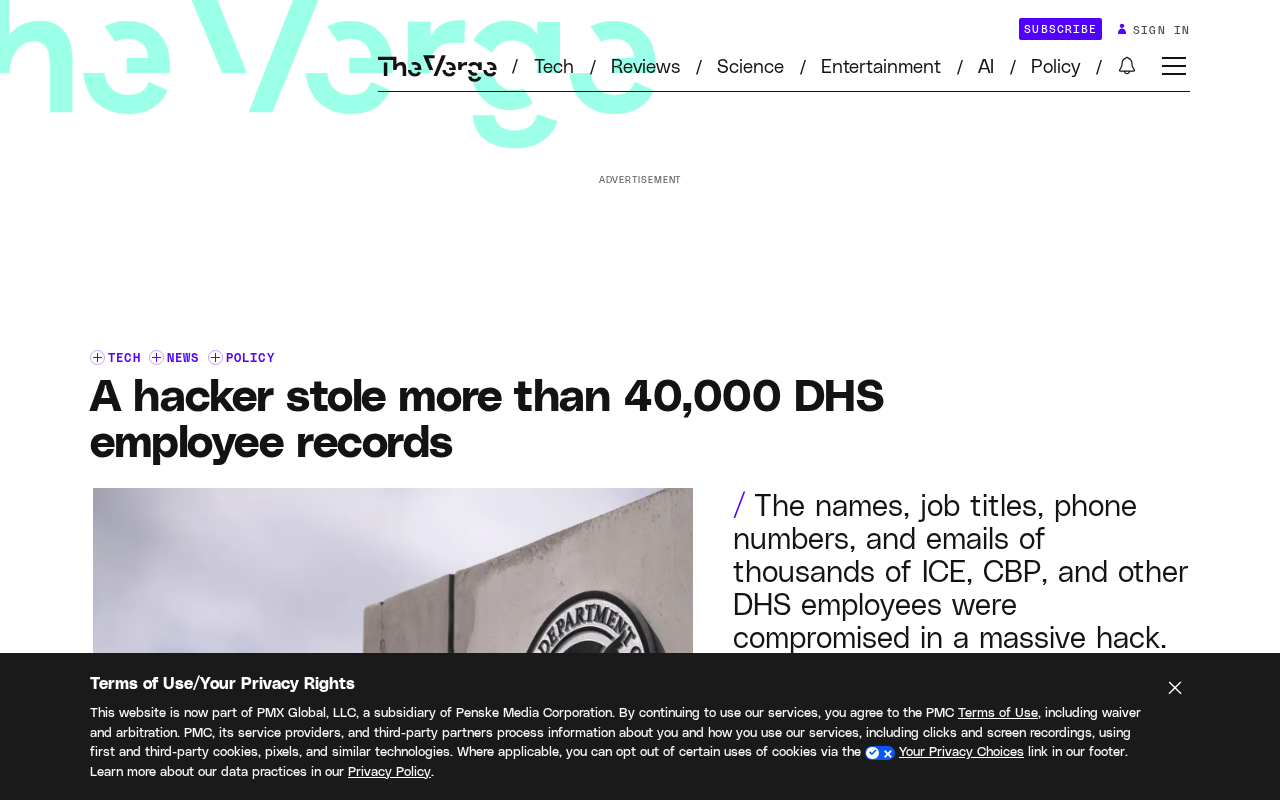
Hacker steals directory data of over 41,000 DHS employees, affecting ICE and CBP and exposing blind spots in low-sensitivity data protection.
The U.S. Department of Homeland Security (DHS) was breached by a hacker, with names, job titles, phone numbers, emails, and office locations of more than 41,000 employees stolen, affecting ICE and CBP. The leaked data is concentrated at the employee directory level and does not include Social Security numbers or financial information, but it is sufficient to support spear phishing attacks and personal safety risks. The attack path has not been disclosed and may point to an employee directory system or third-party service provider. The incident highlights government agencies' blind spots in protecting low-sensitivity data assets and underscores the need to reassess access controls, strengthen auditing, and establish breach response mechanisms.
According to reports from TechCrunch and Wired, a hacker stole personal data belonging to more than 41,000 employees of the U.S. Department of Homeland Security (DHS). The leaked information includes names, job titles, phone numbers, email addresses, and office locations, affecting staff at U.S. Immigration and Customs Enforcement (ICE) and Customs and Border Protection (CBP).
Specific Scope of the Leaked Data
In this incident, the data fields obtained by the hacker were concentrated at the level of employee directory information rather than more sensitive biometric or case data. The more than 41,000 leaked records include names, job titles, phone numbers, email addresses, and office locations—information typically found in internal agency directories or HR systems. The affected individuals span multiple key law enforcement agencies under DHS, with ICE and CBP employee information explicitly appearing in the leaked data.
Although the leaked fields do not involve Social Security numbers or financial information, the combination of names, job titles, and office locations is enough to support targeted phishing attacks against specific employees. For law enforcement agencies, the exposure of employee identity information may also pose personal safety risks.
Analysis of Attack Paths and Exposure Surface
Public reports have not yet disclosed the hacker's specific intrusion method, but judging from the structure of the leaked data, the attack surface most likely points to an employee directory system or a third-party service provider. Government agency directories are often maintained through internal platforms or contractors, and lax permission management or exposed interfaces can both serve as entry points.
Such incidents repeatedly confirm a pattern: attackers tend to choose edge systems with weak protection but high data density, rather than directly breaching core databases. Employee directories fit this condition perfectly—they contain large amounts of structured personal information yet are often treated as low-sensitivity assets and left under-hardened.
Employee Directory is an internal platform used by government agencies to store and query personnel information, typically containing fields such as name, job title, department, and contact details. Such systems are often maintained by IT departments or third-party contractors and accessed via intranet or VPN, but may also be exposed to the public internet or have API interfaces. Because directory data is considered low-sensitivity, its access controls are often relatively loose—for example, allowing bulk exports or lacking fine-grained permissions. Once attackers gain entry through phishing, weak passwords, or unpatched vulnerabilities, they can easily scrape large amounts of structured data. In addition, the security levels of third-party service providers vary, and supply chain risks cannot be ignored.
Warnings for Government Agency Security Building
This leak incident exposes a blind spot in government agencies' management of "low-sensitivity" data assets. The concentrated leak of more than 41,000 employee records shows that even without classified content, the aggregation of personal information at scale itself constitutes a security risk.
From a defensive perspective, agencies need to reassess the access control policies of employee directory systems and implement stricter auditing of bulk queries and export activities. At the same time, personnel information shared across agencies should have clear data responsibility boundaries to avoid protection vacuums caused by third-party maintenance. For law enforcement agencies such as ICE and CBP, the protection of employee identity information should also incorporate personal safety considerations, and a rapid response mechanism after leaks should be established.
DHS has not yet provided a complete explanation of the incident details. Whether follow-up investigations can confirm the attack entry point and the full scope of impact will determine whether this incident is an isolated case or a signal of systemic risk.
Spear Phishing refers to attackers using stolen personal information (such as names, job titles, email addresses, and office locations) to carefully craft fraudulent emails targeting specific individuals. Unlike broad, scattershot phishing, spear phishing emails often impersonate superiors, colleagues, or trusted institutions, with content tailored to the victim's work context, inducing them to click malicious links or attachments. For law enforcement agency employees, attackers may also use job title information to disguise messages as internal notices or case-related documents, significantly increasing success rates. Defending against spear phishing requires a combination of security awareness training, multi-factor authentication, and email filtering technology, along with monitoring of anomalous login behavior.
Related articles
Ollama+RAG Local Knowledge Base Setup: A Step-by-Step AnythingLLM Tutorial
Based on a Bilibili tutorial, this guide details building a local RAG knowledge base with Ollama + AnythingLLM: from general LLM knowledge limits and RAG principles to document upload, vector storage, and verification.
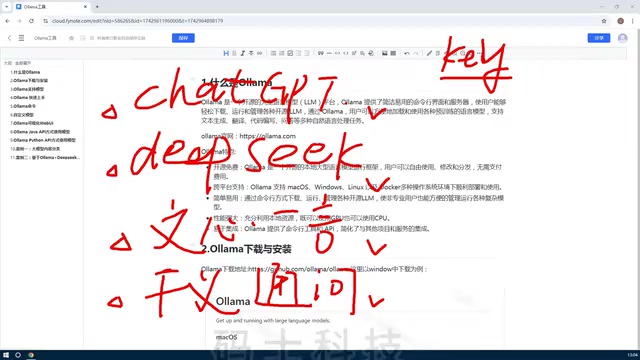
The Ultimate Ollama Tutorial: A Beginner's Guide to Running Large Models Locally for Free
Ollama is an open-source local large model management tool supporting free download and deployment of models like DeepSeek, with command-line and Web UI, cross-platform, automatic GPU/CPU scheduling — ideal for AI beginners and private deployment.
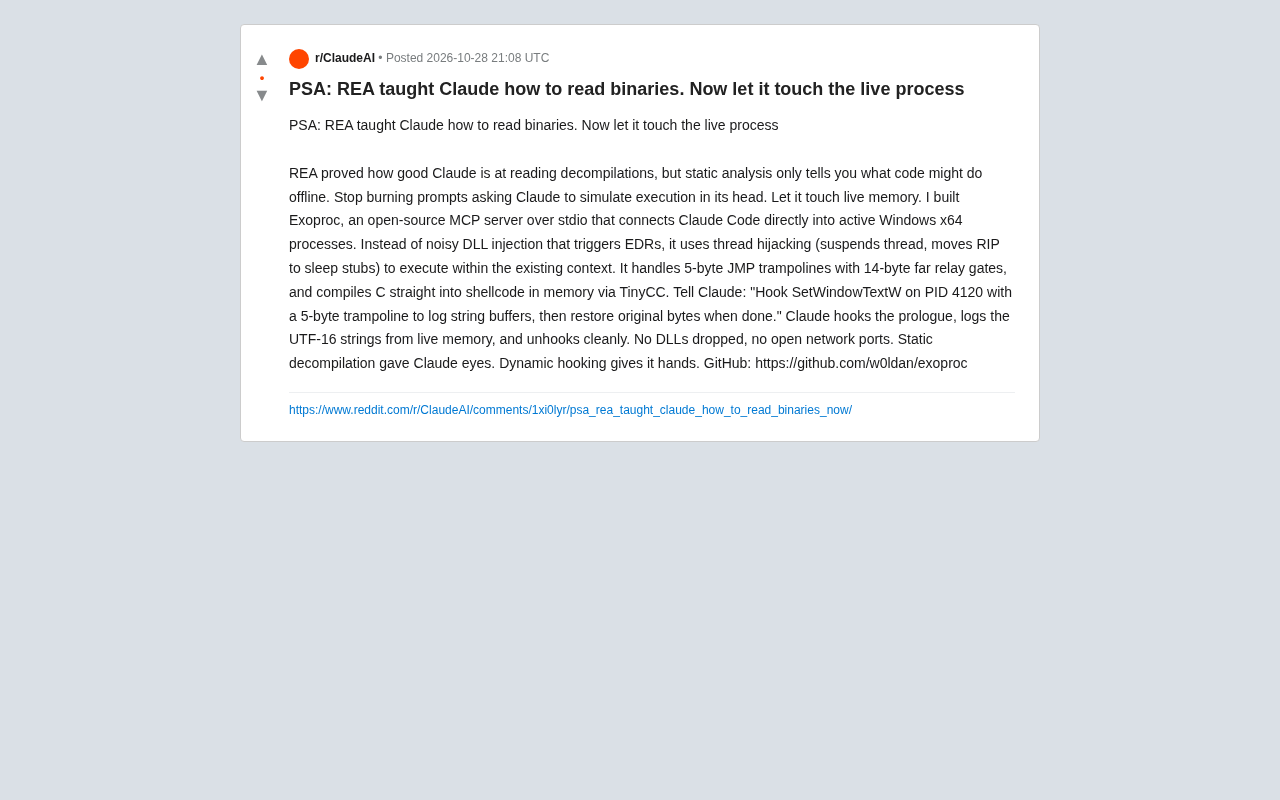
Giving Claude "Hands": Exoproc Open-Source MCP Server Enables Live Process Hooking
Exoproc is an open-source MCP server enabling Claude Code to hook live Windows x64 processes via thread hijacking, bypassing EDR for dynamic analysis. Static decompilation gave Claude eyes; dynamic hooking gives it hands.