Halloween Encounter with "Muse"? Watch Out for Phishing Attacks

A "celebrity" approaching you at a Halloween party may be a new social engineering phishing variant, with phone numbers as the attack entry point.
Starting from a post-Halloween Twitter PSA, the article reveals a new social engineering phishing trend where attackers impersonate celebrities to ask for phone numbers. They exploit the anonymous holiday atmosphere to lower victims' guard, using contact requests as a starting point, and can later expand harm through smishing, information gathering, or SIM swapping. The article analyzes phone numbers' sensitivity as anchors for account recovery and 2FA, notes the pattern matches the security community's observations of "authority effect" and "situational plausibility," and reminds that the warning is from a single unverified source. Defenses include vigilance toward strangers asking for contact info, not clicking suspicious links, preferring authenticator apps over SMS codes, and limiting phone number visibility on social platforms.
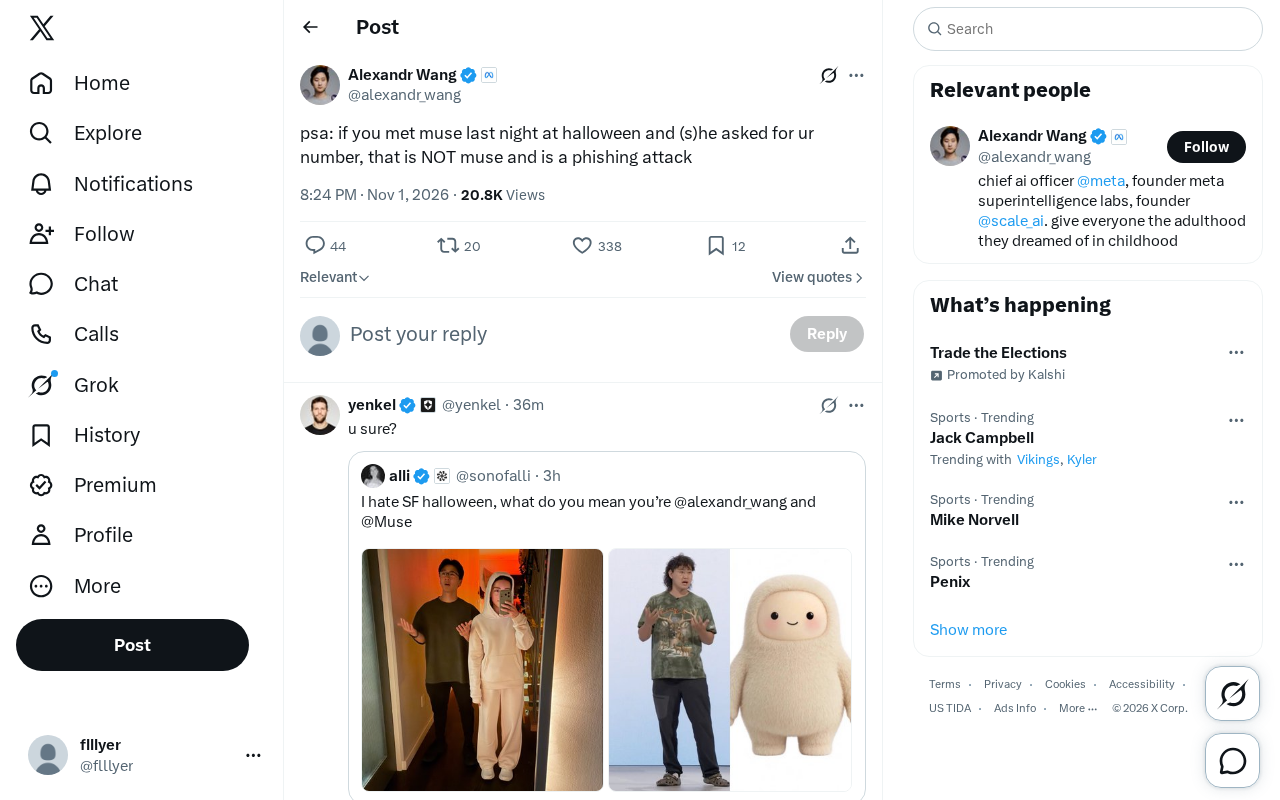
After a Halloween party, a Twitter PSA (public service announcement) quietly circulated in tech circles: "If you met Muse at Halloween last night and he/she asked for your phone number, that wasn't Muse — it was a phishing attack." This short message may seem like a joke, but it reveals a serious security trend: social engineering attacks are leveraging holiday scenarios and celebrity identities to break through people's psychological defenses at extremely low cost.
When a "Celebrity" Approaches You: The New Disguise of Phishing Attacks
Traditional phishing attacks mostly impersonate banks, e-commerce platforms, or colleagues, luring victims to click malicious links via email or text message. But the PSA describes a variant that goes "from offline to online": attackers exploit social occasions like Halloween parties, impersonate a well-known figure (here, "Muse"), and start by building trust and asking for contact information. Later, they may send malicious links via text message, induce money transfers, or extract sensitive information.
According to the original Twitter post, the core of this type of attack lies in "identity disguise" and "scenario exploitation." Halloween itself encourages anonymity and role-playing, lowering people's guard, and attackers seize the opportunity to blend in. Asking for a phone number is the first step — once obtained, it opens a channel for subsequent smishing (SMS phishing).
Why Is a Phone Number the "Ticket" for Phishing?
Most people don't consider a phone number as sensitive as a password. But security research has repeatedly pointed out that a mobile number is a key anchor for account recovery, two-factor authentication, and identity verification. Once attackers have the number, they can:
- Send text messages disguised as "Muse" with malicious links or attachments;
- Use the number to search for associated accounts on social platforms and further collect personal information;
- Conduct early reconnaissance for SIM swapping attacks (though difficult, information gathering is the first step).
The original post doesn't elaborate on technical details, but its warning is clear: in informal social settings, when someone proactively asks for your contact information and their identity is uncertain, you should default to staying vigilant.
SIM Swapping refers to attackers bribing carrier employees or using social engineering to transfer a victim's phone number to a SIM card they control. Once successful, attackers can receive all text messages and calls, including one-time verification codes used for two-factor authentication, thereby bypassing SMS verification protection and taking over bank accounts, cryptocurrency wallets, and social media accounts. The entire process usually takes only minutes to hours, and victims often discover the anomaly only when their phone suddenly loses signal. For this reason, the security community recommends prioritizing authenticator apps (such as TOTP) or hardware keys for two-factor authentication, because such verification does not rely on the phone number — an identifier that can be transferred.
Multi-Source Perspective: Common Traits of Social Engineering Attacks
Although this PSA comes from a single Twitter source, the tactics it describes closely match patterns long observed by the security community. According to public analyses from multiple cybersecurity organizations, social engineering attacks commonly exploit the "authority/celebrity effect" and "situational plausibility" to lower victims' vigilance. What makes Halloween special is that it simultaneously provides a reasonable excuse for "anonymous disguise" and a psychological window of "holiday relaxation."
That said, no other independent sources currently confirm the authenticity of this specific "Muse" case. The original post reads more like a personal warning shared from experience than a verified security incident report. Therefore, readers should treat it as a risk pattern reminder rather than a confirmed attack event.
Situational plausibility is a core psychological mechanism in social engineering attacks. Attackers carefully construct a narrative that closely fits the victim's current environment, making unusual requests seem natural. For example, at a Halloween party, someone dressed as a celebrity asking for your contact information is not out of place in the holiday context, so victims don't activate their usual suspicion mechanisms. Security research indicates that human ability to judge threats relies heavily on contextual cues; when attackers successfully embed themselves in a plausible scenario, even security-trained individuals may let down their guard. This is why security teams, when conducting phishing drills, increasingly emphasize simulating realistic social situations rather than merely testing employees' ability to identify suspicious emails.
How to Defend Against This "Offline-to-Online" Phishing?
Individuals can take several simple measures against such attacks:
- Stay vigilant toward strangers who proactively ask for contact information, especially at parties, exhibitions, and other highly anonymous occasions;
- Don't judge identity based solely on name or appearance — celebrities don't randomly ask strangers for their numbers;
- When receiving suspicious text messages, don't click links, don't reply, and don't transfer money; verify through official channels;
- Enable two-factor authentication, but prioritize authenticator apps over SMS codes to reduce SIM swapping risk;
- Limit the visibility of your phone number on social platforms to avoid public association.
Corporate security teams can also use this case to remind employees: phishing attacks are not limited to work email — personal social scenarios are also entry points.
Conclusion: Security Reflections After the Holiday Revelry
What makes this PSA noteworthy is not who "Muse" is, but that it uses a joke to point out a real vulnerability: when identity disguise meets holiday atmosphere, people's judgment declines. Phishing attacks don't require sophisticated technology — just a suitable scenario and a willing believer. Next time a "celebrity" approaches you at a party, ask yourself: do they want your number, or your trust?
One-line Summary
A "celebrity" approaching you at a Halloween party may be a new variant of social engineering phishing, with phone numbers as the attack entry point.
Paragraph Summary
The article starts from a post-Halloween Twitter PSA, revealing a new trend of social engineering phishing where attackers impersonate celebrities to ask for phone numbers. Attackers exploit the anonymous holiday atmosphere to lower victims' guard, using contact information requests as a starting point, and can later expand the harm through smishing, information gathering, or even SIM swapping attacks. The article analyzes the sensitivity of phone numbers as anchors for account recovery and two-factor authentication, noting that such attacks closely match the "authority effect" and "situational plausibility" patterns long observed by the security community. It also reminds readers that this warning comes from a single source and has not been independently verified, so it should be treated as a risk pattern reminder. Defense recommendations include staying vigilant when strangers ask for contact information, not clicking suspicious links in text messages, prioritizing authenticator apps over SMS codes, and limiting phone number visibility on social platforms.
Related articles
 Tech Frontiers
GitHub Daily · November 8: Agent Infrastructure Blooms Across the Board
GitHub Daily Nov 8: agent infrastructure dominates Trending—browser automation, design systems, skill libraries, VM runtimes, and context compression—while veteran tools warm up.
 Tech Frontiers
Comparing Routing Mechanisms of 10 Open-Source MoE Models: DeepSeek, Qwen, Mixtral, Llama 4, gpt-oss
A configuration-based comparison of routing mechanisms in 10 open-source MoE models, analyzing DeepSeek, Qwen, Mixtral, Llama 4, and gpt-oss on expert count, top-k, shared experts, gating, and load balancing.
 Tech Frontiers
Vibe Coding Step-by-Step Guide: Learn to Build Products with AI in Six Steps
Breaking down the six-step methodology of Bilibili's 748-episode Vibe Coding course, analyzing the usage boundaries and prompt techniques of Codex, Claude Code, and Cursor, and discussing who this AI coding course suits, who it doesn't, and how to avoid the trap of watching without acting.