Hands-On With Snap's $2,200 AR Glasses Specs: A Game of Dominoes and the Future of Spatial Computing

Snap's $2,200 Specs AR glasses bring shared virtual spaces and bare-hand gestures to developers.
Snap has launched Specs, a $2,200 augmented reality headset aimed at developers and early adopters. Its standout features are bare-hand gesture interaction — pinch to select, move to place — and multi-user shared virtual spaces, demonstrated through a cooperative dominoes demo where two wearers manipulated the same virtual tiles on a real table. The device remains chunky, reflecting unresolved tradeoffs between optics, compute, and battery in all-in-one AR hardware. Snap is betting on ecosystem cultivation over mass-market volume, but whether the platform will attract meaningful developer applications remains an open question.
Snap's new augmented reality glasses, Specs, are priced at $2,200 and positioned squarely at developers and early adopters. From hands-on experience, the device aims to seamlessly blend virtual content with the real world — and the scenario that best showcases its potential turns out to be a simple game of dominoes.
A Game of Dominoes That Reveals the AR Experience
The most memorable part of the demo was playing dominoes face-to-face with a Snap employee, both of us wearing the same glasses. You pinch to select a virtual tile, move your hand to place it on the table, and watch it snap into position — a deceptively simple interaction that actually tests the device's ability to handle gesture recognition, spatial tracking, and shared virtual content across multiple users simultaneously.
The fact that two people can manipulate the same set of virtual dominoes on a real physical table means Specs doesn't just need to track your own hands accurately — it also has to ensure virtual objects appear in exactly the same position across multiple devices. This kind of "shared space" experience is one of the hardest problems in AR today, and also one of the most exciting frontiers. Compared to a single person looking at floating UI elements, enabling multiple people to collaborate and interact within a shared physical space is closer to what a true killer app for spatial computing might look like.
Multi-user shared AR spaces rely on a mechanism called Spatial Anchors: devices synchronize their understanding of the physical environment — typically using SLAM (Simultaneous Localization and Mapping) algorithms — to establish a unified coordinate system across headsets, so virtual objects appear in exactly the same location for every wearer. This requires not only precise individual spatial awareness, but also low-latency device-to-device communication to keep virtual content in sync in real time. Even a few dozen milliseconds of positional drift when two people are interacting with the same virtual domino can produce a jarring sense of misalignment and shatter immersion. Apple Vision Pro and the Meta Quest lineup are exploring similar multi-user shared-space features, but stable multi-person AR collaboration remains an industrywide challenge, constrained by network bandwidth and computational overhead.
Pricing and Product Positioning
At $2,200, this is clearly not a consumer product. That price point firmly targets developers and tech enthusiasts. Snap's strategy is transparent: get the hardware platform into the hands of content creators, let them build applications around AR lenses and interaction capabilities, and gradually build up an ecosystem — rather than chasing mass-market volume right out of the gate.
By all accounts, the glasses remain chunky in form factor, a reminder that today's all-in-one AR headsets still involve painful tradeoffs between optics, compute, and battery life. Slimming down remains a long-term challenge for the entire industry, and Snap is no exception.
Gesture Interaction as the Key Breakthrough
Bare-hand interactions — pinch to select, move to place — are the most noteworthy aspect of the Specs experience. They eliminate the need for additional controllers or peripherals, letting users interact directly with the virtual world using their hands. This interaction paradigm aligns with where most major XR companies are heading, but whether it delivers low latency and high precision is what determines whether the wearer feels a sense of wonder or frustration.
The smooth, satisfying feedback when a virtual domino snaps into place suggests Snap has put real work into the responsiveness of its hand tracking. That physical sense of a tile clicking into position is an immersion detail — and a reflection of Snap's years of accumulated expertise in AR filters and Lens technology.
Bare-hand tracking captures key points on the hand (typically 21 skeletal nodes) in real time via onboard cameras, then uses neural network models to infer gesture intent. The core challenges are significant: hands move fast, self-occlusion (fingers blocking other fingers) is frequent, and recognition accuracy varies considerably under different lighting conditions. The industry typically measures interaction quality by "end-to-end latency" — the time between a hand movement and the virtual content responding. If that gap exceeds roughly 30 milliseconds, users notice a clear disconnect. Meta, Apple, and Qualcomm are all continuously optimizing this metric, typically requiring dedicated perception chips paired with algorithmic acceleration to achieve a smooth experience within the power constraints of a wearable device.
Snap's Long-Term AR Play
Snap is not a newcomer to AR. From Snapchat's AR filters to successive generations of Spectacles, the company has consistently bet on the intersection of cameras and augmented reality. Specs represents its most substantial attempt yet to move AR from the phone screen to right in front of your eyes.
For the broader industry, a $2,200 developer device signals that AR glasses are still in an "ecosystem cultivation phase" rather than a "consumer breakout phase." Snap's choice to lead with content and interaction experience rather than raw hardware specs is deeply consistent with its social and creative DNA. Whether Specs can actually win over developers and catalyze genuinely valuable applications remains to be seen — it will take time and real-world content to find out.
Snap launched its first-generation Spectacles back in 2017, though those were simply camera-equipped sunglasses with no AR display. The first Spectacles prototype with genuine AR waveguide displays came in 2021, opened to a small group of developers and focused on bringing Snapchat filters in front of your eyes. The $2,200 Specs marks a more formal step along Snap's commercialization path, accompanied by an updated Lens Studio toolkit that lets developers create spatial AR content for the glasses. This "platform plus ecosystem" approach mirrors how mobile app ecosystems were cultivated in the early smartphone era: lower the barrier for developers, build up a content library, then wait for hardware costs to fall before pushing into the mass market.
Final Thoughts
A game of dominoes neatly captures both the promise and the limitations of today's AR glasses: the interactions are genuinely impressive, the shared-space experience is exciting, but the steep price tag and bulky form factor are a reminder that this is still a device built for the future. Whether Snap Specs becomes a meaningful step toward mainstream AR depends on whether it can carry those "magic moments" from the demo room into everyday life.
Related articles
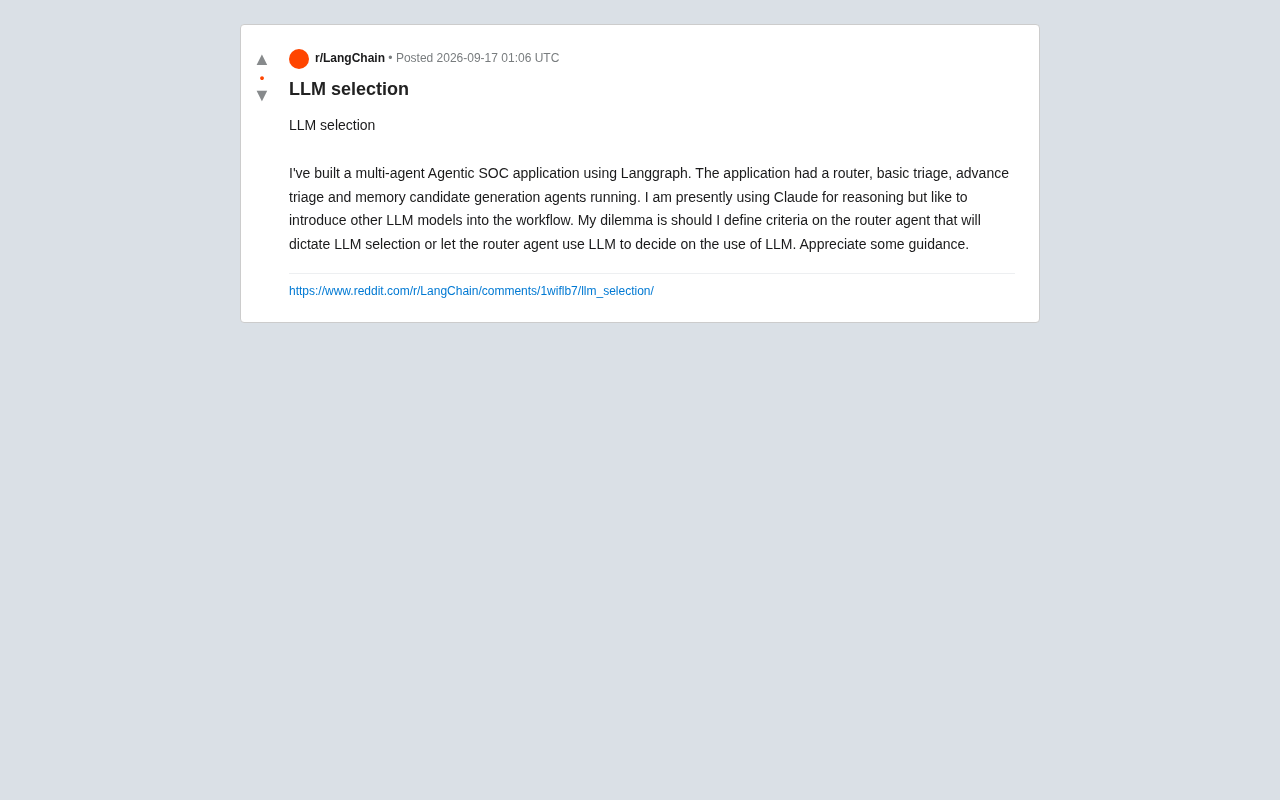
LLM Selection Strategy for Multi-Agent SOC Applications: Rule-Based Routing vs. LLM-Driven Decisions
Should multi-agent SOC apps on LangGraph use rule-based routing or LLM-driven model selection? This article analyzes both approaches and recommends a hybrid strategy for security operations.
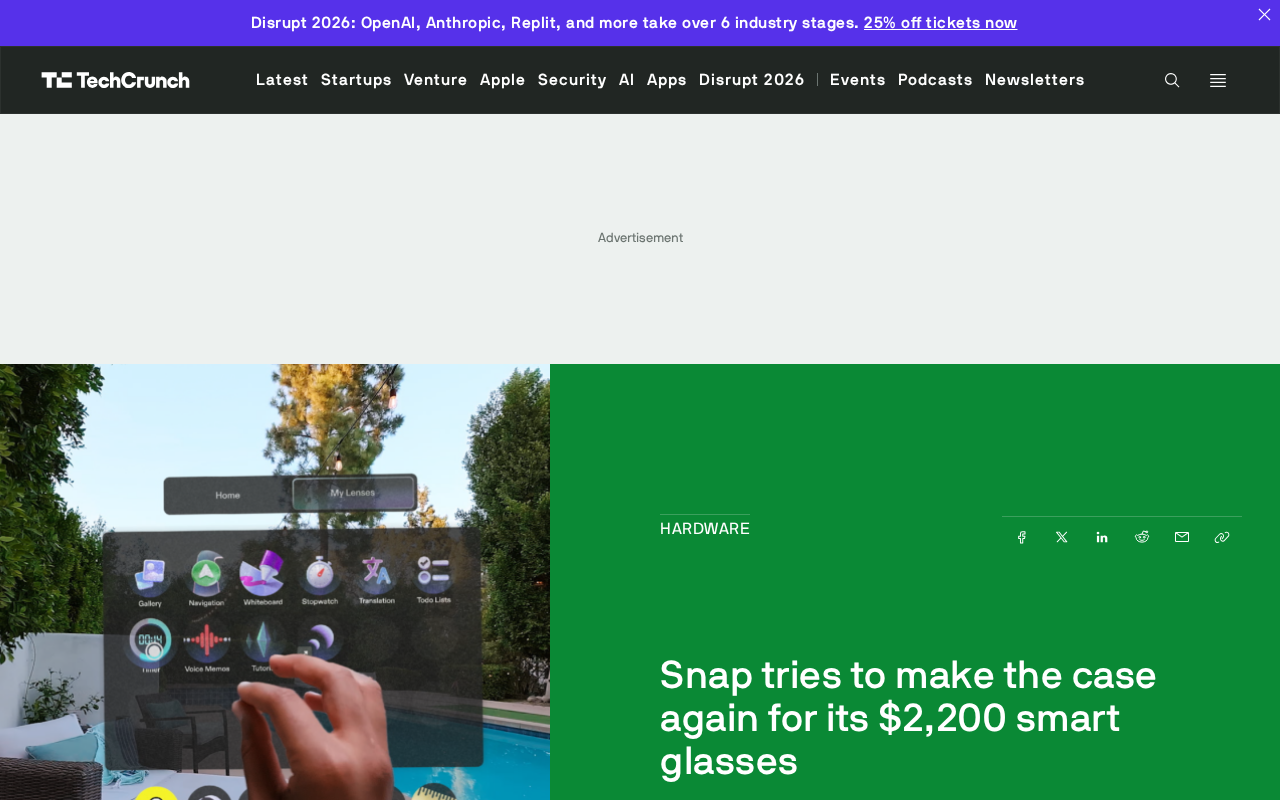
Snap Pushes Its $2,200 Smart Glasses Again — Can It Convince the Market?
Snap launched new features for its $2,200 smart glasses, doubling down on AR. We break down the pricing dilemma, its rivalry with Meta Ray-Ban, and what it means for the AR glasses race.

Vercel AI SDK Update: Multi-Turn Reasoning Preservation for Alibaba Models
Vercel AI SDK releases @ai-sdk/alibaba@1.0.55, enabling reasoning preservation by default in multi-turn requests for supported Alibaba models like Qwen.