Hermes Agent: A Complete Beginner's Guide to the Self-Evolving Open-Source AI Agent

Hermes Agent is a self-evolving open-source AI Agent with long-term memory and a built-in skill-learning loop.
Hermes Agent is an open-source autonomous AI Agent framework that hit 121K GitHub stars in under two months. Unlike traditional LLM tools, it features lower token consumption, cross-session long-term memory, and a built-in self-learning loop that automatically generates and refines skills from user interactions — making it a continuously evolving personal agent rather than a one-shot tool.
What Is Hermes Agent
Recently, an open-source project called Hermes Agent has been spreading like wildfire in the AI Agent community. Hermes Agent is an open-source, autonomous AI Agent framework that amassed over 120,000 GitHub stars (121K) in less than two months — and is still growing fast.
For readers who haven't worked with autonomous agents before, here's a quick distinction: the AI tools most of us use daily — like ChatGPT or Claude — are essentially "brain-type assistants." They can brainstorm, plan, and generate content, but they can't actually do things on your behalf. This gap has a technical root cause: traditional large language model (LLM) assistants are essentially a "language model + chat interface" combination, and their output stops at the text level. Autonomous agents, by contrast, introduce tool use and environment interaction capabilities — they can operate OS APIs, browsers, file systems, and third-party applications, forming a complete "perceive → decide → act" loop. This paradigm shift emerged around 2023 with the rise of the ReAct (Reasoning + Acting) framework, along with standardized interfaces like OpenAI Function Calling and Anthropic Tool Use, which allow models to map their reasoning directly into executable system actions. So the core breakthrough of autonomous agents like Hermes Agent is this: they can actually get things done — organizing files, creating documents, sending emails, scraping information from browsers, and more.
Hermes Agent occupies a similar niche to Open Cloud (nicknamed "crawfish" by the community), both being GUI automation agents capable of controlling computers and executing real-world tasks. GUI (Graphical User Interface) automation is about letting AI directly control desktop or web interfaces — as opposed to traditional automation tools (like Zapier or Make) that rely on API integrations. There are two main technical approaches: one is vision-based screenshot understanding, where multimodal LLMs "see" the screen and generate action commands; the other is Accessibility Tree-based DOM parsing, which extracts structured descriptions of UI elements for the model to act on. Hermes Agent aims to go further than the competition.
Two Key Differences Between Hermes Agent and Open Cloud
Compared to similar products, Hermes Agent has two important advantages over Open Cloud.

Lower Token Consumption
The first key difference is lower token usage. To understand why this matters, consider that tokens are the basic unit LLMs use to process text — roughly corresponding to fragments of English words or Chinese characters. In GUI automation scenarios, token consumption is far higher than in normal conversations: at every step, the agent must encode the current screenshot or DOM structure, the history of previous actions, the task goal, and more — all into the context window. A single inference pass can consume thousands or even tens of thousands of tokens. At commercial model pricing, the cost of a complex task can add up quickly. Open Cloud has been jokingly described as burning through 10,000 tokens just to check the weather. In head-to-head comparisons, Hermes Agent consumes noticeably fewer tokens than Open Cloud, which has a direct impact on operating costs for regular users. The difference in underlying technical choices between the two — vision-based approaches are more versatile but token-heavy, while DOM-based approaches are more efficient but platform-dependent — partly explains this gap.
Long-Term Memory and Self-Evolution
The second — and more fundamental — difference is long-term memory. LLMs are inherently stateless: once a conversation ends, the context is wiped. Open Cloud, like most tools, "forgets" everything when you close a session or restart your device. To overcome this limitation, Hermes Agent uses an external memory storage solution: through a vector database (converting historical interactions into semantic vectors for later retrieval via RAG) or a structured knowledge graph, user preferences and task history are persisted so the agent can access past context even after a restart. This architecture means Hermes Agent remembers what you've done before — it gets smarter the more you use it, gradually learning your preferences and accumulating personalized skills over time.
In one sentence: Open Cloud is a "short-memory tool," while Hermes Agent is a continuously evolving intelligent companion.
Core Positioning: An Agent That Lives on Your Machine

Hermes Agent officially positions itself as "an agent that works alongside you on tasks," with self-evolution as its defining characteristic. Here's how it works:
- Deployed on your own server — your data stays under your control;
- Connected to your messaging accounts — platforms like QQ, WeChat, or Feishu, so you can control it through apps you already use;
- Functions as a persistent personal agent that learns your projects, automatically builds skills, and stays accessible anywhere.
The official description is explicit: this is not a chatbot, not a code completion tool — it's "an agent that lives on your machine and gets smarter every day." That "getting smarter" part refers precisely to its capacity for continuous self-evolution through use.
Core Innovation: The Built-In Self-Learning Loop
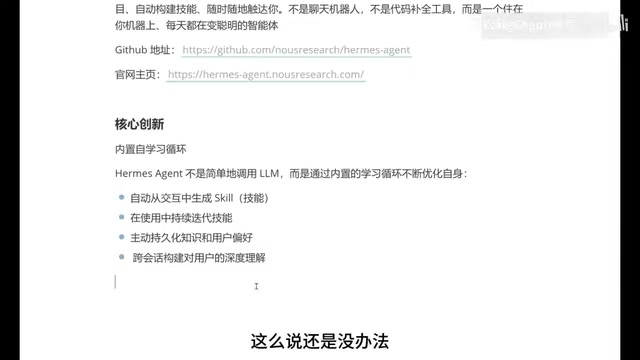
Hermes Agent's technical highlight is its built-in self-learning loop. This mechanism draws on the combined ideas of online learning and experience replay, similar to the skill library concept first systematically proposed in Voyager (the Minecraft AI agent). Unlike reinforcement learning, it requires no explicit reward signals — instead, it relies on the model's own metacognitive capability: after completing a task, the agent reflects on its execution trajectory, distills reusable operation patterns, packages them as structured functions or prompt templates, and calls them directly in future similar tasks without reasoning from scratch.
This mechanism transforms Hermes Agent from a simple LLM wrapper into a system that continuously optimizes itself through a learning loop, across four key dimensions:
- Auto-generates skills from interactions — new Skills are created automatically during conversation, without any explicit instruction;
- Iterates skills through repeated use — skills are refined and matured with each invocation;
- Automatically persists knowledge and user preferences — it gradually learns your habits and retains them long-term;
- Builds deep user understanding across sessions — whether you connect via WeChat, QQ, or Feishu, it gets to know you better over time.
This mechanism is the foundational layer beneath Hermes Agent's "self-evolution" and is what fundamentally distinguishes it from traditional one-shot LLM tools.
Live Demo: A Complete Autonomous Task in Action

Connecting to Hermes Agent via QQ, we can walk through a complete hands-on demonstration that showcases its autonomous capabilities.
The instruction given was: "Browse the web to find out which AI Agents have been trending recently. Summarize the findings into a document, and include important technical links (official websites, key blog posts, etc.). Then generate a tech-themed static webpage to display this document. Once done, tell me where the resources are saved, and run it locally."
Notably, the entire execution required zero backtracking — from web research and document generation to webpage creation, the agent handled everything autonomously, end to end. The final output was a list of recent hot AI Agent products — including Cursor, Claude Code, and Open Cloud — complete with official websites, GitHub links, and product descriptions, all with impressively high accuracy.
The most important detail came after the task was completed: the system log showed that it had automatically created a Skill (skill created) and simultaneously updated the user profile. No one asked for a skill to be created — the agent independently reflected on its execution trajectory during the natural course of the interaction and packaged the "web research + document generation + webpage rendering" workflow into a reusable, persistent skill. This is a real-world demonstration of "auto-generating skills from interactions" — the more you use it, the richer the skill library, and the better the experience.
Summary and Outlook
Taken together, Hermes Agent represents an important direction in the evolution of autonomous AI agents: moving from "one-shot LLM tools" toward "personal agents with long-term memory and self-evolution." Its three core advantages — lower token consumption, cross-session long-term memory, and automatic skill generation through a self-learning loop — directly address the most significant pain points of current comparable products. From a technical evolution standpoint, this direction also aligns closely with academic research into continual learning and embodied AI, signaling a paradigm shift from AI as a "tool" to AI as a "partner."
Of course, this article is just an introductory overview of its capabilities and positioning — the actual installation and deployment process warrants further exploration. For developers looking to try something new, Hermes Agent is already an open-source AI Agent project worth serious attention. If you're curious, head over to the official website and GitHub repository to take a closer look.
Key Takeaways
Related articles
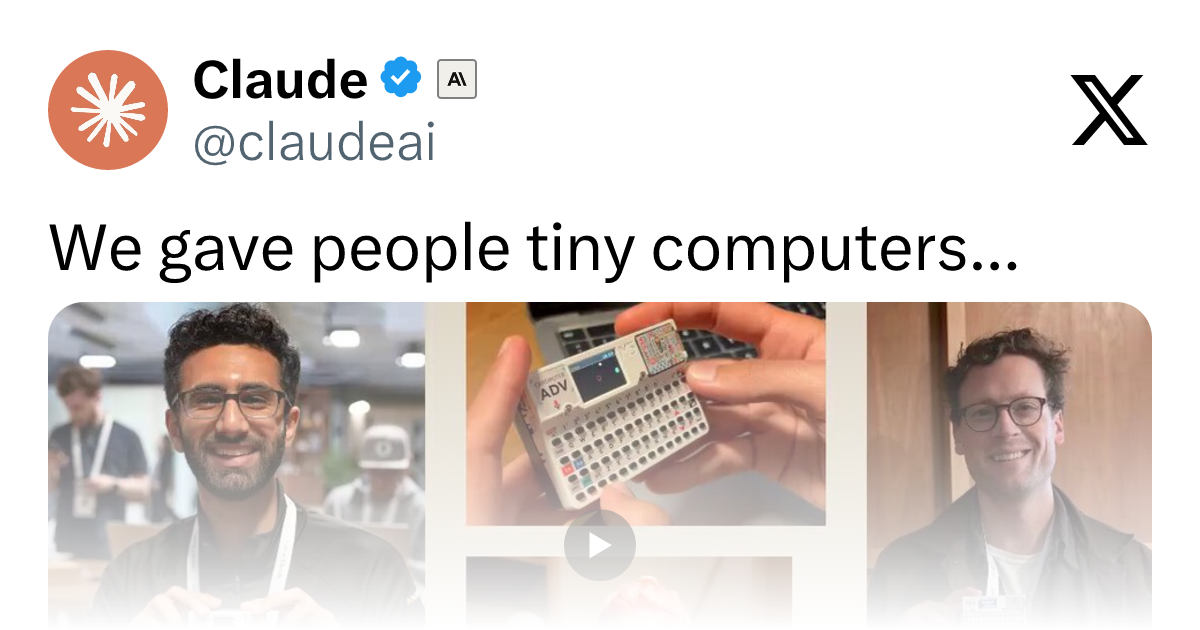
Code with Claude Event: AI-Powered Creative Experiments on Tiny Computers
At Code with Claude, Anthropic gave participants tiny computers to build creative projects with AI assistance, showcasing how AI coding tools empower the maker community.
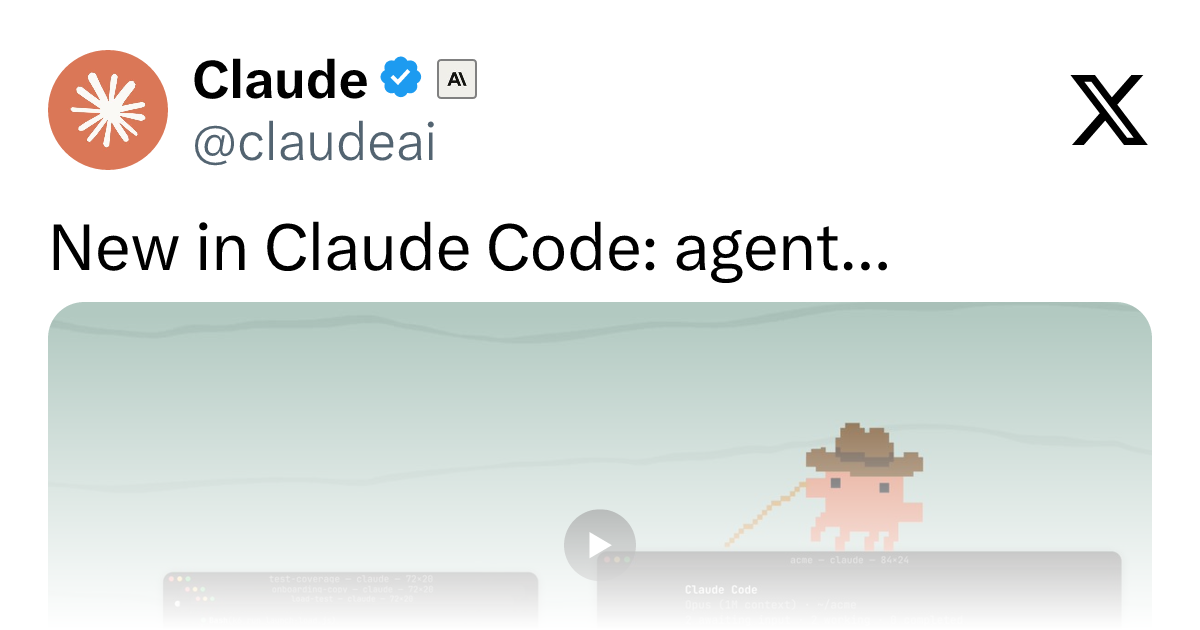
Claude Code Adds Agent View: A Research Preview for Unified Session Management
Claude Code's new Agent View feature (research preview) consolidates all coding sessions into a unified list, advancing AI tools toward multi-agent orchestration.
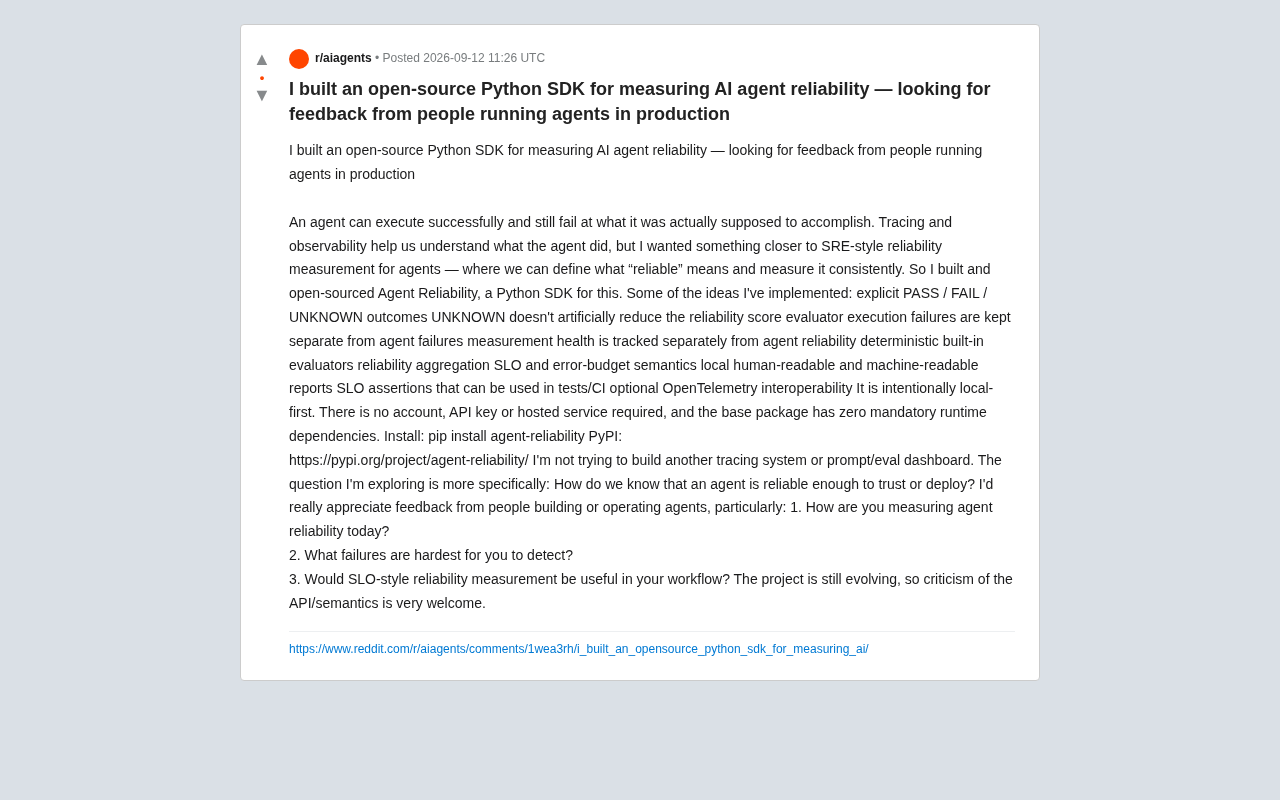
Open-Source Python SDK: Measuring AI Agent Reliability with SRE Principles
Agent Reliability is an open-source Python SDK that applies SRE's SLO and error budget concepts to AI Agent evaluation, with PASS/FAIL/UNKNOWN states, CI assertions, and zero forced dependencies.