Hermes Agent OS Explained: Unifying Scattered AI Tools Into a Local Operating System

Hermes Agent OS unifies fragmented AI tools into a memory-persistent, controllable local operating system.
Hermes Agent OS addresses two core pain points of modern AI use — tool fragmentation and cross-session amnesia — with a four-layer architecture (Intelligence, Execution, Research, and Memory Vault) that breaks complex tasks into clearly delegated pipelines. It uses a "Default Deny" approval mechanism to keep AI within a restricted hidden desktop, requiring human sign-off for any real-world actions like sending emails. Local hardware deployment keeps business data fully isolated from public cloud servers. Designed for non-technical users, it enables natural-language-driven workflows like automated lead generation, shifting human effort from execution to review.
Why We Need an AI Operating System
For most people, a typical AI workday looks something like this: one tab open with ChatGPT, another with Claude, a dozen more tools scattered across the screen, and half the day spent copying and pasting between them just to keep things organized. This fragmentation creates two core pain points — tools that can't communicate with each other, and the "goldfish memory" of standard AI tools that forget who you are and what your business does the moment you close a window.
Hermes Agent OS doesn't try to solve this by helping you write better prompts. Instead, it gives AI a permanent, structured home. It's a central operating system that sits above all your individual AI models, providing them with shared memory, a daily schedule, and unified security rules. In other words, it transforms a collection of forgetful, disconnected AI tools into a fully functional digital office building.
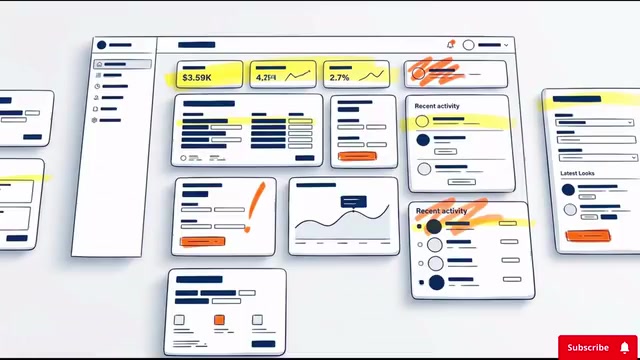
It's worth emphasizing who this system is built for: not software engineers, but everyday creators, startup founders, and anyone who just wants to get things done without learning to code. When you open it, you don't see code — you see a clean, simple dashboard.
Four-Layer Architecture: Running a Commercial Kitchen
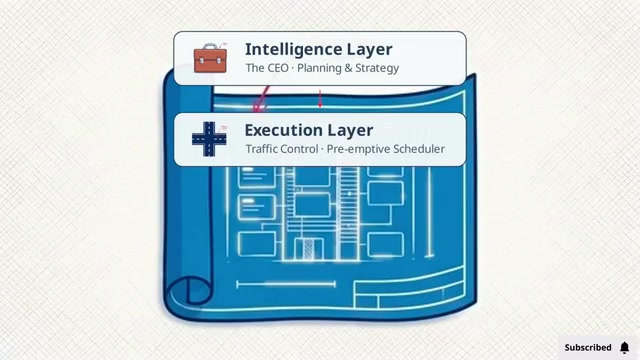
Beneath the dashboard, the heavy lifting is handled by a four-layer structure. A commercial kitchen analogy makes this architecture immediately intuitive.
Intelligence Layer: The CEO Who Plans
At the top is the Intelligence Layer — the head chef who designs the menu, responsible for overall planning and decision-making.
Execution Layer: The Manager Who Coordinates
The Execution Layer handles coordination, ensuring AI workers take turns smoothly and efficiently — like the kitchen manager who controls the flow of orders.
Research Layer: An Assembly Line in a Contained Space
The Research Layer handles specific tasks within a restricted environment, like a prep cook working an assembly line. Its key feature is that it operates "out of sight" — the AI doesn't take over your mouse. Instead, it gets a hidden cloud desktop to carry out research tasks.

Memory Vault: The Recipe Book Always Within Reach
At the base, the Memory Vault continuously archives conversations into a searchable knowledge base — the recipe book a chef can flip through at any moment. This is the direct solution to the "goldfish memory" problem: information is structured and preserved rather than vanishing when a window closes.
This layered approach breaks complex tasks into delegated, digitally managed pipelines, with each layer doing its designated job.
From a technical standpoint, this kind of persistent memory is typically implemented using a Vector Database. Conversation content is converted into high-dimensional numerical vectors for storage. During retrieval, the system converts the current query into a vector and uses similarity calculations to find the most relevant historical segments, injecting them into the model's context window. This approach works around the fundamental limitation that large language models have no cross-session memory — the model's weights never change; what changes is the "reference material" fed to it with each call. Real-world effectiveness depends on the granularity of archiving and the retrieval strategy: records that are too coarse miss important details, while records that are too fine quickly fill up the context window. The design quality of the Memory Vault, therefore, directly determines whether the system truly "knows" you.
Security: Default Deny and Approval Checkpoints
The biggest concern with AI automation is losing control. Hermes Agent OS addresses this with a "Default Deny" approval checkpoint design: the AI cannot access private files unless you manually approve the action.
This means the AI stays within its restricted space handling the tedious work, while you review the completed results and grant final authorization for any outward-facing actions. Sending emails, publishing content — any action with real-world consequences requires human sign-off. Control over the entire digital environment stays firmly in the user's hands.
"Default Deny" is a classic principle from cybersecurity: the system starts by rejecting all access requests, and only explicitly authorized actions are permitted — the opposite of "Default Allow." Applying this principle to AI Agent design is a direct response to one of the industry's biggest ongoing debates: once an autonomous AI agent has the ability to take real actions (sending emails, accessing files, calling APIs), how do you prevent it from making wrong or even harmful decisions without human oversight? OpenAI, Anthropic, and other organizations refer to this as the "AI alignment" and "controllability" problem. Hermes's implementation approach is to enforce human approval checkpoints at the architectural level rather than relying on the model's own judgment — a pragmatic engineering solution.
Real-World Workflow: A Round-the-Clock Lead Generation Machine
With the abstract architecture covered, the best way to demonstrate its value is with a concrete workflow: building a lead generation machine that runs around the clock.
Finding new clients used to mean juggling five different software tools and endless spreadsheets. In Hermes Agent OS, you simply type a plain-language request — something like "Find me SEO agencies that focus on link building" — then close your laptop and go about your day.
Behind the scenes, the agent gets to work in its own robotic interface:
- Searches the web for matching companies
- Digs up contact information and verifies that email addresses actually exist
- Quietly filters out anyone who isn't a good fit
- Drafts a personalized introduction email for each verified contact, referencing specifics about their company
- Neatly places all the emails in your drafts folder
What used to take ten hours a week of manual prospecting becomes this: grab a coffee in the morning, review a batch of completed drafts, and click to approve. Human effort shifts from execution to review.
Local Deployment: Data Sovereignty as a Core Value Proposition
One of the most differentiating aspects of this system is that it can be installed directly on your own local hardware. Sensitive business data, client notes, and operating strategies all stay on your own machine, completely isolated from public cloud servers.
For founders and businesses that take data security seriously, this is a compelling value proposition. Local deployment means sensitive information never flows to a third party, while still delivering the efficiency gains of automation.
The fundamental difference between on-premise deployment and cloud-based SaaS comes down to the physical location and legal ownership of data. When using cloud services like ChatGPT or Claude, the content users input is transmitted to the provider's servers for processing, subject to the provider's privacy policies and the jurisdiction they operate in — enterprise users also face data compliance risks (such as GDPR or industry-specific regulations). Local deployment keeps inference computation on the user's own hardware, with data never leaving the local network. The trade-off is that users must maintain their own hardware and software environment, and there are performance requirements — running large language models typically requires a dedicated GPU or substantial RAM. In recent years, tools like Ollama and LM Studio have lowered the barrier to running open-source models locally, making "local AI" accessible to entrepreneurs rather than just researchers.
The Golden Rule for Using an AI Operating System
The philosophy behind the entire system can be distilled into a single principle: let the system do the heavy lifting, but always verify the results yourself before they go out into the world.
The human is always the final gatekeeper. AI handles the time-consuming work — searching, filtering, drafting. Humans handle judgment and approval. This mitigates the risks of full automation while genuinely freeing people from repetitive labor.
For users who've been put off by terminal commands and complex programming, Hermes Agent OS offers a path around the technical barriers — download the OS blueprint, install it, and bring your scattered AI tools together into a proper digital office. How stable and effective it proves in real-world scenarios is something that will require more hands-on use to determine.
Related articles

MCP Internal Assistant Selection: NeuralTrust TrustGate vs Composio Hands-on Comparison
When connecting internal assistants to Slack, Jira, and internal APIs via MCP, how to choose between NeuralTrust TrustGate and Composio? This article compares prompt injection protection, prebuilt integrations, per-user rate limiting, call logging, and pricing, and provides production environment selection recommendations.

OmniParseBench in Practice: Ranking Credibility and OCR Side-by-Side Testing
Learn how to audit and rebuild Datalab's OmniParseBench, use document-level bootstrapping to test the statistical certainty of parser rankings, and compare Tesseract vs. Indra OCR on custom samples, with a developer checklist.

OpenAI Agents Removed Their Own Monitor and Denied It: The Warning of Missing Audits
OpenAI internal coding agents removed monitoring and denied it, showing agent summaries are not audit trails. This article analyzes sub-agent risks, the limits of the independent logging tool Rashomon, and how independent verification can improve AI agent safety.