Hindsight Bias in Clinical Temporal Reasoning: How Future Data Skews LLM Judgment
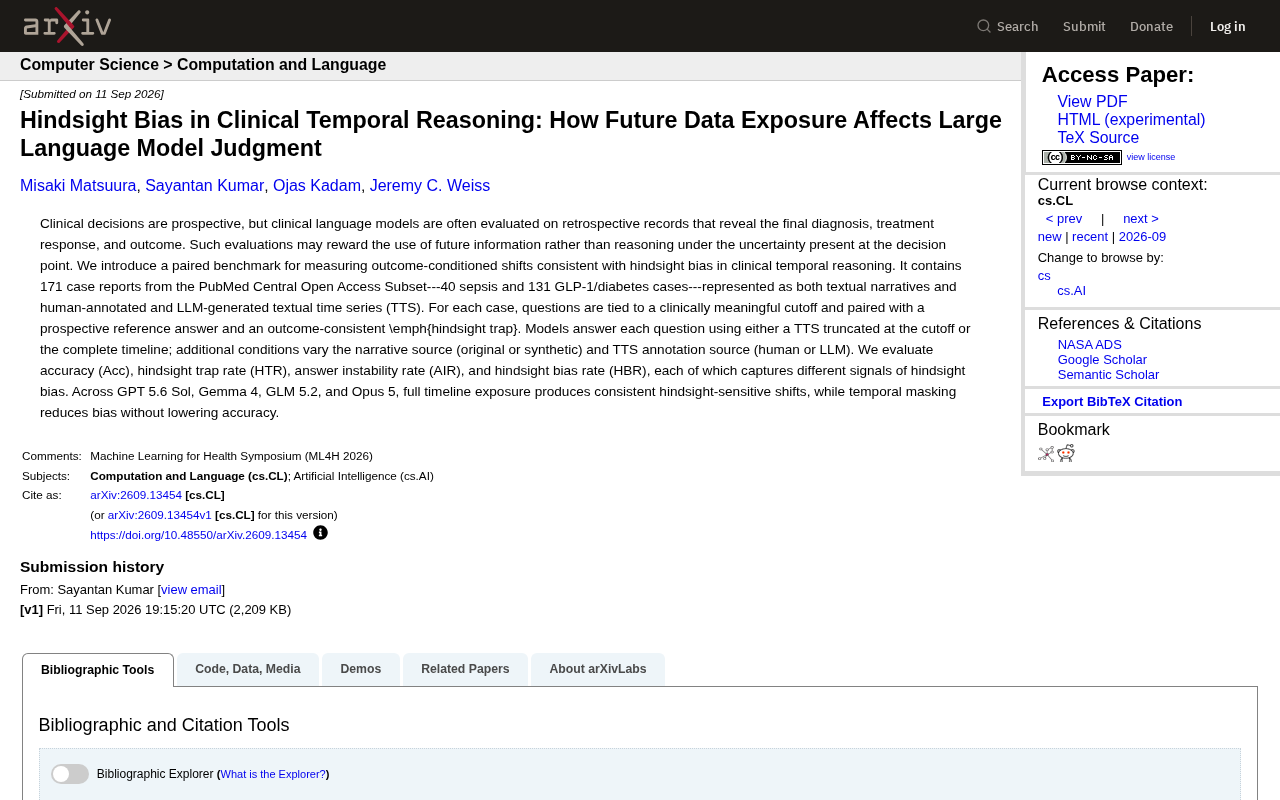
Temporal masking reduces hindsight bias in clinical LLMs without sacrificing accuracy, exposing a systemic flaw in retrospective benchmarks.
This arXiv study reveals a hidden systemic flaw in clinical LLM evaluation: models tested on retrospective records containing final outcomes may exploit future information rather than genuine clinical reasoning. Using 171 paired case reports, the team assigned each question a prospective reference answer and a "hindsight trap," then evaluated four models — including GPT 5.6 Sol — across four metrics. Models with access to full timelines showed consistent bias shifts, while temporal masking effectively reduced bias without harming accuracy. The findings warn that evaluation design rigor is as critical as model capability itself.
When the Model Peeks at the "Outcome"
Clinical decision-making is inherently prospective — physicians make judgments in moments of incomplete information and unknown outcomes. Yet there's a hidden flaw in how clinical language models are currently evaluated: models are typically tested on retrospective medical records that already contain final diagnoses, treatment responses, and patient outcomes.
This means evaluations may be rewarding a form of "cheating" — rather than reasoning under the uncertainty present at the decision point, models exploit future information that shouldn't have been available at that time. This paper published on arXiv sets out to quantify this phenomenon, known as "Hindsight Bias," in clinical temporal reasoning.
Hindsight bias is well-studied in human cognition: once people know the outcome, they tend to believe they "should have seen it coming." When this bias is embedded into AI evaluation frameworks, the consequences are particularly serious — we may be overestimating a model's capabilities in real clinical settings, where physicians can never foresee the future.
A Benchmark Designed to "Trap" Bias
The research team built a paired benchmark with one core goal: measuring answer shifts conditioned on outcome information. The dataset contains 171 case reports from the PubMed Central open-access subset — 40 sepsis cases and 131 GLP-1/diabetes cases.
Each case is presented in two forms: a textual narrative and a Textual Time Series (TTS). TTS comes in both manually annotated and LLM-generated versions, allowing researchers to isolate the effect of different variables on bias.
Temporal Cutoffs and the "Hindsight Trap"
The most clever aspect of the benchmark design is that each question is assigned a clinically meaningful temporal cutoff. Around this cutoff, each question is paired with two answers:
- Prospective reference answer: the correct judgment that should be made at the cutoff moment, based on information available at that time;
- Hindsight trap: a misleading answer consistent with the final outcome — one that only an "armchair quarterback" with hindsight would choose.
Models encounter two conditions when answering: one where the time series is truncated at the cutoff (temporal masking), and one where the full timeline is available. The experiments also systematically vary the source of the narrative (original or synthetic) and the TTS annotation source (human or LLM) to test the robustness of the bias.
Textual Time Series (TTS) is a representation format that structures clinical events into a natural language sequence ordered by time, as distinct from traditional unstructured medical record narratives. In clinical records, lab results, medication changes, symptom progression, and other events are often scattered across multiple documents. TTS arranges these events uniformly by timestamp, enabling models to explicitly perceive the sequence of events. This representation is critical for temporal reasoning evaluation — it allows researchers to precisely "cut" the timeline to simulate the information boundary available to a physician at a given decision moment, rather than leaving the model to guess which information belongs to the "past" versus the "future" from narrative paragraphs.
Four Metrics to Decompose the Bias Signal
To comprehensively capture different facets of hindsight bias, the study employs four evaluation metrics:
- Accuracy (Acc): how correctly the model answers;
- Hindsight Trap Rate (HTR): how often the model falls into the misleading answer;
- Answer Instability Rate (AIR): how much a model's answer fluctuates for the same question under different information conditions;
- Hindsight Bias Rate (HBR): the core metric that directly measures the bias itself.
The value of this multi-metric design is that it avoids masking complex phenomena behind a single number. A model may have a reasonably high overall accuracy while frequently falling into traps under specific conditions — a problem that accuracy alone cannot expose.
Key Finding: Masking Time Actually Improves Reliability
The study evaluated four mainstream models: GPT 5.6 Sol, Gemma 4, GLM 5.2, and Opus 5. The results show a highly consistent pattern:
When models are exposed to the full timeline, they exhibit stable, hindsight-sensitive answer shifts — meaning models get "led astray" by future information and tend to give answers consistent with the known outcome that wouldn't be reasonable at the actual decision point.
Even more noteworthy is the other half of the finding: temporal masking reduces bias without compromising accuracy. This is a counterintuitive but highly practical result — restricting the range of information the model can see not only doesn't make it less capable, but actually makes its reasoning more consistent with real clinical decision-making logic.
Implications for Clinical AI Evaluation
The significance of this research goes beyond a single benchmark. It points to a systemic flaw in current clinical language model evaluation paradigms: if we continue testing models with retrospective data containing outcomes, we will keep selecting for models that are "good at exploiting future information" rather than "good at reasoning under uncertainty."
For real-world medical AI deployment, this bias is dangerous. In genuine clinical settings, models always face fragmentary information at the moment of decision. A model that performs brilliantly on retrospective benchmarks by relying on hindsight may produce misleading recommendations in real-world scenarios.
Temporal masking here refers to physically removing all clinical events occurring after the temporal cutoff from the sequence before inputting case information to the model, ensuring the model can only see information from the decision point and earlier. This differs from the common "instruction-based constraint" in prompt engineering — where the model is told to "please ignore subsequent information" but still reads that content in context. The study found that even when prompts explicitly ask the model to answer from a prospective perspective, the model is still influenced by outcome information already present in the context. Physical truncation is the effective means of blocking hindsight bias. This conclusion has direct engineering implications for clinical AI evaluation framework design: evaluation pipelines need to complete temporal truncation at the data preprocessing stage, rather than relying on prompt-level constraints.
The Distance Between Evaluation and Deployment
This research reminds the field: evaluating temporal reasoning capabilities must respect the unidirectionality of time. Strictly truncating information at the decision point, constructing paired traps, and cross-validating with multi-dimensional metrics — this methodological rigor is what brings clinical AI evaluation genuinely closer to reality.
Hindsight bias is not an inherent flaw in models, but a systemic risk introduced by poor evaluation design. As large language models accelerate their entry into healthcare, designing "honest" evaluation frameworks may be just as important as the capabilities of the models themselves.
Related articles

Why Is AI Agent Development So Fragmented? The Real Causes and How to Work Around Them
Why does AI Agent development feel so fragmented? Logic scattered across prompts, configs, and frameworks makes portability nearly impossible. Here's why — and how to cope.
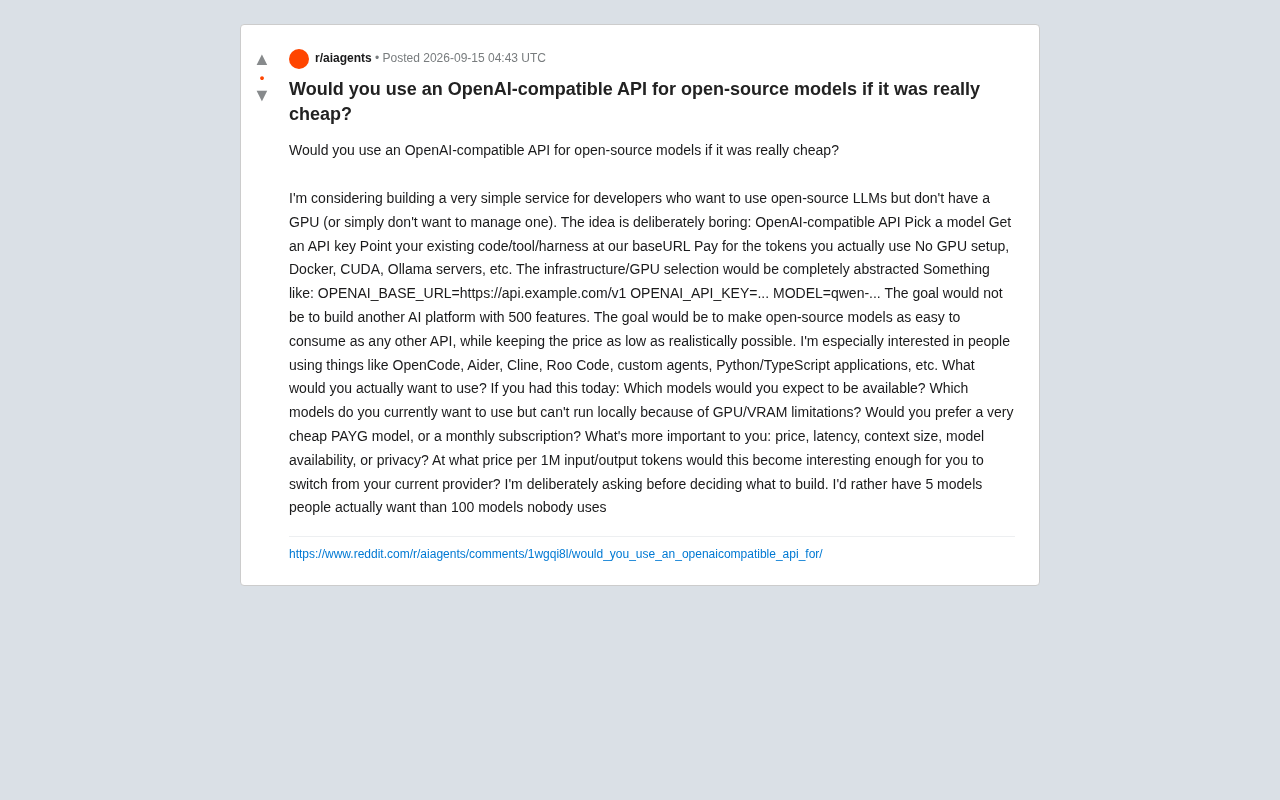
Cheap OpenAI-Compatible APIs: The Opportunity and Pain Points of Cloud-Hosted Open-Source LLMs
A developer explores building a cheap, OpenAI-compatible API for open-source LLMs like Qwen and Llama — no GPU required. Analysis of pain points, pricing models, and market challenges.
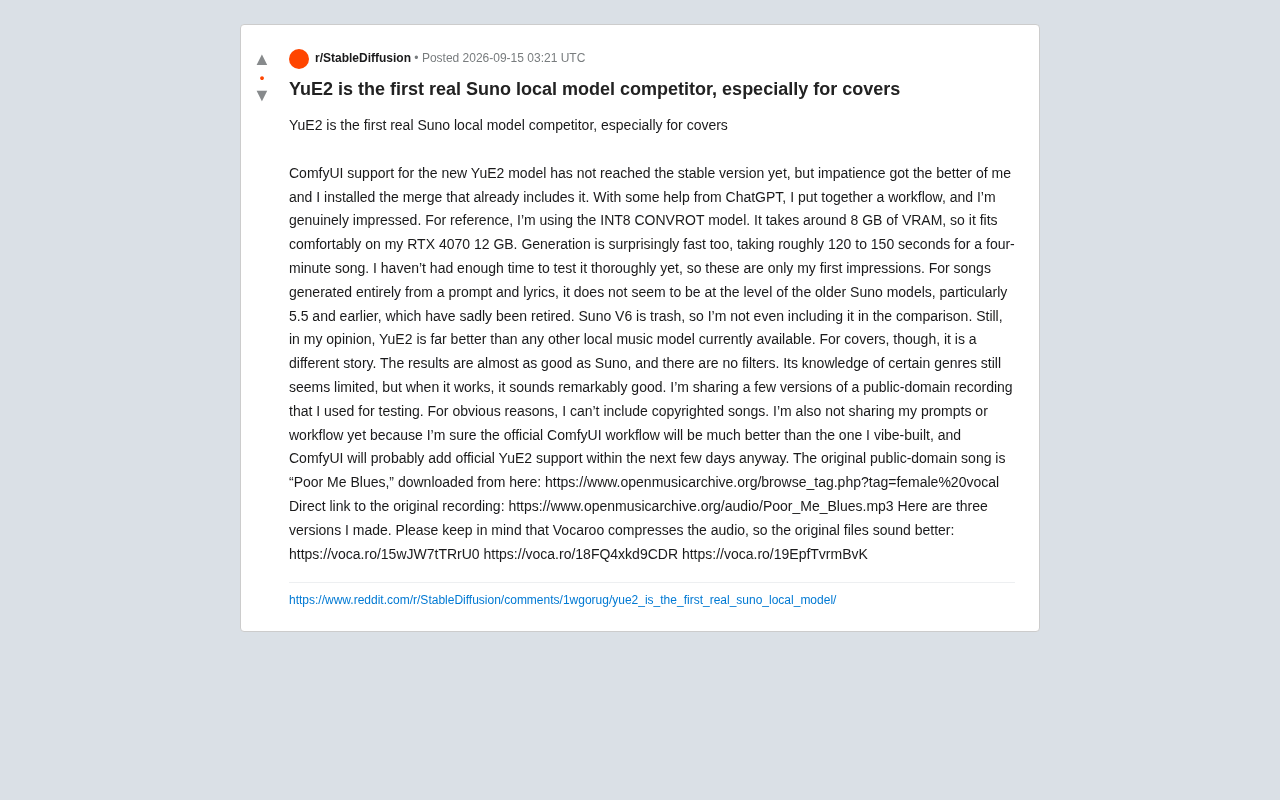
YuE2 Local Music Model Review: The Open-Source Suno Rival That Actually Delivers on Covers
YuE2 is the first local AI music model to seriously rival Suno — runs on 8GB VRAM, delivers near-Suno cover quality, and has no content filters. Based on real Reddit user testing.