How Angular Uses MCP to Keep AI Coding Agents Up to Date

Angular CLI's MCP server uses RAG to give AI coding agents real-time access to current framework docs.
Starting from Angular 19, the Angular CLI integrates an MCP (Model Context Protocol) server that allows AI coding agents like Claude Code and Codex to retrieve version-matched official documentation before generating code. This addresses the training data cutoff problem — even the latest models may have Angular knowledge that's months out of date. The mechanism is RAG (Retrieval-Augmented Generation), effective only within a single conversation and without modifying the model's base knowledge. Codex users currently need a manual config workaround for a known bug. Ultimately, code quality and production responsibility still rest with the human engineer.
Angular may be one of the first frontend frameworks to officially document AI coding agent workflows. This integration makes a lot of sense given Angular's heavy reliance on boilerplate code — repetitive, structured code is precisely where AI agents shine. The Angular team has offered this capability since Angular 19, and has continued to refine it in subsequent releases.
This article is based on a hands-on demonstration by a YouTube creator running Angular 22.2.1. It walks through how Angular uses an MCP (Model Context Protocol) server to let AI coding agents like Claude Code and Codex access up-to-date framework documentation — helping prevent outdated or "hallucinated" code.
MCP Server: Connecting AI Agents to Official Docs
In the current version of the Angular CLI, when you create a new project via the command line, you're asked which AI coding agent you'd like to integrate. Once you make a selection, the CLI automatically generates an MCP server for you.
The most critical value of this MCP server is its built-in Angular documentation service. In other words, your AI coding agent can consult documentation that corresponds to the specific Angular version used in your project — and if you grant permission, it can even fetch the latest official docs in real time.

For a framework as boilerplate-heavy and rapidly evolving as Angular, this means agents can "check the manual" before writing code, rather than relying entirely on knowledge frozen at training time.
MCP (Model Context Protocol) is an open standard proposed and open-sourced by Anthropic in late 2024. Its goal is to standardize communication interfaces between AI models and external data sources or tools. Before MCP, AI tool vendors each designed their own plugin or tool-calling mechanisms, with no interoperability. MCP is essentially the USB port of AI integrations — as long as both the server and client follow the same protocol, an AI agent can access external resources like file systems, databases, APIs, or documentation services in a standardized way. The MCP server that Angular CLI auto-generates is essentially a locally running process that follows this protocol. Agents that support MCP — like Claude Code and Codex — simply connect to this process to pull Angular documentation on demand, without requiring developers to manually copy and paste doc snippets.
Why This Matters: The Training Data Cutoff Problem
The creator illustrates the core pain point with a concrete example. At the time of recording (October 3, 2026), he was using the Claude Fable 5.1 model — one of the more expensive options on the market. When he asked the model whether it had been trained on Angular 22, it responded that its Angular training data had a cutoff of June 2026 — roughly when Angular 22 first became generally available for production use (around June 3).
The problem: by the time of recording, the project had already progressed from Angular 22.0.0 to 22.2.1 — two minor versions and a patch release later. The creator emphasizes this is not a trivial gap. Without consulting the docs, the model could easily produce incorrect code, fail to complete tasks, or generate AI hallucinations.
Notably, this isn't a problem unique to any one provider. The creator points out that the Codex series (he used GPT 6.1) faces the exact same issue. In fact, OpenAI's own Codex documentation explicitly lists "outdated knowledge" as a limitation in the "context optimization" section. Whether you're using the most expensive closed-source model or the strongest coding model available, the training cutoff is a wall none of them can climb over on their own.
The Nature of RAG: Temporary Retrieval, Not Permanent Learning
The creator repeatedly clarifies a commonly misunderstood point — arguably the most valuable conceptual distinction in the entire video.
Enabling MCP so that Claude Code can read the latest Angular 22 docs does not change the model's underlying knowledge. What's happening is Retrieval-Augmented Generation (RAG) — the agent is simply retrieving information from the latest documentation to assist with the current response.
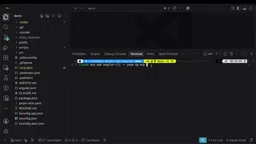
This knowledge boost only applies to the current conversation. It does not cause the model to automatically "learn" Angular 22.2.1, nor does it permanently update the model's base knowledge. Think of it like a human engineer looking up the official docs when encountering a new version — they can write correct code for that session, but they'd need to look it up again the next time. RAG improves the quality of individual responses; it does not extend the model's long-term memory.
RAG (Retrieval-Augmented Generation) is a technical architecture that combines information retrieval with language model generation, formally introduced by Meta AI Research in 2020. The core idea: before the model generates a response, it first retrieves the most relevant document chunks from an external knowledge base, then feeds those chunks as context into the model to guide more accurate generation. This is fundamentally different from fine-tuning — fine-tuning actually modifies model weights, making new knowledge part of the model's "long-term memory." RAG only temporarily injects external information at inference time; the model weights themselves remain unchanged. Because of this, RAG is extremely cheap to update (you just update the retrieval database), but its "shelf life" is limited to the context window of the current conversation. The Angular MCP server uses exactly this mechanism, which is why each new conversation needs to trigger a fresh document retrieval.
The Codex Gotcha: Broken MCP Tools and a Manual Workaround
If you're using a Codex model, things get a bit more complicated. First, when the CLI initializes, you can actually select multiple coding agents at once (just deselect the "none" option).
For Codex, the CLI generates a separate directory containing a config.toml file and an mcp.json file.
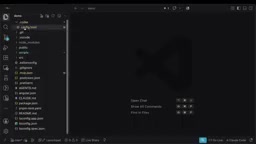
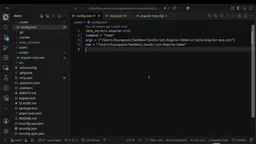
However, at the time of recording, there is a known issue: the MCP tool for Codex has a bug and doesn't work properly. OpenAI is aware of the problem and working on a fix. In the meantime, there's a manual workaround for the Codex coding model — the core of it involves adding three lines to config.toml, modifying the Angular CLI's corresponding MCP entry, and writing a small JavaScript snippet to work around the bug.
The creator confirmed the workaround is effective, albeit with an extra manual step. You need to explicitly ask the agent to apply the workaround until OpenAI ships an official fix.
The Real Superintelligence Is the Human Brain
At the end of the video, the creator raises a point worth every developer's reflection. His own employer has clear restrictions on AI usage: some projects allow it, others forbid it entirely — a reality many organizations share.
The term "agentic AI" has been so overused it's nearly lost its original meaning. But regardless of how you feel about that term, and regardless of whether your employer allows AI coding tools, the person who ultimately decides what code goes into production is still the human in the loop — the engineer.
The creator puts it plainly: if something goes seriously wrong, no one can sue the AI. The people held accountable are those who used the AI, or those who built the AI tools — or both. So whether you use AI or not, you still have to engage that true superintelligence: your own brain. Caveat emptor.
Summary
Angular's integration of MCP into the CLI is a pragmatic, framework-level attempt to address the "stale AI training data" problem. By using RAG to let agents retrieve version-matched official documentation, it reduces the likelihood of hallucinations and incorrect code. But developers should stay clear-eyed: this is temporary retrieval, not a change to the model's base knowledge; Codex currently requires a manual bug workaround; and the final quality gate always rests with the human engineer.
Related articles

AI New Grad Resume Diagnosis: How to Stand Out for ML/CV Roles?
How can AI/ML new grads optimize their resumes to get interviews? Based on a real Reddit case, this article analyzes project selection, depth display, and structure for ML/CV roles, with actionable revision advice.

OpenAI Opens Up Decision Models as Competition with Jev Heats Up
OpenAI makes its decision model widely available, directly challenging first mover Jev. We analyze the impact on the decision model competitive landscape and key considerations for developers and enterprises.

Startup Growth Secrets: Early Sales Are Not the Key
At Disrupt, experts from Lovable, Polska, and Theory Ventures said early startup growth depends not on early sales but on a repeatable sales process, a clear ICP, team development, and data-driven iteration.