How Anthropic Safely Delivers the World's Top LLM: Separating the Brain from the Hands

Anthropic decouples the model's "brain" from the agent's "hands," using engineering layering to support scaled delivery of the Claude platform.
Based on Latent Space's interview with Anthropic engineers Katelyn Lesse and Angela Jiang, the article breaks down the engineering logic behind the Claude platform. The core is "separating the brain from the hands": the model handles reasoning, while tool calls and external operations are handled by an independent execution layer, creating a clear security boundary and enabling independent iteration. It also discusses the systems engineering behind Opus 5.5 and how reliability should be guaranteed through execution-layer design such as state management, timeout control, and idempotency.
How does Anthropic's Claude platform support a "world-leading" LLM? In an interview on Latent Space, Anthropic's Katelyn Lesse and Angela Jiang broke down the engineering logic behind it: shipping Opus 5.5, separating the model's "brain" from the agent's "hands," scaling the API, and building reliable hosted agents. The conversation didn't stop at model capabilities themselves but dug into the often-overlooked link of "delivery"—when a model is powerful enough, how to make it run safely and stably in real products is the real challenge.
Separating the "Brain" from the "Hands": A Key Architectural Decision
The most central engineering philosophy in the interview is "separating the brain from the hands." Anthropic treats the model itself (reasoning, understanding, generation) as the "brain," and the agent's ability to execute actions in real environments (calling tools, operating external systems, accessing data) as the "hands." The two are decoupled architecturally rather than mashed into a single black box.
The direct benefit of this separation is a clearer security boundary. The model's reasoning process can be independently reviewed and constrained, while the reach of the "hands" can be separately limited—permission control, operation auditing, and failure rollback can all be implemented at the "hands" layer without intruding into the model's internals. For enterprise applications, this means controlling the risk surface of agent behavior without sacrificing model capability.
Another implicit benefit is iteration speed. Model version upgrades (such as moving from the previous generation to Opus 5.5) and updates to the agent toolchain can proceed relatively independently, so the entire execution layer doesn't need to be rebuilt with every model update. This decoupling is a prerequisite for delivery at scale.
LLM agent refers to a system with a large language model as its reasoning core that can autonomously plan and call external tools (such as search, code execution, and API calls) to complete multi-step tasks. Unlike single-turn Q&A, an agent needs to maintain intermediate state, adjust its next action based on tool return results, and decide whether to retry or give up on failure. There are two common industry approaches: one is to train tool-calling capability directly into the model (such as function calling), and the other is to parse the model output and hand it to an independent execution engine. The "separation" emphasized by Anthropic is closer to the latter—the model is only responsible for producing structured intent, while actual execution, permission validation, and state persistence are handled by the platform side. This pattern allows the execution layer to evolve independently of model versions and also makes it easier to audit and rate-limit each tool call.
Shipping Opus 5.5: Systems Engineering Beyond Capability Gains
Opus 5.5's release was given a prominent place in the interview. From an engineering perspective, a model release is far more than completing training—it involves API compatibility, stability of inference performance, and behavioral consistency of downstream hosted agents. The focus of the two Anthropic engineers' discussion was precisely how to get the new model "safely" online on the platform.
Here "safety" has two meanings. One is safety at the capability-alignment level, and the other is safety at the engineering-reliability level: after the new model goes live, hosted agent behavior must not drift unexpectedly, and API latency and throughput must remain within acceptable ranges. For developers building products on Claude, the latter often has a more direct impact—an unstable release can be more damaging than a few percentage points of capability improvement.
The interview did not disclose specific performance numbers, but it made clear the continuation of the "separation" principle in the release process: model capability upgrades and stability guarantees for the platform execution layer are managed as two parallel engineering tracks.
Behavior drift refers to the phenomenon in which, after a model version update, output style, tool-calling tendencies, or degree of instruction following change unexpectedly even under the same input. For hosted agents, drift may manifest as steps that would originally call a certain tool being skipped, parameter formats changing, or handling of edge conditions no longer being consistent, which in turn causes downstream workflows to fail. Common engineering mitigations include: maintaining regression test sets for end-to-end validation of key agent flows, providing model version pinning and canary releases at the API layer, and adding schema validation and fallback logic for tool calls. This is also one reason the interview treats "model upgrades" and "execution-layer stability" as two parallel engineering tracks.
Scaling the API and Reliable Hosted Agents
When a model is called by a large number of developers, the API's scaling capability determines the product's ceiling. The interview mentioned the engineering challenges of scaling the API and the goal of building "reliable hosted agents." The difficulty of hosted agents is that they are no longer a single request-response but a multi-step, long-running process that may fail and need to recover.
"Separating the brain from the hands" comes into play again here. The reliability of hosted agents can be guaranteed through engineering design of the execution layer—state management, timeout control, idempotency of tool calls, and failure retry strategies all fall within the scope of the "hands" and can be optimized independently without waiting for the model itself to become stronger. For teams building AI applications (especially automation-workflow products), this idea offers direct lessons: don't pin reliability on the model "being smarter"; instead, leave engineering room for the execution layer in the architecture.
Idempotency refers to the property that performing the same operation once and performing it multiple times produces the same result. In hosted agents, tool calls may be retried due to timeouts or network jitter; if the target operation (such as charging a card, sending a message, or creating a ticket) is not idempotent, retries will cause duplicate side effects. The engineering approach is to assign a unique request ID to each call, have the execution layer record completed calls, and return cached results on retries; for external interfaces that cannot be made idempotent, handle them through deduplication keys or compensating transactions. State management refers to persisting the intermediate results, executed steps, and pending actions of long-running agents so that they can recover from checkpoints after a process interruption rather than rerunning from scratch. Both capabilities sit at the "hands" layer and are unrelated to model capability.
Takeaways for Developers
The value of this interview is not in what new features were released, but in revealing a delivery philosophy: the safe landing of top-tier models depends not on point capabilities but on clear architectural layering. Separating the "brain" from the "hands" so that reasoning and execution are each governable, iterable, and auditable is the underlying logic by which Anthropic supports the scaling of the Claude platform.
For teams building products with Claude or similar LLMs, several actionable ideas can be distilled: clearly distinguish the model invocation layer from the tool execution layer in architectural design; place permissions and auditing at the execution layer rather than the model layer for security; and manage model upgrades and execution-layer stability as two independent tracks in the release process. These practices do not depend on specific parameters, yet they directly determine whether a product can run stably in real-world scenarios.
One-line Summary
Anthropic decouples the model's "brain" from the agent's "hands," using engineering layering to support scaled delivery of the Claude platform.
Paragraph Summary
Based on Latent Space's interview with Anthropic engineers Katelyn Lesse and Angela Jiang, the article breaks down the engineering logic behind the Claude platform's support for landing top-tier LLMs. The core is "separating the brain from the hands": the model handles reasoning and generation, while the agent's tool calls and external operations are handled by an independent execution layer, creating a clear security boundary and enabling the two tracks to iterate independently. The article further discusses the systems engineering behind the Opus 5.5 release—API compatibility, inference stability, and behavioral consistency of hosted agents—as well as the challenges of scaling the API and building reliable hosted agents, pointing out that reliability should be guaranteed through execution-layer design such as state management, timeout control, and idempotency rather than relying on the model becoming stronger. Finally, it distills architectural-layering lessons for developers.
Related articles

Microsoft Fabric Database Agent in Action: From Reactive Firefighting to Intelligent Detective
A deep dive into the Microsoft Fabric Database Agent: how to enable it, supported monitoring scenarios, a blocking-issue demo, and the roadmap from reactive to autonomous operations.

Zendesk Uses ChatGPT Enterprise to Build a Sales Agent with 1,000 Daily Active Users
Zendesk opened ChatGPT Enterprise to all employees, who built about 600 apps themselves, including a sales expansion agent with about 1,000 daily active users. This article analyzes how it turns internal data into sales opportunities and its "don't wait" implementation strategy.
Google Releases Gemini 4 Carbon: Its Strongest Model Yet, Debuting with a Cybersecurity Focus
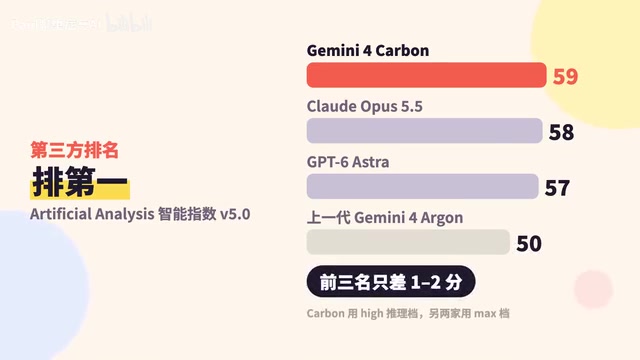
Google releases Gemini 4 Carbon, calling it its strongest model, with a cybersecurity focus. It tops the third-party composite ranking at 59 points but leads by only one or two. This article analyzes its security test results, staged rollout, token pricing, and the divergence between self-reported and third-party tests on hallucinations.