How Dangerous Are Windsurf Account-Switching Plugins? A Deep Dive into Technical Principles and Security Risks
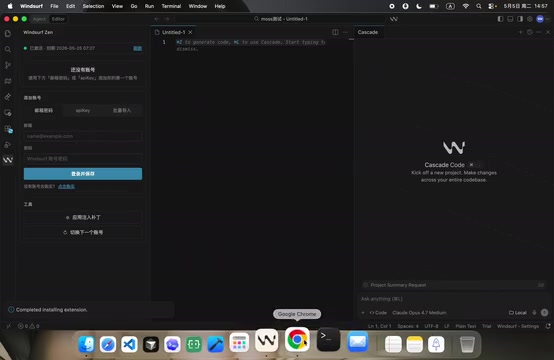
Technical analysis and security risks of Windsurf's third-party account-switching plugins with compliant alternatives.
This article dissects the technical principles behind Windsurf's seamless account-switching plugins, explaining how they rotate authentication tokens to bypass usage limits. It reveals three major risks: accounts from questionable sources, inevitable bans for ToS violations, and potential source code theft through code injection. Four compliant alternatives are provided, including Windsurf Pro subscriptions and open-source tools like Continue and Cline.
What Are Windsurf Seamless Account-Switching Plugins? The Full Story
Recently, a tutorial video appeared on Bilibili about a "seamless account-switching plugin" for the Windsurf editor, claiming that users only need to install a third-party plugin to automatically switch between accounts, bypass official usage limits, and achieve "unlimited speed with unrestricted access to all models."
The video creator mentioned that many users had previously reported Windsurf login failures because the platform changed its Request Headers, and the plugin had already been "fixed" to adapt to this change. Request headers are metadata sent by the client to the server in HTTP protocol, containing critical fields such as user identity markers, authentication Tokens, Cookies, and more. In the context of AI coding tools, each time the client calls a large model API, it carries authentication information in the request headers, which the server uses to determine user identity and remaining quota. Windsurf's request header changes essentially modified the authentication handshake protocol between client and server, causing the forged authentication information from older plugin versions to no longer be accepted by the server.
To understand the technical depth of this mechanism, it's worth reviewing the evolution of HTTP authentication systems. Early web applications primarily relied on Basic Auth (Base64-encoding username and password in the Authorization header), which offered extremely low security. Session-Cookie mechanisms followed, where the server generates a Session ID stored server-side after user login, and the client carries this ID via Cookie for identity verification. However, this stateful authentication approach faced Session synchronization challenges in distributed architectures. JWT (JSON Web Token) solved this problem—the token itself carries all necessary information and is digitally signed, allowing the server to verify identity without maintaining session state. This is the technical reason why AI coding tools universally adopt Token-based authentication. Windsurf's request header changes added new verification dimensions within this authentication framework.
Notably, modern AI coding tools' client-server communication is far more complex than simple HTTP requests. Beyond the standard Authorization header field, platforms typically embed Device Fingerprints, client version hashes, TLS fingerprints, and other multi-dimensional identifiers in request headers. Device fingerprinting technology generates unique identifiers by collecting dozens of parameters including operating system version, screen resolution, installed font lists, and more. Even if the account Token is changed, the server can still identify the same machine frequently switching accounts through device fingerprinting. Windsurf's request header changes likely added new verification fields or adjusted the signing algorithm in the authentication flow, causing the plugin's forged requests to fail the server's integrity checks.
Behind this incident lies the continuously escalating cat-and-mouse game between users and platforms in the battle over AI coding tool free quotas.
Technical Principles and Workflow of Windsurf Account-Switching Plugins
Basic Operation Steps
Based on the video demonstration, the workflow for using the Windsurf account-switching plugin is roughly as follows:
- Obtain accounts: Bulk-purchase multiple Windsurf accounts from a designated website
- Install the plugin: Install the plugin into the Windsurf editor
- Inject and restart: Click the "Inject" button, exit the editor, then restart it
- Import accounts: Import the purchased account information into the plugin to enable automatic rotation
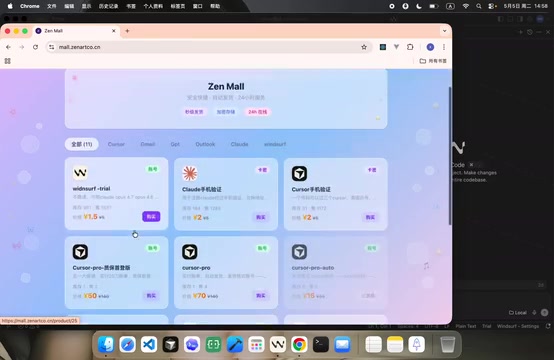
The Technical Logic Behind Seamless Account Switching
"Seamless account switching" essentially modifies Windsurf client's authentication information (including request headers, Tokens, etc.) to automatically rotate between multiple accounts, thereby circumventing single-account usage frequency limits or free quota caps.
Modern SaaS applications universally adopt Token-based authentication systems, most commonly JWT (JSON Web Token)—after user login, the server issues an encrypted token containing user ID, permission scope, expiration time, and other information. The client carries this token in every subsequent request to complete authentication. The core technology of account-switching plugins is maintaining a Token pool locally. When the current Token's account triggers rate limiting (HTTP 429 status code) or quota exhaustion is detected, it automatically replaces it with the next valid Token in the pool, achieving account switching transparent to the user.
It's worth delving deeper into the technical implementation of API Rate Limiting. Mainstream rate limiting algorithms include Token Bucket, Leaky Bucket, and Sliding Window. AI platforms typically employ multi-layer rate limiting strategies: both per-account request frequency limits (e.g., maximum N API calls per minute) and aggregate rate limiting based on IP address and device fingerprint. HTTP 429 is the standard server response informing the client that rate limiting has been triggered, with the Retry-After field in the response header indicating how many seconds the client should wait. More advanced anti-abuse systems also analyze request patterns—for example, multiple accounts making requests from the same IP address at similar time intervals. Such anomalous patterns trigger stricter risk control rules, or even outright bans on all associated accounts. This means that even if a plugin can rotate Tokens, the platform still has multiple means to identify and block such abuse.
Understanding why platforms care so much about anti-abuse from a cost perspective: every AI code completion or conversation request requires calling a large language model for inference, and GPU inference costs are these companies' largest operational expenditure. Taking GPT-4 level models as an example, a single complex code generation request can cost between $0.01-$0.10 in inference costs. If users call it frequently, free quota costs accumulate rapidly. This explains why platforms like Windsurf must implement strict rate limiting—the sustainability of the freemium model depends entirely on whether paid user conversion rates can cover the inference costs of free users. Abuse directly amplifies this cost gap, forcing platforms to either raise paid subscription thresholds or reduce free quotas, ultimately harming all users' interests.
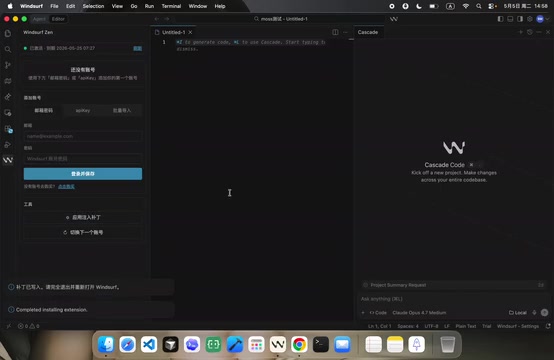
You might not have noticed, but the video mentioned that official request header changes caused the old approach to fail—this indicates that the Windsurf team has already detected such abuse and is actively taking countermeasures. This is essentially a "cat-and-mouse game"—the platform patches vulnerabilities, third-party tools adapt and fix accordingly, and both sides continuously escalate.
Three Major Security Risks of Using Windsurf Account-Switching Plugins
Risk One: Accounts of Unknown Origin Harbor Hidden Dangers
The origin of Windsurf accounts purchased from third-party websites is questionable. These accounts may be obtained through:
- Bulk registration: Created en masse using fake information or temporary email addresses
- Stolen and resold: Illegally obtained from other users and then resold
- Credit card fraud: Paid accounts registered using illegal payment methods
Regardless of the method, using accounts of unknown origin carries enormous legal and security risks. If the accounts are linked to fraudulent activity, users may also be implicated.
Risk Two: Violating Terms of Service—It's Only a Matter of Time Before Windsurf Bans Your Account
Windsurf is an AI-native code editor developed by Codeium, officially released in late 2024. Codeium was founded in 2022, headquartered in Silicon Valley, and has raised over $150 million in funding with a valuation exceeding $1.25 billion. Unlike GitHub Copilot, which primarily functions as a plugin embedded in existing editors, Windsurf chose the path of building a standalone IDE, deeply integrating AI code completion, multi-file editing, terminal command generation, and other features. Its "Cascade" mode can understand the context of an entire codebase and is considered a direct competitor to the Cursor editor.
The AI coding tool market is currently in a period of intense competition. GitHub Copilot holds the largest market share thanks to its first-mover advantage and GitHub ecosystem, with over a million monthly active developers. Cursor, developed by Anysphere, saw its valuation skyrocket after massive fundraising in 2024, with its differentiation lying in deeply embedding AI capabilities into the editor interaction layer, supporting natural language-driven code refactoring. Windsurf focuses on more generous free quota strategies for rapid user acquisition, which is also the direct reason it became a target for gray market operations. Additionally, Amazon's CodeWhisperer (now integrated into Amazon Q Developer), Google's Gemini Code Assist, and JetBrains' built-in AI Assistant are all competing for market share. The core of this competition isn't just model capability but also a battle of business models—the freemium model requires finding a balance between user growth and cost control, and abuse directly erodes this balance.
Windsurf's Terms of Service explicitly prohibit account sharing, automated abuse, and similar behaviors. Using account-switching plugins means:
- Accounts can be banned at any time, with all previous configurations and conversation history lost
- Data from ongoing projects may be unrecoverable
- In severe cases, you may face legal consequences
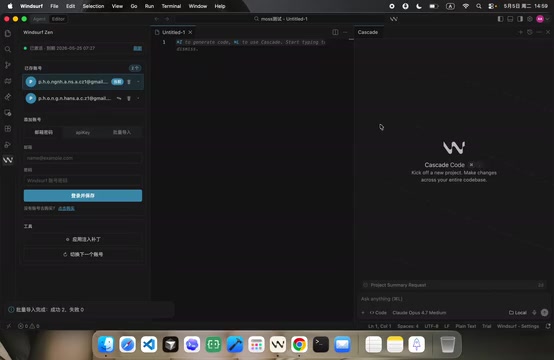
Risk Three: Your Source Code May Be Getting Stolen
This is the most easily overlooked yet most fatal risk. Third-party plugins need to "inject" into the editor to run, meaning they can potentially gain full access to your code.
From a security perspective, the plugin "injection" operation represents a classic code injection attack surface. The plugin system of VS Code and its derivatives (Windsurf is built on VS Code architecture) runs in a Node.js environment with extensive permissions including file system read/write, network requests, and process creation. A malicious plugin could theoretically scan all files in the workspace—including .env environment variable files, SSH keys, database configurations—and silently upload this sensitive data to a remote server via network requests. Since such operations can be disguised as normal API call traffic, traditional firewalls and antivirus software often fail to detect them.
It's particularly important to note that VS Code uses a trust-based plugin model, which is fundamentally different from browser sandbox isolation mechanisms. Web scripts in browsers are strictly limited by Same-Origin Policy and Content Security Policy (CSP), while VS Code plugins run in the Node.js main process or a separate Extension Host process, with default operating system permissions identical to the user's. Microsoft introduced Workspace Trust in 2021, allowing users to restrict plugin behavior in untrusted workspaces, but this mechanism primarily protects against opening malicious projects and has limited constraints on installed plugins' runtime behavior. While VS Code Marketplace has basic malware scanning, security researchers have repeatedly discovered malicious plugins—in 2023, multiple plugins with downloads exceeding ten thousand were found secretly stealing user credentials. The Windsurf account-switching plugin isn't even distributed through the official marketplace, making its security even more impossible to guarantee.
This risk isn't an isolated incident but rather a microcosm of the broader software supply chain security problem. The 2020 SolarWinds incident and the 2021 Log4Shell vulnerability made the world aware of the severity of supply chain security. In the developer tools space, attackers increasingly tend to plant malicious code through IDE plugins, npm packages, PyPI packages, and other components developers use daily. Such attacks are extremely stealthy because developers typically place implicit trust in their development environments. In 2024, a report from security research firm Snyk showed that hundreds of plugins in VS Code Marketplace had varying degrees of security issues, including excessive permission requests and unencrypted data transmission. The Windsurf account-switching plugin requiring users to perform an "injection" operation essentially asks users to actively bypass the editor's security boundaries, carrying a risk level far higher than normal plugin installation.
Injecting unaudited third-party code into your development environment is equivalent to exposing your source code, API keys, database credentials, and other sensitive information to unknown risks. For enterprise developers, if this leads to commercial code leakage, the consequences are unimaginable—ranging from project damage to customer lawsuits and legal disputes.
Not Enough Windsurf Free Quota? Four Compliant Alternatives
Rather than risking gray-market tools, consider these compliant solutions to address insufficient Windsurf quota:
- Plan your free quota wisely: Windsurf provides a certain amount of free usage. Develop the habit of thinking before asking, manage your usage rhythm reasonably, and the free tier is entirely sufficient for personal learning scenarios
- Subscribe to Windsurf Pro: The Pro monthly fee isn't high for professional developers, providing stable and reliable service while saving the time cost of repeated troubleshooting
- Explore open-source AI coding assistants: Continue and Cline are currently the two most noteworthy open-source AI coding assistants. Continue adopts a modular Provider architecture, interfacing with different LLM backends through a unified abstraction layer—whether cloud-based GPT-4 or Claude, or locally-run open-source models like Llama or DeepSeekAd via Ollama, all can be switched through simple configuration files, giving users complete control over data flow. Cline (formerly Claude Dev) employs a ReAct (Reasoning + Acting) agent framework where the model not only generates code but also plans execution steps, invokes tools, observes results, and iteratively corrects—achieving the leap from code completion to autonomous programming agents, suitable for scenarios requiring deep AI involvement in the development process. Both tools exist as VS Code plugins with fully open-source auditable code, eliminating security concerns associated with closed-source plugins. For enterprise developers concerned about data privacy, combining high-performance inference frameworks like vLLM or TGI to deploy locally-run open-source models (such as DeepSeek Coder, CodeLlama, etc.) on private GPU clusters can achieve AI-assisted programming experiences approaching commercial tool quality without ever touching external networks. Specifically, vLLM is a high-performance inference engine developed at UC Berkeley, with its core innovation being PagedAttention technology—borrowing from operating system virtual memory paging management concepts, allocating KV Cache on-demand to non-contiguous GPU memory blocks, achieving 2-4x throughput improvement over traditional implementations. TGI (Text Generation Inference) is an inference serving framework from Hugging Face, supporting Continuous Batching and Tensor Parallelism, suitable for multi-user concurrent scenarios. For individual developers, a single RTX 4090 with 24GB VRAM can smoothly run 7B-13B parameter code models; enterprise teams can deploy 70B-level models on A100/H100 clusters, achieving code generation quality approaching GPT-4
- Use multiple tools in combination: GitHub Copilot is free for students and open-source contributors, Cursor also offers free quotas—combining multiple AI coding tools can cover most daily development needs
Final Thoughts: Technical Ability Should Be Used to Create Value
The proliferation of AI coding tools is an inevitable trend, but gray-market ecosystems driven by a "freeloader" mentality ultimately harm the entire developer ecosystem. When platforms are forced to tighten free policies due to abuse, the ones truly affected are ordinary developers who use them compliantly.
Technical ability should be used to create value, not to circumvent others' business models. Choosing compliant ways to use AI coding tools like Windsurf protects both your account security and code assets, while supporting the healthy development of the entire industry.
Key Takeaways
- A third-party seamless account-switching plugin has appeared for Windsurf, bypassing official usage limits through multi-account rotation
- The official team has already taken countermeasures such as changing request headers, but plugin developers quickly adapted
- Using such plugins carries multiple risks including account bans, code leakage, and Terms of Service violations
- Purchasing accounts of unknown origin may involve legal issues and information security threats
- Developers are advised to choose legitimate subscriptions or open-source alternatives to avoid potential losses from gray-market operations
Related articles
Deep Dive into AI Agent Skill Design: …
Deep Dive into AI Agent Skill Design: Engineering Practices from Anthropic and Perplexity
A deep dive into Skill design philosophy from Anthropic's Claude Code team and Perplexity's Agent team, covering the Tax Test, Gotchas Flywheel, progressive disclosure, and Eval-First practices for building high-quality AI Agent skill systems.
Deep Dive into OpenAI's Official GPT-5…
Deep Dive into OpenAI's Official GPT-5.6 Prompting Guide: The Shift from Manual to Automatic
A deep dive into OpenAI's official GPT-5.6 Sol prompting guide: conciseness-first, outcome-oriented design, autonomy boundaries, tool routing, and reasoning intensity tuning.
 Deep Dives
Deep Dive into How OpenClaw (Open-Source Crayfish) AI Agent Works
Deep analysis of OpenClaw AI Agent internals: System Prompt, tool calling, SubAgents, Skill system, memory, and Context Engineering explained.