How Did Da Vinci Prove the Sun Is Hot? A Neglected Chapter in Science History

Da Vinci used a concave mirror experiment to overturn Aristotle's cold sun model, showing the embryo of scientific thinking.
Starting from the seemingly foolish question "Is the sun hot?", the article reviews Aristotle's cold sun model: the sun is made of the cold fifth element ether, and its heat comes from friction with the fire sphere and air layer. Da Vinci was not satisfied; through the observation that a concave mirror focusing sunlight concentrates both light and heat, he inferred that heat is a property of the light rays themselves; he also used the color change of molten bronze to refute the objection that "the sun is not the color of fire, so it is not hot." The article points out that the value of this history lies not in the conclusion itself but in da Vinci's way of challenging authoritative models with repeatable observations and analogical reasoning, embodying the precursor of the scientific spirit. The end also mentions da Vinci's cold notes on life at the cost of death, showing his rational attitude toward nature.
A Seemingly Foolish Question That Once Stumped the Brightest Minds
If someone asks you "Is the sun hot?", you'd probably think it's a no-brainer. But for most of human history, this question was not as obvious as it is today. Recently, a well-known science communicator, while introducing a new episode of the Curiosity Box, discussed Leonardo da Vinci's thoughts on the nature of the sun. He said his favorite da Vinci achievement wasn't the famous paintings, inventions, or anatomical studies, but rather his efforts to prove that "the sun is hot."
This sounds a bit incredible. After all, the sun hangs in the sky every day, scorching people. But go back a few hundred years, and people's confusion about the sun was real and profound: What is it doing? Is it burning? What is the fuel? Why doesn't it burn out? And—if it's really that hot, why isn't it the color of fire? These questions were not jokes but were seriously debated by some of the most brilliant minds in human history.
According to the video, it was from these questions that many ancient thinkers arrived at a conclusion that seems completely wrong today: the sun is cold.
Aristotle's "Cold Sun" Model
The representative figure of this conclusion is Aristotle. His theoretical framework was built on four basic elements: fire, air, water, and earth, arranged by density from low to high. The densest is earth, which sinks; then water, air, and above all air, there should be a sphere made of the unlit element fire.
So the question arises: What is outer space made of? What are the moon, sun, and stars made of? Aristotle's answer was that they are made of something thinner and higher than fire—which he called the "fifth element" (quintessence) or "ether."
The key point is that ether itself can be cold. But what actually generates heat is not the sun itself, but friction. The sun moves through the ether, rubbing against the fire sphere and the air layer, and the friction heat generated is transmitted to our location. In the words of the video: "Problem solved." This explanation was quite ingenious at the time, and in da Vinci's era, it was the mainstream description of the sun's nature.
Aristotle's four-element theory and the fifth element "ether" formed a complete cosmological framework. In On the Heavens, he argued that the sublunary world (Earth and its atmosphere) is composed of four perishable elements—fire, air, water, and earth—which undergo generation and destruction; while the superlunary world (the moon, sun, planets, and stars) is composed of the eternal and imperishable fifth element. Ether naturally moves in circles, which is why celestial bodies can revolve endlessly, unlike earthly objects that fall in straight lines. The key to this model is that it divides the celestial and terrestrial realms into two regions of completely different natures: celestial bodies do not participate in the generation and decay of the terrestrial world, and naturally do not possess properties like "burning" or "heat" as we know them. For this reason, saying "the sun is cold" was not absurd within the Aristotelian system; on the contrary, it fit the设定 of the noble, unchanging celestial element. This framework, integrated with Ptolemaic astronomy and medieval scholastic philosophy, became the orthodox cosmology of the Western world for nearly two thousand years, until it was completely overturned by the modern astronomical revolution.
Da Vinci's Concave Mirror Experiment: A Decisive Counterexample
Da Vinci was not satisfied with this explanation. He noticed a strange phenomenon: if you use a concave mirror to focus sunlight onto a point, you concentrate not only the light but also the heat. This means that heat is an inherent property of the sun's rays themselves, not a result of friction between the sun and the atmosphere.
This reasoning seems simple and direct today, but at the time it was a crucial logical leap. It directly challenged the core mechanism of the Aristotelian model: if heat comes from friction, then focusing light should not produce additional heat; but experiments showed that where light is focused, heat is also focused.
According to the video, da Vinci also responded to another common objection: the sun is not the color of fire, so it is not hot. His rebuttal was also based on observation: when bronze melts to its hottest state, its color approaches that of the sun; when it cools down, it instead takes on the color of fire. In other words, color cannot be a direct indicator of temperature, and the sun's color actually suggests a higher temperature.
Focusing sunlight with a concave mirror is one of the most intuitive optical experiments. When parallel light hits a concave reflecting mirror, it converges near the focal point, significantly increasing energy density, so that flammable materials can be ignited or metals melted at the focus. This phenomenon was known as early as ancient times; Archimedes is said to have used a similar principle to burn enemy ships, although its authenticity is doubtful. The value of da Vinci's reasoning lies in distinguishing the separability of "light" and "heat": if heat were merely produced by the sun's friction in the atmosphere, then light itself would not carry heat, and focusing light should not add heat; but experiments showed that the focus is precisely where it is hottest, indicating that heat travels along light rays and is a property of light itself. This conclusion transformed the question "Is the sun hot?" from metaphysical speculation into a testable physical problem, laying the groundwork for later research on radiant heat.
Why This History Deserves to Be Retold
What makes this history interesting is not only that da Vinci reached the correct conclusion, but also how he reached it. He did not rely on authority but overturned the most mainstream cosmological model of the time through a repeatable observation (concave mirror focusing) and an analogical reasoning (the color of molten metal).
The video creator was visibly excited when presenting this content: "This is amazing stuff, this is science." Indeed, if you traveled back to the fifteenth century and went around telling people "the sun is hot," people might think you were a genius. But for da Vinci, this conclusion was not a flash of inspiration but was built on experiment and logic.
This also reminds us that many "obvious" truths in the history of science were once counterintuitive puzzles. The questions we consider foolish today may well have been the focus of endless debate among the brightest minds of the past.
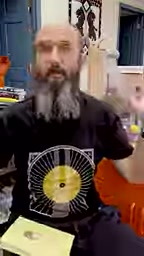
Curiosity Box is a subscription-based science toy box launched by science communicator Michael Stevens (host of the YouTube channel Vsauce), offering experimental equipment, puzzles, and booklets around a theme each issue. Vsauce is known for philosophical, counterintuitive science explanations, skilled at starting from everyday questions to explore deep principles—which is exactly why he would focus on seemingly foolish questions like "Is the sun hot?" Da Vinci's manuscript notes (such as the Codex Atlanticus) indeed contain a large number of independent observations on optics, mechanics, and natural phenomena, and his research methods are often regarded as a precursor to modern experimental science. However, science historians also caution that da Vinci did not form a systematic scientific theory; many of his insights remained at the notebook level and were not published, so their actual impact on the scientific revolution was limited.
Another Side of Da Vinci: A Cold Observation of Life and Death
The video also mentions another unsettling obsession of da Vinci: we are all made of dead things. To survive, we must consume plants or animals that were once alive. Da Vinci wrote in his notes that humans and animals are actually carriers and channels of food, graves of animals, inns of death, coverings that consume everything, sustaining life through the death of others.
This cold observation is in the same vein as his rational spirit in proving the sun is hot: both stem from a direct examination of natural phenomena, refusing to comfort oneself with comfortable but false explanations. No wonder the video author joked at the end that after hearing this, you'd want to paint the Mona Lisa.

Conclusion: The Precursor of the Scientific Spirit
Da Vinci's proof that the sun is hot may not be a milestone discovery in the history of science, but it demonstrates the embryo of a way of thinking: questioning authoritative models with controlled observations, and constructing new explanations with analogy and reasoning. In an era before the scientific revolution, this way of thinking was rare.
Next time you look up at the sun, think about this: there was once a group of people who debated with the utmost seriousness whether it was cold. And an Italian artist and engineer, with a concave mirror and an observation about molten metal, gave the correct answer.
One-line Summary
Da Vinci used a concave mirror experiment to overturn Aristotle's cold sun model, showing the embryo of scientific thinking.
Paragraph Summary
The article starts from the seemingly foolish question "Is the sun hot?" and reviews Aristotle's cold sun model: the sun is made of the cold fifth element ether, and its heat comes from friction with the fire sphere and air layer. Da Vinci was not satisfied; through the observation that a concave mirror focusing sunlight concentrates both light and heat, he inferred that heat is a property of the light rays themselves; he also used the color change of molten bronze to refute the objection that "the sun is not the color of fire, so it is not hot." The article points out that the value of this history lies not in the conclusion itself but in da Vinci's way of challenging authoritative models with repeatable observations and analogical reasoning, embodying the precursor of the scientific spirit. The end also mentions da Vinci's cold notes on life at the cost of death, showing his rational attitude toward nature.
Related articles
SharpLogic: Formalizing Bug Detection for LangGraph Routing Graphs with k-CNF
SharpLogic, an open-source project, maps LangGraph-style multi-agent routing and retry graphs to k-CNF, using a Rust kernel to count deadlocks and failing paths (#F counting), offering a Python AgentGuard hook and CLI for pre-release formal gate checks. This article analyzes its principles, its complementary relationship with evals, and the community's concern about modeling costs.
PPO Training of a Franka Robotic Arm for Pick-and-Place: A Reinforcement Learning Starter Project
A reinforcement learning project using PPO to train a Franka Panda robotic arm for pick-and-place in PyBullet, covering tech stack choices, task design challenges, and future text/voice command interaction plans—a good reference for beginners.

Parents Sue OpenAI: GPT-4o Allegedly Led Daughter to Stop Epilepsy Medication
A couple sues OpenAI, claiming GPT-4o advised their daughter with epilepsy to secretly reduce medication and hide it from her doctor; the girl died in February. This article analyzes why safety alignment of large models fails in medical advice scenarios, the controversy over liability, and the practical impact on AI product deployment.