How Do Republican Voters Rate Trump's Second Term? Street Interview Highlights

Republican voters give Trump's second term high marks, though some worry about the GOP's overall image.
A street interview video recorded several Republican supporters rating Trump's second term, with most giving scores of 9 to 10, citing his record of keeping campaign promises and staying true to the America First agenda. Some respondents acknowledged accepting higher gas prices as a trade-off for a tougher stance on Iran, reflecting a conservative value hierarchy that places security above economic comfort. However, dissenting voices emerged as well, with one respondent saying the Republican Party "is not looked highly upon" and another rating the term a cautious "50-50." The article notes that street interviews reveal how supporters think and feel, but cannot substitute for large-scale scientific polling.
A street interview video captured several Republican supporters sharing their candid assessments of Trump's second term. This informal exchange of public opinion reveals complex and divided attitudes among grassroots conservative voters — ranging from near-perfect approval scores to concerns about the Republican Party's overall image.
Scores from 9 to 10: Strong Approval Among Grassroots Supporters
When asked to rate Trump's second term on a scale of 1 to 10, respondents gave remarkably high scores. Some went straight to 10, others gave a 9.
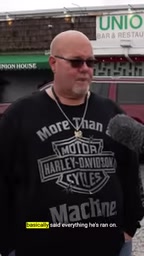
One 56-year-old respondent explained his 9-point rating: in his memory, Trump is the only president who has "basically delivered on his campaign promises." This impression of following through on commitments is the core reason for his high rating.
This reflects a key insight: for core supporters, a political figure's credibility and consistency often earns more loyalty than specific policy outcomes. "Keeping promises" has itself become a form of political capital.
Staying the Course on the America First Agenda
Respondents particularly emphasized that Trump "keeps people that are on with him on the America First agenda."
From this supporter's perspective, alignment within the team is what ensures execution. This stands in interesting contrast to outside criticism of the Trump administration — such as frequent personnel turnover. For grassroots supporters, building a team around a clear agenda is seen as a strength rather than a problem.
"America First" is the cornerstone of Trump's political brand, dating back to his 2016 campaign. Its policy substance includes trade protectionism (such as tariffs on imports), reduced multilateral commitments (withdrawing from or renegotiating international agreements), immigration restrictions, and a foreign policy framework that prioritizes American national interests over alliance relationships. This agenda carries powerful symbolic weight among Republican base voters — it represents a rejection of the narrative that "Washington elites put global interests above national ones." For supporters, "agenda consistency" means the government won't be diluted by traditional diplomatic norms or elite consensus; officials must act in alignment with this core direction rather than going their own way.
Costs and Trade-offs: High Gas Prices in Exchange for a Tough Stance on Iran
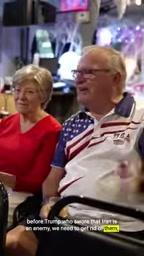
The interview also included candid acknowledgments of real-world costs. One respondent openly admitted he "hates paying high taxes and dealing with high gas prices," but considers it a worthwhile trade-off.

His argument: seven presidents before Trump all declared Iran an enemy that needed to be dealt with, but none actually took action — until Trump did. In his view, paying an economic price for a tough foreign policy is acceptable.
This mindset of "willing to bear economic costs for diplomatic results" reveals the priorities of some conservative voters — security and a firm foreign policy stance carry significant weight on their value scale.
The Iran policy referenced by the respondent primarily refers to the Trump administration's "Maximum Pressure" strategy: withdrawing from the Obama-era nuclear deal (JCPOA) in 2018, then reimposing and intensifying economic sanctions on Iran — including an oil export embargo — and the 2020 killing of Iranian Revolutionary Guard commander Qasem Soleimani. These actions were interpreted by conservative supporters as "unprecedented toughness," contrasting with what they saw as the "soft appeasement" of previous administrations toward Iran. Critics, however, argue that the Maximum Pressure strategy failed to halt Iran's nuclear program and actually accelerated its uranium enrichment while narrowing the space for diplomatic negotiations. The relationship between oil price fluctuations and Iran sanctions is complex — actual oil prices are influenced by global supply and demand, OPEC decisions, and many other factors — but the respondent's direct linking of the two reflects the intuitive way some voters understand policy costs.
A Dissenting Voice: Concerns About the Republican Party's Image
Not all voices were uniformly praising. The interview also captured distinctly different opinions.
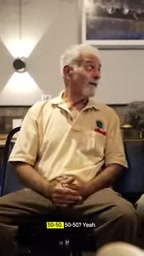
One respondent candidly stated: "I think the Republican Party is not looked highly upon, and I think everyone knows that." Another described their overall assessment of the second term as "50-50" — a notably cautious take.
This division is worth noting: even among Republican supporters, assessments of Trump personally and of the party's overall image can be separated. Someone can strongly approve of the leader while still worrying about the party's public standing.
The Value and Limits of Street Interview Samples
This kind of street interview provides a vivid slice of public opinion, but it also has clear limitations. The sample size is extremely small, respondents are not randomly selected, and the results cannot represent the overall distribution of public opinion. It is better suited for understanding "how supporters think" than for measuring "how many people support" a given position.
In terms of content, this interview captures several recurring conservative narratives: the importance of keeping promises, alignment with the America First agenda, willingness to bear economic costs for diplomatic toughness, and divided attitudes toward the party's image. These themes together offer a window into the current mindset of conservative voters.
A truly comprehensive assessment of public opinion still requires large-scale, scientifically sampled polling data. But the value of street interviews lies in making visible the concrete logic and emotions behind abstract statistics.
Street interviews in journalism are known as "vox pop" material (from the Latin vox populi, meaning "voice of the people"), and the methodological limitations of this format are well-documented in social science. The core issue is selection bias: people who are willing to be interviewed and express opinions on camera differ systematically from the general population in personality, strength of opinion, and willingness to speak out. Editing and presentation further filter the content. Scientific polling controls for these biases through random sampling, weighting, and margin-of-error reporting — at the cost of losing the narrative texture and emotional detail that street interviews provide. The two methods are not mutually exclusive but complementary: polls tell us "how many people think this way," while street interviews help explain "why they think this way" and "what the reasoning logic looks like within the supporter base."
Related articles

OpenAI Partners with Shield: How the Astra Agent Revolutionizes IT Troubleshooting
OpenAI and Shield launch the Astra agent, which autonomously logs into computers and legacy systems to fix IT issues in real time, 35-40% faster than traditional models, with humans involved only when judgment is needed.

iPhone Duo Battery Life Tested: One Charge a Day Is Unavoidable, and the Large Screen Is the Culprit
iPhone Duo battery test: heavy use needs at least one charge a day, and about 30% remains after 6.5 hours of screen-on time. How often the large screen is unfolded is key; a MagSafe battery pack helps, and long-term degradation is also worth watching.

Kimi K3.1 Pro Open-Sourced: 2.8 Trillion Parameters Close In on Opus
Moonshot releases the open-source MoE model Kimi K3.1 Pro, with 2.8T total parameters and 104B activated, trailing Opus 5.5 by under 1 point on Terminal Bench 4.0.