How Does AI Discover Molecular Switches in Infectious Diseases? Google Co-Scientist Accelerates Gene Mutation Research

Cambridge professor uses Google Co-Scientist AI to identify genetic triggers in emerging infectious diseases
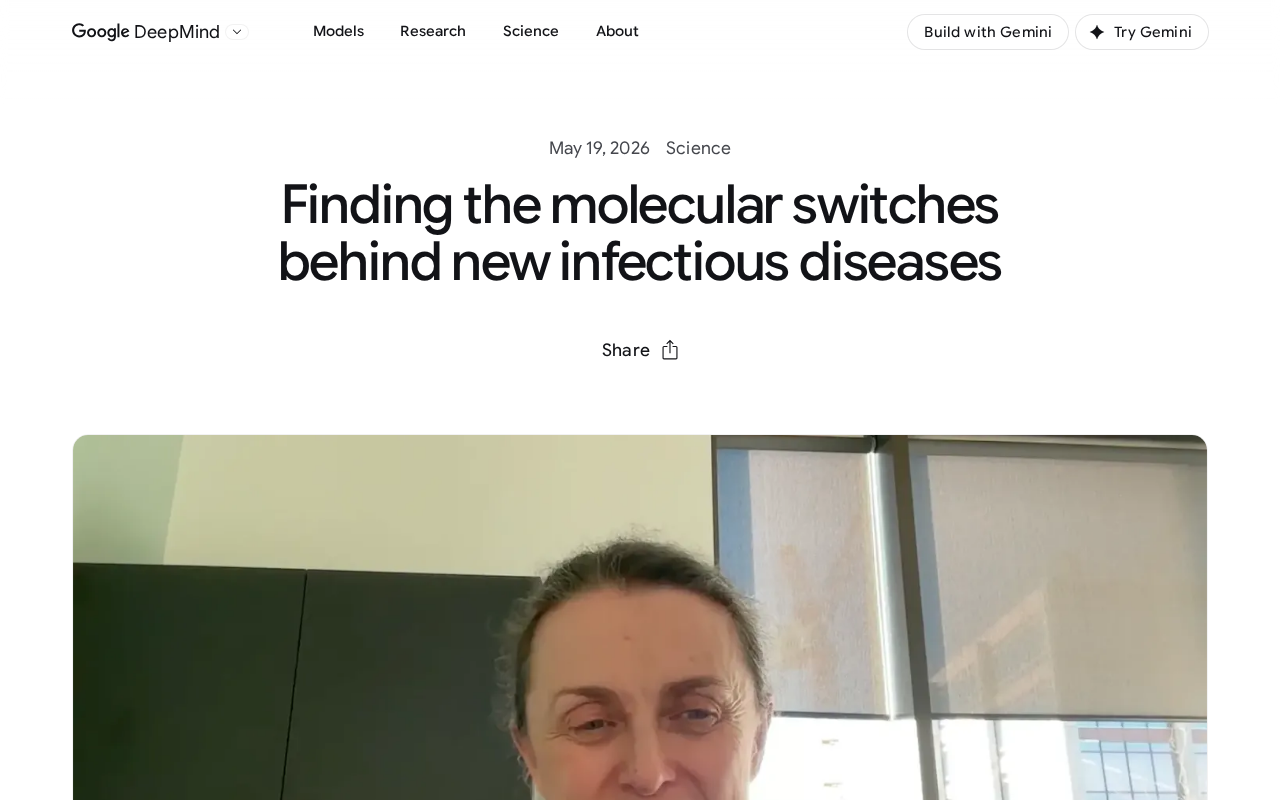
Professor Clare Bryant at the University of Cambridge is leveraging Google's AI tool Co-Scientist to identify critical gene mutations — "molecular switches" — in emerging infectious diseases. Traditional methods for identifying genetic variations that determine pathogen virulence can take months or years. Co-Scientist, a multi-agent scientific research system built on the Gemini model, dramatically accelerates this process through collaborative literature retrieval, hypothesis generation, and critical evaluation, offering a new paradigm for early epidemic warning.
Overview
Professor Clare Bryant at the University of Cambridge is using Google's AI tool Co-Scientist to identify genetic triggering mechanisms in emerging infectious diseases. Professor Bryant is a renowned immunologist at Cambridge's Department of Veterinary Medicine, with a long-standing focus on innate immunity research, particularly the role of Toll-like receptors (TLRs) in infectious diseases. Innate immunity serves as the body's first line of defense against pathogens, rapidly triggering inflammatory responses by recognizing conserved pathogen-associated molecular patterns (PAMPs) — a research background that aligns closely with the study of genetic triggering mechanisms in emerging infectious diseases. This research showcases a cutting-edge application of AI in biomedicine — helping scientists rapidly pinpoint the molecular-level "switches" that trigger disease outbreaks, offering a new approach to early epidemic warning systems.
What Are Molecular Switches in Infectious Diseases?
In infectious disease research, "molecular switches" refer to critical genetic variation sites in a pathogen's genome that can determine its pathogenicity, transmissibility, or host adaptability. When specific mutations occur at these genes, they can suddenly transform an otherwise mild pathogen into one that is highly contagious or lethal.
Mutations in the HA (Hemagglutinin) protein of avian influenza viruses represent the most classic case for understanding this concept. The HA protein is a key glycoprotein on the surface of influenza viruses, responsible for recognizing and binding to sialic acid receptors on host cell surfaces. Avian respiratory cells primarily express α-2,3 type sialic acid receptors, while human upper respiratory tract cells mainly express α-2,6 type receptors. Just 1-2 amino acid substitutions in the receptor-binding domain of the avian influenza HA protein (such as the Q226L and G228S site mutations in H5N1) can shift the virus's receptor preference from avian-type to human-type, thereby enabling human-to-human transmission. In 2011, Dutch scientist Ron Fouchier and American scientist Yoshihiro Kawaoka independently discovered the critical mutation combinations required for H5N1 to gain aerosol transmissibility between ferrets — research that sparked a global scientific ethics debate due to its dual-use potential, fully illustrating both the scientific value and inherent risks of identifying such "molecular switches." These seemingly minor genetic changes are the "molecular switches" that determine whether a global pandemic will occur.
Bottlenecks in Traditional Gene Mutation Identification
Traditionally, identifying these critical genetic variations requires extensive laboratory work and lengthy data analysis processes. While the widespread adoption of next-generation sequencing (NGS) technology has completely transformed sequencing efficiency — short-read sequencing technologies represented by Illumina platforms can complete full pathogen genome sequencing within 24-48 hours, with costs dropping from billions of dollars during the Human Genome Project era to mere hundreds — the explosive growth in data volume has also created new bottlenecks. During the COVID-19 pandemic, the global scientific community shared over 15 million SARS-CoV-2 genome sequences through the GISAID platform, and rapidly identifying mutations of public health significance from this massive sequence data became a core challenge urgently requiring solutions. Researchers still need to:
- Perform whole-genome sequencing on large numbers of pathogen samples
- Compare gene sequence differences one by one to screen candidate mutations
- Validate each candidate mutation's actual function through functional experiments
- Establish causal relationships between gene mutations and pathogenic phenotypes
This process often takes months or even years, yet during emergency outbreak situations, time means lives.
How Google Co-Scientist Accelerates Infectious Disease Gene Research
Google's Co-Scientist was jointly launched in early 2025 by Google DeepMind and Google Research. It is a multi-agent scientific research system built on the Gemini large language model. Unlike general-purpose AI assistants, Co-Scientist employs an architecture specifically optimized for scientific reasoning: the system contains multiple specialized agents responsible for literature retrieval, hypothesis generation, critical evaluation, and experimental protocol design. These agents iteratively refine scientific hypotheses through collaborative debate. Its design philosophy emphasizes "verifiability"
Related articles
New Species Discovered in New York's C…
New Species Discovered in New York's Central Park? Inside the Urban Insect Hunting Project
Scientists set up insect traps in NYC's Central Park and Prospect Park to discover unknown species. With 90% of Earth's species still unnamed, urban biodiversity research is becoming a new trend in ecology.
The Full Story of the Higgs Boson Disc…
The Full Story of the Higgs Boson Discovery: An Insider's Account of the 'God Particle'
A Fermilab physicist's insider account of the Higgs boson discovery: the transatlantic race with CERN, behind-the-scenes details of the 2012 announcement, 14 years of verification, and the true origin of the 'God Particle' name.
 Research
SciMDR: How a 7B Small Model Rivals GPT-5 in Scientific Reasoning
Yale and other institutions introduce SciMDR, a two-stage data synthesis pipeline enabling a 7B model to match GPT-5 level performance in scientific literature comprehension.