How Tariffs Pushed Japan into War: A Historian Explains the Geopolitical Consequences of Trade Wars

Smoot-Hawley tariffs caused trade to shrink and indirectly pushed Japan toward military expansion and war with the U.S.
Using historian Sarah Paine's analysis, the article reviews the 1930 Smoot-Hawley Tariff Act and its chain reactions: economists' warnings were ignored, retaliation by trading partners sharply shrank global trade. Highly trade-dependent Japan turned to "self-sufficiency" after its largest partner shut it out, first invading Northeast China, then expanding into full-scale invasion and stalemate. To cut off aid to China, Japan attacked Malaya, the Philippines, Singapore, and other targets on the same day as Pearl Harbor, prompting the U.S., Britain, Australia, and New Zealand to deepen involvement in Asia. The article argues protectionism can trigger security chain reactions beyond economics, offering lessons for today's trade frictions.
Trade protectionism is often viewed as an economic policy tool, but its geopolitical consequences can far exceed what policymakers anticipate. In a recent talk, historian Sarah Paine used the case of the Great Depression in the 1930s to show how American tariff policy indirectly pushed Japan down the road of military expansion and war with the United States. This history still offers a useful reference for understanding today's global trade frictions and security landscape.
Protectionism During the Great Depression: The Smoot-Hawley Tariff
In the 1930s, under the impact of the Great Depression, the "America First" mood rose in the United States, with calls to protect domestic jobs. According to Sarah Paine's analysis, the United States passed the Smoot-Hawley Tariff Act, sharply raising import duties. Economists had warned President Hoover that trading partners would inevitably retaliate, that global trade would be severely damaged, and that this would ultimately hurt the United States itself. Nevertheless, the bill was signed into law.
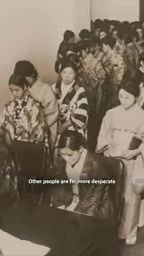
What followed confirmed the economists' fears: trading partners retaliated one after another, and global trade volume shrank sharply. For countries more dependent on foreign trade than the United States, the blow was even more devastating. Japan had long cooperated with the international system and was a founding member of the League of Nations, while the United States at that time was not a member. When Japan examined its own situation, it found that its economy was highly dependent on trade, yet its most important trading partner had shut it out.
The Smoot-Hawley Tariff Act was introduced by Representative Willis Hawley and Senator Reed Smoot and signed into law by President Hoover in June 1930, raising tariffs on more than 20,000 imported goods to historic highs, with the average rate rising to more than 40 percent. At the time, more than a thousand economists signed a petition opposing it, arguing that high tariffs would hinder the international division of labor, invite retaliation, and deepen the depression. In hindsight, the act did trigger reciprocal retaliation from Canada, France, Italy, and other countries, and global trade volume shrank by about two-thirds between 1929 and 1934. Scholars generally regard it as an important driver of the deepening of the Great Depression and the fragmentation of the international trading system, and it is often cited as a classic cautionary example of "beggar-thy-neighbor" policies.
Japan's Response: From Manchuria to Full-Scale Invasion of China
Faced with trade isolation, Japan's decision-makers chose the path of "self-sufficiency"—if sufficient resources could be obtained through the empire's territory, there would be no need to worry about external trade. According to Sarah Paine, Japan therefore decided to invade Manchuria and turn it into a regional war, which initially progressed relatively smoothly.
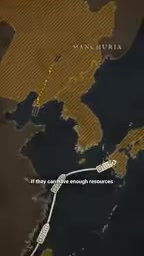
Japan then decided to expand this model to all of China, but events did not unfold as expected. Japan tried to seize all resources and put China in a "death grip," but instead prompted China's previously feuding factions to stop their internal strife and recognize jointly that Japan posed an existential threat, ultimately fighting Japan to a stalemate. Japan's economy began to decline because of the costs of war, and its position became increasingly desperate.
The "Manchuria" mentioned in the text should refer to Northeast China (then the Japanese-backed "Manchukuo"). In 1931, Japan's Kwantung Army launched the Mukden Incident, and in 1932 Japan established the puppet state of Manchukuo, viewing it as a rear base for resources and strategic depth; materials such as coal, iron, and soybeans were important supplies for the Japanese economy. After the Marco Polo Bridge Incident in 1937, Japan expanded the fighting into a full-scale invasion of China. The so-called "self-sufficiency" was the concept of the "yen bloc": by controlling resources and markets within its sphere of influence, Japan sought to reduce dependence on the Anglo-American-dominated world trading system and ease the strategic anxiety caused by tariff barriers and shrinking trade.
A Desperate Gamble: Pearl Harbor and Simultaneous Strikes
To cut off foreign aid to Nationalist China, Japan decided to take military action against the United States, Britain, and other countries. Sarah Paine points out that the American public often focuses only on Pearl Harbor, but in fact, at the same time on the same day as the attack on Pearl Harbor, Japan also attacked Malaya, the Philippines, Singapore, Wake Island, Guam, Thailand, and the Shanghai International Settlement. Its goal was to eliminate all bases from which China could be aided.

Yet this strategy backfired. Japan's actions prompted major allies such as the United States, Britain, Australia, and New Zealand to redouble their support for Chiang Kai-shek, drawing the great powers more deeply into the Asian theater. Japan tried to escape its trade predicament through military means, but in the end dragged itself into a multi-front war it could not win.
On December 7, 1941 (Hawaii time), the Japanese navy attacked Pearl Harbor, and on the same day (December 8 in Asian time) it launched attacks on Malaya, the Philippines, Hong Kong, Guam, Wake Island, Thailand, and other places, and entered the Shanghai Public Concession. This series of actions was intended to seize strategic resources such as oil and rubber in Southeast Asia and to cut off foreign aid to China through channels such as the Burma Road and the Flying Tigers. The United States declared war on Japan the next day, and Britain and other allies soon entered the war as well; in January 1942, the Declaration by United Nations was signed, formally forming the anti-fascist alliance, and Japan thus became mired in the prolonged multi-front war it had originally hoped to avoid.
Lessons from History: The Unintended Consequences of Trade Policy
Sarah Paine's analysis reveals a key mechanism: when a country feels excluded from the international trading system, it may turn toward resource self-sufficiency and military expansion. The Smoot-Hawley Tariff was intended to protect American jobs, but through the chain reaction of shrinking global trade it intensified Japan's existential anxiety and ultimately became one of the indirect factors pushing it toward war.
This historical case reminds us that trade policy is never merely an economic issue. In an interdependent global system, unilateral protectionist measures can trigger chain reactions at the security level, and their consequences often go beyond the original policy design. For today's policymakers, understanding the geopolitical transmission mechanisms behind tariffs may be more important than simply calculating trade balances.
One-line Summary
Smoot-Hawley tariffs caused trade to shrink and indirectly pushed Japan toward military expansion and war with the United States.
Paragraph Summary
Drawing on historian Sarah Paine's analysis, the article reviews the introduction of the U.S. Smoot-Hawley Tariff Act in the 1930s and its chain reactions: economists' warnings went unheeded, retaliation by trading partners caused global trade to shrink sharply. Highly dependent on foreign trade, Japan turned to "self-sufficiency" after its largest trading partner closed its doors, first invading Northeast China and then expanding into full-scale invasion of China, becoming bogged down in a war stalemate. To cut off aid to China, Japan attacked multiple targets such as Malaya, the Philippines, and Singapore on the same day as Pearl Harbor, but instead prompted major powers such as the United States, Britain, Australia, and New Zealand to redouble their involvement in the Asian theater. The article thus points out that trade protectionism can trigger security chain reactions beyond the economic sphere and offers lessons for current trade frictions.
Related articles

Reinforcement Learning Takes On Getting Over It: Distributed Training Strategies Behind 63% Progress
A developer uses deep reinforcement learning to tackle Getting Over It. The agent climbs from the bottom to 63% progress but gets stuck at the anvil. The project is open-sourced, using divide-and-conquer training and CPU-only training, seeking community collaboration to break the bottleneck.

Sigma FP2 Released: The World's Smallest Full-Frame Camera Gets Sensor and Screen Upgrades
Sigma launches the FP2 full-frame camera, retaining its smallest-and-lightest design with three key upgrades: improved sensor, articulating LCD screen, and longer battery life—built for portable video creators.

AAAI 2027 Phase 2 Decisions Imminent: Community Debates Review Fairness and Submission Ecosystem
AAAI 2027 phase 2 review results are imminent, with the Reddit community debating reviewer consistency and process transparency. This article examines pre-decision sentiment, structural tensions in top conference review, and practical strategies for authors.