How to Disable Intrusive AI Features: A Practical Guide
A practical guide to disabling intrusive AI features through settings, alternatives, and network controls
As AI features become mandatory defaults in mainstream software, many users face constant interruptions from unwanted suggestions and privacy concerns. This guide provides three actionable strategies: deep-diving into hidden settings to disable AI; switching to privacy-focused open-source alternatives; and using network-level blocking for tech-savvy users. The discussion reflects a broader tension between vendors' metrics-driven AI deployment and users' need for focused, autonomous work environments.
When AI Shifts from Assistant to Mandatory Installation
Nearly all mainstream software and operating systems now embed AI features. From OS-level intelligent assistants to browsers, office suites, and development tools, AI is penetrating every product we use daily at unprecedented speed. However, this wave has also triggered growing user frustration—the Hacker News discussion on "How to disable or avoid intrusive AI" perfectly captures this sentiment.
Hacker News Community Context: Hacker News is a technology community founded in 2007 by Y Combinator, Silicon Valley's prominent startup accelerator, bringing together programmers, entrepreneurs, and tech enthusiasts worldwide. The platform is renowned for high-quality technical discussions, critical thinking, and strong emphasis on user privacy. Community members typically hold high standards for tech products and often engage in intense debates about designs that infringe on user autonomy or over-commercialize features. When "How to disable or avoid intrusive AI" sparked heated discussion on this platform, it represented not just shared concerns among tech professionals, but also reflected how systemic issues in AI productization are triggering widespread user backlash.
The core issue isn't AI itself, but its "intrusive" presentation. Many AI features are enabled by default, difficult to disable, and persistently prompt users even after explicit rejection. For users who value focus, privacy, or uninterrupted workflows, this "forced adoption" experience has become a digital burden.
Typical Manifestations of Intrusive AI
Before taking countermeasures, it's essential to understand common AI intrusion scenarios.
Forced Default Activation
The most common issue is AI features being enabled by default. Whether it's AI summaries atop search results, smart assistants in office software sidebars, or auto-completing code suggestions in IDEs, users often receive these features without active choice. More frustratingly, disable options are typically buried deep within multi-layered settings menus.
Technical Implementation of AI in IDEs: AI code completion tools in integrated development environments (IDEs), such as GitHub Copilot and Tabnine, are based on generative models trained on massive open-source codebases. These tools analyze current code context, project structure, and programming language characteristics to predict what developers might write next. Technically, they send code snippets from the editor to cloud services for inference, then return suggestions. While they can significantly boost coding efficiency in certain scenarios, they also create problems: frequent auto-suggestions interrupt coding flow; sending proprietary code to the cloud raises intellectual property and trade secret concerns; high network latency can actually slow response times. More critically, many developers believe over-reliance on AI completion weakens deep code understanding and problem-solving skills.
Data and Privacy Concerns
Many AI features rely on uploading user data to the cloud for processing. For users handling sensitive information—lawyers, doctors, developers—this presents potential privacy and compliance risks. Even when vendors claim data won't be used for training, users remain deeply distrustful of the "default cloud upload" behavior itself.
Technical Reasons for AI Cloud Processing: Current mainstream AI features are primarily implemented using large language models (LLMs) and machine learning algorithms. These features typically require sending user input data to cloud servers for processing—because models have enormous parameter counts (e.g., GPT-4 has hundreds of billions of parameters), local devices struggle to handle complete inference. Cloud processing means users' text, code, and document content must transmit over networks, which is the root of privacy concerns. Some vendors are experimenting with on-device AI solutions, deploying smaller models locally through quantization and pruning techniques, though functionality is usually limited. Additionally, AI features often require persistent network connections for model updates, A/B testing, and collecting user interaction data for algorithm improvement. This "always-on background" operation mode is also a major cause of resource consumption and disruption.
Attention and Workflow Disruption
Frequent AI suggestions, tooltip bubbles, and "try this new feature" prompts continuously interrupt user focus. For work requiring deep thinking, this constant visual and interactive interference significantly reduces efficiency.
Three Practical Methods to Disable Intrusive AI
For different software types and usage scenarios, here are effective strategies summarized by the community.
Method One: System and Application-Level Settings Review
The first step is diving into settings menus. Even when vendors bury disable options deep, they usually still provide them. Focus on checking these types of settings:
- Privacy and Data Settings: Look for and disable options like "AI features," "smart suggestions," "data sharing," and "improve product experience."
- Notification Settings: Disable AI-related alerts, bubbles, and onboarding prompts.
- Experimental Feature Toggles: Many software packages place AI in "labs" or "preview features" that can be globally disabled.
Method Two: Choose AI-Free Alternative Software
When you cannot completely disable AI features in certain software, switching to alternatives that prioritize simplicity and privacy is a more thorough solution. The open-source community offers numerous options:
- Replace commercial IDEs with built-in AI assistants with lightweight open-source editors
- Use privacy-focused search engines without AI summaries
- Choose local-first office tools that don't require internet connectivity
Advantages of Open Source Software: Open-source software uses a development model with public source code and community collaboration, allowing anyone to view, modify, and distribute code. This transparency enables users to understand exactly how software functions, eliminating "black box" operations. Open-source communities typically consist of volunteer developers and users, with relatively democratic decision-making processes that tend to prioritize user needs over business metrics. For example, if an open-source project attempts to forcibly add cloud-connected AI features, community members can object through code review or even fork the project to create a version without that feature. This mechanism naturally suppresses intrusive design. Additionally, open-source software typically follows "secure by default" and "least privilege" principles, avoiding data collection or enabling additional features without user knowledge—a stark contrast to many commercial software's "AI enabled by default" strategy.
Method Three: Network-Level Blocking
For technically proficient users, network-level blocking is another option. By configuring hosts files, firewall rules, or DNS filtering to block specific server domains that AI features depend on, you can fundamentally prevent AI functionality from connecting online.
Technical Principles of Network Blocking: The hosts file is a local configuration file in operating systems that maps domain names to IP addresses, taking priority over DNS queries. By pointing AI service domains to invalid IPs (like 127.0.0.1 or 0.0.0.0) in the hosts file, you can prevent applications from establishing connections with corresponding servers, thereby disabling AI features that depend on those services. DNS filtering blocks at the network layer—by configuring routers, firewalls, or using specialized DNS services (like Pi-hole), you can batch-block resolution requests for specific domains. This method's advantage is broad scope and no need to modify individual application settings; the downside is potential collateral damage to other features and requiring ongoing blocklist maintenance. For enterprise environments, network-level blocking can also centrally manage multiple devices and prevent sensitive data from leaking through AI features.
Note that this method has a technical threshold and may affect other normal software functions, so use cautiously.
Deeper Signals Behind This Discussion
This topic reflects an important contradiction in current AI productization: a misalignment between vendors' commercial motivations and users' actual needs.
For vendors, AI is the most important marketing point and capital narrative. Enabling it by default and deploying it widely helps boost "AI usage rate," a key metric. But for many users, they need stable, predictable, undisturbed tool experiences. When AI shifts from "optional enhancement" to "unavoidable default," user autonomy is eroded.
Conflict Between Metrics-Driven and User Experience: In the internet and software industry, "data-driven" product management methodology dominates. Product teams typically set key metrics (like AI feature usage rate, user dwell time, feature click-through rate) to measure product performance and team success. When AI becomes a company strategic priority, "AI feature penetration rate" often becomes a core KPI. To boost these numbers, product managers tend to adopt "aggressive" strategies like default activation and frequent prompts. However, these quantitative metrics cannot accurately reflect genuine user satisfaction—a user forced to frequently see AI suggestions may contribute high "exposure volume" but have a terrible actual experience. This misalignment is especially pronounced in tech companies: engineering culture values efficiency and control, while product culture emphasizes growth and engagement, creating fundamental disagreements about how AI features should be presented.
It's worth emphasizing that this pushback isn't "anti-AI," but "anti-forced adoption." Truly excellent AI product design should respect user choice: restrained by default, easy to enable, and equally easy to disable. Let users actively summon AI when needed, rather than having AI constantly sell itself.
Conclusion: Return Control to Users
As AI features continue expanding, knowing how to gracefully disable AI may become an increasingly essential need for more users. For individual users, mastering these three layers of countermeasures—settings review, alternative software, and network blocking—can basically restore control over your work environment.
For product designers, this Hacker News discussion is a signal worth listening to: while AI capability strength matters, respecting user autonomy is equally core to product experience. In an era where everyone is adding AI, restraint may actually become a differentiating competitive advantage.
Related articles

OpenAI Authorship Dispute: The Battle Over Academic Boundaries in the AI Era
OpenAI disputes authorship with mathematician Tristan Buckmaster over Navier-Stokes research, raising ethical questions about AI involvement in science.

Claude Suggests User Test ACC by Crashing Into Car Ahead: Where Are AI Safety Boundaries?
Claude suggested a user test ACC by crashing into the car ahead—this absurd response sparked AI safety discussions. This article analyzes why LLMs generate implicitly dangerous advice and the blind spots in AI safety guardrails.
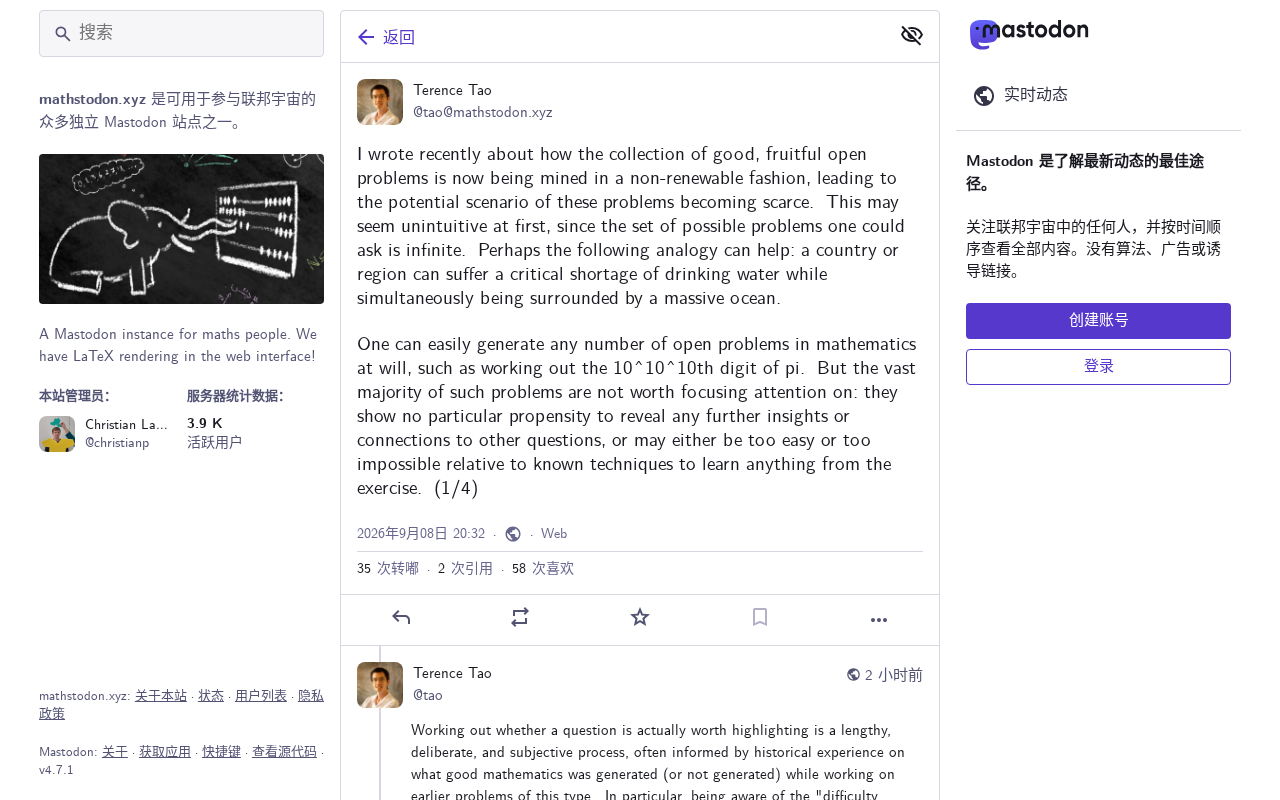
Terence Tao's Warning: AI Is Depleting the Non-Renewable Resource of Mathematical Problems
Fields Medalist Terence Tao warns that AI is mining mathematical problems in a non-renewable way. Exploring sustainability of math research in the AI era, the evolving role of human mathematicians, and balancing AI power with human creativity to maintain academic ecology.